Introduction
“In everyone’s life, at some time, our inner fire goes out. It is then burst into flame by an encounter with another human being. We should all be thankful for those people who rekindle the inner spirit.” Albert Schweitzer
It has been two years since we first discovered their grave. There was a brief flurry of research which has lain dormant since, until I was prompted by a recent encouraging comment on our Facebook site. This was from Carol Smith on October 15th:

“The grave ward looks fantastic the work you all are doing is really appreciated so pleased our family are at rest there (Sir and Lady Wilkins also my father and my mother ) thanking you all from the bottom of my heart xx”
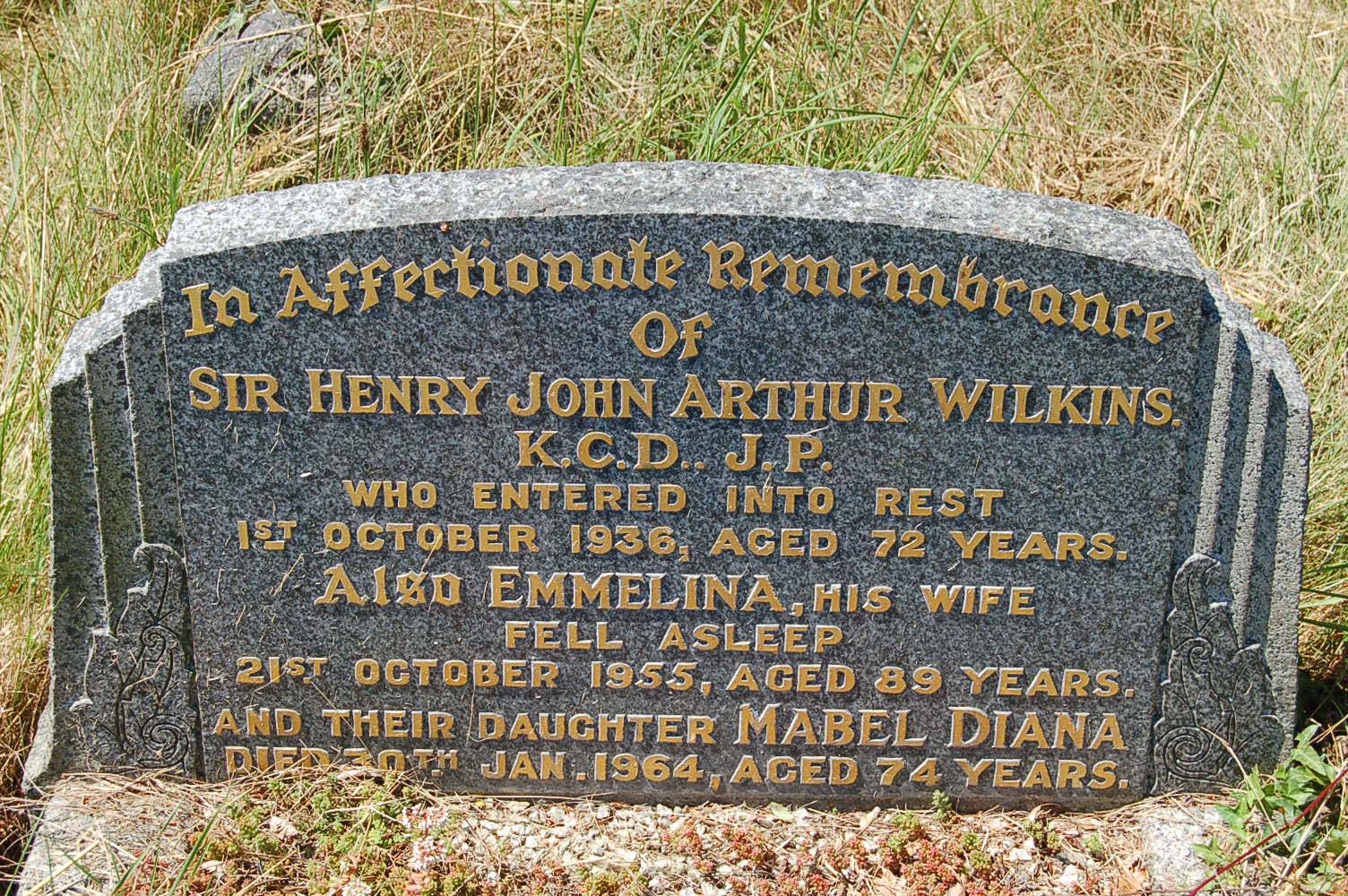
She referred to the family grave of Sir Henry John Arthur Wilkins, his wife Emmelina, their daughter Mabel and grandson Peter Moore. The story of Sir Henry Wilkins is, as you will see, quite remarkable. Though Emmelina doesn’t feature much in the documentation I have unearthed it is evident that Henry would not have been able to achieve so much without strong and constant support from his wife. That inner spirit that they both showed also flowed through to Mabel whose impact on social welfare in Teignmouth has lasted through to today.
I shall talk later about Mabel but this is predominantly the story of Sir Henry. He was a man of humble origins who became respected across the country, was honoured internationally, was once involved in the storming of the House of Commons and gives the impression, from what I have read, of someone of integrity who genuinely cared for others. His main claim to fame was steering the Cooperative Wholesale Society (CWS) over a nine year period to its peak nationally before the second world war and contributing to its equivalent international growth. He was the eighth president of the CWS and the first from Southern England.
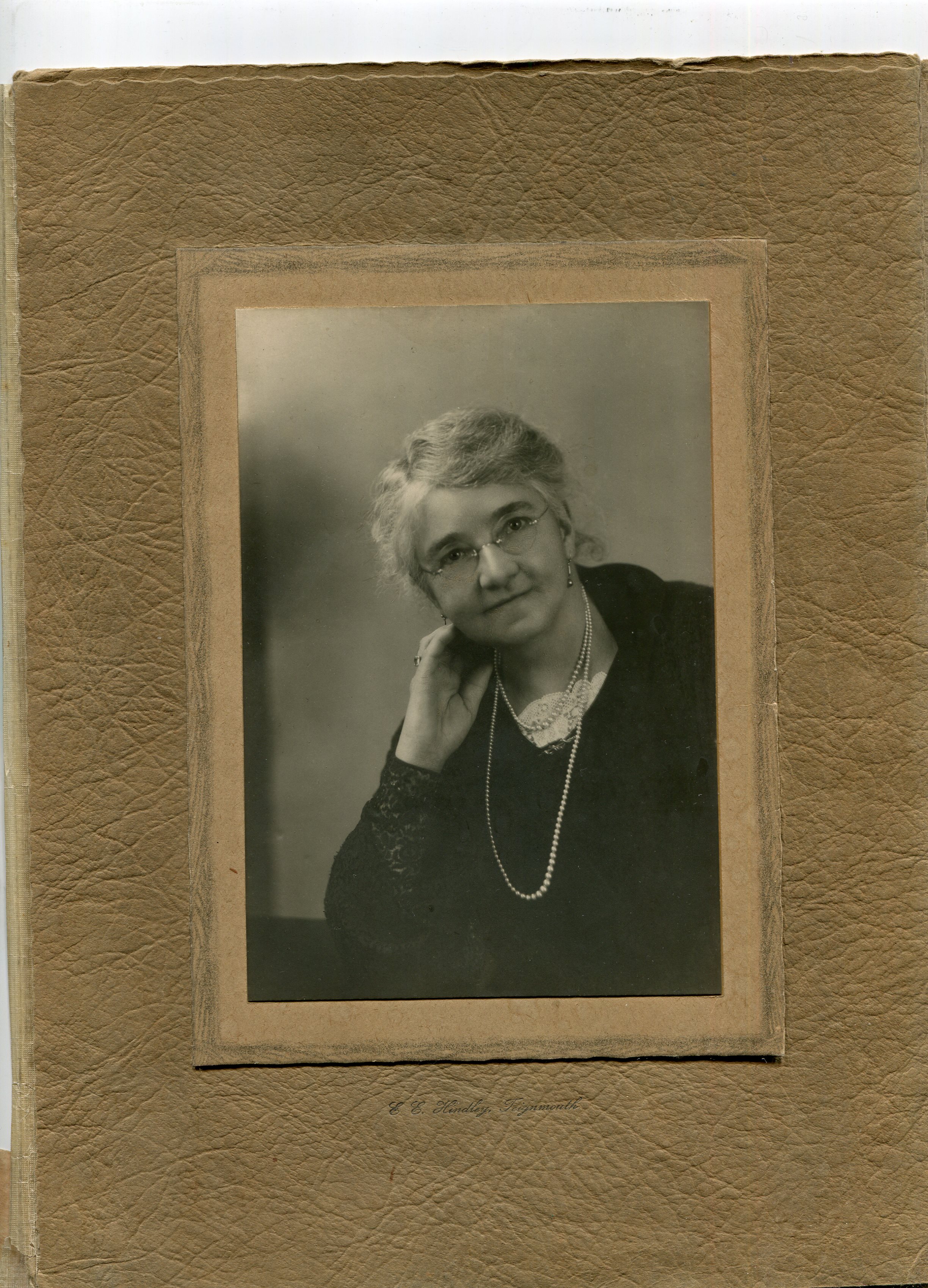
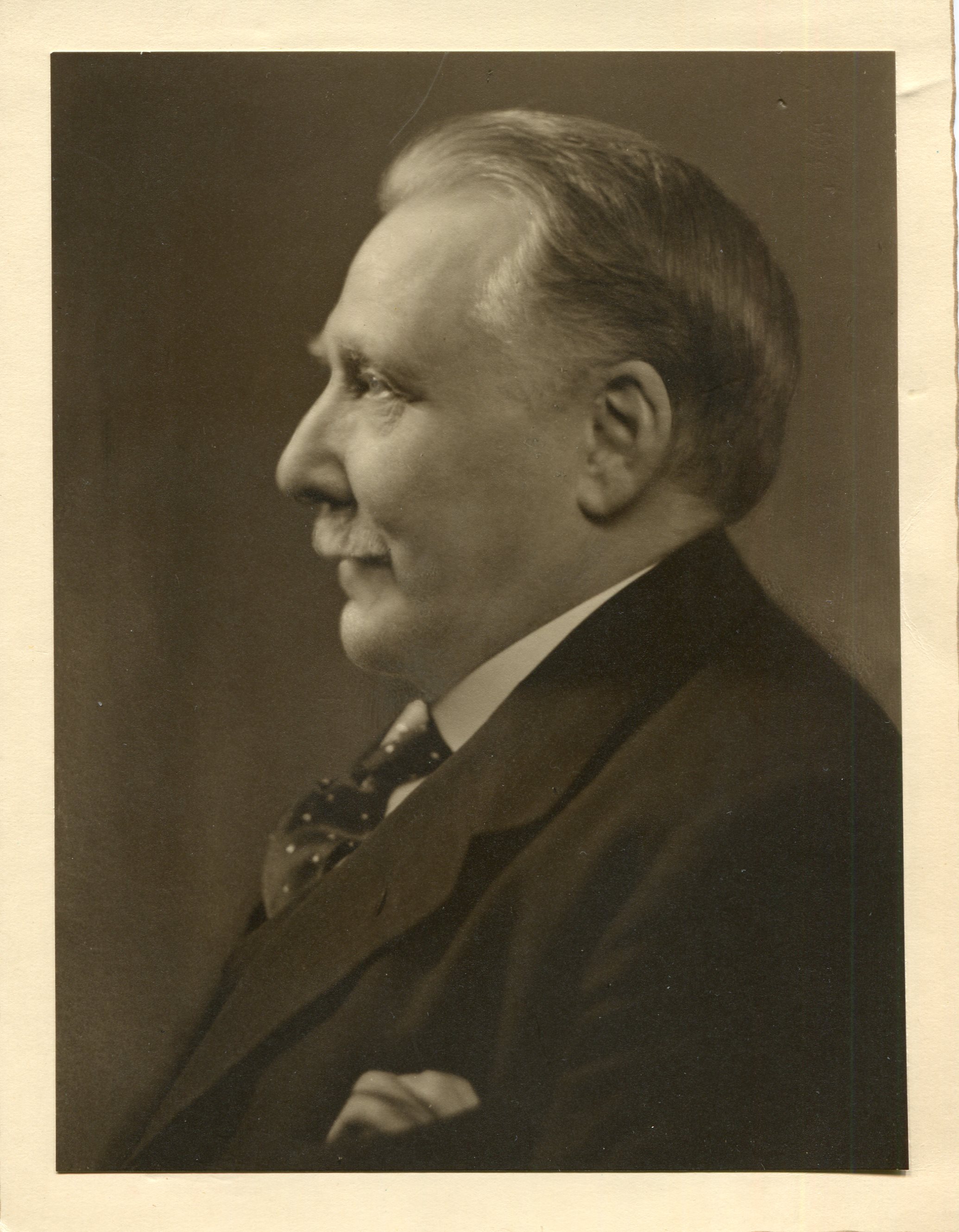
Emmelina and Henry Wilkins (photos courtesy of Carol Smith)
A Potted History
When Sir Henry died in 1936 there was a lot of commentary in the Press. I thought I would just start with an obituary from the Western Morning News of 3rd October and then flesh out parts of that where possible from other sources.
“TRAGIC DEATH OF DEVONIAN
Famous Pioneer of Co-Operation
SIR HY. WILKINS
PASSES AT HOTEL”
“SIR HENRY WILKINS, of Beulah, Teignmouth, whose rise from humble origin to the presidency of the Co-operative Wholesale Society was a romance of the business world, died suddenly at the Great Western Hotel, Paddington, London, on Thursday night, at the age of 71. An hotel servant found Sir Henry dead in his room. His bed had not been slept in and apparently he had been taken ill while undressing.
Throughout the British Empire Sir Henry, who received a knighthood in the New Year Honours List of 1932, advocated and advanced co-operation, and in every Dominion his name is known and honoured as a pioneer of co-operation.
As an orphan of a naval servant, Sir Henry, who was born at Devonport, spent three and a half years at the Royal Naval School, Greenwich, training for a naval career. While the school provided him with a good foundation for manhood, he failed to pass the medical examination for entry into the Navy.
Work was found for him as compensation at Devonport Dockyard, where he settled for some years, and at the early age of 21 he became interested in the Plymouth Co-operative Society.
SOON BECAME A POWER
Showing a keen sense of efficient administration he soon became a power in the organisation, and through it was able to serve the cause of co-operation throughout the Westcountry.
In those early days of building his career Sir Henry took a prominent part in the service of temperance and friendly societies, and his first real introduction to the national movement was through the annual conference of the Co-operative Wholesale Society at Plymouth.
Elected president in 1924 he retained the position until 1933, and when visiting America in connection with the 21st anniversary of the opening of the New York branch of the society he was received by the President of the United States, while subsequently he conferred with President Hoover at the White House.
He was equally respected on the Continent of Europe, and as a Knight Commander of the State of Denmark he was held in esteem throughout Scandinavia.
Sir Henry was a Justice of the Peace for Devon and attended sittings of the Teignmouth Bench frequently, but owing to the demands made upon his time by his position was unable to devote a great deal of attention to the public life of the town. He loved Teignmouth, and once described it as the ‘prettiest place God ever made’.
WORLD CONGRATULATIONS
Congratulations from all parts of the world were showered on him at Christmas of last year, when he celebrated his golden wedding. He was married at Charles Church, Plymouth. Sir Henry leaves a widow, two sons, and a daughter. The latter, Miss Mabel Wilkins, is the leader of the ‘Sunshine Girls’, a Teignmouth organisation which annually provides a treat for the old people of the town, a work in which Sir Henry was keenly interested.
Before the commencement of business at Teignmouth Police Court yesterday the Chairman (Col. R. S. Pottinger) said the Bench was grieved to hear the news of Sir Henry’s death. He had not been a magistrate very long in Teignmouth, but he had had a distinguished record in his own line, and he had made a great impression on the Bench. They all felt they had lost a very valuable colleague, and they had the deepest sympathy with his family.
Mr L. M. Kennaway (magistrates clerk) and Supt. Gill also voiced expressions of sympathy.”
Let’s take a look now at aspects of his life in a little more detail.
Humble Origins
Henry John Arthur Wilkins was born on 26 March 1864 in the East Stonehouse district of Plymouth. His parents were John Wilkins and Elizabeth Mary Perring Wilkins (nee Moore) who had married in 1863 and were aged 21 and 20 respectively at the time of his birth.
Sir Henry’s mother was shown as a ‘tailoress’ in the 1871 census and his father as a butcher. In 1873 though it appears that his father joined the navy although the naval record suggests that his career there was short-lived. According to his record he was of fair complexion, blue-eyed with light hair and stood at 5ft 10in tall.

Courtesy of the Naval Historical Foundation,
Washington,
D.C. Photo #: NH 75984
U.S. Naval Historical Center Photograph.
The record also shows that in 1873 he was based on HMS Agincourt, a Minotaur-class armoured frigate built for the Royal Navy during the 1860s. She spent most of her career as the flagship of the Channel Squadron’s second-in-command – Rear-Admiral Henry Chads from 1 October 1869. The Channel Squadron was the Royal Navy formation of warships that defended the waters of the English Channel from 1854 to 1909 and 1914 to 1915. It appears from John’s record that he was invalided out on 27th August 1873. There is no reason given but he died a year later.
His father’s brief spell in the navy could explain the reference in Sir Henry’s obituary to his attendance at the Royal Naval School, Greenwich. The CWS archives confirm that he entered that school in 1876. In a speech Sir Henry made some 50 years later it appears that he had also attended George Street Baptist School in Plymouth.
The next ‘loss’ in Henry’s life was his mother. This time though it was to another man. She re-married a William Appleyard in 1878 and then disappeared from the records! By the time of the 1881 census Henry and his two siblings, Maude and Ernest, were living with their grandparents (parents of his mother Elizabeth) John and Mary Ann Moore. John was a labourer and it looks as though they shared a large house at 26 William St with a number of other families. Henry had left school and was identified in the census as a plasterer – he had been apprenticed to a builder whose business had subsequently failed and then Henry entered the Royal Dockyard in 1881.
In that same census Henry’s future wife, Emmelina, and her siblings too were living with their grandmother Diana, a retired draper, though both her parents, John and Sarah, were there as well. Her father ten years earlier had been a gilder but by 1881 had become a master carpenter. Emmelina was then 15.
So both Henry and Emmelina had come from working-class backgrounds and experienced living in extended families. Henry in addition had endured the trauma of losing his father at age 10 and his mother disappearing from the scene perhaps only four years later. I wonder if these experiences during his formative years had sown the seeds of a philosophy of strength through working together and of caring for others.
What brought Henry and Emmelina together? Could they just have been neighbours? Had they attended the same primary school (though Emmelina was two years younger)? Did Henry’s grandfather and Emmelina’s father work together at times? We may never know but in December 1885 they were married. Their first child, Mabel Diana, was born four years later on 26th January 1889, followed six years later by their son, Reginald John Moore (21st November 1895) and their final child, Henry Ernest in 1904 (30th November). By the time of the 1901 census Henry was still plying a trade – he was 37 and had graduated from plasterer to ‘iron and brass turner’. There was still no inkling in the records of what he was later to achieve but he had already taken the first steps.

Sir Henry may have come from humble origins but I wonder if he knew that his family name carried with it a coat of arms and a motto which seems remarkably fitting to the way his life unfolded – “Estote prudentes”, or “Be ye prudent”.
Henry and Co-operation
Henry’s place of work was the Royal Dockyard, Devonport, and it was here that his interest grew in the Plymouth Co-operative Society which he entered in 1886. His activity with the Society shaped the rest of his life so that, although in 1901 he was still working as a turner, by 1911 he was identified on the census as a Director of the Cooperative Wholesale Society.
We may not know why exactly Henry became involved with the Co-operative movement but perhaps this modern quotation from Boutros-Boutros Ghali encapsulates Henry’s belief at the time:
“Co-operative enterprises provide the organizational means whereby a significant proportion of humanity is able to take into its own hands the tasks of creating productive employment, overcoming poverty and achieving social integration.”
Before exploring Henry’s involvement with the Co-operative it’s worth recapping a little on the history of the movement because it establishes the context of what Henry ultimately achieved.
The Cooperative Wholesale Society (CWS)
The original definitive work on the history of the CWS through this period is undoubtedly “The story of the C. W. S. The jubilee history of the cooperative wholesale society, limited. 1863-1913” by Percy Redfern. This describes what most people are aware of as the founding of the movement in Rochdale.

Graces Guide
The Co-operative movement began in Lancashire when a group of men came together to buy and sell everyday goods at an honest and fair price. To do this they wrote down a series of rules for fair business (known as the Rochdale Principles). On 21 December 1844 they opened their store with a very meagre selection of butter, sugar, flour, oatmeal and a few candles.
Within three months they expanded their selection to include tea and tobacco and they were soon known for providing high quality unadulterated goods. They were known as the Rochdale Society. From these small beginnings the business core for much of the Co-op’s history was its wholesale operations which began in 1863 when the ‘North of England Co-operative Wholesale Industrial and Provident Society Limited’ was launched in Manchester by 300 individual co-operatives in Yorkshire and Lancashire. By 1872, it was known as the ‘Co-operative Wholesale Society’ (CWS) and it was wholly owned by the co-operatives which traded with it.
However, by 1938 the author Percy Redfern was changing his view on the origins of the movement, and Plymouth was featuring prominently in its roots. The Western Morning News of 9th November 1938 explains:
“DOCKYARDMEN PIONEERS OF GREAT MOVEMENT
Devonport Men’s Flour Mill
WEST’S PART IN CO-OPERATIVE ORGANIZATION”
“First in the field of co-operative production were not the Rochdale pioneers of 1844 or Richard Owen and his disciples, but shipwrights of the Royal Dockyards.
Profiteers of the Seven Years’ war (1756-63), and those who in the 18th century sold poor and adulterated food to working people at high prices, were those who roused working men to join together to produce good food at reasonable prices.
About 1760, shipwrights of Woolwich Dockyard built their own co-operative flour mill with which to provide their daily bread. Chatham, then the principal naval arsenal, followed in the same year; in 1816 Sheerness Dockyardmen formed their Economical Society, and the next year came news of the Devonport Union Mill as another development in the consumers’ revolt. Butchers’ meat and pure water were added to bread later …..
….. At Devonport the mill and bakery combined the efforts of naval Dockyard workers and townsmen, says the ‘New History of the C.W.S.’, to supply themselves with cheaper and better bread, despite intimidatory opposition, and the mill continued until the establishment of the present Plymouth Co-operative Society.”
This revision of the origins of the movement is important for two reasons in relation to Sir Henry Wilkins. Firstly, he worked in the Devonport Royal Dockyard and would have experienced first-hand the aethos of community and cooperative working; so it would have been natural and almost inevitable that he joined the Plymouth Co-operative Society. Secondly, despite the historical dominance of the Rochdale Society in the beginnings of the CWS, the path to a nation-wide movement was not friction free. Not only were there non-co-operative suppliers to compete with but there was also the task of trying to unite the myriad of small, local co-operative organisations that appear to have sprung up independently across the country. This was perhaps the principle challenge facing the CWS for the first 50 years of its existence. It was the challenge into which Henry Wilkins was plunged, a challenge which probably required dedication and a passion coupled with well-honed political nous to make things happen. It appears that Henry rose to that challenge.
Henry’s Path in the CWS

In terms of his own career within the CWS:
- He joined the Plymouth Society in 1886;
- He was elected to the CWS Board (I.e. the national Board) in 1907 and is featured in Redfern’s first book as also being on the Drapery Committee in 1913 (top left in photo);
- He was President of the Co-operative Congress at Plymouth in 1910;
- Some time between 1911 and 1917 he left his Plymouth roots behind and moved to Teignmouth
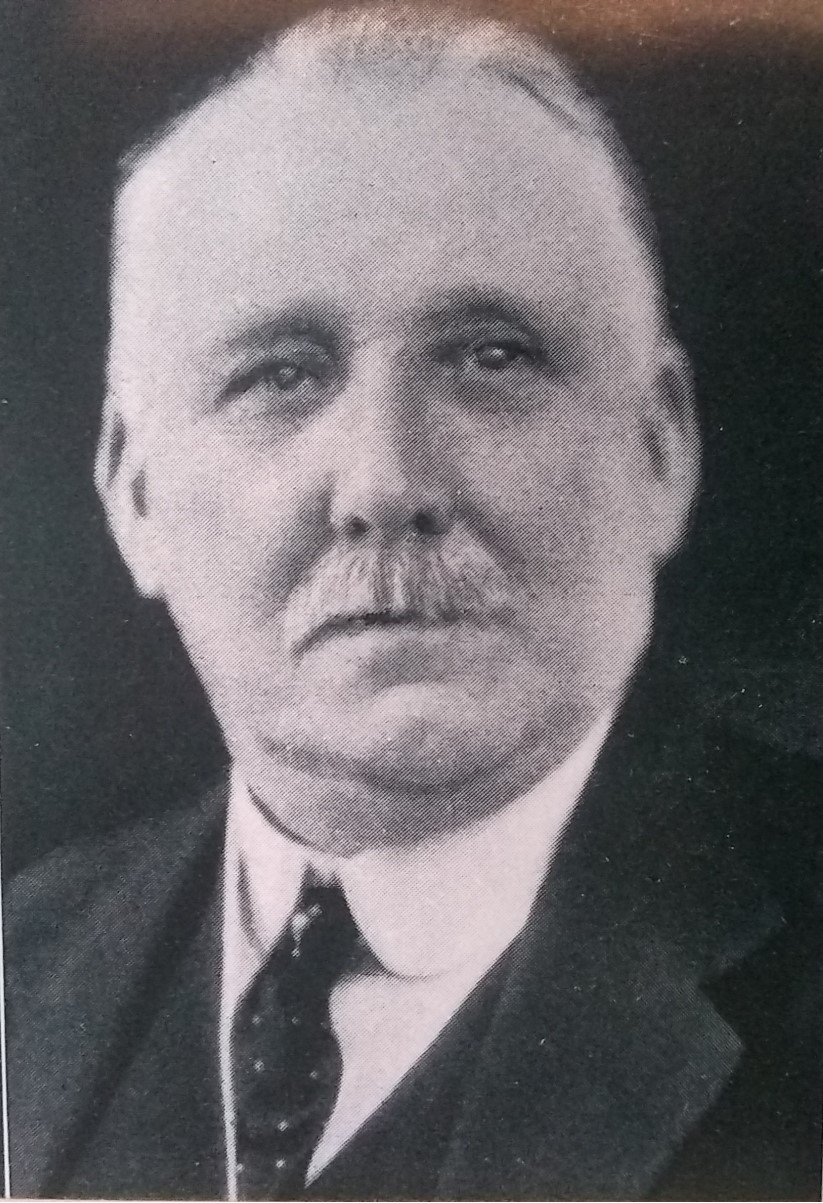
Photo clip from Redfern’s 1938 book
- He was elected President of the CWS in 1924, the first from the South of England, standing down in 1933 under the age rules of the organisation. In his 1938 book on the new history of the CWS Redfern said “… he personified, in the twentieth century, the shipwrights who first made co-operative history in the eighteenth”
- He was knighted in 1932 for services to the Co-operative movement. The Exeter and Plymouth Gazette of 2nd January 1932 reported it as:
”TEIGNMOUTH’S NEW KNIGHT
Mr. H. J. A. Wilkins, whose name appears among the Knights in the New Year’s Honours list, resides at Beulah, Coombe-road, Teignmouth. He was recently made a Justice of the Peace for Devon, and a few months since received an honour from the King of Denmark.
The new Knight’s duties as President of the Co-operative Wholesale Society have taken him all over the world, and he only recently returned from a tour in New Zealand. Both Mr. Wilkins and his wife were born at Plymouth.
Mr. Wilkins is one of the most unassuming of men.”
At his final general meeting of the CWS he told the congratulatory delegates that he had been ‘overwhelmed with telegrams and letters (six hundred altogether) of immediate congratulation for his knighthood.
As we saw from his obituary Sir Henry received international acclaim but finding documentation describing the work he was involved with abroad is not easy. Some supporting evidence though is the passenger lists of three voyages he made to three continents:
- 1917, returning to Liverpool aboard the ‘Louise’ (?) from the west coast of Africa. This would have been an interesting voyage in the middle of WW1!
- 1919 (9th August), entering the USA from Liverpool aboard the SS Vestris. In her article on ‘Cooperation’ in the Monthly Labor Review of April 2020 Florence Parker commented on this trip:
”Early in September 1919 several directors of the English Cooperative Wholesale Society visited San Francisco in the course of a tour made for the purpose of making international trade arrangements. It is stated that the directors have taken the preliminary steps for mutual buying between the Cooperative Wholesale Co. Of San Francisco and their own society and that hereafter all purchases of the English society made in this section of the United States will be made through the Pacific Cooperative League.”

1928 (stock photo)
- 1931 (8th September) shows him entering the USA again but this time having sailed from Wellington, New Zealand, aboard the SS Monowai. It looks perhaps as though he had been on a round the world business trip. Is this possibly the trip when he met with President Hoover and, if so, I wonder what they discussed in the depths of the Great Depression three years after the Wall St crash?
We know he also visited the USA in May 1926, with four other members of the CWS, to celebrate the golden jubilee of the establishment of the CWS purchasing depot there. The celebration dinner was held at the Waldorf Astoria Hotel (photo clip from Redfern book 1938) and they were received subsequently by President Coolidge in Washington.

International acclaim was also recognised by the award he had received from the King of Denmark in 1931, as reported in the Exeter and Plymouth Gazette of 24 July 1931:
“Teignmouth
Mr. H.J.A. Wilkins, of Beulah (President of the Co-operative Wholesale Society) has had bestowed upon him by King Christian X of Denmark the insignia of Commander of the Order of the Dannebrog. Mr. Wilkins, with other members of the Co-operative Wholesale Society, recently attended the jubilee celebrations of the Society in Denmark.”

The Order of the Dannebrog is a way of honouring people of the Danish state for meritorious civil or military service, for a particular contribution to the arts, sciences or business life. It is also used in a discretionary way to recognise foreign nationals who contribute to Danish interests.
Sir Henry’s Influence on the CWS
In order to understand Sir Henry’s views of the CWS and, therefore, the influence that he would have had during his presidency I shall focus on some of his reported speeches in the lead up to his retirement when it seems he was still touring the country, opening new branches and facilities and generally encouraging and promoting the Co-operative philosophy.
In February 1930, presiding over the first of three major London Branch openings, he said at the opening ceremony:
“Individuals of forty years ago had very definite ideas of what was unnecessary in co-operative trade. There was no need for commercial travellers, no need for larger premises. An ordinary warehouse was all that was wanted ….. When we opened the first extension in Leman Street twenty-two years ago, it was thought that we had overstepped ourselves. Within five years we were crowded out. And you buyers – you have been long-suffering. It has long been a puzzle to me how the managers of the drapery departments have been able to build up the trade they have under their trying conditions. ….. We are having no more of these backdoor arrangements. We are having the best.”

He made reference to the importance of the internationalisation of the Co-operative movement in a speech for International Co-operative Day in 1932, as reported by the Western Morning News of 4th July:
“OLD PLYMOTHIANS
CELEBRATIONS BY CITY CO-OPERATORS”
“Early associations with Plymouth were recalled by Sir Henry Wilkins, president of the Co-operative Wholesale Society, when he addressed Co-operators in Plymouth Guildhall on Saturday in the celebration of International Co-operative Day. He said he remembered when he and Mr. J. Hayne Pillar (president of the Plymouth Society) were pupils at George-street Baptist School, of Mr. Henry Duke, now Lord Merrivale.
Sir Henry said there were 42 countries affiliated to the International Co-operative Alliance, and 70,000,000 members. ‘We are meeting these foreign internationals,’ he declared, ‘and go to their countries and meet with them. We come to a common understanding. We are binding ourselves together, and they are beginning to realize with us that men all over the world can be brothers.’
Mr. H. A. Glover, chairman of Plymouth Co-operative Education Committee, presided, and Mr. J. Hayne Pillar moved a vote of confidence in co-operation and its principles, which was carried.
Mrs. E. E. Hammett (Education Committee) and Mr. W. J. Lapthorn (vice-president of the society) thanked the speakers. In addition to community singing, musical items were given by the Co-operative Junior and Adult Choirs, conducted by Mr. H. Woodward, and the Co-operative Orchestra, directed by Mr. Harry S. Wraight.”
Meanwhile, as president he also had duties at home and, as a Devon man, it was probably inevitable that there was significant local press coverage. Here is the Exeter and Plymouth Gazette of 27 May 1932:
“EXMOUTH
Sir Henry Wilkins, President of the Co-operative Wholesale Society, visited Exmouth on Saturday, when he opened a new bakery built and equipped by Exmouth Co-operative Society. Mr. C. Ebdon, Chairman of the Society, presided and welcomed Sir Henry as a Devonshire man.”
Four months later he was performing similar duties in Bristol, as reported in detail by the Western Daily Press of 7th September.
“MEMORABLE DAY
FOR BRISTOL C.W.S.
Opening Ceremony for New Premises Extension”

“The opening of the recent extension of the Bristol Co-operative Wholesale Society premises yesterday, the ceremony being performed by Sir Henry Wilkins, the president of the Co-operative Wholesale Society movement …..
….. There was a large attendance of directors, managers, and representatives of the retail society at the opening ceremony yesterday, and the exterior of the huge building was gaily decorated with flags in honour of the occasion.
Sir Henry said they were met that day for the purpose of witnessing another definite step forward. When the original block of buildings was opened in 1906 there were those who thought that the Executive had made a mistake in coming to Bristol, but within two or three years those pessimists realised that the building had justified itself up to the hilt. (Applause)
Custodians of Millions
During the past 10 or 12 years that building had not been able to cope with the work and they had to secure property in other parts of the city. He proceeded to give a history of the progress of the C.W.S. in Bristol, and mentioned that 15 years ago they started buying property adjoining and decided to erect a building that would cost at least £60,000. He alluded to the importance of having accommodation in which to make a proper display as by display they attracted business.
The Executive were the custodians of between 60 and 70 millions, and they were doing their best to use that in the most business-like manner for the interests of the subscribers.
He appealed to them to be loyal to the Society and then they would progress by leaps and bounds and before long see further extensions. (Applause.) He then declared the new buildings open.
There was an attendance of nearly 400 at the luncheon over which Sir Henry Wilkins presided ….. After the loyal toast had been duly honoured, Mr. J. Justham, Bristol, made a presentation to Sir Henry Wilkins of two framed water colour paintings of Glorious Devon as an expression of the regard and esteem of his colleagues and himself. The gift was suitably acknowledged by the president.
Proposing ‘Prosperity to the City of Bristol’, the president said that Bristol was a city and port with a remarkable history and one with very beautiful surroundings. Referring to the docks and their importance, he wished the undertaking every success and hoped that the good feeling that existed between the Docks Committee and themselves would continue. He believed that their society was the second largest contributor to the docks, and he believed that with the extension of their buildings they might come to the front. He mentioned that the total number of employees of the society in Bristol and district was now 1758. In replying Ald. E. M. Dyer said that as a port they appreciated very much the business they did with their society. Today they were in a better position than they had ever been before notwithstanding the great depression throughout the whole kingdom …..”
Politics could never be ignored but it seems that no-one in government had expected the revolt they would face six months later when the Co-operative movement launched a “Mass Attack on Commons”. At least that was the theme of three items of news published in the Western Morning News of 5 April 1933:
“MASS ATTACK ON COMMONS
—–
CO-OPERATORS FIGURE
IN AMAZING SCENE
—–
BEWILDERED M.P.s FACE
CENTRAL LOBBY CHAOS
BY OUR POLITICAL CORRESPONDENT”
“There were amazing scenes at the House of Commons yesterday afternoon, when the Co-operators came from their meeting in the Central Hall, Westminster, for a mass attack on M.P.s.
They flocked through the entrance at St. Stephen’s in hundreds into the central lobby, where members of the public wait to interview local M.P.s.
Specially reinforced corps of police and attendants distributed specially large piles of green cards to the Co-operators, who filled in the names of their local M.P.s, and then perspiring attendants dashed into the Chamber, into the smoking rooms, and down on to the terrace to fetch the M.P.s.
When the members arrived in the central lobby, they looked with amazement on the scene, and endeavoured to extricate their local deputations from the crowd. Each batch of Co-operators from each locality had brought a petition. The total number of signatures on these petitions was about 1,000,000.
Some of the petitions were rolled up, some carefully tied with red tape, and others made their appearance from large suit cases.”
“PROTEST MEETING
—–
LABOUR PROMISES OPPOSITION
TO TAX PROPOSALS”
Over 2,000 Co-operators, delegates representing societies in all parts of the country, met in Central Hall, Westminster, yesterday to protest against the implementing of the report of the Committee which has recommended the taxation of undistributed trading profits.
The conference was part of the nation-wide drive by the Co-operative movement against the Committee’s proposals, and was the prelude to the presentation of the monster petition at the House of Commons last night.
Alderman Sir Fred Hayward (chairman of the Central Board of the Co-operative Union) presided.
Sir Henry Wilkins, chairman (sic) of the Co-operative Wholesale Society, Limited, moved a resolution declaring that the Committee’s recommendations destroyed the principle of mutuality, were inequitable, and would, if adopted, result in great injustice being inflicted upon Co-operative Societies and their members, of whom a large section was drawn from the poorest people of the community. Mr. Neil S. Beaton (chairman of the Scottish Co-operative Wholesale Society) seconded.
Mr. George Lansbury, M.P., promised the support of the Labour Party.
The resolution was carried with a renewed request that the Prime Minister should receive a deputation before the Budget decision.”
“PETITION PRESENTED
—–
ALLEGED INFLICTION
OF GREAT INJUSTICE
BY OUR PARLIAMENTARY CORRESPONDENT.”
Mr. Kirkwood (Lab., Dumbarton) presented a petition in the Commons yesterday from the members of the Clydebank and Dumbarton Co-operative Societies protesting against the recommendations of the Select Committee which dealt with the taxation of Co-operative Societies, on the ground that they would inflict great injustice if adopted on the members.
Mr. Chamberlain, who was asked by Capt. Peter MacDonald (Con. Isle of Wight) whether he would be able to announce the policy of the Government with regard to the taxation of Co-operative Societies when he opens the Budget, replied that he must not be expected to anticipate his Budget statement.”
It seems, though denied by the government, that the petitions and protests were successful in overturning the proposed taxation. Here’s one report from the Aberdeen Press and Journal of 7 April 1933:
“CO-OP. PROFITS
NOT TO BE TAXED
—–
Yield Not Considered Sufficient
to Justify Trouble
—–
(By Our Political Correspondent)
London, Thursday”
“I understand that the Government has decided not to tax the profits of the co-operative societies.
There have been sharp differences of opinion among Ministers on this subject, but eventually the view has been taken that it would be inadvisable to accept the recommendation of the Committee set up by the Chancellor of the Exchequer which investigated the subject and came to the conclusion that a case had been made out for taxation of the undistributed surplus of the societies while leaving the dividend untouched.
The Government, in its decision, has not been swayed by the mass demonstration of co-operators who invaded the House of Commons the other evening and presented petitions to M.P.s.
The deciding consideration has been that the estimated yield of such a tax, a little over £1,000,000, would not be sufficient to justify the trouble and disturbance which would be caused by its collection.”
It appears though that the victory may have been short lived as the country continued to battle the economic depression.

Three weeks later Sir Henry was back in London to open the new CWS offices there. Sir Henry’s view of the event, as described in Redfern’s book, was:
“While the big commercial houses have been considering to economise, we have been compelled by the very force of our development to open new buildings.”
The Western Morning News of 21st April reported:
“CO-OPERATIVE OFFICIALS FROM WEST AT CEREMONY
Sir Henry Wilkins of Teignmouth and Plymouth, and Sir Thomas Alen (Newport), directors of the Co-operative Wholesale Society, who are retiring under age limit at the end of this month, attended the opening of the new Co-operative Wholesales Society’s offices in London yesterday, the formal ceremony being performed by Sir Henry Wilkins as president.
Sales of the branch, which includes the Bristol, Cardiff and Plymouth depots, were nearly £20,000,000 last year.
Mr. J. T. Davis, Plymouth, was present as director responsible for the policy in the area, and Mr. G. A. Ramsey, who is associated with the supervision of some Cornish societies. The latter congratulated Sir Henry Wilkins, who was nominee of the Plymouth Society in 1907, on being the first president of the Co-operative Wholesale Society from the West of England.”
Just over a week later Sir Henry stood down as president. His closing message was reported in the Western Morning News of 1st May 1933:
“SPIRIT OF DRAKE
SIR H. WILKINS’S MESSAGE TO CO-OPERATIVE MOVEMENT
FROM OUR OWN CORRESPONDENT.
MANCHESTER, Sunday”
“Sir Henry Wilkins, who vacated the chair as president of the C.W.S. at Manchester yesterday, in a farewell message, said: ‘We must have courage in co-operation. Something is needed of the daring spirit of Drake, Raleigh, Frobisher, Grenville and others who sailed the stormy seas in quest of their hearts’ desire.’
Sir Henry, who is a native of Teignmouth, said he was a Devonian with something of the roving spirit of the old sea-dogs who scoured the seas for new lands. When the co-operators of Devon, with whom he had served as a member and as a committee man, urged him to respond to the call for service within the C.W.S., he went forth with a desire to secure more scope for co-operative adventure.
He referred to the growth of the C.W.S., and declared that it was becoming recognized throughout the world as a potent force in bringing the producer and consumer together.”
Redfern, in his book on the “New History of the CWS” comments:
“.…. he personified, in the twentieth century, the shipwrights who first made co-operative history in the eighteenth ….. He left the presidency – succeeded by Sir William Dudley – amidst warm tributes to his strong personality. ‘I have always believed a leader should step aside while still in possession of all his qualities’ he said in reply, ‘and I have no regrets’.”
He may have stood down as president but it seems he hadn’t quite retired and he was still in demand at local events as shown by the invitation he received the following year to attend another opening, this time at Newquay, as the Cornish Guardian of 24 May 1934 reported:
“NEWQUAY EXTENSION OPENED
SIR HENRY WILKINS THANKS
NEWSPAPER CRITICISM”
“There was a large gathering of local and other co-operators at the premises of the Newquay and District Co-operative Society in Fore Street, Newquay, on Thursday, when a formal re-opening ceremony was performed by Sir Henry Wilkins of the C.W.S. There were representatives from most of the Co-operative Societies in Cornwall besides others further afield. Mr. A. S. Bartlett, president of the Newquay Society, presided and was supported by Sir Henry and Lady Wilkins …..
Miss Pascoe presented Lady Wilkins with a bouquet and in reply Lady Wilkins wished the Society every success in the future. Mr. Bartlett presented Sir Hy. Wilkins with a pair of scissors suitably inscribed with which he asked him to sever the white ribbon which had been stretched across the stairway leading to the showrooms etc.
NEW BRANCHES AND EXTENSIONS
Sir Henry Wilkins, in the course of his address, spoke of the efforts 32 years ago to spread co-operation in Devon and Cornwall. The private traders immediately became active and sent contingents to the meetings to try and upset the proceedings. But they did not succeed. He found, when they got active opposition, that was the time when they were going to develop. Referring to a recent London newspaper attack on the ‘Co-ops’, Sir Henry said he was thankful to the two noble lords who were agitating against them. They were doing useful work in making people think. There were not enough thinkers today. Too many people were prepared to accept anything that was said to them. People were thinking, however, and throughout the length and breadth of the land co-operation was flourishing and from Scotland to Penzance societies were opening new branches, and going in for extension. He was glad they were doing that in Newquay.
The first place he visited in Cornwall was Bodmin – it was a purely voluntary visit! (Laughter). He remembered that they advertised a meeting in the town. It was said that there would be no meeting and when four of them went to the hall to speak they found only one person there. Two of his friends went back to Plymouth by the next train, but he and another remained behind. They went into the street and enquired where the Salvation Army held their open air meetings and went to that spot and started a meeting and soon had collected a gathering of 150 people. When rain came on they invited the people into the hall and that night in spite of everything they formed a co-operative society. (Applause). Other societies were formed as a result of their campaign and when the Co-op Congress was held at Exeter they were able to report that 15 new branches had been started in Devon and Cornwall. (Applause).
NEWQUAY’S SUCCESS
The Newquay Society had been in existence 14 years ….. In the last 12 months the membership had grown to 1,378, the share capital was £16,885 and the year’s trade amounted to £27,951. They had been doing remarkably well. (Applause). The committee were the custodians of the members’ savings – the £16,000 odd belonged to the members – and the committee had invested it in the business, and decided to use it to extend the premises. If the members were wise they would see that all they required was obtainable in that shop in which they had supplied the wherewithal to run it. They could not imagine the wife of a local draper going to a rival shop to buy goods and co-operators should not act in that foolish and ridiculous manner. The committee had invested their money in that extension and they had to rally around them and purchase from that store and in a few years’ time they would have to extend still further. He wished all the officials and members every success and he believed they would have it. On an occasion like that the committee of the wholesale society made a present to the leading men of the Society, and he had pleasure in asking Mr. A. S. Bartlett, their president, to accept a gold watch (suitably inscribed from the Architects’ Department) as a memento of the occasion. He wished him health and strength to continue the good work in which he took so keen an interest.
Mr Bartlett suitably replied and Sir Henry then declared the new premises open and cut the ribbon stretched across the stairs which led to the new showroom …..
GROWTH OF CO-OPERATIVE SOCIETIES
A tea was held at St. Michael’s Hall, followed by a public meeting, the speaker being Sir Henry Wilkins, while Mr. A. S. Bartlett presided …..
….. Sir Henry briefly outlined the history of co-operation, which, he said, was founded by 28 weavers in Rochdale in the year 1844. Gradually the movement had grown, for in 1864 the year’s trade amounted to £58,904, and last year the trade was £93,000,000, while this year it was hoped to pass the £100 million mark. Sir Henry accounted for the already increasing trade of this year by the already increasing opposition supplied by two newspapers, for he had always found that an active opposition did more good than harm. He congratulated the Newquay Society on being one of the best patronised stores in Devon and Cornwall. He was also very glad that all the profit had not been given back in dividend, as he thought the directors were very wise in putting some away for a rainy day. Opening an extension was a very great achievement and he wished to congratulate the members, the committee and the employees for having helped to bring about such an achievement. Soon, he hoped, he would be asked to come an open more extensions, but for this to happen there must be another increase in trade.
Before and after Sir Henry’s speech Mr. George, accompanied by Mr. Willcocks, sang to a highly appreciative audience.
The secretary and manager, Mr. F. Gregory, proposed a vote of thanks to Sir Henry and Lady Wilkins, to all the ladies who had assisted with the refreshments, and also to Messrs. George and Willcocks for entertaining the audience …..”
Sir Henry the Rechabite

Henry was an active baptist and, according to his obituary, in the early days of building his career he also took an active interest in the Rechabite movement though his first real introduction to the national movement was not until the annual conference of the CWS in Plymouth.

Although the “Independent Order of Rechabites” (IOR), founded in Salford in 1835, played a prominent part in the wider temperance movement it was in fact a Friendly Society with broader objectives. Friendly societies had been around for some time, generally set up to help working-class people with such things as health insurance, death benefits etc. Generally these societies met in pubs. The Manchester methodists who founded the IOR were concerned that meeting in this way meant that the societies could actually be harming their members’ health, finances and moral welfare. Their name was taken from the abstaining Rechabites of the Old Testament.
The Western Temperance League founded in 1837, of which the Rechabites formed a part one year later, was the second oldest in the country and had its roots locally in Plymouth in the evident impact that naval dockyards in particular were having on the fabric of society there.
An excellent web-site describes the problem in Plymouth:
“As a naval port, Plymouth developed an infamous reputation for drunkenness and disorderly conduct much of which centred around Union Street. By the 1880s there were 350 public houses across the Three Towns as well as numerous beerhouses and off licences, in fact 1 for every 232 persons in Plymouth. While men could socialise on licensed premises away from the pressures of family life, public houses also attracted prostitutes, habitual drunkards and other ‘ne’er do wells’. Drunken behaviour often escalated into brawls and fights causing problems for the local community and concern about the morality and of such individuals.”
So Henry’s acquaintance with the temperance movement in general would probably have begun early in his life. He may even have witnessed in 1887 (working at the dockyard and one year after joining the Co-operative Society) the “Grand Monster Temperance Demonstration” organised by Aggie Weston, President of the tripartite Plymouth, Stonehouse and Devonport Ladies Temperance Association. According to the Exeter and Plymouth Gazette of 22nd September:
“a procession was marshalled in Devonport Park, and after the principal streets of the Three Towns had been paraded, a mass meeting took place in the Guildhall, which was crowded.”
By 1923 temperance was on the political agenda with Lady Astor of Plymouth supporting a temperance platform and later introducing legislation prohibiting the sale of liquor to minors. This was a year before Henry became president of the CWS. His involvement with the Rechabites certainly gives us more insight to his beliefs but I wonder if it is an indication too of the political nous that would have served him well during his presidency.
Sir Henry and Teignmouth
Sir Henry and his family moved to Teignmouth some time between 1911 and 1917. I always wonder what brought people to Teignmouth and it seems in Sir Henry’s case that the answer was simple; according to his obituary “He loved Teignmouth, and once described it as the ‘prettiest place God ever made’.” They moved in to a large, newly built semi-detached house named ‘Beulah’ in what was known at that time as Coombe Road but is now Coombe Vale Road. It was built on the valley slope leading down to Bitton Brook.
It seems though that it wasn’t until 1932 that Sir Henry started taking an involvement in Teignmouth life, perhaps with an eye on being able to offer his skills and keeping himself busy after his retirement from the CWS. The Exeter and Plymouth Gazette of 2nd February 1932 described Sir Henry’s initiation as a JP:
“WELCOMED AT TEIGNMOUTH
PETTY SESSIONS”
—–
“Sir Henry Wilkins, Teignmouth’s newly-created knight, was welcomed at the local petty sessions yesterday when he took his seat for the first time as a Justice of the Peace.
Mr. E. J. Ford, who presided, said that on behalf of the Bench he would like to give a word of welcome to their esteemed friend. He was sure the Bench, as well as the Court, appreciated the honour the King had conferred upon him. They hoped Sir Henry’s services in the Court would be of a congenial nature. Sir Henry Wilkins suitably responded.
There are quite a few examples in the local press of Sir Henry’s rulings in the Petty Sessions so I have chosen only a couple here to illustrate the range of ‘minor’ misdemeanours and crimes he had to deal with and how he made his judgments.
The first should be considered perhaps as not so minor and perhaps shows a level of compassion from Sir Henry that was ahead of its time. This is how the Western Morning News of 12th February 1935 described it:
“CHAIRMAN’S COMMENT
—–
Wife Granted Separation at Teignmouth”
“I thoroughly agree that it will be a good thing if a law is passed for cases of this description to be dealt with in camera”, remarked Sir Henry Wilkins (chairman) at Teignmouth Petty Sessions yesterday, when Mrs. Dorothy Beatrice Wood, the mother of eight children, successfully applied for a separation order against her husband, Percy Wood, dairyman, of Fore-street, Shaldon, on the ground of alleged persistent cruelty.
Ordering that defendant should pay weekly sums of 30s. in respect of the wife and 5s. for each of the children, who were placed in the mother’s custody. Sir Henry described the case as a painful one. The Bench were convinced there had been persistent cruelty for a number of years.
Mrs. Wood was represented by Mr. Gordon H. Mc Murtrie (Dawlish). Defendant did not appear. Defendant was also ordered to pay costs.”
The second example is possibly more at the whimsical end of cases in Petty Sessions, as described this time by the Western Times of 6th July 1934:
“BISHOPSTEIGNTON SLUMBERED
—–
But the Arm of the Law
was Still Reaching”
“For the furious riding of push bicycles at Shute Hill, Bishopsteignton, on June 8th, Horace Taylor, of Bitton-street, Teignmouth, and Ray Lamble, of Stanley Gardens, Teignmouth, were each fined 7/6 by the local Magistrates on Monday.
Constable Crocker, of Bishopsteignton, proved both cases, which he said occurred at 10.10 p.m.
Taylor said he could not have been endangering the lives of anybody at that time because everybody at Bishopsteignton was in bed by then.
The Chairman (Sir Henry Wilkins): If you think that after that time you can ride about as you like, get the idea out of your head. He added that members of the Bench had had opportunity of seeing some boys rush about the town. They were exceedingly clever on their bikes and it was astonishing how they avoided accidents, but it would have to stop.”
The Royal Humane Society also recruited Sir Henry to their ranks as this example from the Western Morning News of 22nd November 1932 illustrates:
“MEN’S BRAVERY REWARDED
—–
GIRL BATHER SAVED AT TEIGNMOUTH
—–”
“A gallant rescue from drowning in the River Teign had a sequel at Teignmouth Police Court yesterday, when the Royal Humane Society’s vellums were presented to Mr. George Elfick, of the London Hotel, Teignmouth, and Mr. W. T. Hitchcock, a local fisherman.
On behalf of the society, Mr. Hamilton Young said that on August 19 Mr. George Elfick (who is now in Australia) rescued a girl who was bathing near the mouth of the river, and had been carried into the middle. Mr. Elfick, fully clothed, swam 50 yards to the girl, who had gone under water twice and was just sinking for the third time.
Mr. Elfick became exhausted, and was in serious difficulties himself, when Mr. Hitchcock swam out and brought them ashore.
Mr. Young added that this was the third occasion on which Mr. Hitchcock had received an award from the society.
Sir Henry Wilkins (chairman), who also presented a silver cigarette case to Mr. Hitchcock on behalf of Mrs. Elfick, said he was speaking for everyone when he said how extremely proud they were of the brave actions. It was the work of heroes.”
I am sure that after 50 years of service to the CWS Sir Henry would have been looking forward to a long and perhaps more tranquil retirement. Unfortunately it was not to be – he died only three years after standing down in 1933 as President, the first from southern England, of the immense Co-operative Wholesale Society.
The Western Morning News of 7th October 1936 described his funeral:
“LATE SIR HENRY WILKINS
—–
FUNERAL TRIBUTE AT TEIGNMOUTH”
“Indicative of his business and other activities, there was a large attendance at the funeral at Teignmouth yesterday of Sir Henry Wilkins, of Beulah, Teignmouth, who was formerly president of the Co-operative Wholesale Society.
The mourners included Mr. W. Bradshaw, the present president, and other officials of the society, while representatives of co-operative societies throughout South Devon were present.
The interment at Teignmouth Cemetery was preceded by a service at St. James’s Church, Rev. F. C. Eddy (vicar) officiating, and Mr. E. Smith presiding at the organ.
The family mourners were Lady Wilkins, widow; Miss M. Wilkins, daughter; Mr. And Mrs. R. Wilkins, son and daughter-in-law; Mr. E. Wilkins, brother; Mrs. Willoughby, sister; Mrs. Bishop, sister-in-law. Deceased’s son (Mr. E. Wilkins), who is in South Africa could not be present.
Those also present included ….. A VERY LONG LIST THEN FOLLOWS …..
A number of women present included representatives of the Teignmouth Sunshine Girls, in whose work Sir Henry was interested.
Sir Henry’s grave is at the top end of the cemetery. He was joined almost 20 years later by Emmelina, then Mabel and his grandson Peter Moore Wilkins more recently in 2009.


After Sir Henry’s death his wife Emmelina and their daughter Mabel moved away from Teignmouth. It appears that went to live close to Emmelina’s elder son, Reginald, and his family. The electoral register of 1939 shows that Reginald was living at 74 Thornhill Road, Stockport and was the manager of an electrical works. Emmelina and Mabel lived at 60 Compton Road, Stockport.
They may have moved away but they left a legacy in Teignmouth.
The Teignmouth Legacy
In 1926 the Exeter and Plymouth Gazette of 20 December reported on a party in Teignmouth:
“POOR AND LONELY
—–
TEIGNMOUTH PARTY”
“Over 100 poor and lonely persons of Teignmouth have been given a Christmas party at the Town Hall by the Sunshine Girls, a class of young people conducted by Miss M. Wilkins. As the guests were assembling the girls sang old-time songs. Turkey and ham were served, Mr. E.Ellis carving the former. An entertainment followed, and was much enjoyed. Before the company dispersed plum pudding and cream were served and each guest was presented with a parcel of groceries. The Rev. H. R. Veale voiced the thanks of the class to the Urban Council for reducing the charge for the Town Hall and to all who had assisted. The guests were welcomed by Mrs. Wilkins, and the girls assisting, in addition to Miss Wilkins, were the Misses H. Scagell, L. Baker, A. E. Webber, M. Smith, R. Walling, N. Walling, W. Skinner, E. Anderson, E. Cox, L. Rabjohns, E. Rabjohns, R. Murray, N. Churchill, S. Heller, W. Webber, and G. Banham.
This party became a tradition, continuing throughout the time that Mabel Wilkins was in Teignmouth. The Western Morning News of 24 December 1931 picked up on the back-story, going back to 1917, and tells us:
“SUNSHINE GIRLS”
“The Christmas festival is a special joy to the old, and there are few jollier gatherings than the old folks’ treats. Teignmouth, I noticed, has an organization known as the ‘Sunshine Girls’, who this year entertained over 200 old people. Behind the formal report of the proceedings I found there is an interesting and appealing little story.
Fourteen years ago Miss M. Wilkins, of Beulah, Coombe Road, Teignmouth, touched by the friendless state of many girls engaged in domestic work in this seaside town, decided, as she puts it, that ‘her bit of work’ should be to bring them the sunshine of friendship. Accordingly, with a nucleus of girls she personally knew, she started a weekly gathering at her own home. For six years this friendly circle grew; its members hastened to give a cordial welcome to other girls whom they heard had come as strangers to the town. Then, as in all healthy organizations, there was the desire to do something definite.
Led, I suspect, by the kindly heart of Miss Wilkins herself, the ‘Sunshine Girls’, as they had called themselves, decided that ‘their bit of work’ should be to earn the money to entertain the old people of the town each Christmas.
Accordingly, the weekly meetings became sewing bees. Employers and other friends heard of the project, and orders came in for the plain and fancy sewing which was being steadily produced each week. The sum total earned this year enabled the net to be cast wider, and for old people from Shaldon, Holcombe and Bishopsteignton to be included in the party.”
1935 was a special party as it was also the Golden Wedding Anniversary of Mabel’s parents, Sir Henry and Lady Wilkins. There were also even more attendees as the Exeter and Plymouth Gazette of 20 December described:
“AGED FOLK ENTERTAINED
—-
Sunshine Girl’s Annual Party”
“Over 300 aged folk of Teignmouth, Shaldon, Bishopsteignton, and Holcombe, attended the Townhall, Teignmouth, when the Sunshine Girls gave their annual Christmas party. Dr. F. W. Morton Palmer presided, and was supported by Mr. E. W. Toby (Chairman of the Council) and Mrs. Toby, Sir Henry and Lady Wilkins, the Rev. F. C. Eddy (Vicar of St. James) and Adjutant J. Kenny (Salvation Army).
Miss M. Wilkins, superintendent of the Guild, welcomed the guests, and read greetings from ex-Sunshine Girls from as far away as Iceland. She announced that on Christmas Day her parents would celebrate their golden wedding.
On behalf of the Sunshine Girls, Miss A. Webber presented Lady Wilkins with a basket of roses. Miss Peggy Mullen pinned a rose in Sir Henry Wilkins’s coat, and Miss Marjory Walling handed Sir Henry and Lady Wilkins a miniature garden.
The musical programme was contributed by Mrs. V. Vicary, Master R. and Miss D. Howard, the Misses H. M. Strong, E. Cox, N. Walling, Messrs. R. Loughborough and W. McIlvenna.
Master Peter Wilkins (grandson) presented Sir Henry and Lady Wilkins with a golden wedding cake.”
By 1939, as we have seen, Mabel’s father had died, she and her mother had moved to Stockport and then the war intervened so the Sunshine Girls’ activities seemed to have come to an end. In 1946 a different party was arranged in Teignmouth though – a Victory party, as the Exeter and Plymouth Gazette of 11 January reported:
“HAPPY GESTURE – A new organization, the Service For Others Committee, was responsible for an old folks’ Victory party at Teignmouth on Saturday. About 210 accepted the invitation to be present, the majority being between 70 and 80 – one was over 90. The party was waited on by the committee and representatives of the Churches and Toc H. Those unable to walk to the hall were brought by cars.
Mr. H. Irish, chairman of the Urban Council, wished all a happy New Year. On behalf of the committee he presented the organizer, Miss Alice Cross with a fountain pen. A telegram from Miss M. Wilkins, Stockport (daughter of Lady Wilkins and the late Sir Henry Wilkins), the originator of the old folks’ parties, wished the guests prosperity for 1946.”
The following year the same committee entertained 350 ‘old Teignmouth folk to tea and entertainment at the Church House’. Mabel Wilkins was welcomed at that event. By now it was clear that Alice Cross had picked up the mantle of Mabel Wilkins; the Sunshine Girls may have passed but their tradition remained. In 1948 the number of attendees had risen to 400 and the Western Times of 16 January continued to remember Mabel’s legacy:
“A telegram was read from Miss M. Wilkins, of Manchester, the daughter of the late Sir Henry Wilkins, who originated the party.”
The legacy remains today. The Service For Others Committee morphed eventually into the charity Age Concern Teignmouth and Shaldon which runs the eponymous Alice Cross Centre and each year continues to offer a Christmas party for the “old folk of Teignmouth”.
Like Albert Schweitzer “We should all be thankful for those people who rekindle the inner spirit.”
Acknowledgements
In what has turned out to be another much longer story than anticipated I am very grateful for the help received from:
- Carol Smith for photographs of Sir Henry and Lady Emmelina Wilkins and inspiring this story
- Jean Gitsham for her initial research two years ago and tracking down a source for the location of “Beulah”
- June Snell and Lin Watson for tracking down what we know so far on “Beulah”
Sources and References
Extracts from contemporary newspapers are referenced directly in the text and are derived from British Newspaper Archives.
Ancestry.com for genealogy
Wikipedia for general background information
Other sources, with hyperlinks as appropriate, are as follows:
- The National Archives of the UK; Kew, Surrey, England; Royal Navy Registers of Seamen’s Services; Class: ADM 188; Piece:6 – Naval record
- The Story of the C. W. S. The jubilee history of the Co-operative Wholesale Society, limited. 1863-1913, Percy Redfern – Background history
- The New History of the C.W.S., Percy Redfern 1938 – Background history
- Flickriver – Various photos of CWS
- CWS Archives
- Everyday Offending – – Temperance movement in Plymouth
- “Cooperation” – Journal Article by Florence E. Parker in Monthly Labor Review – Vol. 10, No. 4 (APRIL, 1920), pp. 117-132 – Visit to America 1926
- Graces Guide – – Picture of CWS candle
- Primitive Methodists – – Rechabite movement
- The Alice Cross Centre – – the Sunshine Girls
FINALLY there are some loose ends ……
- Where exactly is Beulah, the house where the Wilkins family lived in Teignmouth?
- What happened to Sir Henry’s mother?
- What happened to the Sunshine Girls after Mabel left Teignmouth?
 Teignmouth Old Cemetery
One thought on “Inner Spirit”