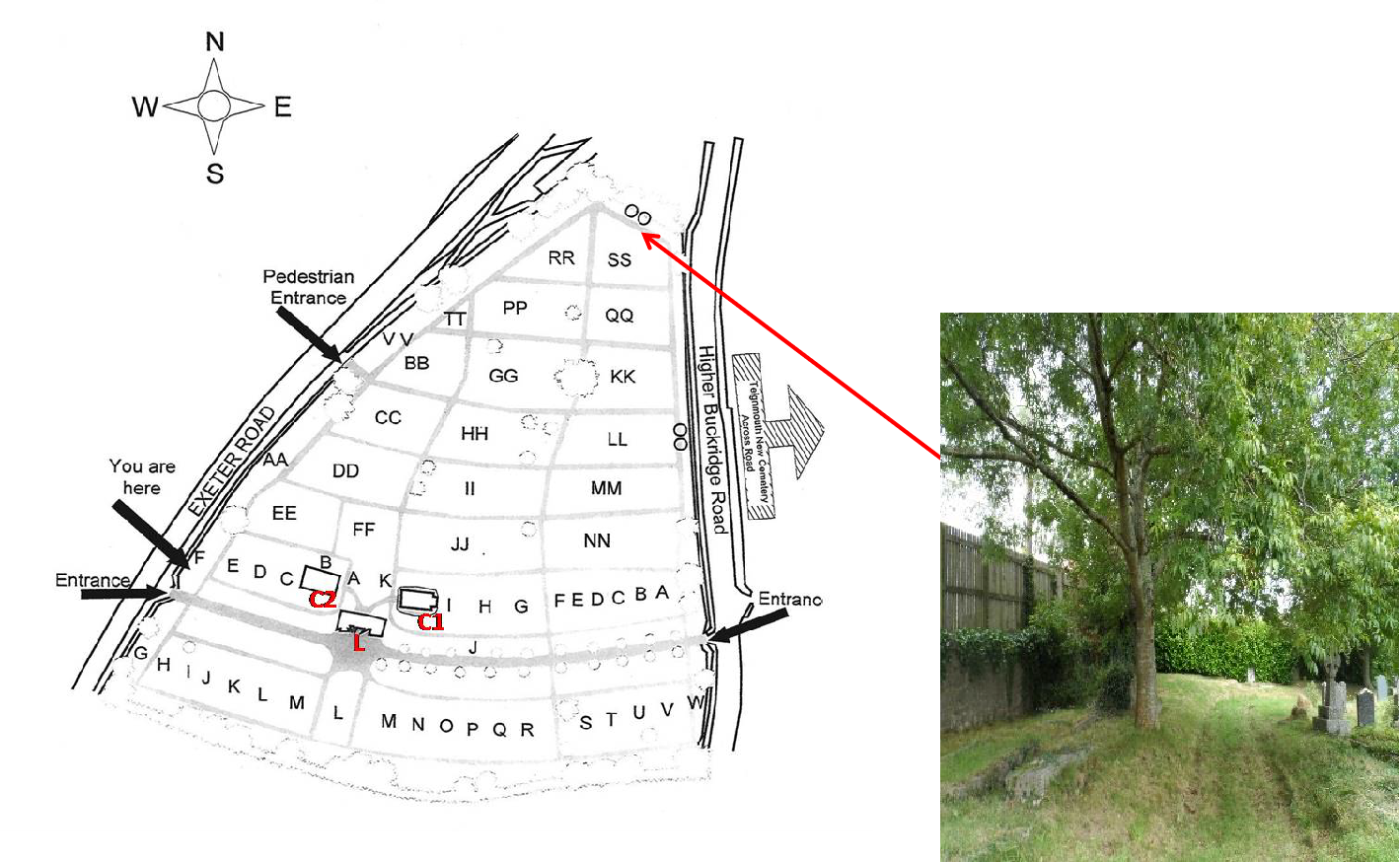
Look for lichens on the Ash and Oak trees along the cemetery boundary with the Richard Newton Hall.
Availability of sunlight, acidity of the bark, air quality, presence of various nutrients and water are some of the factors that influence which lichens will colonize the trunk, branches and twigs.
These two foliose lichens are the most common:
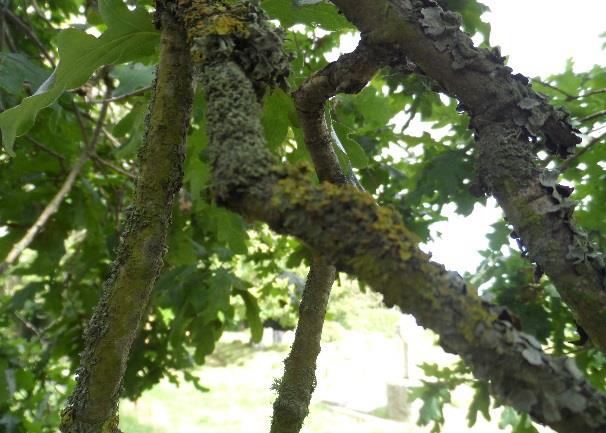
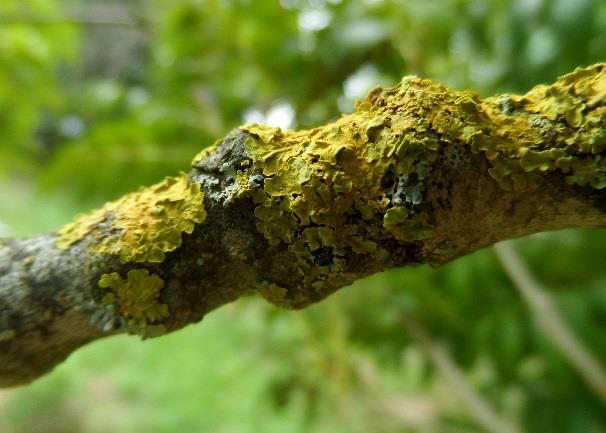
We tend to think that the presence of lichens indicates good air quality. Whilst some lichens are unable to grow in polluted air, there are others that thrive in atmospheres with a high concentration of nitrogen gases, such as Ammonia from farming environments and NOx gases from traffic fumes. Physcia and Xanthoria, found here, are known to be Nitrogen loving and Parmelia and Flavoparmelia can tolerate moderate levels. It would seem likely that the atmosphere, in this section of the Cemetery, is polluted by fumes from traffic passing along the Exeter Road.
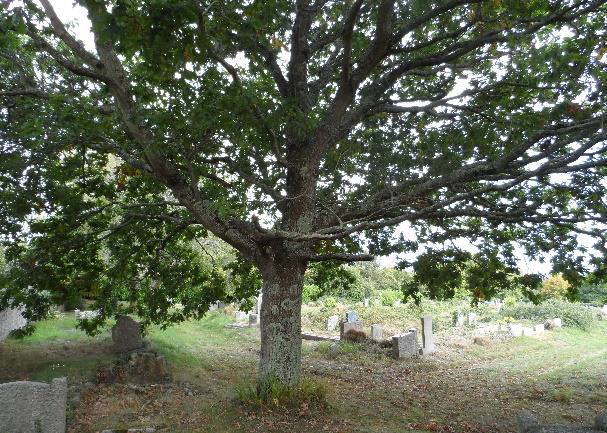
The trunk of this oak tree displays large rosettes of grey foliose lichens: Parmelia saxatilis and Flavoparmelia sp
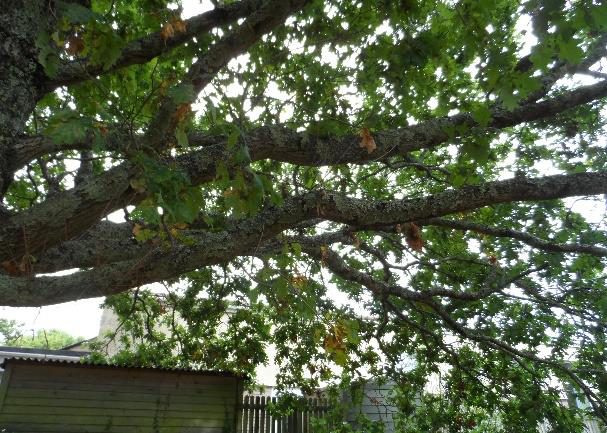
The lichens cover the branches, appearing to grow better where there are gaps in the leaf canopy, where there is more sunlight, available.
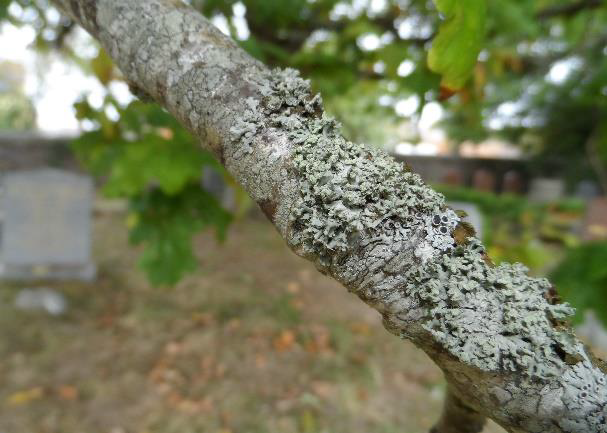
Lichens competing for space on the branch Look for the cup shaped fruiting bodies of Physcia aipola. They grow best in full sun.
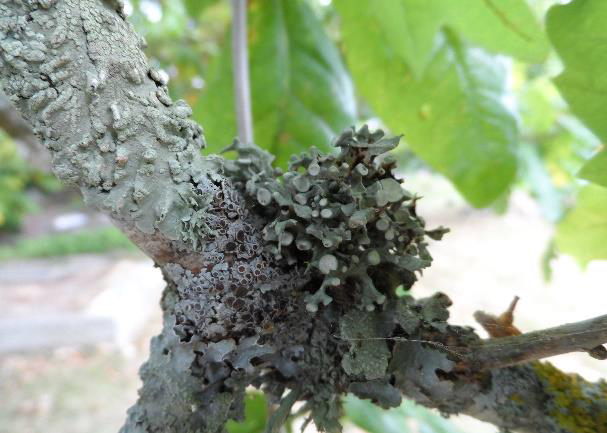
Ramalina fastigata is a tufted lichen with stalks ending in cup shaped fruiting bodies
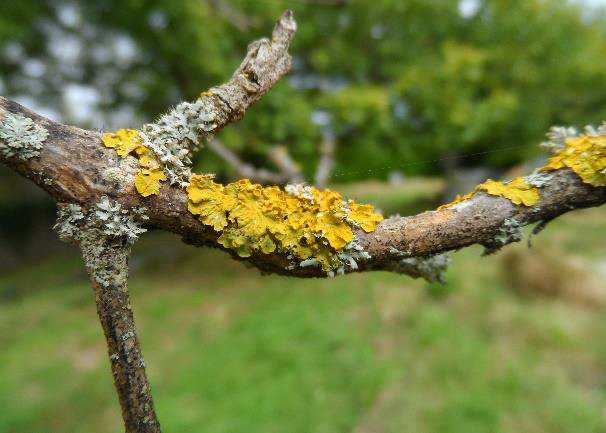
Xanthoria parietina mostly found at the tip of the branches.
 Teignmouth Old Cemetery