The initial survey covered areas, with grid refs: MNOPQR. The gravestones, in zones M-R, vary greatly in size shape and rock type. Some are upright whilst others lie flat, like the big chest tombs. They offer a wide range of surfaces to support lichen growth. The commonest lichens present are recorded in picture form.
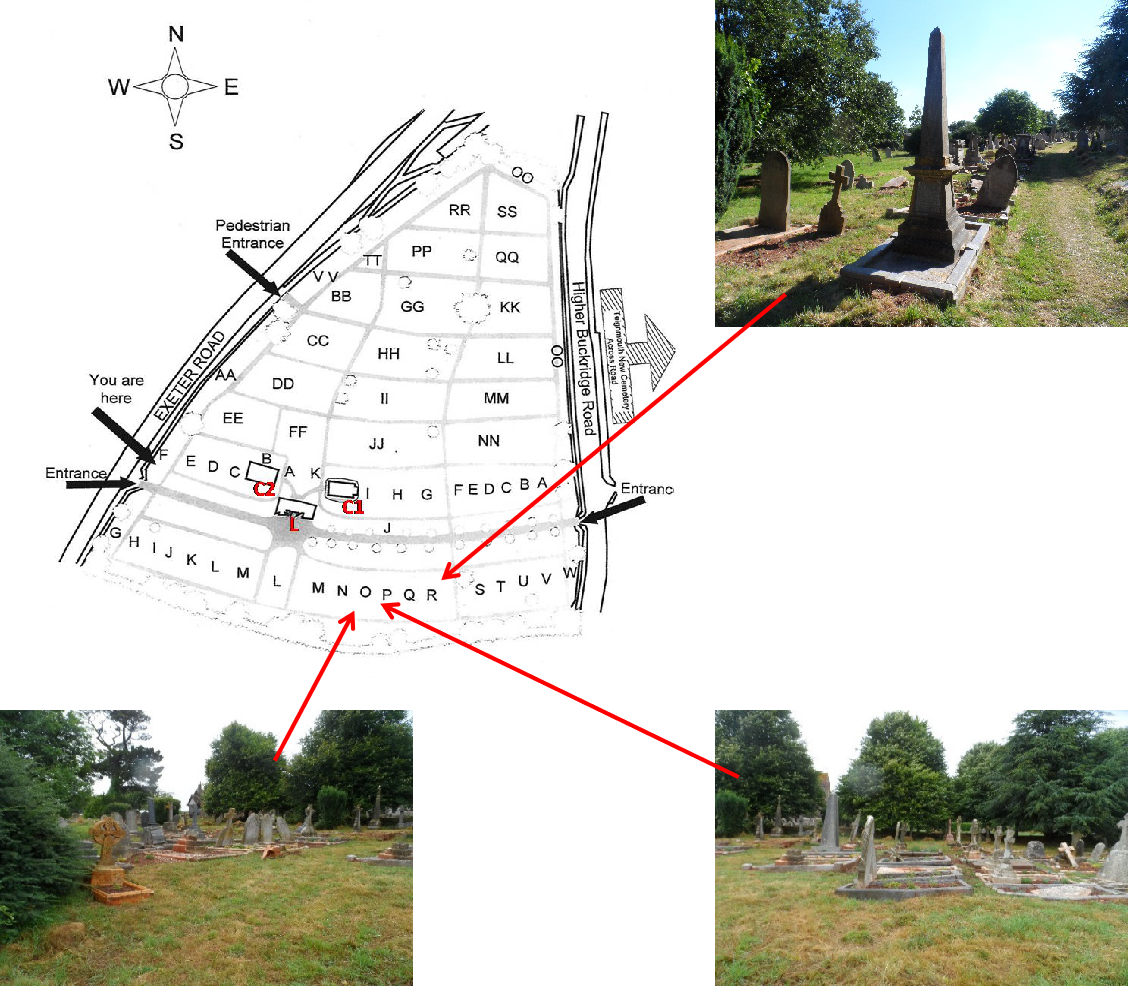
Lichens on Gravestones in Sections: MNOPQR
General Survey 25 July 2018

This orange lichen Caloplaca flavescens is present on some of the gravestones. It is a crustose lichen that grows mainly on basic stones such as limestone, marble or mortar
.
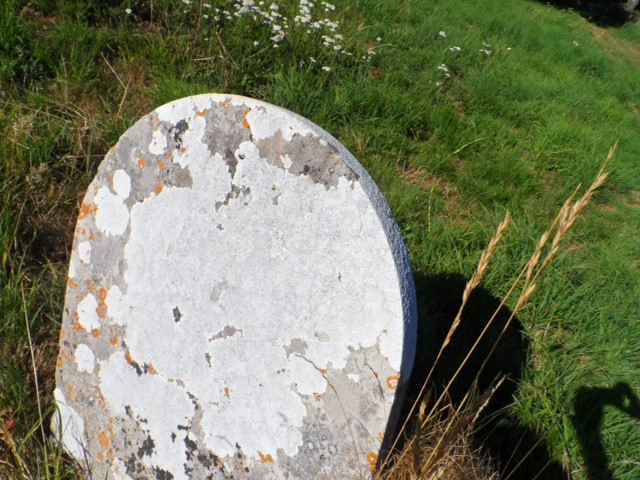
There are many white lichens present, which need to be identified by the shape of their fruiting bodies. This chalky one is Lecanora calcarea
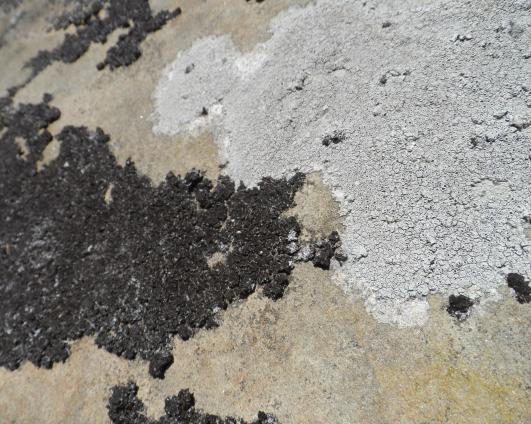
This black foliose lichen is Collema auriforme. It has a leaf-like structure which can be removed without damaging the stone
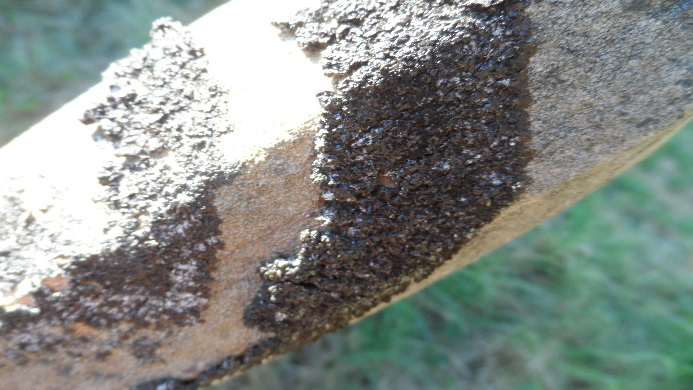
The dry weather of July 2018 may have affected its ability to hang onto the stone, as it can be seen to be peeling off in places

Lecanora species appear as white, grey and pale green crustose lichens

Aspicillia calcarea, a white rimmed lichen

A community of crustose lichens: orange rosettes of Caloplaca flavescens; white, chalky rimmed Aspicillia calcarea and black Verrucaria nigrescens
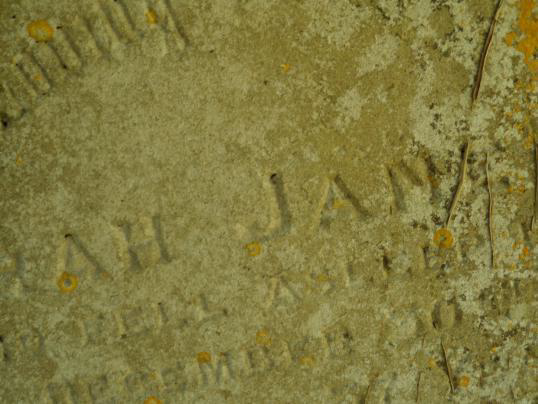
Psilolechia lucida is a pale green lichen found growing on acidic rocks. Rarely found on trees
Many of the monuments and gravestones have been in place for over a hundred years and some of the lichens may be as old as the stone on which they are growing.
Some surfaces are colonized by a variety of species whilst others have only one or two present. There are also quite a few that do not appear to have any lichen growth on their surfaces. Since the environmental conditions affecting their growth, such as degree of exposure to wind direction, air pollution, the amount of available light, moisture in the air, would appear to be the same for each surface, it would seem that the type of stone (Basic or Acidic) and its surface properties, (highly polished or rough and pitted), have a lot to do with which lichen grows on it.
Taking a closer look, in sections MNOPQR:
Look for the Veysey family graves in P zone. They are side by side and yet one supports a variety of lichens whilst the other has very few.
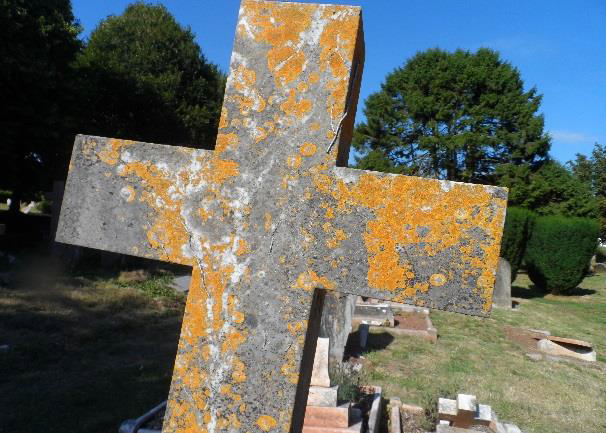
Rev Veysey’s Calvary cross has a variety of orange, white and black lichens …..

….. whilst the Celtic cross of his wife is only colonized, in a small area, by a black lichen

One of the smooth, horizontal surfaces of the chest tombs, offers a large surface for white lichen, Aspicillia calcarea and black Verrucaria nigrescens …..
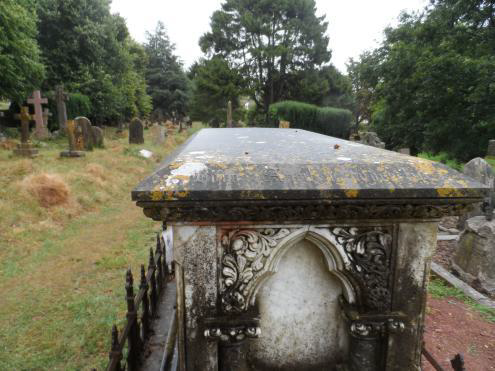
….. whilst the other, also supports orange Caloplaca
 Teignmouth Old Cemetery