
For the last couple of years we have been lucky to be helped by Roy McCormick, a local lepidopterist, who has been carrying out moth surveys at the cemetery. Here are the results from the most recent surveys in May and June 2020.
For more information and photographs of each moth you can look them up on the web-site UKMoths. Meanwhile here’s a little information about the top four most frequent moths during that period.
Heart and Dart Moth

It is a common species throughout most of Britain, and flies from May to July, when it is readily attracted to light. It has a wingspan of 30-40mm and a distinctive feature is that it always has a black band across the front of the thorax, when viewed head-on. The larvae eat a variety of wild and garden plants.
Garden Grass Veneer
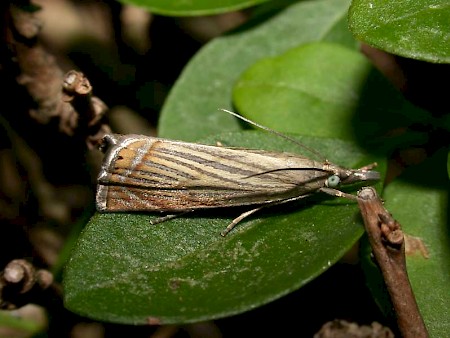
One of our commonest ‘grass moths. With a wingspan of 20mm, this species flies in June and July and is easily distinguished with its one or two angled cross-lines and metallic golden fringe to the forewings. It normally flies at night whilst by day it rests head-down on grass stalks, and is easily disturbed.
Dark Arches Moth
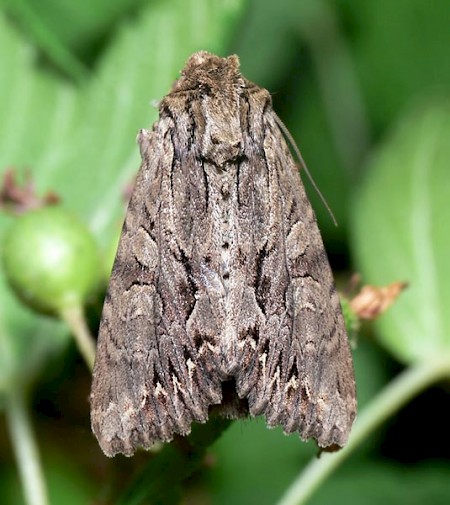
This is a common species throughout the British Isles, there are frequent melanic specimens, especially in the north.. It occurs in a variety of habitats, especially more grassy areas, where the larvae feed on the bases and stems of various grasses. It is on the wing from July to August, with a later second brood in the south.
Elephant Hawk Moth

The English name of this moth is derived from the caterpillar’s fanciful resemblance to an elephant’s trunk. It is also large, with a wing-span of 45-60mm. The adults are attractively coloured pink and green and have a streamlined appearance. They fly from May to July, visiting flowers such as honeysuckle for nectar. The larvae feed mainly on rosebay willowherb , but also other plants as well, including bedstraw.
Want to see more about the cemetery? Just click.
 Teignmouth Old Cemetery