Featured

Death at Sea

Background

We seem to have had a battering from Atlantic storms this winter but how many of you remember the great storm of 1987?  That was the one where Michael Fish pronounced, live on television, the now immortal words: “Earlier on today a woman rang the BBC and said she heard there was a hurricane on the way. Well, if you’re watching, don’t worry, there isn’t!” [1]

Just over 100 years earlier was another year of violent storms.  1886 saw almost twice as many hurricanes as average over the Caribbean and West Atlantic which in turn spawned a stream of violent storms crossing the Atlantic towards the UK.[2]

The storms were so memorable that several artists depicted them in their works that year. Some are included here to give an impression of the storm[3].

The Storm Strikes

Storm off the Coast of Belle-Ile, Monet 1886

It was on 8th December that year that such a storm struck Teignmouth with tragic consequences.  The first recorded sign of it was off the coast of Northern Ireland where the barometric pressure dropped to 927.2 mbar, a value that still stands as the British Isles December record.  In places, wind strengths reached 11-12 on the Beaufort scale – i.e. between ‘violent storm’ strength and hurricane.[4]

In Devon there were reports [5] of roofs being lifted, chimneys blown over, windows blown out, buildings collapsing, trees being uprooted, roads blocked, rivers overflowing, telegraph wires coming down, lightning strikes, people being killed. And, of course, the coasts were battered.  Ships sought shelter as best they could but inevitably there were collisions and ships grounded as their moorings gave way or were simply swept ashore.  Trawling gear was lost – “The Jeffery Drew lost all her trawling gear, and many other boats broke their trawl beams and tore their trawls, while others lost them”.

The story of the Teignmouth tragedy starts at about 12.30pm on the 7th of December, as related in the Inquest which was convened about five weeks later[6].

The Gathering Storm

Walter George Horn Hooper, a crew hand on board a 26ft ‘dandy’ rig boat owned by a Capt Andrews, was called out at that time to go to sea.  His father George remembered him lying on the sofa and looking very depressed when the message came in.  George himself felt a sense of foreboding since there was no reason for his son’s mood.  His unease may have been the reason for his accompanying him down to the Custom House Corner at about 2.30pm to see the boat off.  Walter joined the skipper Walter Haynes there and the other crew hand, Haynes’s son.

At that time there was no sign of a storm and the sea was very calm.  About 15-20 other boats set sail at the same time, most of the herring fishery fleet of Teignmouth.  It was at 2am the following morning that the hurricane suddenly arrived, forcing the fleet to slip their nets.  Most headed for cover under the headland at Babbacombe.  One, belonging to Robert Ruddall, was sunk but fortunately the crew was all quickly picked up.  The yawl Florinda just made it to Dawlish cove having lost almost all her canvas.[7]

Storm by the Coast, Rudolf Jordan, 1886

Meanwhile, back in Teignmouth, George Hooper had gone to bed at about 10pm but was wakened at one o’clock by the noise of the storm which had arisen.  By 2am it was ’raging fiercely’.  George’s son had not returned and he felt so alarmed that he went down to the beach to see if his son was there.  A few boats had managed to return to port before the worst of the storm but not Walter’s.  He waited there throughout the night.  Then, with no sign of Walter by 9am and no information, he contacted the boat’s owner, Capt Andrews, who telegrammed along the coast for news.  A message came back later that the boat and crew had sheltered safely at Babbacombe and the crew were now on their way home.  There was hope.  Sadly, though, the boat had been mistaken for another from Paignton[8] and George’s hope was shattered.

The Search

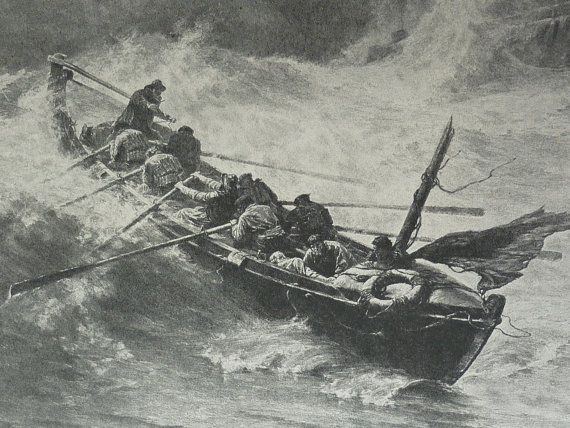
Antique Nautical Print of A Lifeboat, A Morlon, 1886

Once the storm had abated the following morning, Mr J. Dawe made his steam launch available to start the search.  He and Capt Andrews made their way up the coast to Babbacombe but saw no signs of the boat.  They turned back heading towards Exmouth and subsequently found the boat’s ‘wink’ (winch) floating in the water off Straight (Sprey?) Point.  The search continued the following morning and more wreckage – oars and bottom boards of the boat’s punt – was discovered off Budleigh Salterton.  There was no sign of any crew.

A relief fund for the crew’s families was started.

First Body Found

It was over a month until the first body, that of Walter Hooper, was found.  The Express and Echo described the grim discovery on Wednesday 12th January in full:

“Yesterday morning, about 9.30, Mr. Pratt, farmer, of Littleham, was walking near Watershute (on the coast between Exmouth and Budleigh Salterton), when he came across a human body on the rocks. It is not an exaggerated term to use when we say that the condition in which he found the poor fellow’s body was frightful. Mr. Pratt came across it jammed between two rocks. That on the top of the body was moveable, but it took no less than twelve men to shift it from off the remains. It was then seen that the effect of the body being buffeted about by the waves and thrown upon the rocks had been to dreadfully shatter it. In addition, the crabs and other denizens of the watery element had been at work, and eaten the body in a shocking manner in all parts. His left leg was entirely gone, and his head and face had been eaten away. In more than one instance the flesh has been consumed, and articles of attire were hanging simply by the ‘cords’ of the limbs. The task of having to view the remains was a shocking and thankless one.

News of the finding of the body was given to the Coastguard authorities and Chief Officer Blackler ordered its removal to the coastguard station. The fact that part of deceased’s clothes are missing has led some people to favour the idea that he partially divested himself of his attire in order to save himself by swimming. This is, however, improbable, as the man would certainly have taken off his boots, had he had any such intention. It is more likely that the clothes had been washed off whilst the body was in the sea. Information of the discovery was conveyed to the widow of Hooper. She came to Exmouth as soon as possible.

There were no features left by which to identify her husband, but this she did by means of tattoo marks on the arm that was not destroyed by the fish. An imitation bracelet was tattooed on the wrist, and the name of a woman on the arm. The grief of the poor widow on seeing her husband’s body, and in such a shocking condition, is described as heart-rending. Deceased was twenty-five years of age; his widow has been left with one child.”

An inquest was held the following day at the Beach Hotel before Mr Coroner Cox.  The verdict was simple – ‘Accidentally drowned off the coast’.

In Memory

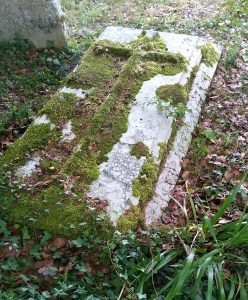
Unmarked grave of Walter Hooper

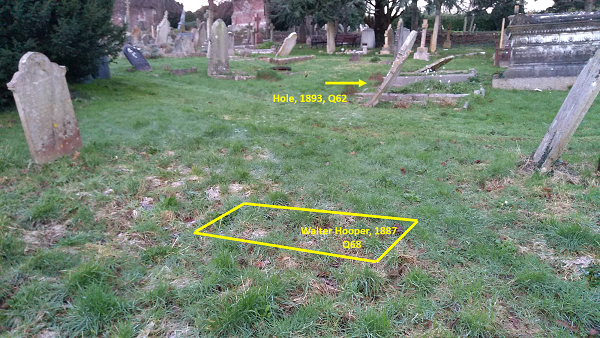
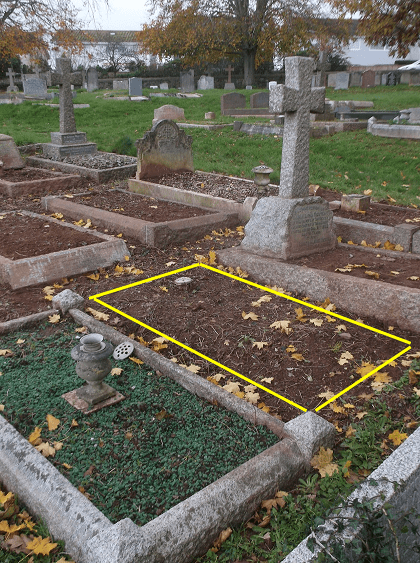
Walter Hooper’s remains were taken back to Teignmouth where he was buried three days later in an unmarked grave, Q68.  The Rev. J. Metcalfe, vicar of West Teignmouth, officiated at the grave where a large number of fishermen attended as a token of respect.[9]

Walter Hayne’s body was discovered the next day, followed by that of his son on the 20th January[10].  There was no inquest.  It was believed that the boat lay in deep water about two miles off Exmouth.  Walter and his son were not buried in Teignmouth cemetery.

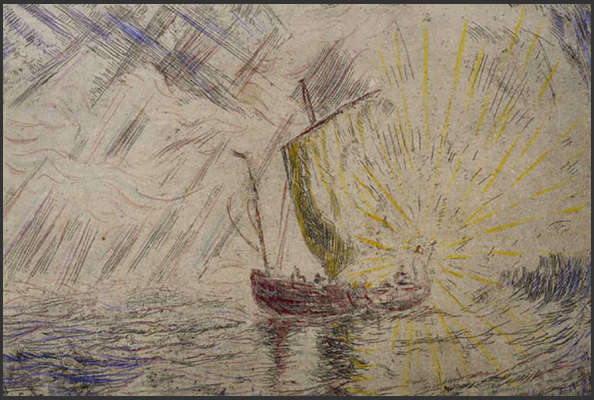
Christ calming the storm, James Ensor, 1886

Sources and References

Extracts from contemporary newspapers are referenced directly in the text and are derived from British Newspaper Archives.

Wikipedia for general background information

Other sources, with hyperlinks as appropriate, are as follows.


[1]     https://www.history.co.uk/articles/-deadliest-uk-storms

[2]      https://en.wikipedia.org/wiki/1886_Atlantic_hurricane_season

[3]      Storm off the Coast of Belle-Ile, Monet 1886;
https://www.wikiart.org/en/claude-monet/storm-off-the-coast-of-belle-ile-1886

Storm by the Coast, Rudolf Jordan, 1886
https://www.wikiart.org/en/rudolf-jordan/storm-by-the-coast-1886
Antique Nautical Print of A Lifeboat, A Morlon, 1886
https://i.pinimg.com/736x/12/b1/9c/12b19c015b3a7d32563ee2eb5c4bbe51–antique-prints-vintage-prints.jpg
Etching of Christ calming the storm, James Ensor, 1886,
www.art-prints-on-demand.com

[4]      https://premium.weatherweb.net/weather-in-history-1850-to-1899-ad/

[5]      There were many newspaper reports of the storm’s effects throughout the county.  The Express and Echo of Thursday 9th December 1886 gives a full flavour

[6]      Express and Echo, Thursday 13th January 1887 – The Drowning of Teignmouth Fishermen

[7]      Teignmouth Post and Gazette, Friday 10th December 1886 – The Gale

[8]       Western Times, Saturday 11th December – Suppose Loss of a Teignmouth Fishing Boat and Three Hands

[9]      Express and Echo, Monday 17th January 1887 – The Drowning of Teignmouth Fishermen

[10]      Teignmouth Post and Gazette, Friday 21st January 1887 – The Fishing Boat Disaster off Exmouth

Last of a Line – Margaret Champernowne

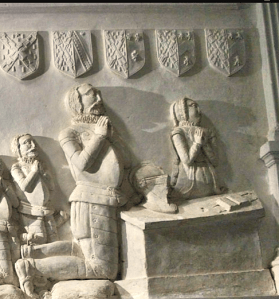
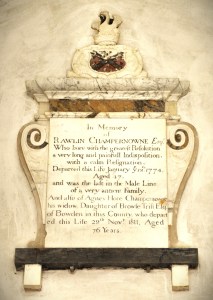
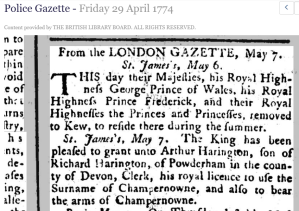
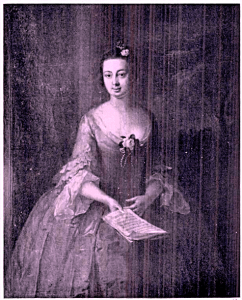
Had Margaret been born male she probably wouldn’t have been buried in Teignmouth Old Cemetery.  She would probably have been interred in the churchyard of the Dartington estate, Totnes.  She would probably have had a memorial plaque in the church tower.  Parliamentary history would have changed and who knows what else might have changed by now.

But that didn’t happen and Margaret Champernowne was buried in a small tomb-like grave in one of the earliest consecrated sections of Teignmouth Cemetery (plot A30).

For the full fascinating story click HERE

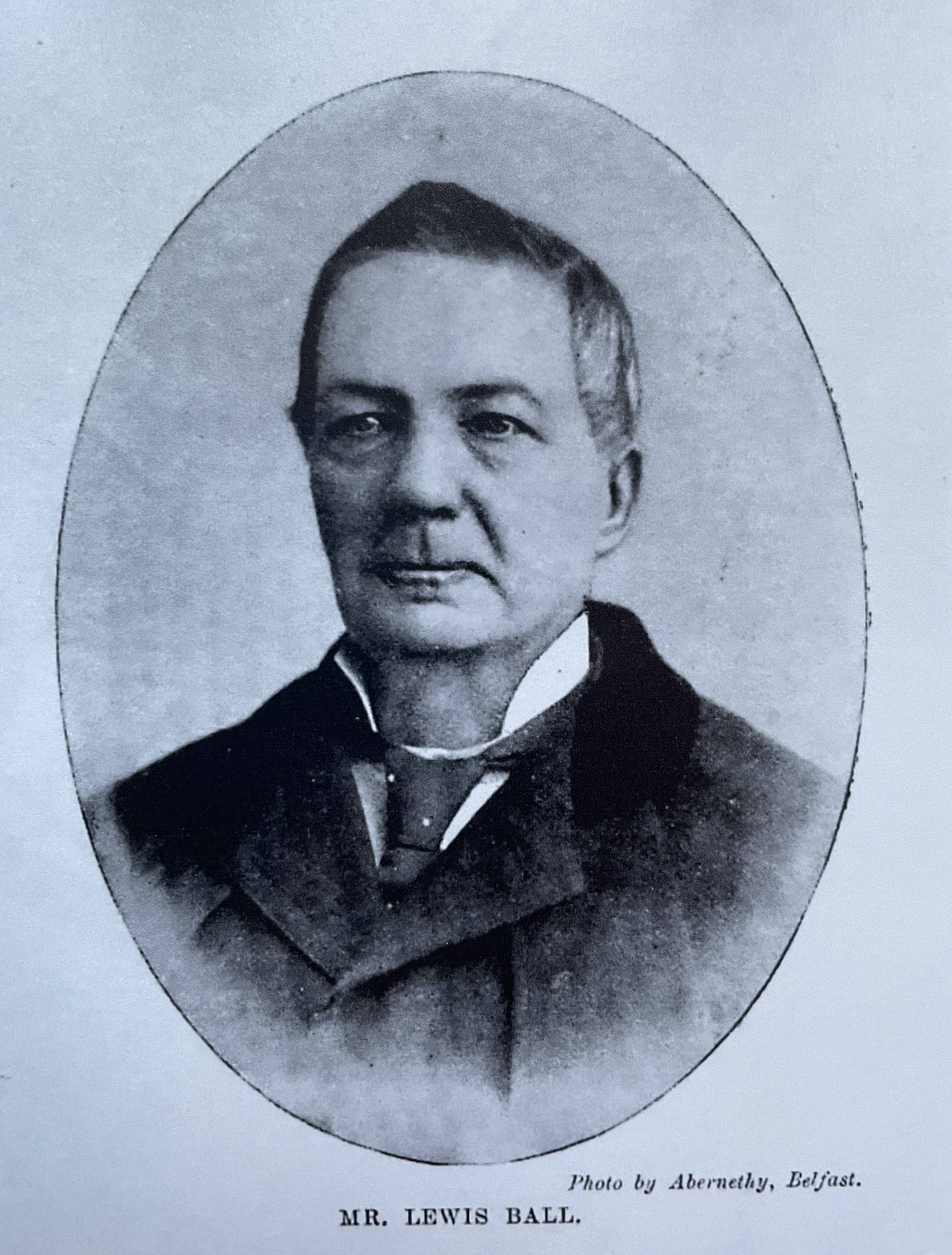
Lewis Ball – The Low Comedian

Introduction

When I first spotted a small announcement of the death of a ‘Comedian’ the immediate vision that conjured up was a clichéd one of someone treading the boards of Victorian Old Time Music Hall.  It couldn’t have been further from the truth.

Photo courtesy of Johanna Cotter

Within days news of his death had spread across the whole country from Teignmouth to London, across middle England, through the agricultural acres of the east as far north as Greenock where he was remembered as “One of the best known and highly appreciated actors who yearly made a visit to Greenock ….. Some years ago playgoers in Greenock used to crowd the theatre on a night when ‘School for Scandal’ or ‘Twelfth Night’ was announced ….. No artist ever got more genuine welcomes on the Greenock stage than did this fine old actor.[1]

The news continued back down through the industrial heartlands of the north-west, through Wales and crossing the Irish sea to Dublin where “He will be well remembered by patrons of the Gaiety theatre ….. He was a finished exponent of old men’s parts and he earned an outstanding reputation for his presentation of Shakespearean characters.  With his death a well-graced actor leaves the stage”.[2]

It was here in Teignmouth that he was laid to rest on Saturday 18th February 1905 “in the peaceful shades of the little cemetery at Teignmouth where the Channel waters lap the Devon shore[3]

He wasn’t a headliner; but he was an accomplished supporting actor who had mastered the art of ‘low comedy’, equally comfortable on stage in a farce or a Shakespearean production.  On hearing of his death Sir Henry Irving telegraphed his family “May I beg you in your sorrow to accept my respectful and deep sympathy? Your father was loved and honoured by all who knew him.”[4]

Click HERE for the full story of Lewis Ball, low comedian,

[1] Greenock Telegraph Wednesday 15 February 1905
[2] Dublin Evening Mail Wednesday 15 February 1905
[3] Birmingham Daily Gazette Wednesday 22 February 1905
[4] Manchester Courier Friday 17 February 1905

Another Snapshot of History

This is a much belated follow up to a post made almost two years ago.  That was about Samuel Poole who pioneered commercial photography in Teignmouth and established his family business here around 1859.  This lasted for almost 50 years during which time other Victorian photographers came and went.  Photographic technology continued to evolve and following the First World War new developments and techniques made photography more accessible to the general public and created opportunities for new photographic businesses.

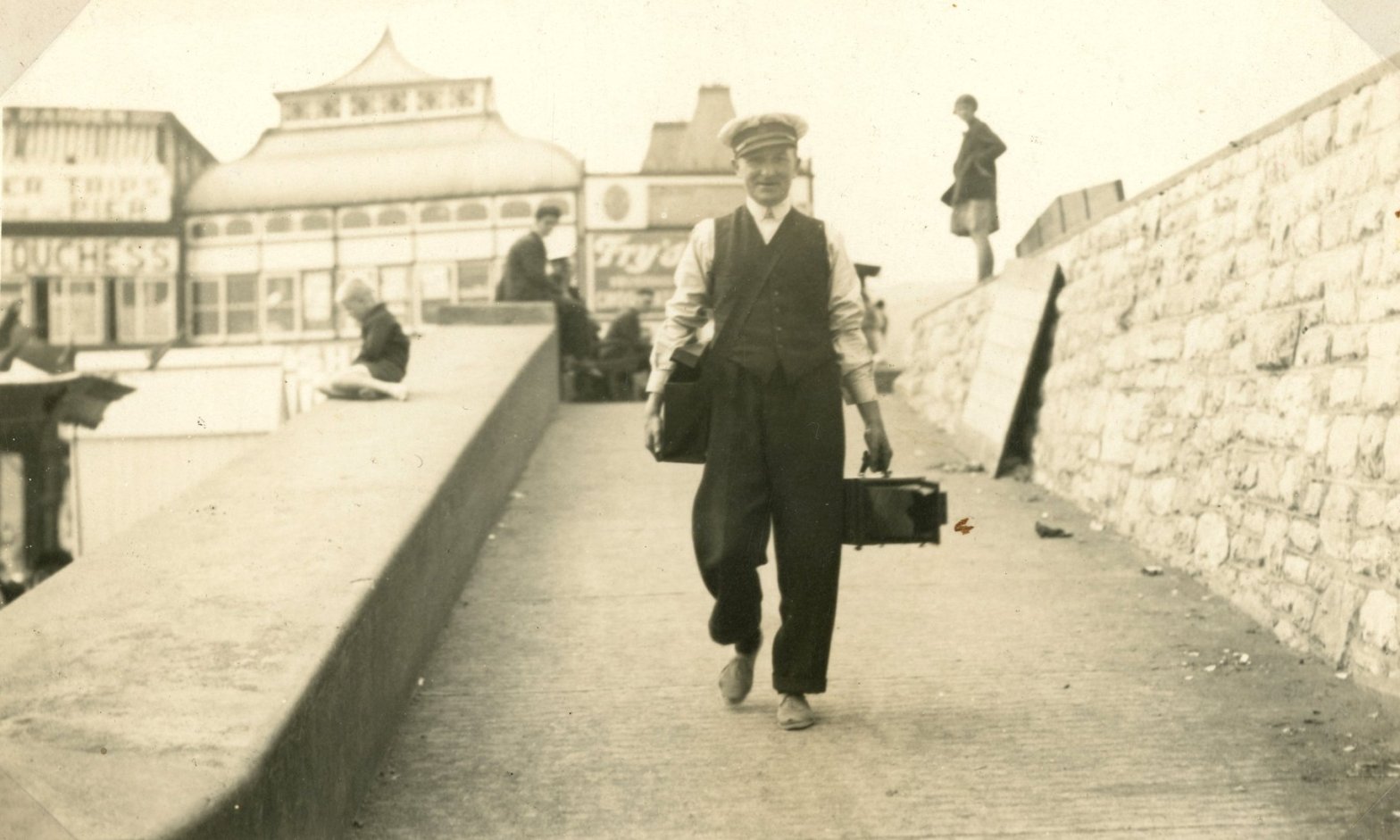
After that post I was contacted by Tom Walker who told me the story of his grandfather, Reginald Reuben Walker, who set up one of those businesses.  This is Reginald’s story as written by Tom:

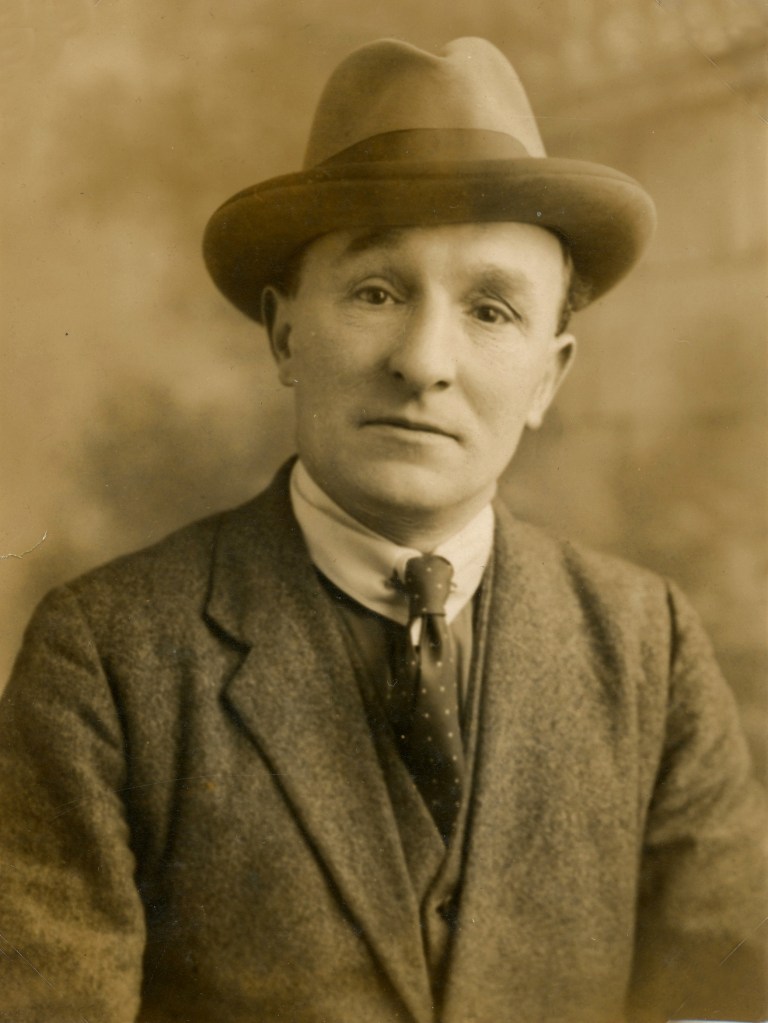
Reginald Reuben Walker was born in 1885 and christened in the village of Church near Accrington in Lancashire, his father was Thomas Walker, a railway guard on the Furness Railway and his mother, Jane Walker (nee Wharton).  He had five brothers and a sister and the family lived in Barrow-in-Furness.

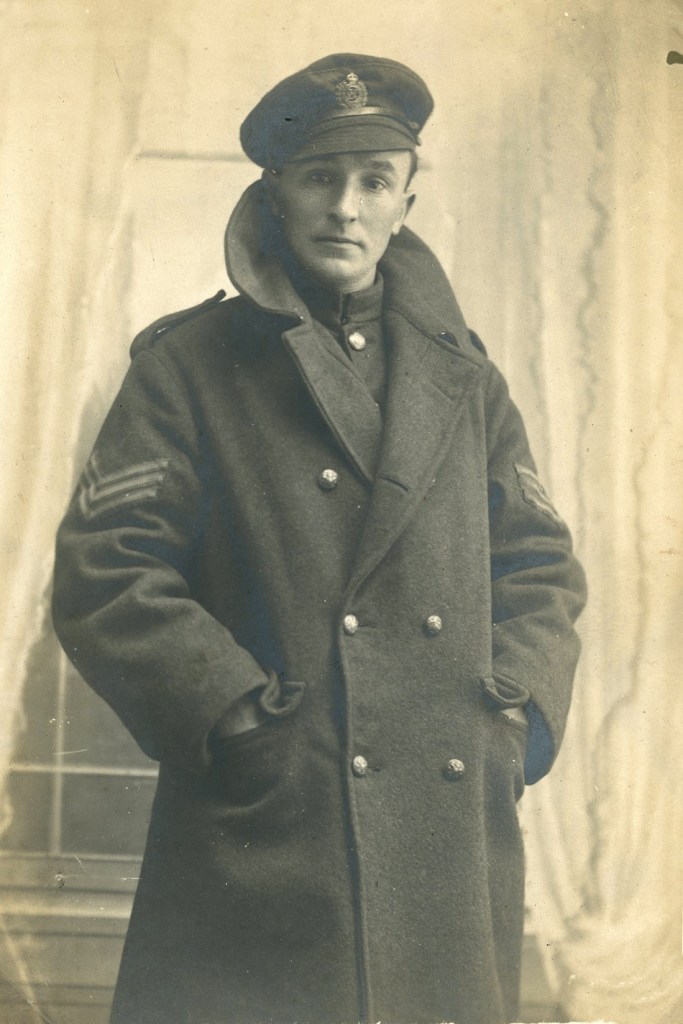
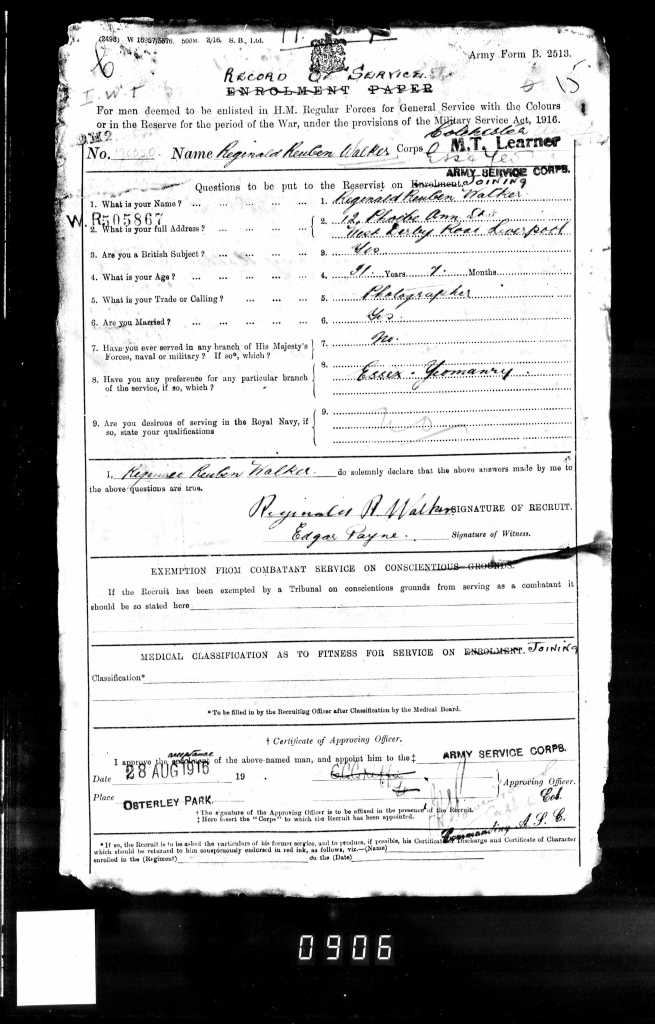
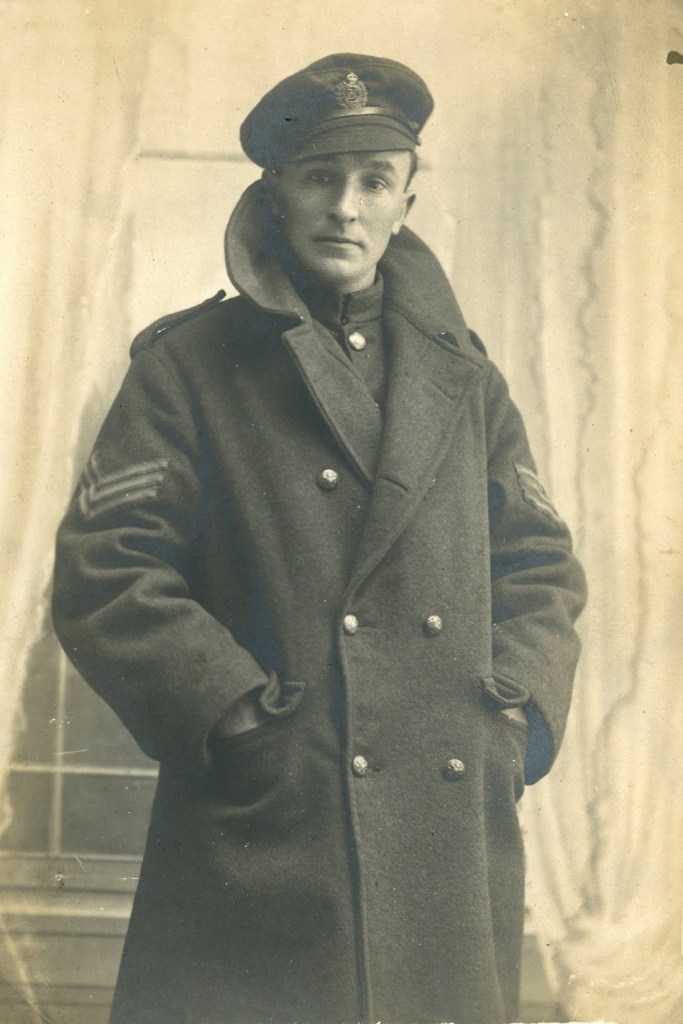
In 1911, Reginald was married to Beatrice Mary Baker in Margate, where the family had a photographic business.  By this time both his father and Beatrice’s are recorded as deceased.  At some time Reginald ‘emigrated’ to New York with his wife, but this appears to have been for a short period as they had returned by the end of 1914, when he was recorded as being a Sapper in the Royal Engineers.  Photographs indicate that he was promoted to Sergeant by the end of the First World War. [1]

In 1915 their first son, Gordon Charles was born on a farm at Baildon near Leeds.

The family then moved to Bristol, where Beatrice had originated from, where they again set up a photographic business.  In November 1919 their daughter, Joan Mildred was born, regrettably she died from meningitis when only a few months old.  In 1923 Reginald and Beatrice had a second son, Brian Hamilton, also born in Bristol.  Their eldest son, Gordon had suffered a serious accident while they lived at Bristol which resulted in a protracted stay at the Bristol Eye Infirmary, leaving him with reduced eyesight.

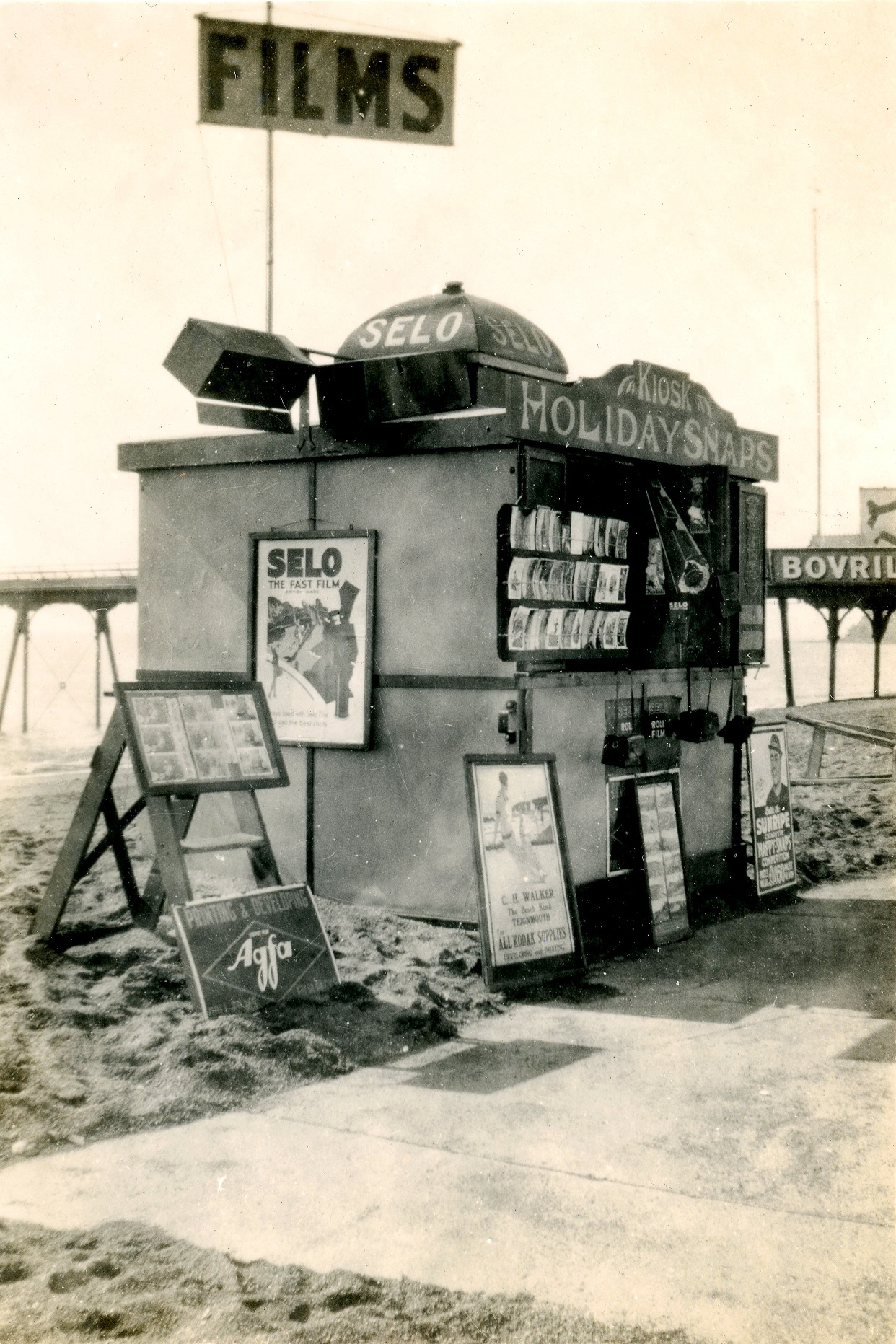
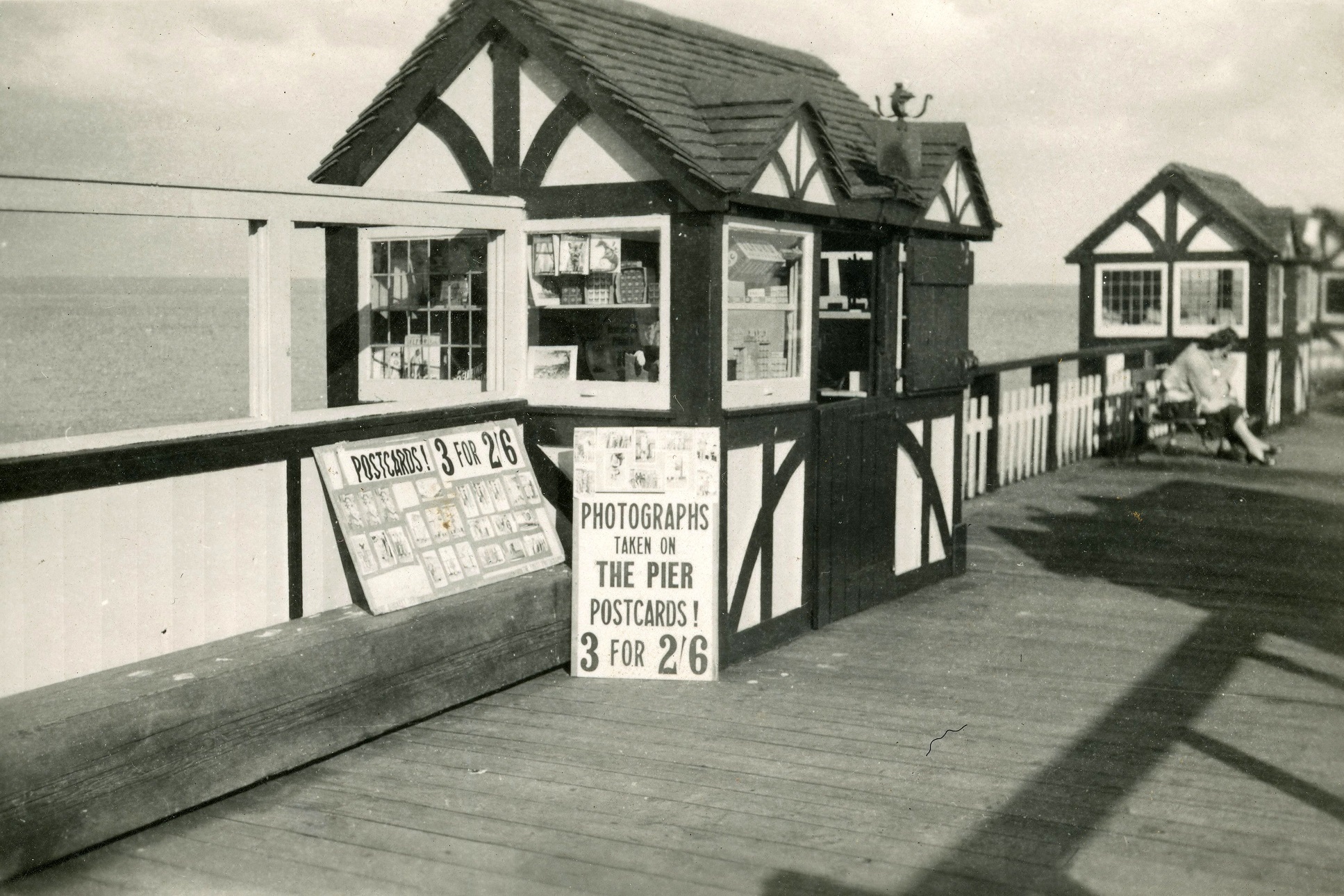
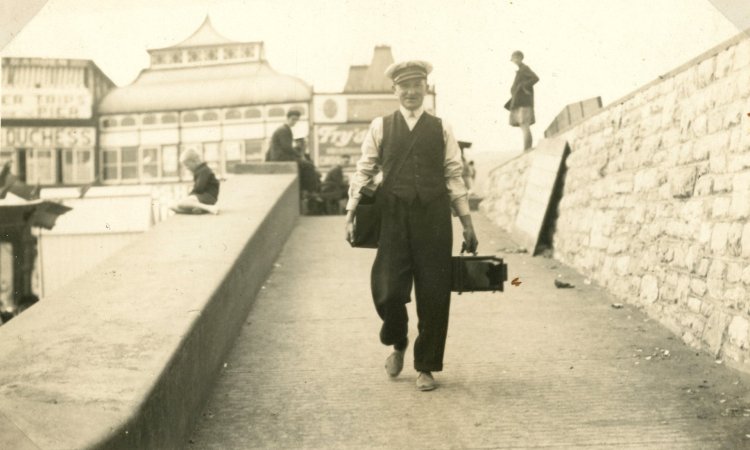
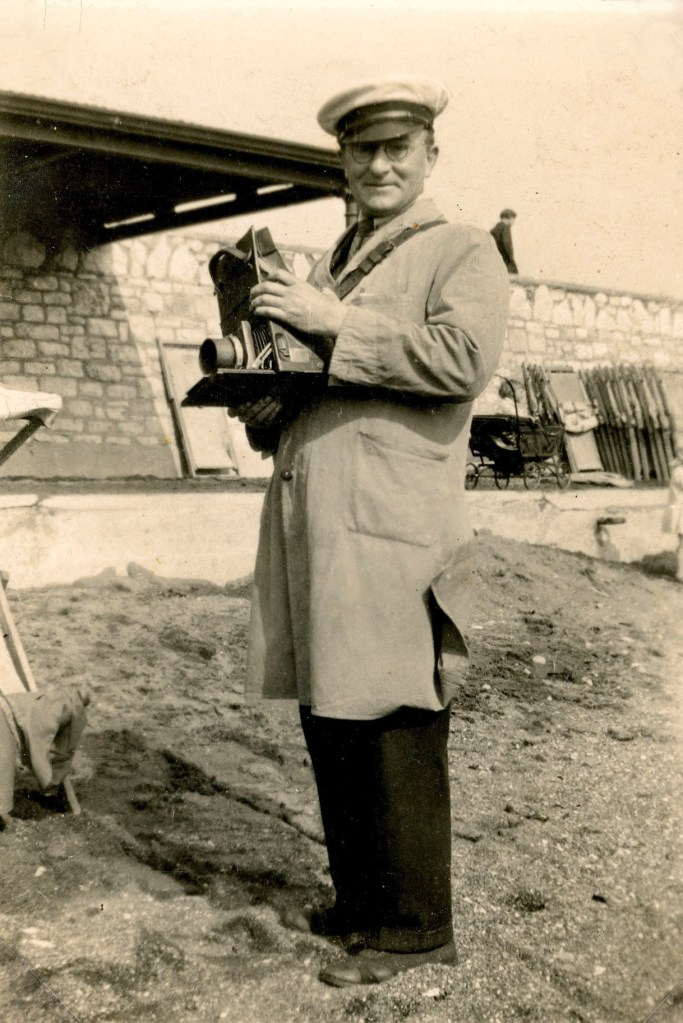
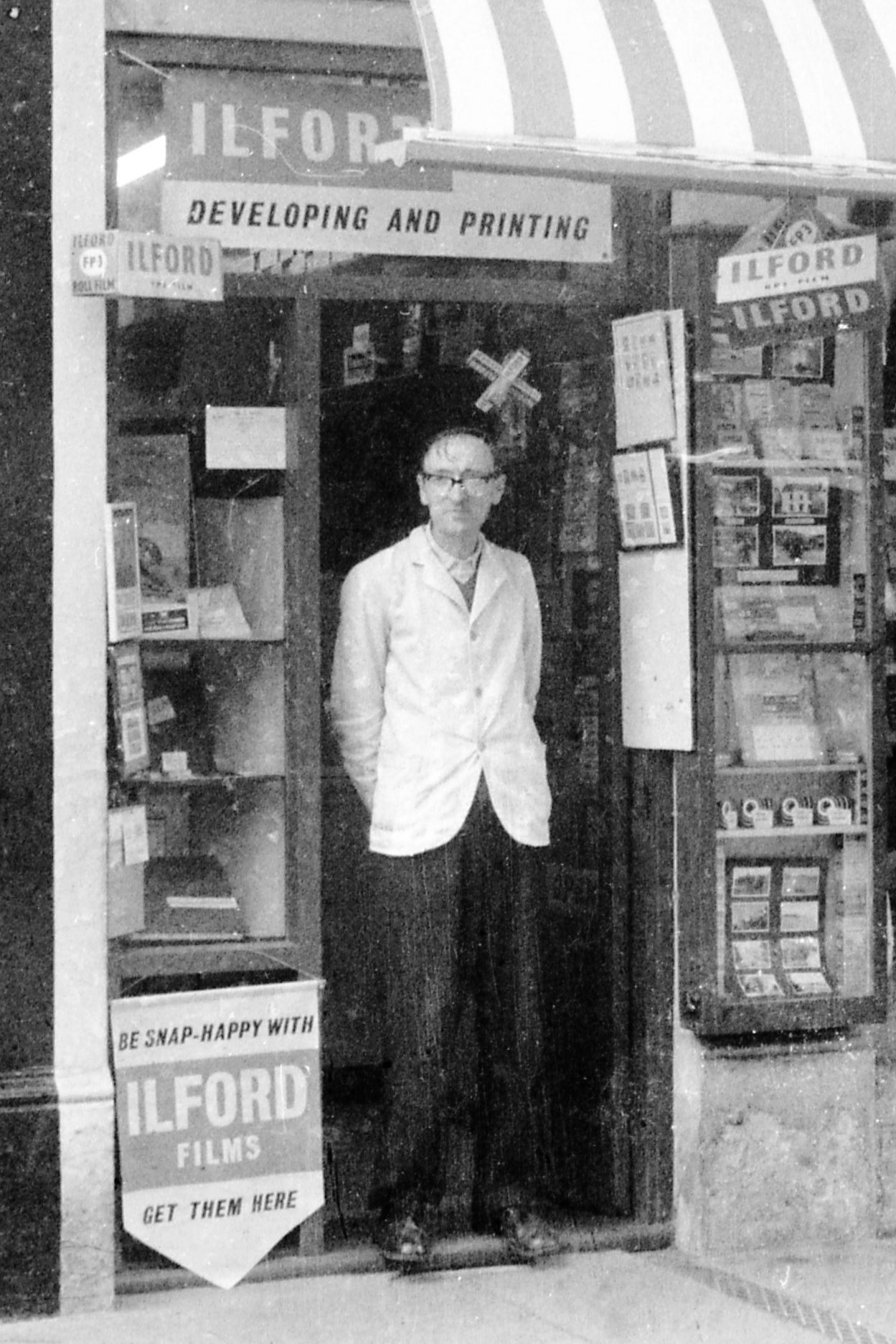
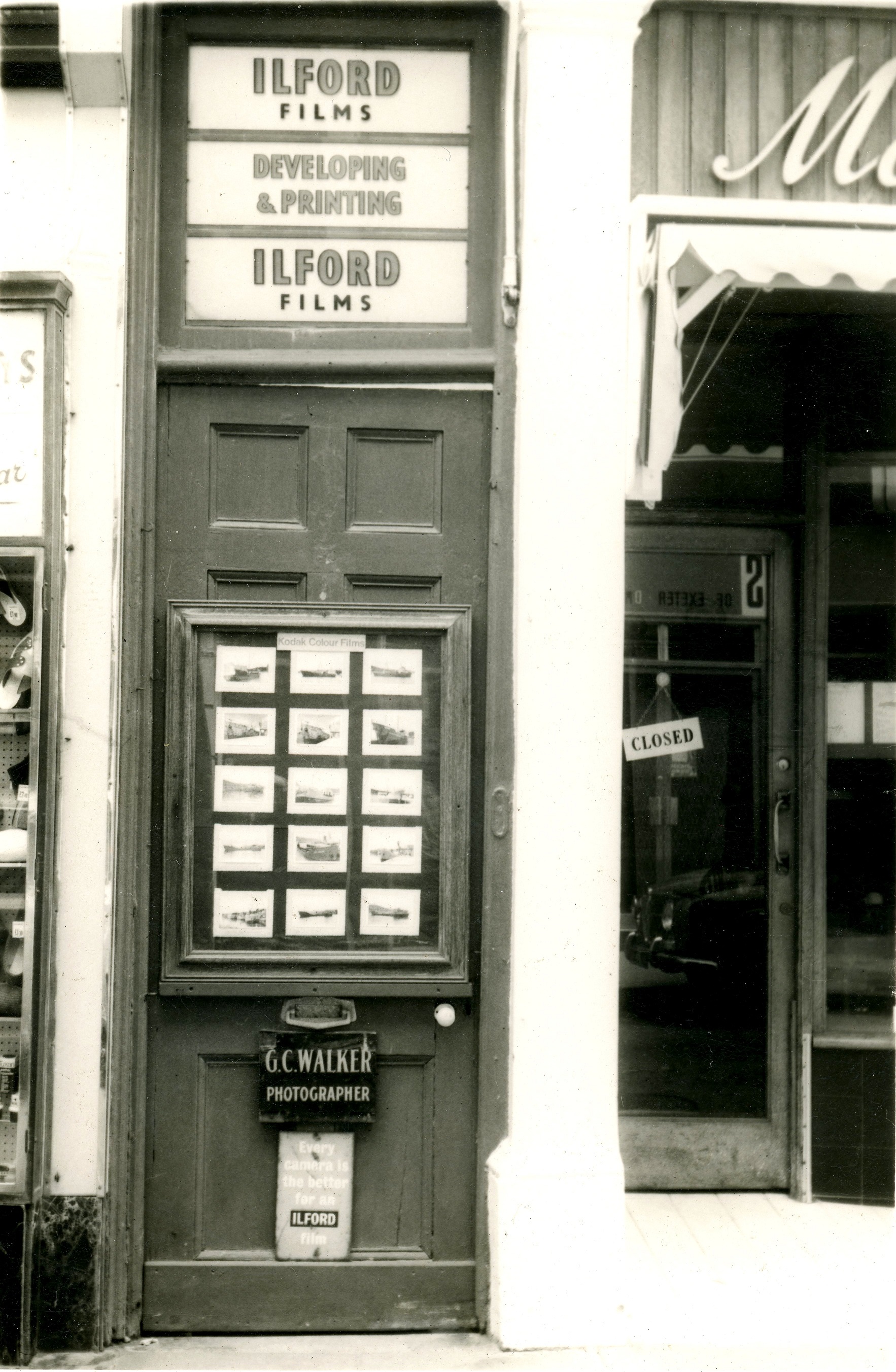
In the 1920s Reginald moved his family to Teignmouth where he established a photographic business with his brother Charles Hamilton, but Charles did not remain in Teignmouth for long.  Reginald had a shop in Brunswick Street, Teignmouth and also operated from a beach hut near the Pier where he had photographic rights.

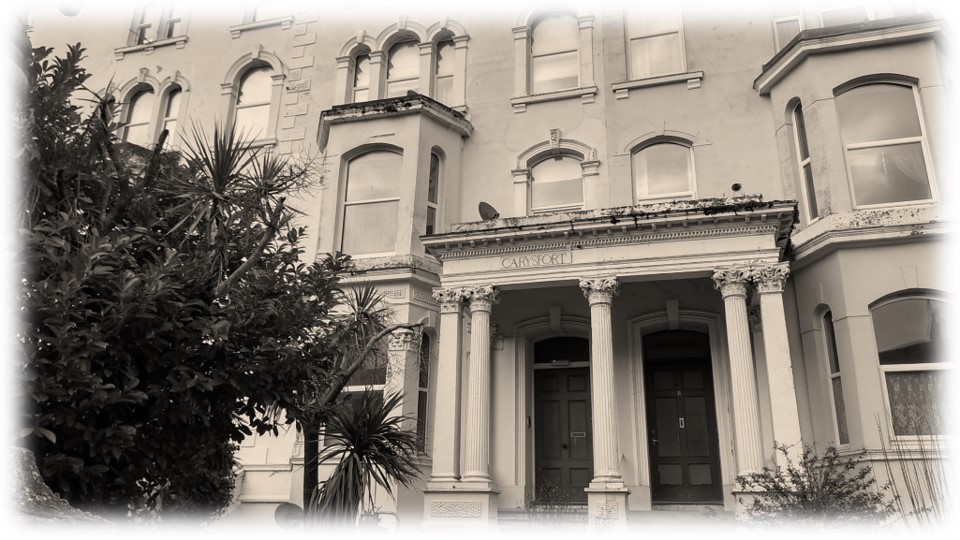
Carysfort, Orchard Gardens

Reginald traded successfully in Teignmouth until January 1933.  The family was living in a basement flat in Carysfort, Orchard Gardens [2] in Teignmouth when Reginald slipped and fell down the steps leading to the flat.  Reginald remained at home, but the next day his condition worsened and he was admitted to hospital in Exeter where he subsequently passed away.  (Note: the inquest into his death was reported in the Exeter and Plymouth Gazette, which is reproduced below in the appendix [3]).  He was buried in Teignmouth’s Old Cemetery, in an unmarked grave [4].

The family business was then run by Gordon and his mother and continued after Gordon’s wartime service until 1976 when he moved from their Bank Street shop.

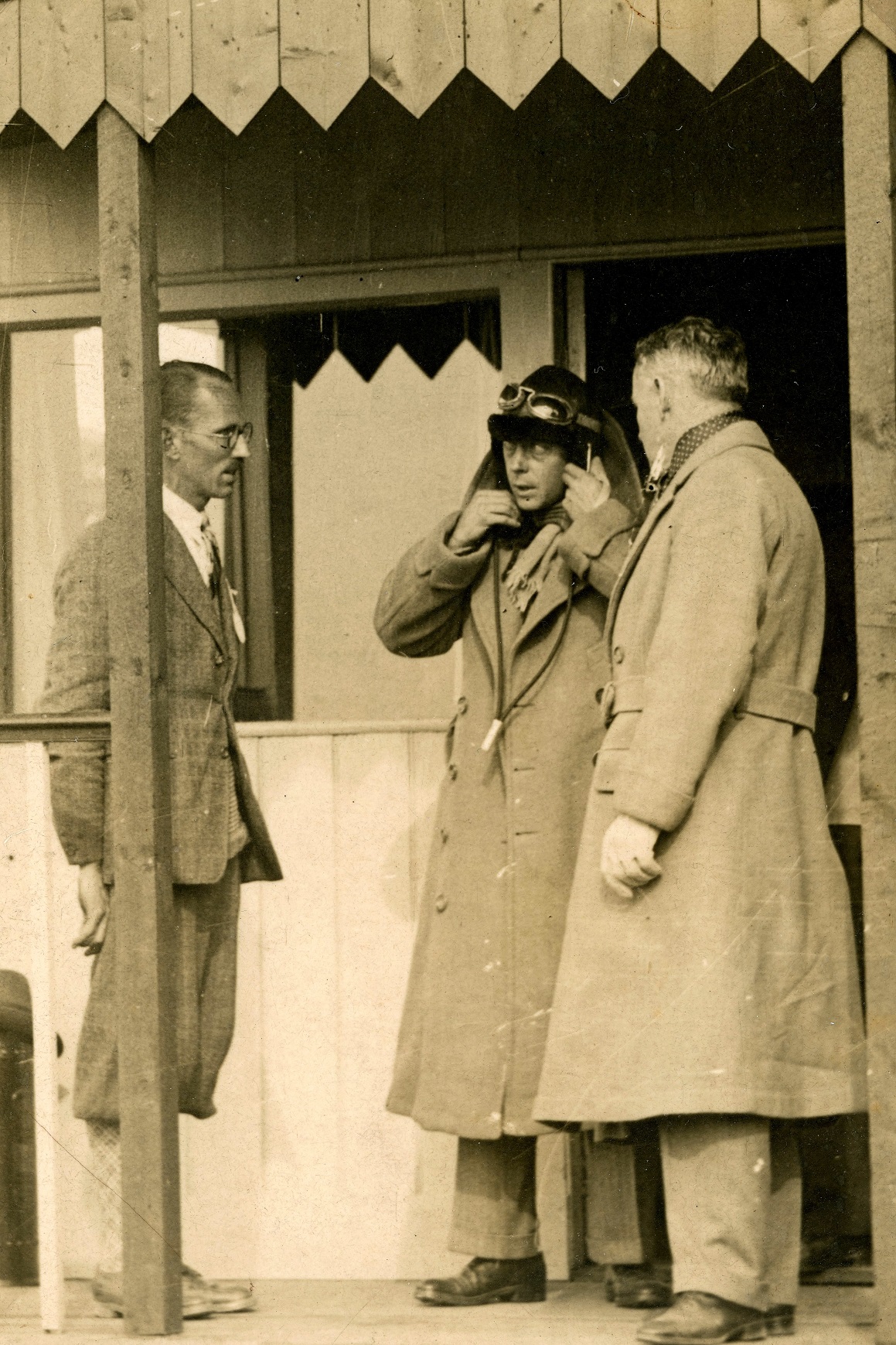
There are very few ‘confirmed’ photos taken by Reginald Reuben Walker since most of his work was lost in some extensive flooding in Teignmouth between the Wars.  Here is one showing the then Prince of Wales on a visit to Haldon Aerodrome in 1930.

Appendix

Exeter and Plymouth Gazette 13th January 1933

FATAL FALL AFTER PARTY.
Teignmouth Man Fractures Skull.
“ACCIDENTAL DEATH” VERDICT AT INQUEST.

How a fall while returning from party led to a man’s death was told to the Deputy City Coroner (Mr. H. Linford Brown) on Friday at the inquest on Reginald Reuben Walker, aged 44, of Carysfort, Orchard Gardens, Teignmouth, who died at the Royal Devon and Exeter Hospital on January 5th.

Mrs Beatrice Mary Walker said her husband, who was a photographer and aged 44, went with her and their two sons to a party on January 4th.  They left about 3.30 on Thursday morning. Their house was approached by a path through a garden, and there was basement, which was protected by a small railing. One of the boys went on to light the light, and her husband followed him. He was few paces in front of witness and the other boy, and turned to tell them to walk on the grass to make less noise. They had hardly done so when he disappeared, and witness found he had fallen over the railings into the basement.

It was a dark night, and the street lamps were out. Deceased was well acquainted with the path, having lived at the house for about six years, and witness thought the darkness had made him misjudge his distance from the railings. They had had nothing intoxicating at the party.

Gordon Charles Walker, son of deceased, said he was away in the passage on his way to light the light when heard a thud, as if someone had fallen. Obtaining a light, he found it was his father, and sent for a doctor. There were eleven steps, each about eight inches deep, and his father had fallen the concrete.

P.C. J F Strang deposed that about 3.10am in he found deceased resting on his elbows and knees in the basement of the house. He was semi-conscious, and after being assisted into the house became fully conscious. His nose was bleeding badly, hut he seemed to have no other injury. Witness attended to him, and he was later put into bed.

Dr. Gissane, senior house surgeon at the hospital, stated that deceased was unconscious when admitted at 9.15 on Thursday morning. He had no external injuries, except bleeding from the mouth and nose.  He was suffering from hemorrhage of the brain, and was operated on to stop bleeding of the skull, but died at 10 p.m. A post-mortem examination had revealed a fracture of the skull.

The Coroner returned a verdict of “Accidental death,” and expressed his sympathy with the widow and sons.

Sources and References

Extracts from contemporary newspapers are referenced directly in the text and are derived from British Newspaper Archives.

Ancestry.com for genealogy

Other sources and notes, with hyperlinks as appropriate, are as follows:


[1]  This and other personal photographs courtesy of Tom Walker

[2]  Photograph by Neil Howell

[3]  Exeter and Plymouth Gazette Friday 13th January 1933

[4]  Photo of cleared grave by Neil Howell

The Shadows Flee Away

The sea takes its toll.  Teignmouth has had its fair share of tragic incidents over the years by virtue of its association with sea as a working port on an estuary and historically as a ‘watering place’ and subsequent popular seaside resort.  The previous two posts illustrated the perils of working with the sea; this post reflects the dangers of underestimating the power of the sea when simply trying to enjoy yourself.  The story has been put together from a number of newspaper reports from the time [1].

It was on Friday 5th August 1921 that three friends – Robin Brown, Harold Babbage and George Wing – set off for a day on the beach during their school holidays.  They were undeterred by forecast for the day which was a mild 19°c with a lot of cloud, some rain and strong south-westerly winds [2].  Avoiding the main beach they headed for what would have been the less crowded stretch leading up to Sprey Point.  Perhaps they walked along the sea wall through the whale-bone arches and passed the notice that bathing was dangerous further on because of the rocks.  Perhaps they ran along the beach and missed the warnings.  Perhaps they didn’t care.  Safe in the invincibility of youth they were just three young teenage boys out for a bit of fun and adventure.

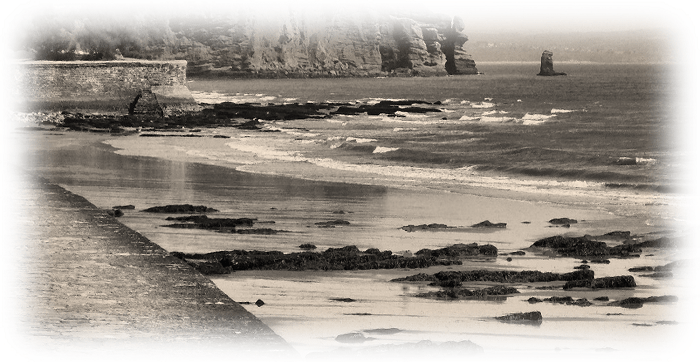
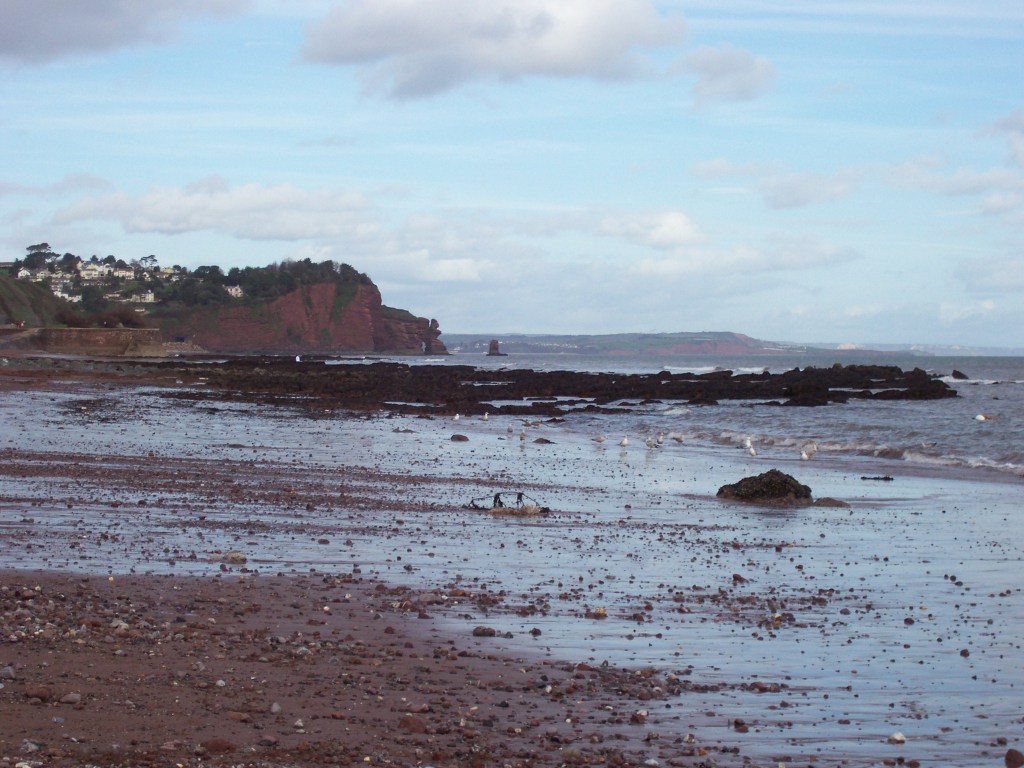
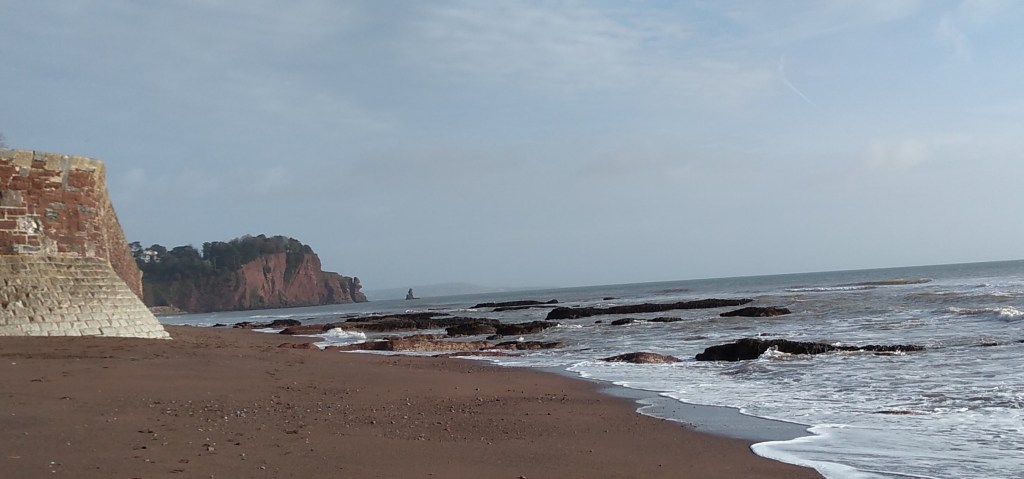
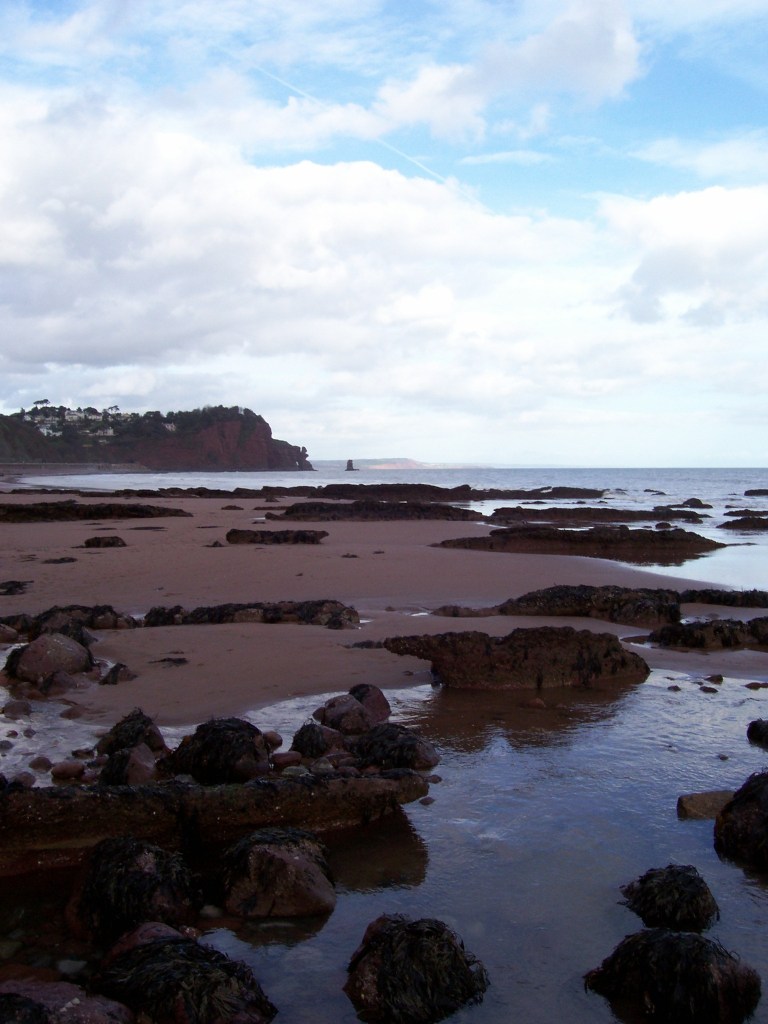
The following photographs [3] show the rocky terrain of the beach at and leading up to Sprey Point at a low tide.  The rocks are covered as the tide comes in, making bathing especially hazardous.

Sadly for the three boys, adventure turned to tragedy.  They were messing about in the sea and had started bathing at a sandy area. There was a heavy, choppy sea running.  They didn’t notice that the combination of the incoming tide and the south-westerly winds was causing them to ‘unconsciously stray’ [4] towards the rocks.  Soon they were wading amongst the rocks in the area around Sprey point.  It was there that they got into trouble, getting out of their depth and falling into a deep pool.  They called out for help.

Mr A Pilgrim, a schoolmaster from Bristol, was the first to hear those cries for help and raised the alarm ‘attracting the attention of people on the beach to the precarious position of the lads.’ [5]

Frederick Kirby, a visitor from Paddington, rushed fully dressed into the surf and rescued an exhausted George Wing who, apparently, ‘took to his heels and ran home’!! [6]

Rescuer J T Browne

Jesse Thomas Browne [8], another visitor staying at the School House in Bishopsteignton, also jumped into the water fully dressed, swam out, caught hold of Harold Babbage and brought him ashore where he applied artificial respiration.

The lad, also badly bruised from being swept against the rocks, was taken to hospital where he was detained, still unconscious.  He regained consciousness during the night and by Saturday morning was described as being ‘as well as could be expected’. [7]

Robin Brown and his sister

Arthur Hughes and Walter Johnson rescued an unconscious Robin Brown [9] and also started artificial respiration.  Dr H E Goulden was called for and by 3.35pm the coastguards, led by Chief-Officer Corden, and the police, under PS Stanbury had also arrived and were helping. Other people had brought blankets and hot water bottles.  Attempts to revive Robin continued on the beach for a couple of hours until the incoming tide forced them to move him back to the lawn of the East Devon and Teignmouth Club and then the hospital.  Despite all their efforts over about three hours Robin never regained consciousness.  He died at 6.35pm and his body was taken to the mortuary pending an inquest.  Like Harold, he too was badly bruised from the rocks.

The inquest [10] took place on the afternoon of the following day where it was stated that Robin was not a strong swimmer.  The Coroner returned a verdict of accidental death and also commented on safety on the beach which led to a short contretemps between him and the Council Surveyor:

The Coroner suggested that steps should be taken to inform the public by notice boards that bathing was dangerous from beyond the further Whalebones to Sprey Point.

The Surveyor to the Urban District Council, Mr F.N.Knight, undertook to see that this was done.  He remarked that it was only fair to point out that the rocks were visible at low water.

The Coroner: That makes it all the more dangerous.

Mr. Knight: But people do not touch the rocks at this point and do not know of their existence.

The Coroner:  The answer to that is this accident”.

David Robinson Brown (aka ‘Robin’) was one of the first boys to win a scholarship at the new secondary school in Teignmouth.  His family was in a bit of a turmoil at the time as well since his father had been posted a few months earlier to Gloucester as a signals inspector for the Great Western railway but had been unable to find a suitable house there.  So Robin and the rest of the family were still living apart in Teignmouth.

Photo courtesy of Paul McClure

Four days after the inquest there was a large attendance and numerous floral tributes at Robin’s funeral [11] at Teignmouth Cemetery where he is buried in plot FF10.  He had been a member of the Baptist bible-class so pastor Rev. S.J. Thorpe officiated. 

“Robin, son of Thomas and Annie Brown, who was drowned whilst bathing. ‘Until the day break and the shadows flee away'”

Sources and References

Extracts from contemporary newspapers are referenced directly in the text and are derived from British Newspaper Archives.

Other sources, with hyperlinks as appropriate, are as follows.


[1] 1 Western Morning News Saturday 6th August 1921; Exeter and Plymouth Gazette Saturday 6th August 1921; Western Morning News Saturday 6th August 1921; Western Times Saturday 6th August 1921; Western Times, Monday 8th August 1921; Western Morning News Thursday 11th August 1921; Western Morning News Friday 12th August 1921.

[2]  Western Morning News Saturday 6th August 1921; and Exeter Met Office archives  – thanks to Emily Inganni at Library and Archives.

[3]  Photos from: Geology of the Wessex Coast of Southern England, Ian West; Beshlie Pool (from facebook contributions); Neil Howell

[4]   Western Times Monday 8th August 1921

[5] Exeter and Plymouth Gazette Saturday 6th August 1921

[6] Western Morning News Saturday 6th August 1921

[7] Western Morning News Monday 8th August 1921

[8] Western Morning News Friday 12th August 1921 Thanks to Gwynneth Chubb for photo enhancement.

[9] Western Morning News Friday 12th August 1921 Thanks to Gwynneth Chubb for photo enhancement.

[10] Western Times Monday 8th August 1921

[11] Western Morning News Thursday 11th August 1921

Death in the Docks

“Watch therefore, for ye know neither the day nor the hour wherein the Son of man cometh.”  Matthew 25-13

Docks can be a dangerous place and deaths there can happen unexpectedly.  Teignmouth was no exception.  We already have one example of that in the death of James Bond in 1861.  This is a second such story some 30 years later, this time the death of Thomas Watt Linklater.

Thomas was born 23rd October 1829 at Sedgwick in the Orkneys[1].  The fourth of six siblings to Thomas Linklater and Jean Slater he became a seaman by trade.  At the time of his death 65 years later, he was the bosun on board a cargo-ship called the Comorin.

The Comorin

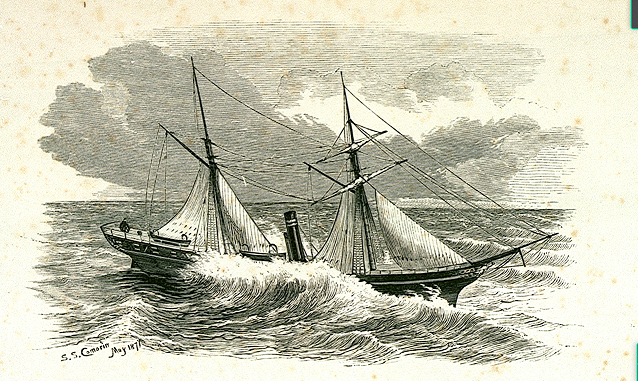
By way of background the Comorin was a schooner-rigged screw-steamer built in 1863 on the Clyde by William Simmons and Co[2].  At just under 300 tons she was a small ship with a crew of sixteen hands and carrying upto about 580 tons of general cargo[3].  She had an auspicious start, joining the fleet of the British India Steam Navigation Company.  The National Maritime Museum, Greenwich, holds a fine picture of her on her voyage home from India in 1871 via the Suez canal[4].  That same year though she grounded on the French coast, was salvaged and subsequently sold to J & P. Hutchison, Glasgow[5].  After repair she continued as a general cargo ship.

SS Comarin May 1871, bound from India via the Suez canal

Fast forward to 1894.  The Comorin set sail from “Tail-of-the Bank”, the name given to the anchorage in the upper Firth of Clyde immediately North of Greenock, registered as bound for Bordeaux [6].  She reached Teignmouth on Christmas Day and ran ashore off the Ness where she remained until floating off on the high tide[7].  She sailed into harbour on Boxing day to load up with an additional cargo of clay bound for Seville[8].  That was when the accident happened.

The Accident

There were several accounts published of what happened that day.  The fullest was in the Teignmouth Post and Gazette of 28th December:

SAD ACCIDENT AT THE OLD QUAY

On Wednesday morning a sad accident occurred at the Quay Extension by which Thomas Linklater, boatswain, of the steamer Comorin, of Glasgow, lost his life. The steamer came into the harbour in the morning and was berthed at the wharf to load clay from trucks. Two gangs of men were at work loading the steamer, one party at the main hatchway and another at the hatchway the aft side of the main mast. As the trucks were unloaded they were removed and the loaded ones run down in their places. Two horses were drawing the trucks and it was at the moment of shunting that the deceased stepped off the deck of the steamer, with the intention, no doubt, of crossing the line of rails. There was a space of a few feet between the trucks at the spot where the unfortunate man got on the wharf, and it is supposed he was passing between the trucks at the time another loaded one was being pulled down the line, as he was caught between the buffers and squeezed badly. Notwithstanding the dreadful injuries he received he got over the rail of the steamer and walked towards the cabin, and was able to state that he had heard his bones smash. Medical aid was procured and Drs. Little and Stevenson were soon in attendance and ordered his removal to the Infirmary, where he died within a few minutes of his admission.”

An inquest was held the following afternoon by Mr Sidney Hacker with Mr J W Finch as the foreman of the jury.  The jury found that Thomas Linklater’s death was accidental but that there were factors which contributed which should be reported to the appropriate authorities to determine whether action could be taken to improve safety on the quay.

The report of the inquest fleshed out the details of the accident through the eyes of witnesses, as described in the same newspaper article:

THE INQUEST.

The first witness called was George Andersen. of Glasgow, deposed that he was master mariner of the steamship Comorin. The vessel had come from Glasgow with a part cargo of coals. The deceased was boatswain of the steamer, and his name was Thomas Linklater, a native of the Orkney Islands, and lived at Glasgow. He was sixty-five years of age, and a widower. Deceased had been sailing under witness for six years. Witness was standing on the Old Quay, at which wharf the steamer was lying, but did not see deceased until the accident occurred. Witness was standing opposite the after end of the ship, when a man tapped him on the shoulder and said “Captain, one of your men is hurt.” The deceased walked on board after the accident, and went down to the cabin. He said he was in pain and he heard his bones crack when he was squeezed between the buffers of the truck. Deceased was not deaf and he had good eyesight.

The Foreman: If there was room between the trucks and the edge of the Quay would a man stand a chance of getting out of the way of the trucks? (witness replied) Certainly he would. The rails are close to the edge of the wharf.

Witness had given over the wages and effects to the Mercantile Marine Office.

A Juror: Was the deceased sober at the time?  (witness replied) Perfectly; he was a man of sober habits.

John McGilvery, first mate of the Comorin, stated that about 11.30 he was standing on the deck, and saw the deceased get on to the Quay and stand with his back to the rails, and he was looking at the ship. Witness happened to turn around to speak to the chief engineer, and he heard the buffers of the trucks come together. He turned around and saw that the deceased had been caught between the buffers, and the trucks went back, which allowed deceased to get clear. He got over the rail himself and sat down near the funnel, and then went down the cabin. Deceased said he was very bad, and that he heard his bones smash. The lumpers on shore were shunting the trucks with horses, and deceased knew this. As the trucks were unloaded they were pulled away and the loaded ones brought up. The horses were working on the other side of the trucks to that which the deceased was standing. The man in charge of the horses would not see anyone standing on the Quay at the spot where deceased stood. In other places where trucks are unloaded there was more space, and in witness’s opinion the accident was attributable to the narrow space between the trucks and the edge of the Quay. No warning was given at the time the trucks were being shunted, neither was there anyone near the spot with a flag.

Samuel McKay, chief engineer of the ship, corroborated the evidence given by the previous witness, adding that he heard deceased shout when the trucks came together. It was not more than a minute from the time that witness spoke to deceased before the accident occurred.

At this stage of the proceedings one of the jurors was putting leading questions to the witness, and the Coroner said he could not allow it. The jury must form their own opinion from the evidence given, and not help witnesses in their evidence.

William Dymes Stevenson, surgeon practising at Teignmouth, stated that he was called about quarter to 12 to go to the Quay. He found deceased in the cabin in a sitting position. He was in a state of collapse and speechless. His stomach was swollen and hard, and he had the appearance of losing blood internally. There were no external marks or injury to the flesh. Witness ordered his removal to the Infirmary, where he died in a few minutes after he was brought in. Witness concluded there had been a rupture of the liver and probably the diaphragm had been injured. The buffer would inflict injuries over a large surface.

Richard Medland stated that he was in the employ of the Old Quay Company, and drove the horses in shunting the trucks. On Wednesday morning witness and his mate, Hamley, were shifting the empty waggons and bringing up the loaded ones. There were three loaded trucks standing on the line a few yards from the empty trucks. Hamley was the hind chain man and witness was at the horses’ heads. He called out “Look out” before he started the horses, which he always did before he moved trucks. He could not see on the offside of the trucks and did not know deceased was standing on the wharf. It was only a few yards distance to pull the trucks and would only take about a minute.

The Foreman: Between the buffers of the trucks would be about six feet. (witness replied) He never saw anyone standing in the six feet opening.

By Mr. Wills (juror): (witness confirmed) He had been employed for 30 years in the same kind of work.

Charles Hamley stated that be hooked the chain to the trucks. There were close on 50 people standing about. He and the previous witness shouted to the people to “Look out” before the trucks were started.

Charles Brewer, stevedore, in the Quay Company’s employ, stated that he had charge of the work of loading the steamer. He heard Medland call out ” Look out.” Medland could not have seen anyone standing on the line at the spot where he was hooking the horses to the trucks. Deceased was caught between the empty trucks at the moment the loaded one came against them.

William Skinner Wills, secretary to the Old Quay Company deposed that he was on the Quay talking to the Captain when the accident happened. He did not see the deceased neither could he hear anyone call out, the noise of loading and moving the trucks prevented his hearing Medland call out. All the rails were laid under the supervision of Mr. Inglis, chief engineer of the Great Western Railway and to have a system of signalling would be a farce. The Board of Trade regulations did not come into force where horse traffic was used. Medland and Hawley were two most trustworthy men and knew their work well.

The Foreman: Were not the rails laid so close to the wharf to save a turn-table?

Witness: I cannot pass judgment on Mr. Inglis’s plans.

The Coroner reviewed the evidence and pointed out that as long as people had access to the Quay so must proper precautions be taken. It was just a question whether the cause of death came within the category of accidents or not. If there was culpable negligence on the part of anyone, it then became a serious affair, if on the other hand any suggestion from the jury would prevent future accidents, it would be their duty to say so and pass a rider to that effect.

The jury then discussed their verdict in private, and came to the conclusion that the accident was purely accidental, and added a rider to the effect that the railway metals were too close to the edge of the wharf, thereby not allowing sufficient space for a person to stand between the trucks and the edge of the Quay. The Coroner accepted the rider and said he would forward it to the proper authorities.

Following Events

The Comorin left port on the same day after the inquest.  Apparently it was despatched pretty smartly by Messrs G.P. Ward, the brokers.

Headstone of Thomas Watt Linklater, buried in plot M89

Thomas was buried in Teignmouth Old Cemetery in plot M89 on 31st December.

His epitaph is the quotation from Matthew which was quoted at the start of this story:

“Watch therefore, for ye know neither the day nor the hour wherein the Son of man cometh.” 

A haunting reminder.

Sources and References

Extracts from contemporary newspapers are derived from British Newspaper Archives.

Wikipedia for general background information

Other sources, with hyperlinks as appropriate, are as follows:


[1] Genealogy from: www.raymillar.co.uk

[2] Ship’s build register from: https://www.clydeships.co.uk/

[3] Ship’s details from: https://www.wrecksite.eu/wreck.aspx?302188

[4] National Maritime Museum – https://www.rmg.co.uk/collections/objects/rmgc-object-110921
Attribution: License:: Public Domain. Free for editorial, educational, commercial, and/or personal projects

[5] British India Steam Navigation Company: https://www.theshipslist.com/ships/lines/bisn.shtml

[6] Departure of Comorin: 1894-12-24 Greenock Telegraph and Clyde Shipping Gazette – Monday 24th December 1894

[7] Grounding of Comorin: Sunderland Daily Echo and Shipping Gazette – Wednesday 26th December 1894

[8] Setting sail: Teignmouth Post and Gazette – Friday 28th December 1894

Triumph and Tragedy

A few weeks ago Jacqui, one of the dedicated group of volunteers of Friends of Teignmouth Cemetery, discovered and uncovered a grave in section HH of the cemetery.  Her first reaction was “There’s a story here”.  That instinct was not wrong but she had under-estimated.  There were three stories – people buried in different parts of the cemetery but linked through this discovery.

A seven year old girl, Frances Maude Waite, tragically killed by a runaway traction engine on 12th June 1896, was the subject of the first story. This second story is about Sidney Charles Wills whose life could perhaps have been so much more but which turned from triumph to tragedy.

The Start in 1900

This story starts in 1900, in the dying days of Victorian imperialism when Britain was deeply mired in what was known in Britain as the Second Boer War, which the Boers acclaimed as the “Freedom War”, and which is now conventionally referred to as the South African War.  The war itself started in 1899 and it wouldn’t be over-simplistic to say that greed was a prime instigator of the war.  The Kimberley diamond mine was already open and a huge swathe of gold ore had been discovered in the Boer-controlled state of Transvaal.  The war started badly for Britain as the well-armed, fleet-of-foot Boer commandos outmanoeuvred the conventional military approach of the British generals. News came of the sieges at Ladysmith, Mafeking and Kimberley.

Then a wave of jingoistic, patriotic fervour was whipped up by the Press and over 180,000 men were recruited to add to the existing British army in South Africa creating an “Expeditionary Force” whose sheer weight of numbers would eventually prevail ….. but at a cost as we’ll see later.  The war was brought home to villages, towns, cities across Britain, and Teignmouth was no exception.

Sidney Charles Wills, together with his friend William James Buckingham and another lad, George Matthews, from Shaldon were the three local volunteers who took that journey to South Africa.  But they didn’t leave quietly.  In what was probably not atypical of thousands of places across the country these three young men received a civic send-off and procession through the streets.

The Send-Off

A shortened extract from the Teignmouth Post of 13th April described the departure of troopers Buckingham and Mills:

OFF TO THE FRONT! A GENUINE AND HEARTY SEND OFF.

Teignmothians gave themselves away on Thursday evening. It was not a carnival, but just a few thousand people revelling in excitement to give a hearty send off to a couple of young patriots “going to Table Bay.” Like many a public demonstration we could mention, the whole thing was got up on the spur of the moment, and as a natural consequence in Teignmouth, this impromptu “Good-bye” was an unqualified success—not lasting an hour, but making a deep impression on the minds of the rising generation, who will not readily forget the scene at the railway station and the crush of people to cheer and wish “God speed” to Troopers W. Buckingham and Sid Wills, who have volunteered to go to the front in the ranks of the Rough Riders’ Corps.

Buckingham was a telegraphist and clerk at the Post Office. His father was for many years Chief Officer of Coastguards at Teignmouth station. Wills is the youngest son of the late Mr. Joe Wills, and as the families of the two young fellows were so well known in the town, it was considered – and wisely too – that we should not let them go away without some reminder that their desire to do their duty as soldiers was admired and recognised by the townsfolk generally.

Uniform of a ‘Gentleman in Khaki’

And it was a ‘send off’! No generals could have wished for or received such an ovation. Cheers, music, and miniature guns rent the air, and for forty minutes a throng of people occupied the streets, escorting in procession the two young “gentlemen in Kharki going South.” It was an unexpected demonstration and proved how well we can do the thing when our hearts are in that direction.

Previous to the formation of the procession, there was an interesting and pleasing ceremony performed at the Post Office. The staff had a desire to mark their appreciation of Buckingham’s companionship and to assure him that during the time he was working with them, his good tempered and friendly character had not escaped notice, and the whole body of postal workers were at one in putting together for a reminder of happy days in the Teignmouth office of the G.P.O. So they got him a purse and placed something in it bearing the profile of Her Most Gracious Majesty as one memento; and from Mappin and Webb’s they obtained a most useful and necessary present, in the shape of a soldier’s combination knife in case and with lanyard .….. Mr John Berry handed the young trooper a pocket Bible; and with cheers and a verse of the National Anthem the initial proceedings closed.

A move was made for the Rifle Drill Hall. Here the I Company of the 1st R.V. had assembled, and to their credit be it said, as well as to the Artillery Volunteers, the men responded to the bugle call at what may be termed a minute’s notice. Armourer-Sergt. Tapper was on duty and Color-Sergt. H. Hooper commanded. The hall was crowded. Color-Sergt. Hooper addressing Buckingham as one of their comrades, said he had wired Captain Beal for permission for the Company to turn out that evening, and the Captain had wired “Yes, with hearty congratulations to Buckingham, and wishing him a safe voyage, God-speed and a safe return.”

He (Sergt. Hooper) said he supposed he must address their comrade as “trooper” now, but he could assure him that every member of I Company thoroughly appreciated what he had done. During his connection with the Company he had been an obedient and steady soldier, and if he made as good a trooper as he had been an infantry man he would be certain to come out all right. They were sorry to lose him, but as a soldier he preferred to go on active duty at the front, and they thought the more of him for the step he had taken. The few articles which he handed him, on behalf of the Company, would be useful and necessary to him in the undertaking he had entered upon and would no doubt remind him of the pleasant time he had spent in the ranks of I Company.

Color. Sergt. Hooper then handed Trooper Buckingham a silver mounted pipe and pouch of tobacco; a box of cigars given by Mr. H. A. McBryde ; a box of cigarettes from Mr. J. Steer, and a Tam O’Shanter hat from Mrs. Bell-Soames, to which was attached the following good wishes “God bless you and all true patriots and grant you a safe return.” (Applause.)

A presentation on behalf of the Company was made to Trooper Wills in the shape of a pipe and pouch, and a box of cigarettes and holder from Mr. George Hill, together with a Tam O’Shanter cap with the same lines attached as on Trooper Buckingham’s. In thanking the members of I Company and the friends who had been so kind Trooper Buckingham said that what he had learnt as a Volunteer had already proved most useful to him, and he would not be afraid to stand before many of the regulars he had met with since be had joined the ranks as a trooper. (Applause.)

Headed by the Artillery Band. the Artillery Volunteers, under Lieut. D. V. Whiteway-Wilkinson, and the Rifle Volunteers, made up a procession in Northumberland Place and at once proceeded to the station to catch the up-mail. At McBryde’s London Hotel colored lights were displayed, and a salvo of cracker guns was fired. The excitement was at its highest, and the two young troopers were given their “baptism of fire ” in the way of volleys of “Celestial Empire” pyrotechnics. Along the Station Road Mr. Croydon had arranged a deafening bombardment. A salute of no less than 150 “guns” being fired in four minutes. This banging, together with the inspiriting tune “The Soldiers of the Queen.” and the cheering of a thousand and more people, was a scene, such as has never been witnessed in Teignmouth before, whilst the crush at the station doors was something tremendous. There was a general waving of hats and shaking of hands, and the send-off was completed when the train steamed out of the station.

Before the two young men left the platform. Mr. S. A. Croydon presented each with a box of cigars. Bandmaster McDermott gave the signal and the band struck up that dear old Scotch air ” Auld acquaintance.” A few more ringing cheers and then a verse (vocal and musical) of “God save the Queen.”

Reading between the lines of this article you might speculate that it was Sid’s friend who led this venture and that Sid had been persuaded, cajoled, goaded into joining him.  Despite the patriotic fervour that was sweeping the country there might also have been a sense of adventure for young men of their age (Sidney was 18 at the time).  There is also a slight clue in the article in how this might have been presented to young men when it refers to them as joining the ranks of the “Rough Riders’ Corps”.

This was officially the Imperial Yeomanry, created by Royal Charter in December 1899 specifically to support the regular army in South Africa following the disastrous series of defeats they had experienced earlier that month.  Informally they were known as the Rough Riders (or simply the ‘Roughs’), named after Theodore Roosevelt’s Rough Riders who served in the Spanish-American war of the previous year. Sid and his friend were both in the 79th Company of that Imperial Yeomanry.

Men joined up for only one year.  They were organised into county service companies and equipped as “mounted infantry”.  They received minimal training before all being shipped out straight into the fray in April 1900.  Adventure?

Some brief news of Sid and William appeared in the Teignmouth Post and Gazette of 27th April:

EN VOYAGE

Mr J U valentine has received a few lines from Trooper Buckingham, written at sea on board the transport SS Canada.  He says that neither Sid Wills or himself have been sea sick, though scores of the others have been.  They expected to call at Las Palmas, and he should post the letter to Mr Valentine from that port of call.  They were, he said, a bit cramped on board, otherwise very comfortable and good grub.  The ‘send off’ quite surprised him for Teignmouth.

Three months later more news arrived home from Trooper W Buckingham in a letter to his friend Bert Valentine which was reproduced in the Teignmouth Post and Gazette of 31st August:

Pretoria, July 31st 1909

Dear Old Chum,
We arrived here from an expedition against Botha yesterday and received two English mails.  Last Monday fortnight (16th) we left here after Botha and were under artillery and pom-pom fire before noon, but he was playing a retiring fight as we attacked a kopje one side the Boers retired the other.  Five of our company are missing and our transport waggon, supposed to have been taken prisoners, and one of ours had his horse shot under him.  You see my great wish to be under fire has been realised, it is very funny to lay behind boulders on a kopje and hear the shells going over your head, they sound like running water.  After our waggon was captured we were put on quarter rations, vis: 1
½ biscuits and about ½ pint of coffee per day.  We have not slept under canvas for a month.  It is cold at night and very hot by day.  We march about 18 to 20 miles a day and start before daybreak, often not camping until after dark.  Our horses are done up and every man will be heartily glad when the war is over.  We are in Ian Hamilton’s column but “Bobs” was with us several days.  It is astonishing to see how our gunners can put shells into the Boer trenches with the howitsers.

Well, dear old chum I must close now, will tell you all about this outing when I come back, if spared.  Give my kind regards to all at home, and the dear old boys.

Your ever sincere “pal”, “Buckie”

P.S. We are off after another body of Boers at daybreak tomorrow, we expect more fighting.

The Return

The Teignmouth Post and Gazette produced a souvenir programme with photos of Troopers Wills and Buckingham on the front (it would be wonderful to see a copy if one still exists).  The troopers were arriving home on the mail steamer Roslin Castle expected at Southampton on 8th July and plans were made accordingly.  A committee was formed, money was raised, expectations were raised but in the event there had to be last-minute changes since Sid Wills had been detained in hospital and would be returning on the following ship.  The committee decided to go ahead with two welcomes, the first a more abbreviated event and the second when Sid Wills arrived which would be the fuller event originally planned.

Troopers Sid Wills and George Matthews arrived back in Southampton on 18th July in the Manchester Merchant. 

The Manchester Merchant 1900

The full celebratory welcome home for all three troopers then took place on Wednesday 24th July.  The Teignmouth Post and Gazette of 26th July covered it in full.  Here is an abridged version:

RETURN OF TROOPER WILLS. A PRESENTATION, SERVICE, SUPPER AND CONCERT.

The welcome extended Trooper Sid Wills on his home-coming on Wednesday evening was none the less demonstrative and hearty as that accorded his comrade Trooper W. Buckingham when he came home. The procession, which consisted of an escort of Yeomanry preceded the three Troopers on horseback and in their uniforms of kharki and slouched hats. The band of the Volunteer Artillery was in front, playing “Soldiers of the Queen.” The Volunteer and the Rifle Volunteers followed. There was a plentiful display of bunting in the town. The bells in the tower of St. Michael’s rang out and the thousands of people who watched the procession cheered to the echo. At the Den the commander of the volunteers, approached the platform, and introduced Trooper Wills.

PRESENTATION:

Capt. W. H. Whiteway-Wilkinson said: I offer you, Trooper Wills, sincere congratulations on your return from the front. (Cheers).

On behalf of the Town of Teignmouth I extend you a most hearty welcome back to your home. We were all sorry to hear that you had been delayed in hospital at De Aar, and we were delighted to hear that you were able to leave by the next ship. We should much liked to have seen you here with Trooper Buckingham, but though delays are dangerous you are here now safe over your journey. (Cheers).

The Imperial Yeomanry Hospital, De-Aar

When you were in Africa, you no doubt heard the strains and words of a song by the name of “Soldiers of the Queen.” When you left Teignmouth to take part in the struggle in the Transvaal you were a soldier of the Queen. Certain lines of that familiar song refer to the men who have been and the men who have seen. You have seen what it is quite likely you may never see again in your lifetime. You have done what many of us have never done. You have seen the grouping of the units of the magnificent fighting forces of this Empire (loud cheers)—and you left this country as one of these units, and every branch of the fighting forces of this country, together with its Colonies, were represented, and with these you have mixed, been one of them. Although a soldier may not be in the fighting line, or in actual engagements, he did his duty if he offered his services and went to be ready when needed. (Hear, hear.) The soldier, as long as he behaved himself, was worthy the respect of every citizen. There used to be an old song with the troops in India, and he believed the words were:

In this campaign
There’s no whisky or champagne
But we can teach them
How to respect the British soldier.

You have, since you left home, been in peril by sea, and open to the dangers of being killed or wounded, or being caught by disease. The last mentioned fact you accomplished, but fortunately for you, thank God, you have recovered from the latter, and we trust you will be none the worse for it.

It gives me pleasure to offer you hearty congratulations on your safe return and to express that feeling on behalf of your townspeople. It was the grim business of some of the units to take up arms as regular soldiers, whilst there were a lot in business occupations who did not mind taking up arms for the mere love of their country, and they had proved themselves worthy soldiers. (Hear, hear.) It must be a source of gratification and comfort to the soldiers to know they were not forgotten, to realise that all at home were ever mindful of the welfare of the soldier when away. Scarcely a week passed without something having been sent out to South Africa, to let the British soldier know that although he may be a thousand miles away, those at home did not forget comforts of some sort, and the chocolate boxes, plum puddings, and many necessaries sent out, were to let the soldiers know they were ever in the hearts of those at home.

I am asked by the Committee to hand you this watch, subscribed by your fellow townspeople in appreciation of your services in South Africa. It will be some little token to remind you of what you have done, that you did your duty as a soldier and a man. (Cheers.) When you look at the watch I now hand you, and the inscription inside, you will be able in years to come, to say, “thank God, when my country was in distress, I gave my services and did my duty as a citizen soldier should do, and by this present I am aware that my fellow townspeople appreciated what I did”. With the watch, we one and all wish you long life and happiness to wear it, so that you may have some pleasure after what you have been through. (Loud and prolonged cheers).

Trooper Wills regretted that he was unable to have been present with his comrade Trooper Buckingham, but that could not be helped. He was glad to say he felt in the best of health, but he could hardly find words to express his thanks for the hearty welcome and the handsome present given him. He should always look upon it with pleasant recollections, and a mark of the kindness of the townspeople of Teignmouth. He wished to thank everyone and that was about all he could do.

The watch presented was engraved on the outside with Trooper Sid Wills’ monogram, and inside is the following inscription: “Presented to Trooper Sid Wills, 79th Co., I.Y. by the inhabitants of Teignmouth on his return from the South African Campaign, July, 1901.”

There followed a Thanksgiving Service at St Michael’s Church taken by the Rev. J. Veysey.

THE SUPPER AND CONCERT:

At 8.30 a goodly company assembled at the Town Hall and sat down to a capital supper provided by Mr. W. H. Bonner, chef of the Regent Street Restaurant.

This was followed by toasts and the concert which “was thoroughly enjoyed, as a good deal of the professional element was introduced, whilst the local talent embraced many of the best vocalists and musicians in Teignmouth, each of whom were heard to advantage. The programme included a popular song of the time: “When the Boys in Kharki all come home.”

The following day the three Troopers called on Mr. S. A. Croydon (hon. secretary of the Reception Committee), and asked him to convey to the public their thanks for the splendid reception given them. They also highly appreciated the efforts of the Committee for what they had done and wished to express their thanks to one and all for their great kindness.

Aftermath

The Country

By the time the three troopers had returned to Teignmouth the feeling in Britain was that the war was all but over.  Kimberley, Ladysmith and Mafeking had been relieved, the Boer state capitals of Pretoria and Bloemfontein had been captured and Botha’s commandos had been driven back.  But the war continued for almost another year as the Boer tactics of guerrilla warfare continued to have an impact.  Eventually sheer weight of numbers prevailed (Britain deployed over half-a-million armed forces against approximately 60,000 Boer commandos) and the surrender treaty was signed in May 1902.

Britain may have won the war but at what cost?  Financially the war cost around £20 billion in today’s terms.  In terms of casualties, an estimated quarter of the total British force were either killed, wounded or returned home sick or wounded.

In human terms Britain descended to a low in warfare.  Unable to win through conventional means the generals adopted “scorched-earth” policies and introduced “concentration camps” for Boer women and children and Africans.  Over 50,000 died in those concentration camps.

It is ironic that in the very same edition of the Western Morning News, directly above the announcement of the arrival of the three troopers back to Teignmouth, there appeared the following article:

Perhaps this was coincidence or perhaps the paper was trying to reflect the shifting attitude in the country to the war. The fact that this effort was sanctioned by the Secretary of War suggests that there was a definite feeling of shame, guilt, vulnerability in the government. Whatever the interpretation, the whole debacle brought about the fall of the British government at the election in 1903.

Trooper Buckingham

Sid’s friend “Buckie” returned to his job in the post office and appears to have simply settled down to a normal life and put the war behind him.  He was an active member of the Corinthian sailing club and the Teignmouth Volunteers Rifle Club up until the outbreak of WW1 when he joined the Wessex Signal Company stationed in Torquay.  After that war he remained with the post office until at least 1936 when he was acting Postmaster.  Presumably in his retirement, he became an active member and honorary secretary of the Winterbourne Bowls Club.  He died in 1963.

Trooper Wills

After his triumphant return from the South African War Sidney seems to have been more influenced by his experiences there than his friend. This ultimately led to the tragedy which forms the second half of this story.

From Triumph to Tragedy

By way of background, Sidney grew up at the Devon Arms Hotel, 48 Northumberland Place, where his father Joseph was the proprietor.  This experience subsequently formed a grounding and a backdrop to his future life.  At the time of the 1891 census he was the youngest of five children with three sisters – Kate, Amelia and Florence – and one much older brother, Albert.  His father died five years later when Sidney was 15 and, by then, three of his siblings were well into adulthood so his mother would have been left looking after just him and his sister Florence.

So ….. what happened after the war?

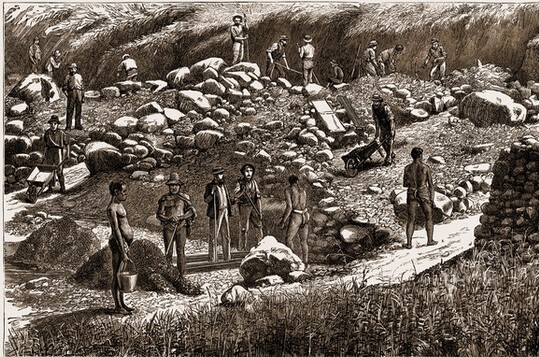
Despite his harrowing introduction to the country Sidney seems to have been attracted back to South Africa, lured probably by the potential pickings to be made from the gold mines of the Transvaal.  He returned there probably after the end of the war in 1902 and it looks as though he stayed for 2-3 years “engaged in mining” (Teignmouth Post and Gazette 10th Jan 2013).

Transvaal Gold Fields

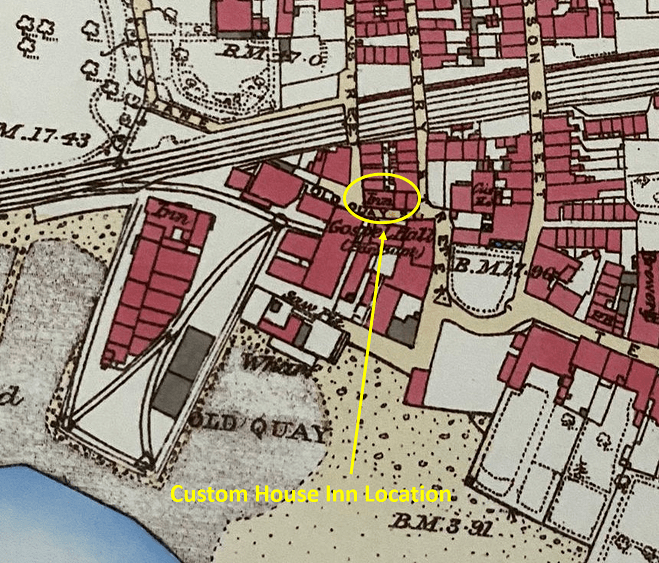
He was back in Teignmouth by May 1905 when he took on the licence of the Custom House Inn, 9 Old Quay Street Teignmouth.  This had become available through the death of the previous proprietor, Mr George Berry, in November 1904.  Sidney was now following in his father’s footsteps as a licensed victualler.  The Teignmouth Post and Gazette of 19th May commented “The best of good wishes are being extended to Mr. Wills from all quarters.  He takes possession on the 1st July.”

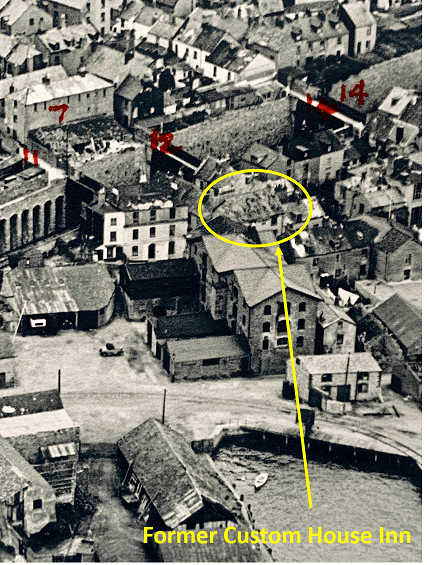
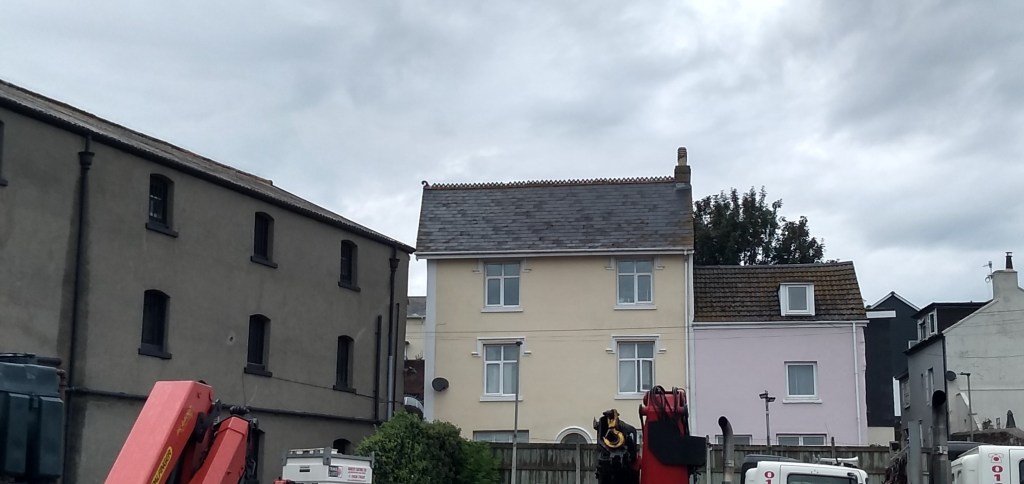
The Custom House Inn was a very different establishment from the probably more salubrious Devon Arms Hotel where Sidney had grown up, so Sidney may have faced a bit of a baptism by fire.  It was in the docklands area, the heart of the working quarters of many in Teignmouth.  Like so many pubs in Teignmouth it has long since disappeared.  The building still exists though, having being bought by the Rotary in 1937 and converted into a special residence, Eventide House, for Old Age Pensioners.  It features on the 1890 Ordnance Survey map and in a rare aerial photograph from the 1930s (Viv Wilson archive).  Ironically in 1907 it stood opposite the Teignmouth Rifle Club rifle range (now used for indoor bowls).

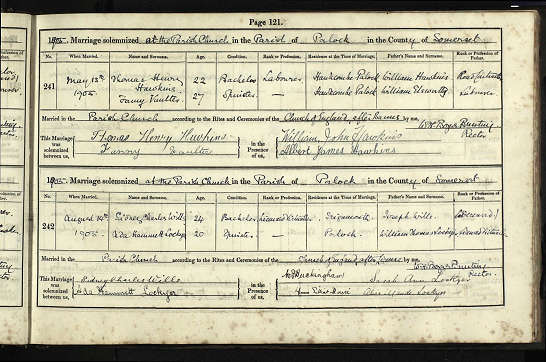
Then a few months later, on August 14th 1905, Sidney married Ada Hammett Lockyer. At the time she lived in Porlock, Somerset, where her parents ran the Castle Hotel. You do wonder how they met.  Was it a chance whirlwind romance in the short time since he had been back from South Africa? Or had he known Ada from his earlier days, remained in contact and returned to marry her?

Ada’s earlier background was similar to Sidney’s.  Born in Mamhead in 1886 Ada is shown in the 1891 census as one of six daughters to (William) Thomas Lockyer and his wife Rachel. Her father had been a head gamekeeper in Plympton St Mary but her parents subsequently moved and ran the “popular” Castle Inn in Holcombe.  They were still there in 1901 but then moved to Porlock where her parents had taken over the Castle Hotel and later went on to run the Exeter Inn in Dawlish.

The wedding was “an altogether pretty though quiet one.  The bride was attired in a gown of French grey colienne trimmed with white silk, and white chiffon hat to match ….. the happy couple, amid a shower of rice and confetti from their friends and a large number of villagers who had assembled to bid God-speed, drove to Minehead en route for Weston-super-Mare, where the honeymoon is being spent.”

Marriage Certificate Sidney and Ada

Whether five years at the Custom House Inn had taken its toll or Sidney felt that a better life could be had in South Africa it seems that he returned there, initially on his own, probably late 1910 or early 1911.  The 1911 census showed Ada living on her own at 5 First Avenue, Coombe Vale, with their three children – Sidney Thomas (4), Joseph Verdon (3) and Ernest Charles (8 months, born July 15th 1910).

In September 1912 Ada and her sons sailed out to South Africa to join Sidney, seemingly to start a new life there but finding tragedy instead.

Tragedy Struck

The Teignmouth Post and Gazette of 10th January 1913 described the full story:

SHOCKING TRAGEDY IN SOUTH AFRICA.
TEIGNMOUTH CONNECTION
HUSBAND’S TERRIBLE DISCOVERY IN HIS HOME.

On December 20th a paragraph appeared in The Teignmouth Post to the effect that news had been received in the town of the death at Benoni Brakpan, Transvaal, of Mrs Ada Hammett Wills, wife of Mr Sidney Charles Wills ….. It was freely stated, and the majority of people were at the time under the impression that the cause of death was blood poisoning, and it was not until the last few days, that the full circumstances of the terrible tragedy became known in England.

On the 7th of September last, Mrs. Wills sailed from Southampton with her three little boys to join her husband in South Africa where he is engaged in mining. They arrived safely, and until the 12th of last month lived in the land of their adoption. Then occurred a tragedy which has cast a heavy shadow over the household, depriving the husband of both his wife and a friend. Returning home late at night he found his wife lying dead, while his friend, a miner named Roberts, who also resided in the house was in a dying condition with a revolver beside him. The sad affair which is, so far, owing to the entire absence of witnesses, shrouded in mystery, is reported to be one of the most terrible recorded is the annals of crime on the East Rand.

The deepest sympathy will go out to the family at Dawlish, and also to the husband and children in South Africa, and to Mr. Wills’s two married sisters who reside in Teignmouth—Mrs. S. Furler, of Fore Street, and Mrs. G. H. Furler, of 8, Hermosa Terrace. He has also several cousins in the town.

The reports published in the “Rand Daily Mail “(Johannesburg) and “Benoni Advertiser”, both dated December 14th, differ slightly as to details. From what can be gathered between the two stories, the shocking tragedy occurred between 11pm and midnight, on Thursday, the 12th December in Lake Avenue, Benoni.

Somewhere about 6pm Mr. Wills left his home at 39a Lake Avenue, to compete in the air rifle Bisley at Johannesburg, his young wife seeing him off. He returned by a late train, and, procuring his bicycle at the station, proceeded to his home, which he reached shortly after midnight. Entering the passage, he wheeled his machine to the accustomed spot, and noticed that the dining-room light was burning. As he passed the dining-room, which door was partly open, he saw Dave Roberts, who was a friend of his, and rented a room in the house, lying on the floor breathing heavily. As Roberts had, it appears, been drinking excessively of late, and had recently lost his job at the Brakpan G.M., where he had been employed as a miner, the Teignmothian came to the conclusion that his friend was lying helplessly drunk.

A minute or two later he returned to the dining-room with the object of getting Roberts to his own bedroom. He then noticed the booted feet of a woman projecting beyond the door and on looking behind was horrified to find that his wife lay stretched on the floor, and weltering in a pool of blood, her face being almost blown away. He then turned round and saw that Roberts was also lying in a pool of blood, which was oozing from the right side of his head. By his side lay a Browning pistol. Rallying from the shock the horror-stricken husband rushed into an adjoining bedroom, occupied by his three little sons aged 6, 4. and 3 years respectively. The two younger ones were asleep, but the eldest was sitting up in his bed, and in a scared voice the poor little fellow said: “I am so glad you have come home, Daddy, l am so frightened. There was such a big bang just now.” The half-demented father pacified the little boy for a few moments and then hurried out into the street to call the police.

A detective and a sub-inspector were quickly on the scene, and Drs Smith and Stevenson were also summoned and pronounced life to be extinct in the case of Mrs Wills. There were two bullet wounds in the temple. Roberts was still alive but unconscious, and he was taken to the cottage hospital where, however, he died about an hour later. It was seen from the first that his condition was hopeless. There were no signs or indications of a struggle having taken place in the room. The body of Mrs. Wills was removed to the Bloemfontein mortuary. Two bullets had entered close to each other on the left side of the face, and the scorched appearance of the skin showed that one at least had been fired at very close range. Roberts was shot through the right side of the head.

One of the papers states that Mr Wills cannot suggest a possible or probable reason for the crime, and they go on to state, “Various conjectures are rife, but the most likely one is that the deceased woman spoke to Roberts about his intemperate habits and asserted that he was out of work in consequence of this. In a fit of rage, Roberts, it is assumed, drew the pistol from his pocket, fired twice at the unfortunate woman, and then turned the weapon upon himself.” Another paper states: “Yesterday (11th December) in a local hotel, he (Roberts) exhibited a small Browning pistol, and used the words, “l am fed up this. Two souls shall go aloft to-night.” Roberts, whose only relative in South Africa is a brother, resident in Johannesburg, had been mining since 1907. Prior to that he was employed at Longs Hotel and the Victoria Hotel, Johannesburg, as a barman. He was 35 years of age, and had borne a good character.

It is stated that Mr. and Mrs. Wills had just fixed up their new home, and Roberts lived with them as a friend. The greatest sympathy Is felt for all concerned.  At present the three little boys are in the hands of friends and are oblivious of their tragic bereavement. Mr. Wills is, naturally, overwhelmed with grief at the terrible occurrence. The result of the inquest has not yet reached England.

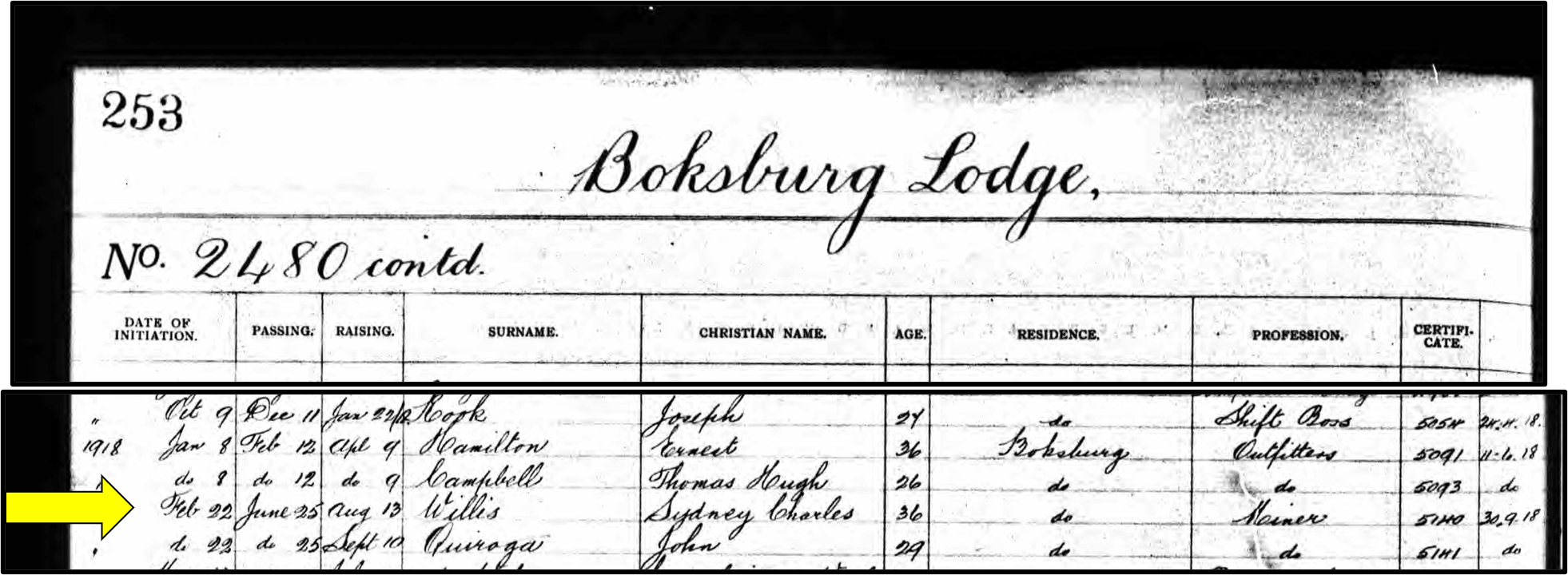
It seems that Sidney and his three sons remained in South Africa after this dreadful incident and he continued working as a miner.  At some point he appears to have re-married and he and his new wife, Elizabeth Turner Wills, had a son, Norman, around about 1919.  He joined the Boksburg Lodge of Freemasons on February 22nd 1918 and, according to their register, he was recorded as a miner and remained a member there until July 1920.

At some point within the next twelve months or so he, with his wife and family, returned to Teignmouth.  His freemasonry membership transferred to the Teignmouth Benevolent Lodge of Freemasons on November 11th 1921 where he was now registered as a “hotel proprietor” (believed to be the New Quay Hotel).  His mother, Elizabeth Newkey Wills, died on 2nd July 1924 and was interred alongside her husband in Teignmouth Old Cemetery.

In 1925 Sidney’s life came full circle.  The licensees of the Devon Arms Hotel, Mr and Mrs Longthorpe, separated after a dramatic court case in which Mr Longthorpe was accused of assault and persistent cruelty to his wife.  Sidney was quick to seize the opportunity and acquired the licence for the Devon Arms at the Newton Abbot licensing session on Tuesday 3rd March 1925.  The award of the licence was accompanied by a strange comment though, as described by the Western Times of 6th March:

“Major Halford Thompson, Deputy Chief Constable, said he offered no objection to the transfer, provided Mr Wills agreed to terms which he (the Deputy Chief Constable) did not wish to make public, but which he would hand to the bench.  Mr Wills indicated that he would agree to the terms, and the Bench granted the application, subject to an inquiry from Liverpool regarding the testimonials being satisfactory.”

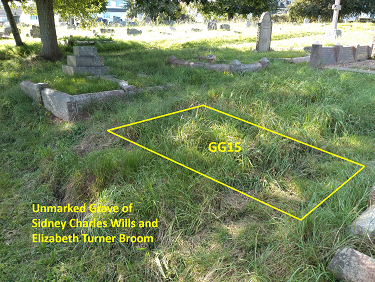
His tenure at the Devon Arms Hotel did not last long.  Sidney died three years later, aged only 47, on Tuesday 31st January 1928.  His funeral took place at the cemetery the following Saturday and was “largely attended”. Surprisingly, he too was buried in an unmarked grave, simply plot GG15.  He was joined six years later by his second wife who had re-married and was then Elizabeth Turner Broom.

Acknowledgements

Many thanks to Rosemary Booth, Gwynneth Chubb, Jemima Eastwood, Chris Inch, and Viv Wilson MBE for their assistance in resolving the mystery of the Custom House Inn

Sources and References

Extracts from contemporary newspapers are referenced directly in the text and are derived from British Newspaper Archives.

Ancestry.com for genealogy, including Freemasonry records

Wikipedia for general background information. Other sources, with hyperlinks as appropriate, are as follows:

Shocking Traction Engine Accident

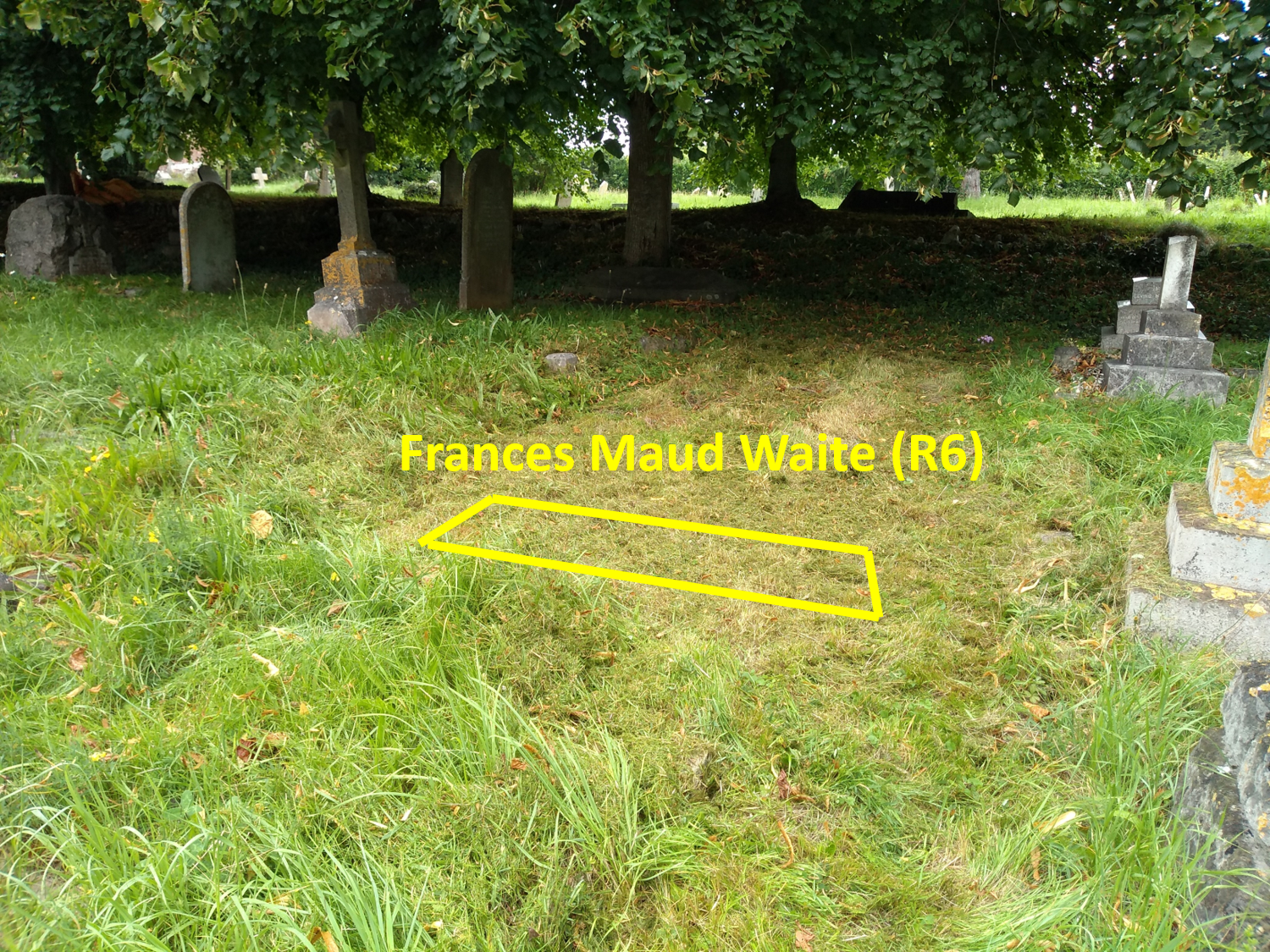
A couple of weeks ago Jacqui, one of the dedicated group of volunteers of Friends of Teignmouth Cemetery, discovered and uncovered a grave in section HH of the cemetery.  Her first reaction was “There’s a story here”.  That instinct was not wrong but she had under-estimated.  There were three stories – people buried in different parts of the cemetery but linked through this discovery.

This is the first story.  Frances Maude Waite was only seven years old when she died, tragically killed by a runaway traction engine on 12th June 1896.  The event made headlines in the local papers for the next few weeks as the story and its consequences unfolded.  It is told here in this verbatim full account, starting with the Bridport News of 19th June 1896:

“TEIGNMOUTH. SHOCKING TRACTION ENGINE ACCIDENT. A CHILD CRUSHED TO DEATH AND A SHOP WRECKED

On Friday an accident of a shocking character occurred at this pretty watering place. A traction engine belonging to Mr. Roger C. Fenton, of Maidencombe, Torquay, was engaged in drawing three truckloads of bricks from the Hele Brick Works at Torquay to Dawlish. The engine was driven by man named William Maffey, while Mr. Fenton was in charge of the steering wheel. Four other men were also engaged with this road train to look after the waggon, brakes and such like. The engine weighs, probably, ten tons, while the bricks and three trucks could not have totalled much less than 30 tons.

The journey proceeded without mishap until Bitton Hill was reached, when it was found that, although the engine was a powerful one, it was not sufficiently strong to take its load to the summit. One of the trucks was consequently uncoupled, and the remaining two were drawn to the top of the hill as far as Bitton Terrace. The engine was then run back for the third truck, and on this one arriving at the terrace the three were again coupled together and the journey continued towards Teignmouth.

There is a very steep Incline from the railway bridge down Fore Street, and before it reached here several persons considered that the engine was travelling too fast for safety on the slightly inclined road between Mulberry Street and Parson Street.

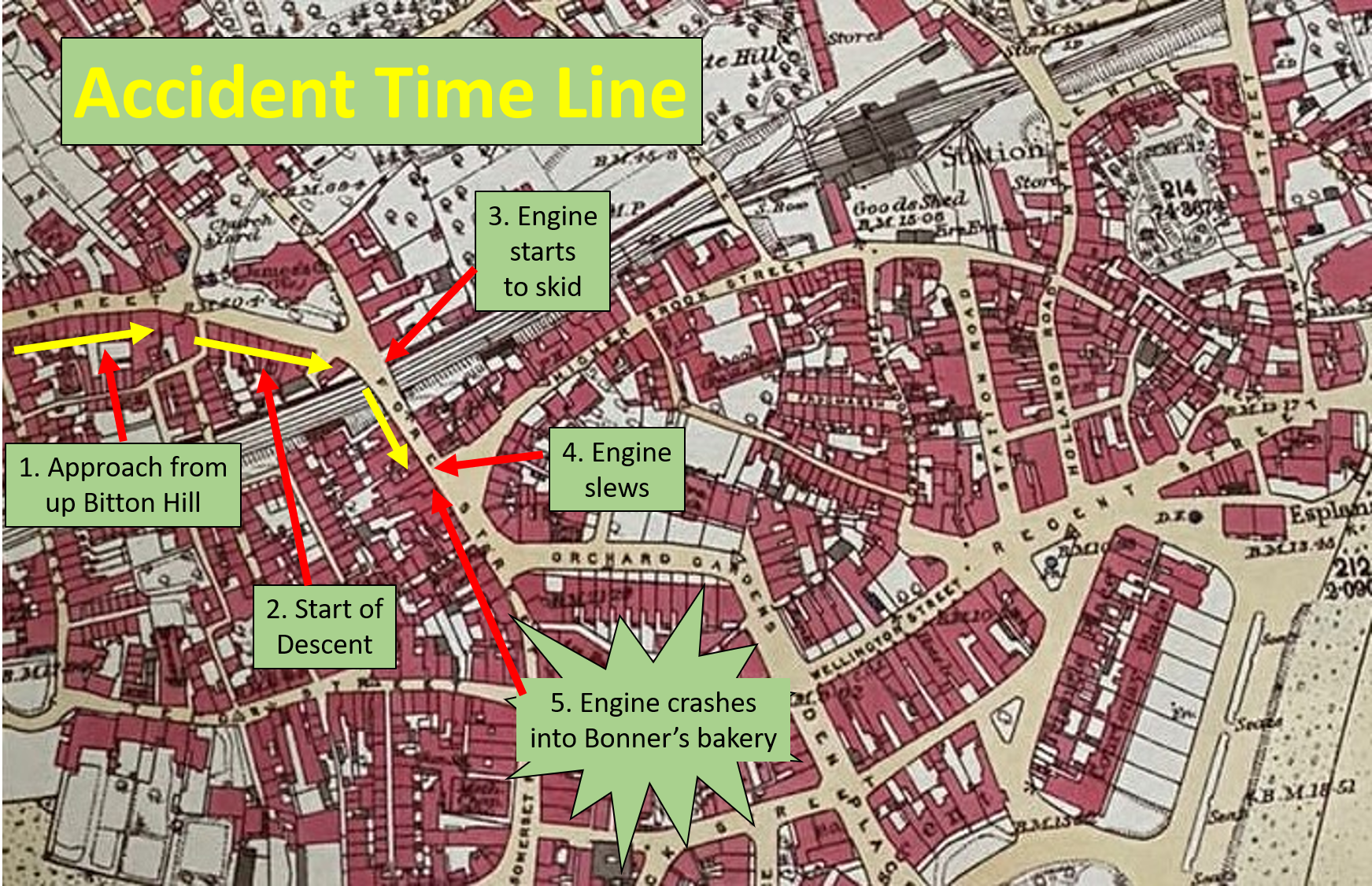
People commenced to be alarmed, more especially from the fact that Fore Street is so steep. When the engine arrived at the bridge it commenced to “skid”, probably from the weight behind It. The brakes were applied with al! force and the steam was shut off, but the locomotive had evidently “run away”, and some kind of accident appeared inevitable. It was hoped the engine would have been able to be guided into Higher Brook Street, and with this idea Maffey took charge of the steering gear. The turn, however, was not made quickly enough, and it was just opposite to the entrance of the thoroughfare named that the three trucks crashed into the end of the engine with melancholy result.

This area of Teignmouth has changed considerably with the development of the dual carriageway in the 1970s.  So here is an extract from an 1890 map of the town showing the street layout as it was then and annotated to mark the events described in the article.

The Bridport News continued:

It was about 20 minutes to 2 o’clock in the afternoon, and, being the dinner hour, there were but few people about, and fortunately, no vehicles. A few minutes later would have seen Fore Street filled with children, for there are two Board Schools in the immediate vicinity of the accident.

Three children were near the shop occupied by Mr. W. H. Bonner, confectioner, and owned by Mr. W. Larkworthy, of Teignmouth. Persons shouted to them to run for their lives, and two of them—one named Clark – took refuge in the doorway of the house in the possession of Mr. C. Lane, greengrocer, 10, Fore Street. The third, Frances Maude Waite, seven years old, daughter of Sergeant lnstructor Waite, of the Teignmouth Company of the 1st R.V., unhappily, was not quick enough, for the engine and trucks crashed into Mr. Bonner’s shop front, pinning the poor little girl to the wall. The other children had a miraculous escape, and were speedily rescued from their dangerous position by Mr. T. Jones, painter, of Fore Street, and Mr. Grainger, who saw the accident happen.

One half of Mr. Bonner’s shop front was completely demolished, and here another narrow escape took place. The shop was in charge of Mrs. Richards, and this lady was sitting by the counter, and close to the window, when she heard a commotion outside. She had simply time to take the faintest glance at what was happening, when the front truck and engine smashed the shop window in and drove the counter two feet from its original position.

Efforts were at once made to get at the child Waite, whom, it could be seen, was fatally crushed. The poor little thing was in such a position that it required a great deal of work before the body could be recovered. There was soon a vast crowd on the scene, and the vicinity of the accident was packed all the afternoon by persons witnessing the operations of recovering the body, and the removal of trucks and engine. First of all the bricks had to be shifted, and these were packed in a heap near the lamp post at Higher Brook Street. Then the two last trucks were dragged out of the way. When eventually the last truck was dragged clear of the debris the body of the unfortunate child fell to the ground, the trunk being fearfully mangled, although the face and head did not appear to be so much Injured.

The remains were quickly taken up and conveyed to the deceased’s father’s house. It is scarcely necessary to say that the parents were overwhelmed with grief, which was intensified by the suspense in waiting for the body to be recovered. Sergeant Instructor Waite previously visited the spot, and was so distressed that he had to be taken home.

Attention was next directed to the removal of the engine, and here a good deal of precaution had to be taken owing to its dangerous position. Happily the work was successfully accomplished, and, the whole of the wheels being got on the ground, the machinery was set in motion, and the engine steamed away from the scene of the catastrophe at 20 minutes to six o’clock.

It was then seen that a wreck had been made of Mr. Bonner’s shop. An iron pillar, supporting the first floor, was smashed in two, pieces of glass and a brass rod were found deeply imbedded in the woodwork of the truck, showing the force of the impact. The contents of the windows were, of course, destroyed, and the large pane of glass in the window on the other side of the doorway was smashed. Some damage was also done to Mr. Lane’s premises. It was ascertained that Maffey had driven the engine for seven or eight months, having been sent down by the makers.

The following photograph from the picture archives of Teign Heritage Centre shows the devastation caused by the crash

The legal system worked very fast in those days and a Coroner’s Inquest was convened for the following day.  The full details of that inquest with its analysis of the cause of the accident is picked up by the Western Times of 19th June 1896:

THE TEIGNMOUTH DISASTER. CORONER’S INQUIRY. VERDICT OF MANSLAUGHTER”.

The inquest was opened on Saturday evening by the District Coroner (Mr. S. Hacker) at the London Hotel. Superintendent Moore was present on behalf of the police. Mr. R. Hall Jordan attended as Clerk to the Urban District Council, and the owner of the engine, Mr. R. C. Fenton, was in attendance, accompanied by Mr. I. Carter, solicitor, Torquay. Mr G. H. Jarvis, member of the Urban District Council, was chosen foreman of the Jury.

At the suggestion of Mr Hamlin, a juryman, all the witnesses (except Mr Fenton) of the occurrence were ordered to remain outside the Court until they were called. Mr Fenton being the owner of the engine was allowed to remain.

Mr. J. T. Waite, Sergt.-Instructor of Volunteers, identified the body as that of his child, Frances Maud, who was seven years of age.

Evidence from the owner, Mr Fenton

Mr. R. C. Fenton, C.C., Maidencombe, said he owned two traction engines. On Friday one of them was on its way from Torquay to Dawlish drawing three trucks of bricks, and he joined it at Kingsteignton. His man, Wm Maffey was in charge of the engine, which was also accompanied by three other men, the regulation number, named Samuel and William Hannaford and Passmore. The trucks contained about 9000 or 10,000 bricks, and they averaged 2½ ton per thousand. The load, therefore, amounted to about 25 tons, added to which was the weight the trucks, making in all about 30 tons behind the engine. No difficulty was experienced on the way from Kingsteignton.

The driving wheel of the engine was seven feet in diameter. The engine which was about two years old, had just been to Rochester where it had been thoroughly overhauled by the makers, Messrs Aveling and Porter. It was 42 horse power, and around London the ordinary load for such an engine was about forty tons. Witness was not aware that under the Act of 1861 the load for each truck was limited to eight tons. The tyres of his trucks were about nine inches wide, and they were provided with diagonal cross bars to enable them to grip the road.

The engine took the load without difficulty up and down the hills until Bitton-Hill near Teignmouth was reached. There, in consequence of the wheels slipping on the stones, one of the trucks had to be dropped halfway up. Witness got off at this point, and the driver first took two trucks to the top, and then returned for the third one which was kept stationary in the mean time by blocks of wood and the drag on the wheel.

The Coroner asked whether it was not a dangerous practice to leave a truck in the middle of a steep hill like that.  Witness said he had never found it dangerous. Of course the engine was never disconnected until the driver had made quite sure that the truck was safely fixed.

Proceeding with his evidence, witness said that on the top of Bitton Hill he again rejoined the engine and took charge of the steering.  He proceeded without stopping.

The Coroner: Don’t you think it would be a prudent thing to stop at the brow of a hill?  Witness: No, there would be no object.  The Coroner: But you would lose the impetus would you not?  Witness explained that there were two speeds to the engine and it was the usual practice to stop it before proceeding down a hill and alter the machine from the fast to the slow gearing. That was done in the present case.

In answer to the Foreman, witness said that on ascending Bitton Hill something went wrong with the injector, but that did not affect the control of the engine

In answer to a juryman, witness said he had not noticed that some spokes in the wheel by which the brake was worked were defective.

Continuing, Witness said the road in question was much barrelled. On coming down the engine commenced to skid, and the driver took the steering gear. Witness attributed the skidding to the smooth state of the stones on the road. He had been told that the rain had swept away the earth and left a stone surface. Thus, the engine wheels were unable to obtain a grip. At the spot where the accident happened the engine suddenly “slewed round” at right angles to the road. He was thrown from his seat, and for a few moments he was jammed. He quite expected the engine to topple over on its side. Naturally, he was a bit confused. When he looked round he saw that the front truck had smashed into a shop. He did not know that the child was there until his attention was called to it by some bystanders. The engine was not quite touching the footpath, and the extreme bar behind was not touching the wall of the house. How the child got there he did not know.  She was apparently killed by the draw bar of the engine.

The Coroner: To what do you attribute the occurrence? Witness said in his opinion it was owing to the fact that the road was barrelled to a height in excess of what was required.  Road engineers as a rule, in a 30 feet road, made it six inches higher in the centre than by the side- but this road would exceed that – more than doubIe, perhaps three times as much. Consequently, the engine, if a little bit on one side, would have a tendency to slip along on one side. If the road was level, it would have slipped down straight, there would be no reason why it should go sideways. The Teignmouth Surveyor had told him that it was a slippery sort of stone.

The Coroner: Then you do not say anything about the weight behind the engine? Witness: No; I don’t think it was an extraordinary weight for an engine of that class.

Mr Hamlin (a juryman) suggested that if the road was so high in the centre it would have a tendency to prevent the engine from slipping to one side. Witness said that was a nice point. It might be the result if the centre of the road came directly under the centre the engine.

The Coroner: You do not attribute the accident in any way to the trucks? Witness said he thought a sufficient answer to that was they had come the whole way from Newton, and passed down hills much steeper in perfect safety. The Teignmouth Surveyor had told him that he had himself had trouble on the hill with the town roller.  Witness’s opinion was that the engine would have slipped if there had been no weight behind. He had ridden it on a bicycle.

The Clerk to the Urban Council (Mr Jordan) asked whether the act of reversing the gear and stopping the wheels with 25 tons behind would not necessarily cause the engine to skid. —Witness replied that was a difficult matter to say. He thought it would be found that the driver did not reverse the gear until he found the engine absolutely skidding.

Evidence of William Maffey, the driver

Wm. Maffey, the driver, was next called. He was told by the Coroner that he was not obliged to give evidence, but he could do so if he pleased. Witness elected to make a statement.

He said the Board of Trade did not grant certificates to traction engine drivers. He corroborated a large portion of the previous witness’s evidence, and added that on coming to the hill in Fore-street Mr Fenton gave signs to the men to put on the brake. When that was done, the engine was proceeding at the rate of from a mile or mile and half an hour He explained that it was impossible to stop the engine to put on the brakes. If they did it would probably be unable to restart, or if they did start again with the brakes on the machinery would be greatly damaged and the brake gear would be rendered useless.

The engine commenced to skid, and gathered speed as it proceeded. He absolutely lost control of it. It was impossible to steer, and the engine went where it liked. The back of the engine struck the wall by the side of the shop, and the first truck ran against the side of the engine and the shop window. Witness did not know the child was there. He had a mishap at St. Mary Church about a fortnight ago when, consequence of the road having just been watered, the engine skidded and knocked down a doorway entrance to a garden.

Answering further questions, witness said the roads about the district, especially at Torquay, were very slippery owing to their smoothness. Macadamized roads were more dangerous than ordinary country roads. There had been an accident with an engine at Totnes, but it was not their engine.

At this point the inquest was adjourned to be resumed the following day.

Maffey, recalled, said that it was just before he reached the bridge when he put the brake fully on. It was put on gradually. If it was put on tight at first the engine would be stopped. The engine was three or four yards past the bridge when it commenced to slide sideways.

Answering Mr. Hutchings, witness said he shut off steam two minutes before he applied the brake. He had been traction engine driver all his lifetime, but he had never been told how much weight was allowed to be carried.

Evidence of Employees

Samuel Hannaford, an employee of Mr Fenton stated that he was in charge of the trucks. On ascending Bitton-hill the wheels of the trucks slipped round. This often happened. As Mr Fenton thought it was “pretty much of a load”, he had one truck detached and took up two. The engine subsequently returned for the other truck. At the top, while proceeding again with the three trucks, Mr Fenton motioned for the brakes to be applied. Witness put them on the first two trucks, and a man named Passmore applied the brake to the third. They had to go between the trucks to do this. It was all done before the engine commenced to descend the hill. On turning the corner, his notice was attracted to the wheels skidding. He then turned round and said to his mate, Passmore, “Look out, you had better keep away a little, I believe she is going to run away.” He could not say positively that the brake of the engine was on, but the wheels were certainly not revolving. These, he thought, must have been stopped by a reversal of the driving gear. It was not often that the brake alone would stop the wheels of the engine; although he had stopped truck wheels in that way. On reaching the spot opposite Higher Brook-street, the engine suddenly slewed round.

The Coroner: What caused the engine to slew in that way —Witness said he thought the driver must have locked it a little order to get it to the other side.

Replying to further questions from Mr Hutchings, witness said Fore Street-hill had been rendered greasy by having apparently been recently watered in the ordinary manner. The road was not really wet.

If the road had not been recently watered you think the engine would have slipped —No, I don’t believe she would have slipped. If the road had not been watered and if the surface of the road had been rough, the engine, I think, would have gone down all right.

Wm. Passmore, an employee of Mr Fenton gave evidence of a similar character. He also attributed the accident to the slippery state of the road, but he did not notice that it had been recently watered. Every possible precaution was taken.

Evidence was also given by Wm. Hannaford, St. Marychurch, who said that his duty was to walk in front of the engine. When he came to the hill it did not occur to him that it was necessary to warn the driver to stop. He did not think it was so slippery as it turned out to be. The engine had descended hills quite as steep. When the skidding commenced, he ran forward to warn any vehicles that might be in the way.

Evidence from witnesses

Wm. Taylor, labourer, Bishopsteignton, stated that he saw the brakes of the trucks applied near the church gate in Fore-street. On crossing the bridge, the driver reversed the lever, and the engine at once commenced to skid. The road being “sideways” and the trucks being pressing heavily behind, the engine suddenly swerved round. If the road had been level it would probably have gone straight on.

William Edward Granger, house decorator, gave a description of the accident. He pulled away two children, and passed them back to his brother. He then went to the shop door and told Mrs Richards that nobody was hurt. At the same time he noticed someone behind the engine, and on passing round he saw the child jammed to the wall.

Thomas Wm. Jones, who assisted in rescuing the two children from their perilous position, said that when the engine turned, the trucks seemed to “take charge” of the back part. He had seen a good many engines pass down the hill, and most of them, notably Mr Hancock’s, stopped “dead”, at the brow of the hill and put on their brakes and chains.

Mr Hutchings :  Then in your opinion the brakes were applied too late? —Witness: That is so.

Evidence from others

William Coram, foreman of the brickworks, where the trucks were loaded, stated that the three trucks contained altogether 25 tons bricks.

Mr Christopher Jones, Surveyor to the Urban Council, stated that the road between Bitton-Hill and the spot where the accident occurred was in excellent condition for all ordinary traffic. There was a rising up Bitton-hill of one in eleven, and from the top of Fore-street hill to the spot where the accident happened was a downward gradient of one in ten. He described Bitton-hill and Fore street hill as good macadamized roads in excellent condition. As they were chiefly used for carriages he aimed at making them as smooth as possible. Fore-street hill was not bevelled excessively. It was a 20ft roadway, and in the centre it was nine inches higher than it was the sides. Near the spot where the accident occurred it was a sideland road. The hill had not been watered on Friday. That, however, was done on Thursday. He examined it immediately after the accident and found it perfectly dry. Limestone was slippery when damp, but that was not used in metalling this particular hill. If an engine once slipped on the hill, it would never recover itself because the stone was so hard. He denied that he told Mr Fenton that his steam roller had skidded on descending this hill.

Answering further questions put by Mr Carter, witness admitted that the roads were watered by salt water. The metalling used was a green stone and it looked damp even when it was dry. His opinion was that the brakes of the engine were not put on soon enough.

In answer to Mr Jordan witness said there was nothing in the state of the road to cause the accident.

The CORONER put three questions to the jury.

(1) What was the cause of the occurrence which resulted in the death of the child;
(2) was that cause produced by neglect or a want of proper care and precautions in the working and management of the locomotive, or was it simply an accident which could not have been avoided by reasonable care and precautions; and
(3) if there was neglect or a want of proper care and precautions who were the persons responsible?

The crucial point was – What caused the wheels to skid? Was it an overpowering weight behind, the smoothness of the road, or that the brakes were not put on soon enough? Also, it was for them to consider whether the provision of the Act of Parliament with regard to the weight to be carried by the trucks was not observed, and whether the occurrence was in any way consequent upon it. It seemed to him a terribly unsafe practice for men to have to go between the trucks when in motion for the purpose of applying the brakes to them.

Whatever the result of their verdict, it seemed highly important that the jury, having regard to the evidence of the engine driver as to the danger and difficulty – the almost absolute impossibility – of controlling traction engines on steep hills and smooth roads (always found in towns), should consider whether it was not their duty to make some urgent representation to the Home Secretary or the County Council as to further regulations. The Act of Parliament applied to the whole of England. But what was safe for the Midlands, where the roads were wide and level, might not be safe for that part of South Devon. The Act gave power to County Councils to make certain regulation but in the regulations of the Council of Devon there was nothing affecting the question of hills. If the jury found that the child’s death was produced by this occurrence, and that the latter was brought about by neglect or a want of proper care and precautions working the locomotive, the persons responsible would also be responsible for the child’s death, and would have to take their trial.

The Verdict

The Jury returned at a quarter to eleven with a verdict of manslaughter against Fenton, the owner, and Maffey, the driver, twelve having agreed with one dissentient. They added the rider that the County Council’s attention be called to the fact that the regulations for traction engines travelling on hilly roads such as South Devon are inadequate and the said traction engines are dangerous to human life and property, and liable at any moment to get beyond control. To prevent further disasters such as took place at Teignmouth on Friday last the jury recommend the said County Council to apply to Parliament to enforce better regulations for locomotives travelling on hilly roads.

Mr Hutchings said the father of the deceased child (Sergt-Instructor Waite), would like to publicly thank Wm. Woodley, who extricated the child by knocking away the bricks after it had been jammed between the end of the engine so many hours. The Coroner concurred and thought it very humane on the part of Woodley.

It being after hours Sergt. Richards proceeded to clear the room, whereupon the Coroner reminded him that whilst on licensed premises that room was a coroner’s court of inquiry and the public were privileged to stay, provided no drink was drawn. This announcement was received with applause.

The Commitment

The Coroner committed Mr Fenton and Mr Maffey immediately from that Court to the Assizes (this week) for trial on the charge of manslaughter, granting bail, Mr Fenton in his own recognizance £100, and two sureties of £100 each; Maffey’s recognizance with £50 and two sureties of £50 each. In both cases the sureties were Mr Chas. Ingram, Torquay, and Mr H. Stanbury, Teignmouth.

The Funeral

The funeral of the little one took place on Tuesday amidst tokens of much sympathy. The coffin was of elm, covered with violet cloth with white metal mountings, and a plate bearing the name “Frances Maude Waite. Died June 12, aged 7 years and six months.” Wreaths and floral tributes were sent in abundance from all parts of Devon. Those who followed as chief mourners were the father and his four daughters. The service at the cemetery was conducted by the Rev J. Metcalfe, and Mr W. Tapper carried out the arrangement.
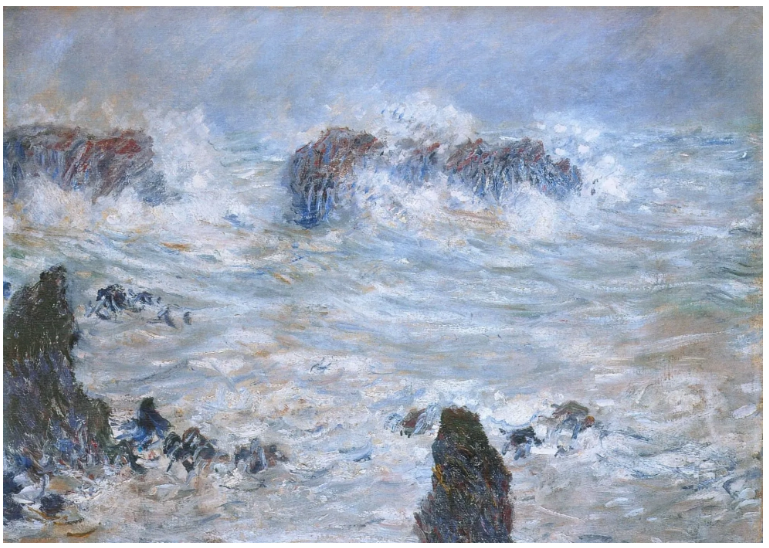
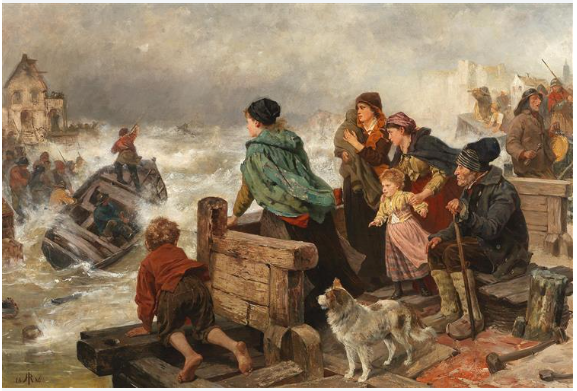
A week later the case was heard at the Devon County Assizes with the following outcome as described by the Western Times of 26th June:

THE TEIGNMOUTH TRACTION ENGINE DISASTER”.

Mr. R. C. Fenton and Wm. Maffey, owner and driver respectively of the traction engine which ran away and killed a child at Teignmouth, were placed in the dock. The Grand Jury on the previous day threw out the Bill under which prisoners had been indicted by a Coroner’s jury for manslaughter. Both the accused persons pleaded not guilty.

Mr. Roberts, counsel for the prosecution, said the prisoners stood committed on a Coroner’s inquisition. The Bill had been thrown out the previous day by the Grand Jury. The charge was that of manslaughter negligence in the management of a traction engine which unfortunately ran away and killed a child. He had carefully considered the evidence, and he did not feel he ought, after the Grand Jury had thrown out the bill, to ask the present jury to find a verdict of guilty in this case. He did not think he could establish such culpable negligence as would be necessary in that Court, and under these circumstances he proposed to offer no evidence.

Mr. Foote said that Mr. Fenton felt confident that no charge of negligence could have been successfully brought against him, and while he was prepared to defend himself, he wished to say how deeply he regretted the unhappy death of the unfortunate child.

The learned Judge said as far as he could make out it seemed to him that the accident happened to the engine while descending a hill too steep for it. He should have thought that this was a matter the County Council should take into consideration. Among the many useful things the Council did, they would be doing something additionally useful if they would attend to the preservation of life as well as property. Sometimes one saw a notice that a bridge was not calculated to bear a traction engine; that bicyclists must not ride down a hill, and he should have thought it would be a wise thing to say this hill is too steep for a traction engine. As he understood, the brake in the present case was put on but the hill was too steep and the whole thing went down at full weight. Clearly this was not a proper hill for an engine to go down. County Council powers were unlimited as far as he could make out, and he hoped County Councillors would read what he had had to say.

The jury then returned formal verdict of “not guilty,” and the accused were discharged.

Postscript

The young child, Frances Maud Waite was buried in an unmarked grave (R6) in an area dedicated to children.  Colour-Sergeant J T Waite stood down as instructor to the Teignmouth Rifle Volunteers the following year and moved with his family shortly afterwards to Newton Abbot where he took up the position of assistant bailiff.

Sources and References

Extracts from contemporary newspapers are referenced directly in the text and are derived from British Newspaper Archives.

Acknowledgments

Many thanks to:

Rosemary Booth, archivist at Teign Heritage Centre, for providing the original photograph of the scene of the crash from the THC picture archives. It was this photograph which also prompted the subsequent research.

Gwynneth Chubb for enhancing that picture

Jemima Eastwood for providing an extract from an 1890 map she has showing the specific location of the incident

Caught In Flagrante

There have been some quirky stories associated with Teignmouth Old Cemetery such as:

This latest story was inspired by a local Facebook post from the group “Dawlish History”.

Setting the Scene

The Family Vault

As you walk along the main avenue of Teignmouth Old Cemetery from the Higher Buckeridge Road entrance you pass, on the left-hand side, section O and may notice two identical crosses in a family plot (O115/116) directly next to the avenue.  The plot, apparently, is an underground vault.  The left-hand cross is for Richard Marsh Marsh-Dunn and his wife Eliza-Ellen Marsh Dunn.  They are the parents of their son Major James Bower Bower who is buried in the right-hand grave with his wife Ada Emily.

The Man with Two Names

So the first curiosity about this story is that their son has a different surname!

This came about because James changed his surname in order to benefit from an inheritance from his uncle, James Henry Bower, on his mother’s side.  The book “BOWER OF CLAREMONT, Donhead, Dorchester, Lostwithiel, and Weymouth” by H. B. BOWER explains:

The Rev. James Henry Bower, MA (Oxon.) …. in his Will dated 20 Jan. 1880 makes his nephew, James B. M. Marsh-Dunn his principal heir, conditionally to his assuming the name and arms of Bower, if not, then his estates go to his cousin Edmund Bower, M.D.”

A Military Career

James started his career as a lieutenant in the South Yorkshire King’s Own Light Infantry and served in India from 1872 to 1874.  His brother, the Rev. R M Marsh-Dunn also served in the same regiment as a captain, retired as a major and became vicar of St Peter’s at Shaldon.  James obtained his captaincy in the 3rd Cheshire regiment and subsequently retired with the rank of major.

A Pillar of the Community

Upon retirement you could infer from his obituary that James became a pillar of the community.  As the Exeter and Plymouth Gazette of 3rd March 1920 reported:

“For 30 years he was Vicar’s warden to his brother-in-law, the Rev. J. Vesey, Vicar of St. Michael’s, East Teignmouth, and at the time of his death acted in a similar capacity to his brother, the Rev. R. M. Marsh-Dunn.  Major Bower was a member of the Committee of Management and a trustee of the Teignmouth Hospital, and one of the representatives for East Teignmouth on the Newton Abbot Board of Guardians.  He was one of the oldest members of the East Devon and Teignmouth Club, and was one of the Commodores of the Teign Corinthian Sailing Club, his yacht, Toad, being always an entrant at the local regattas.  He was keenly interested in music, and for several years acted as Secretary of the Diocesan Choral Association.

The Blot

BUT …. There was a blot on his escutcheon, which can only be described as being “caught in flagrante”.  The fullest account of this comes from the Western Times of 18th July 1908.  Here is a slightly edited transcription:

MAJOR’S DIP

What the PC Saw at Dawlish

A CONVICTION

The magistrates present at Dawlish Sessions yesterday, were Mr. W. A. Daubeny (in the chair), Mr. J. W. C. Washington, Mr. A. McCasland, and Mr. J. Gamlin, when Major Jas Bower Bower, of Teignmouth, was summoned for improper bathing at Dawlish on June 30th.  Mr. A. P. Dell, of Teignmouth, appeared for defendant, who pleaded not guilty.

PC Sanders, who is stationed at Teignmouth stated that, in consequence of complaints, he proceeded on the sea wall, at 8.30 a.m., to the further end of the breakwater, in the parish of Dawlish.  He secreted himself there.  At 8.55 a.m. he saw defendant come along the sea wall and go down the steps on to the sands.  Witness came from his hiding place and looked over the wall.  He there saw defendant, who was without a costume, bathing in the sea, and about 15 yards from the wall.  When defendant came out of the water he carried his clothes up the slope from the steps, and dressed.  Witness told defendant what he had seen, and that he should report him.  Defendant replied, “I looked to see there was no one about.  I had my costume in my pocket, and should have put it on I had seen anybody.”  Defendant, in further conversation, asked the constable not to report him.

Mr. Dell: “Did you think you were going to catch the defendant?”

P.C. Sanders : “I did not know who, but I thought I should catch somebody”.

PS Hulland stated that Major Bower came to the Police Station, and said, “One of your constables has caught me this morning bathing without a costume.  I hope that nothing will be done in it.  I should not wish to have it reported.”  PS Hulland replied. “I am sorry, sir; I cannot suppress a report from a constable.  When it is made I must forward it to the Superintendent.  I sent the constable there in consequence of complaints of someone bathing there on mornings without costume.  I am sorry you should be the one to be caught, but I have no option but to forward the report.

Supt. Wood stated that he received a communication, and saw Major Bower at Teignmouth Police Station.  Defendant then asked him if it was not possible to stay proceedings, and Supt Wood replied in the negative, adding the by-laws were made, and it was the duty of the police to enforce them. Supt Wood also told defendant that the constable was sent there to watch in consequence of complaints.  Defendant then observed: ” I was careful to see there was no one about before I bathed. There was not a soul on the sea wall from one end to the other, and I was not in the water more than minute or two.” Supt Wood also told defendant he was sorry that he (the defendant) asked the constable to suppress the report, and followed it up by requesting the sergeant to do it.  Defendant ultimately remarked,  “Is there any way out of it ? Can’t I make donation to some Institution or other ?” He afterwards offered £50 to the Widows’ and Orphans’ Fund, and Supt Wood told him he could not entertain anything like that, and that they had no such fund.  Conversation was kept up in the same strain, and eventually defendant observed, “I will give £100.”

Mr. Dell submitted that defendant did not bathe.  He undressed and went down to see what the water was like.  He found it was rough, and did not go in.  Had defendant decided to bathe, he would have put on his costume.  It was not likely that Major Bower, knowing the by-law, would have deliberately gone into the water without wearing his costume.

Mr. Washington: You know the old saying that “No man is wise at all times.”

Defendant bore out his advocate’s statement.

Supt. Wood produced (Editor’s note – like a rabbit from a hat) a letter, in which defendant admitted it was the second time for a similar offence.

The Chairman said the Bench were unanimously of opinion that defendant was guilty, and they fined him £1 and costs.

So James was found guilty of “skinny-dipping” but was also obviously desperate that his misdemeanour should not become public.  He went up the chain of command to ask that the charge be dropped and, when this didn’t work, he attempted what can only be described as bribery.

He also wasn’t as naïve as he was making out.  Evidence that he had committed the offence before showed that he knew exactly what he was doing.  Researching back through the newspaper archives revealed his previous offence which played out in much the same way, as described by the Teignmouth Post and Gazette of 28th October 1904 in this edited transcription:

BATHING AT THE BREAKWATER.

At Dawlish Petty Sessions on Friday before Messrs. J. Broad Bissell (in the chair), W. Daubeny, W. Waterfield, E. H. Bayldon, A. McCasland, and H. Hattwill.

Major James Bower Bower, of Claremont, Dawlish road, Teignmouth, was summoned for bathing without a costume at Dawlish, on the 25th September. Defendant pleaded guilty.

PC Friendship said he was on duty in plain clothes on the sea-wall near the Breakwater, between Teignmouth and Dawlish. He saw defendant going down the steps leading to the beach. He took off all his clothes, and in a nude state entered the water. When he came out he proceeded to the steps, where he put on his clothes again. Witness told defendant that he should report him. Defendant replied that he did not know he was doing wrong, and he thought that anyone could bathe without a costume on that side of the Breakwater before ten o’clock in the morning. Defendant also said, “What made you come over here; to try to catch me? You’ve not been here before.” Witness replied that complaints of indecent bathing had been made.

Defendant said the spot where he bathed had been a well-known one for years. He understood that anyone could bathe there without drawers at that spot before ten ‘o’clock in the morning, and had done so himself for 30 years. Notices to this effect used to be affixed near the spot. These had lately been taken down.

Superintendent Wood acknowledged that some years ago the spot was sanctioned for such bathing. The notices had been removed, and there had been no need for fresh notices, as the new bye-laws which forbade it had been published.

The Chairman said that, while accepting defendant’s explanation in a sense, the Bench felt they could not dismiss the case. Defendant would have to pay the costs, amounting to 14s. 6d.

At Peace

Major James Bower Bower, aged 72, died at his home, Claremont, Dawlish Road, Teignmouth shortly before midnight on 1st March 1920.  His funeral took place four days later at St.Peter’s Church, Shaldon.  The interment followed at the Teignmouth cemetery family vault where the hymn “Here, O My Lord, I see Thee face to face” (A&M 274) was sung.  The bell of St. Michael’s church tolled on the hour of interment and the flag of the East Devon and Teignmouth Club was flown at half-mast. (Note: The East Devon and Teignmouth Club had an exclusive membership taken from the gentry and professional middle class; it is now the building known as the Riviera).

Sources and References

Extracts from contemporary newspapers are referenced directly in the text and are derived from British Newspaper Archives.

Book “BOWER OF CLAREMONT, Donhead, Dorchester, Lostwithiel, and Weymouth” by H. B. BOWER, privately printed for the author in Great Britain by E Dwelly, Fleet, Hants, 1929. 

References to family genealogy from:  thepeerage.com; wikitree.com; findmypast.co.uk

A Romantic Tragedy

Lives may be cut short in untimely fashion.  Their stories may be short; sometimes made more poignant by that brevity.  This is one such story.

Background

On the 21st June 1890 the East and South Devon Advertiser reported “Fatal Carriage Accident at Teignmouth”.  Mrs Elizabeth Lewarn of Plymouth had been staying in Teignmouth with her family for the benefit of her health.  On the previous Saturday, 14th June, she had been enjoying a ride out in a “donkey-chaise”.  She had just reached the Den.  Meanwhile a local doctor, Dr Piggott, was in his horse and carriage doing his usual rounds.  He had reached Brunswick Place when the horse bolted and hurtled uncontrollably down Brunswick Street towards the Den.  The inevitable happened.  The carriage crashed at top speed into the donkey-chaise.  Mrs Lewarn was thrown out, suffered severe injuries and died within the hour.

Five years later it was the Western Daily Mercury that announced another “Teignmouth Fatality”.  On Friday 5th April 1895 Albert Tapp had collected a 5cwt load of coke on a pony and trap from the gasworks for delivery to the bakehouse in Wiley Lane.  He left the pony and trap unsupervised outside the bakehouse whilst he carried the coke inside.  The pony bolted and ran down a young child, Dorothy May Sampson, who was killed instantly.

Do you believe that fate may stalk some people?  One person links these two events – James Heller of 43 Parsons Lane.  He owned both the donkey chaise and the pony trap.  He also bore witness to another fatality – the death of his sister, Emily Martha Heller, in the previous year on February 5th 1894.

This is Emily’s story.

Emily is buried in Teignmouth Old Cemetery and  we found her grave recently whilst clearing section N.  The grave had been prepared for the interment of two people and the headstone does also commemorate her sister, Ann Susannah Partridge, who died the following year in Port Elizabeth, S. Africa.  The burial records though do not show her buried here.

The story of Emily’s tragic death featured in a number of newspapers across the country, with some sensationalised headings.

Emily was aged 38 and had been employed for nearly ten years as a lady’s maid in South Kensington, London.  She was single although when her brother James was asked by the coroner at her inquest “Do you know of any love affair?” he confirmed:

“Yes sir.  She has corresponded with a young man for some years.  He was a first-class petty-officer in the Royal Navy, and they were engaged to be married.   When he left Teignmouth for the last time to go to sea he promised to write to her, but he did not do so, and this seemed to prey upon her mind.  There was no insanity in the family.”

The last sentence wasn’t quite true, but let’s go back a few years to trace her journey from Teignmouth to London.

Early Years

We start with the 1851 census when an Emily Martha Heller (aged 2) lived with her family at 25 Bitton Street.  The family was: her father William, a ‘sawyer’ (an occupational term referring to someone who saws wood, particularly using a ‘pit-saw’ either in a saw pit or with the log on trestles above ground, or operates a sawmill); her mother Agnes; and three siblings – the eldest Frances Ann Louisa (aged 10), then James Bryant (aged 8) and a second sister Ann Susannah (aged 5).

This wasn’t our Emily Martha Heller though.  This Emily died the following year and her parents had another daughter in 1855 whom they also named Emily Martha – the Emily of our story. Perhaps our Emily was now already carrying a mental burden of being named after a dead sibling?

By the time of the 1861 census Frances, now a dress-maker, was about to marry Samuel Griffin-Benney and leave home, although still living in Teignmouth.  Another brother had come along – William John Heller, aged 9 – and the family was now living at 4 Park St (?).

By 1871 the family had moved to Coombe and Ann had left home too.  Like so many unmarried women of that time she had entered service and was now a general servant to the family of George Hester, a maths teacher, also living in Coombe.  A mystery appears in the census too – there is a two-year old girl, Kate L, described as a grand-daughter.  Could this have been the illegitimate daughter of Ann, or conceivably of Emily?  Ann seems to have married a Henry Partridge about three years later. He was a POIC (Petty Officer In Charge) on board HMS Topaze (and may well have been present at the scene of Agnes West’s anecdote described in her book ‘Life among our Blue Jackets’see Annex at the end of this story).  Ann, Henry and Kate then disappear from the records until Ann’s death in 1895 in Port Elizabeth South Africa is marked on Emily’s headstone.

Oakley, New Road

Emily seems to have followed Ann’s route into service. By 1881 she is shown as a lady’s maid, one of four servants, to Mary Toler living at ‘Oakley’ on New Road (This was the large Victorian building which now forms part of Trinity School. The adjacent photograph, 1947, gives some idea of the splendour of this residence). 

It could be a complete coincidence but that same year William Smith Nicholson, retired captain of the Cameronians 26th regiment, together with his daughter Helen Maude and her own lady’s maid, Aline Carboy, were staying nearby in lodgings in Tormoham.  (As an interesting aside Capt Nicholson was the cousin of Florence Nightingale).  It was about three years later that Emily moved to their household in London as Helen’s new lady’s maid.

Her departure for London seemed to coincide with the death of her mother who had been committed to the ‘Devon County Lunatic Asylum’ in Exminster at least three years earlier and died there in the third quarter of 1884 (perhaps contradicting brother James’ assertion that there was no insanity in the family?).  Her father died in 1892 and even though she seems to have returned to Teignmouth off and on it appears from her brother James’ statement that she was also in anguish about the disappearance from her life of the petty officer to whom she was engaged.

We can’t know exactly why she decided to take her own life in 1894 but there had obviously been ongoing traumas which could have affected her and we don’t know why her own mother had been committed to the lunatic asylum – perhaps that overly weighed on her mind too.  Our only insights come from the reporting of the inquest into her death.  Here is one version of that from the Portsmouth Evening News of 9th February 1894:

A LOVE TRAGEDY
SAD SUICIDE OF A PETTY OFFICER’S SWEETHEART

On Thursday evening at the Kensington Town Hall, Mr. C. Luxmore Drew, the West London Coroner, held an enquiry concerning the death of Emily Martha Heller, aged 38 years, a lady’s maid, in the service of Miss Nicholson (daughter of Captain Nicholson), of 5, Mansion place, South Kensington, who committed suicide on Monday under circumstances of a somewhat romantic character.

James Heller, of 43, Parsons street, Teignmouth, identified the body as that of his sister, whom, he said, he last saw in August last.

The Coroner: Do you know of any love affair?
Witness: Yes, sir.  She had corresponded with a young man for some years.  He was a first-class petty officer in the Royal Navy, and they were engaged to be married.  When he left Teignmouth the last time to go to sea he promised to write to her, but he did not do so, and this seemed to prey upon her mind.  There was no insanity in the family.

Eliza Long, cook at Captain Nicholson’s, said she had worked with the deceased for over ten years.  She was always well, except for occasional attacks of indigestion which affected her nerves.  She was greatly depressed in consequence, fearing she would lose her situation.  Deceased never spoke to witness of her love affairs, but when her niece told witness of her disappointment she was very cross and upset.  Deceased appeared perfectly sane, and had never threatened to take her own life.  On Monday morning at about half-past eight o’clock witness went to deceased’s room and found her lying on the floor on her face.  She was undressed, and groaning heavily.  Thinking she was in a fit witness called for assistance.  She knew the deceased kept a quantity of salts of lemon, which she used to take ink stains out of linen.  A glass containing a white sediment was on the table at the side of the bed.

Eliza Goodman, housemaid, said that the deceased had never threatened to take her life.

Captain Henry Herbert Nicholson deposed that the deceased had resided with the family for nearly ten years, and was a good servant.  He knew nothing of her mental condition or of her love affairs, and had never noticed her being depressed or strange in manner.  They were on the best of terms, and it was merely her fancy that she thought he had noticed her demeanour.

The Coroner said a number of letters had been left behind by the deceased.  They were all couched in the same terms, and one addressed to Miss Nicholson read as follows:

“Sunday, Feb 5th – Madam – I am sure I am mad or I should never do what I am about to, but I feel I cannot live.  I have had very strange ideas in my head lately.  I am very unhappy, but the doctors can prove I am a respectable woman.  No-one is the same to me lately; Captain Herbert looks at me in a very strange way, and I am sure he thinks there is something wrong with me, but thank God I have never been let fall in that way.  I have done things I am very sorry for now.  I ask of you to forgive me.”  After referring to the kind treatment she had always received at the hands of her mistress, the letter continued:  “May God forgive me for what I am about to do, but I cannot live.  I hope and trust that poor dear Captain Nicholson (father of the previous witness) will recover.  I am sure it will make you very happy.  May you all forgive me and think of what a poor, unhappy woman I am.  Oh, great God! This is a dreadful thing I am going to do; but I cannot live.  Good-bye.  From your poor, unhappy servant, EMILY HELLER.”

Dr. R. D. Brinton attributed death to oxalic acid poisoning, which was undoubtedly self-administered.

The Jury returned a verdict of ‘Suicide whilst of unsound mind.

Emily’s body was brought back to Teignmouth where she was buried in plot N135.  The epitaph on her headstone reads “Our days upon earth are a shadow”, part of a quotation from Job8:9 “For we are but of yesterday and know nothing, for our days on earth are a shadow”.

Family Loose Ends

From the limited information available it would appear that the family in general had more than their share of tragedy.

Her mother Agnes we know died in the Devon lunatic asylum at Exminster.  She and her husband William are buried together in the cemetery in plot N52.

Her eldest sister Frances died a widow in the work-house at Wolborough, Newton Abbot.
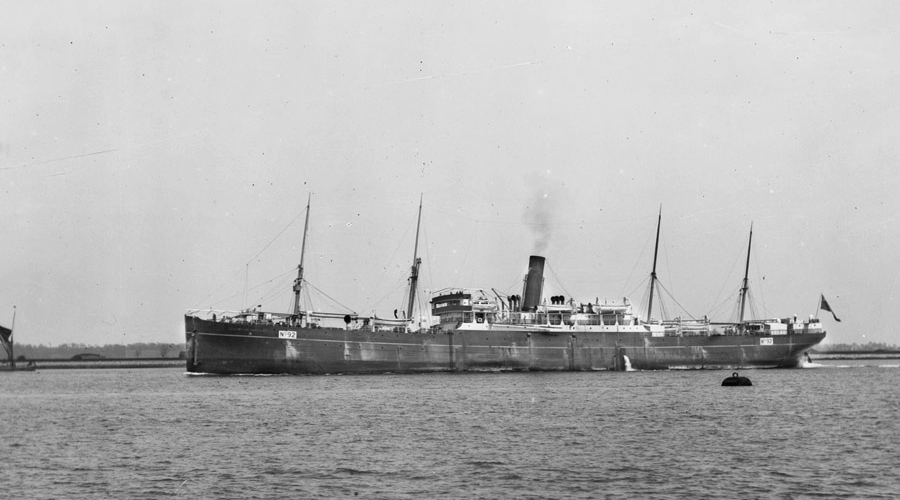
Her brother James and his wife Elizabeth had no children, presumably because they were unable to have children.  They adopted two girls though and are buried together in plot HH38 with the younger of their adopted daughters, Lily May.  Their elder adopted daughter Henrietta died in 1970 and is buried in S86 under her birth name Henrietta White together with M A White (died 1888) who was presumably her birth mother.
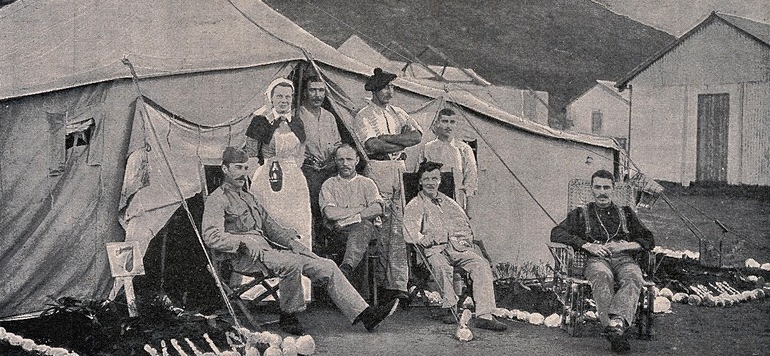
Sources and References

Extracts from contemporary newspapers are referenced directly in the text and are derived from British Newspaper Archives.

Ancestry.com for genealogy

Wikipedia for general background information

Other sources, with hyperlinks as appropriate, are as follows.

Epitaph on headstone:  https://biblehub.com/job/8-9.htm

Capt Nicholson and Florence Nightingale:  https://lifeandtimesofflorencenightingale.wordpress.com/family-history-2/nicholson/

Acknowledgements

Thanks to one of our volunteers, Geoff Chetfield, for discovering and clearing the grave.

Thanks also to Rosemary Booth, archivist at Teign Heritage Centre, for digging out the information about Oakley and the photograph.

ANNEX:  HMS Topaze reference

The ship is notable for an incident when Agnes Weston came on board to plead the cause of Temperance; as she recalled in her memoir ‘Life among the Bluejackets’.

“The Captain of H.M.S. Topaze invited me on board, and the men were mustered on the main deck; they listened very attentively. When I had finished speaking I asked the Captain, ‘Whether any men that wished it might join the Royal Naval Temperance Society?’ He gave a cordial assent, and my eyes roved round to see on what place I could put the pledge-book. I saw what I thought to be a bread tub standing not far off. ‘Could I have that bread tub?’ I asked; ‘it would make a nice little table turned over.’ I saw the Captain smile and tug at his moustache, and the men seemed on the brink of bursting into laughter. ‘Yes,’ he answered, ‘anything that we have is at your command. Here, men, a couple of hands roll over that grog-tub.’ “

Apparently the 60 man crew all signed the grog-tub. The incident is undated in Agnes Weston’s book but probably occurred between 1873 1nd 1877 which corresponds to the time that Henry Partridge was on board. I wonder if that tub is still around today bearing the signature of Henry Partridge?

According to Wikipedia, “Dame Agnes Elizabeth Weston, (26 March 1840 – 23 October 1918), also known as Aggie Weston, was an English philanthropist noted for her work with the Royal Navy. For over twenty years, she lived and worked among the sailors of the Royal Navy. The result of her powerful influence is evidenced in the widespread reform which took place in the habits of hundreds of men to whom her name was a talisman for good. In her day, one man in six in the navy was a total abstainer. Weston’s work included her monthly letters to sailors, Ashore and Afloat, which she edited, and the “Sailors’ Rests”, which she established in Portsmouth.  She was the first woman given a full ceremonial Royal Navy funeral”.