Inner Spirit

Introduction

“In everyone’s life, at some time, our inner fire goes out. It is then burst into flame by an encounter with another human being. We should all be thankful for those people who rekindle the inner spirit.”  Albert Schweitzer

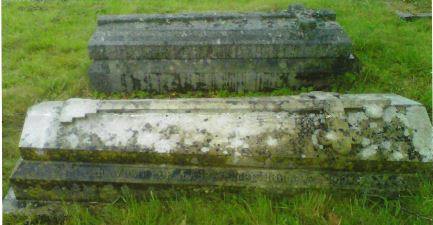
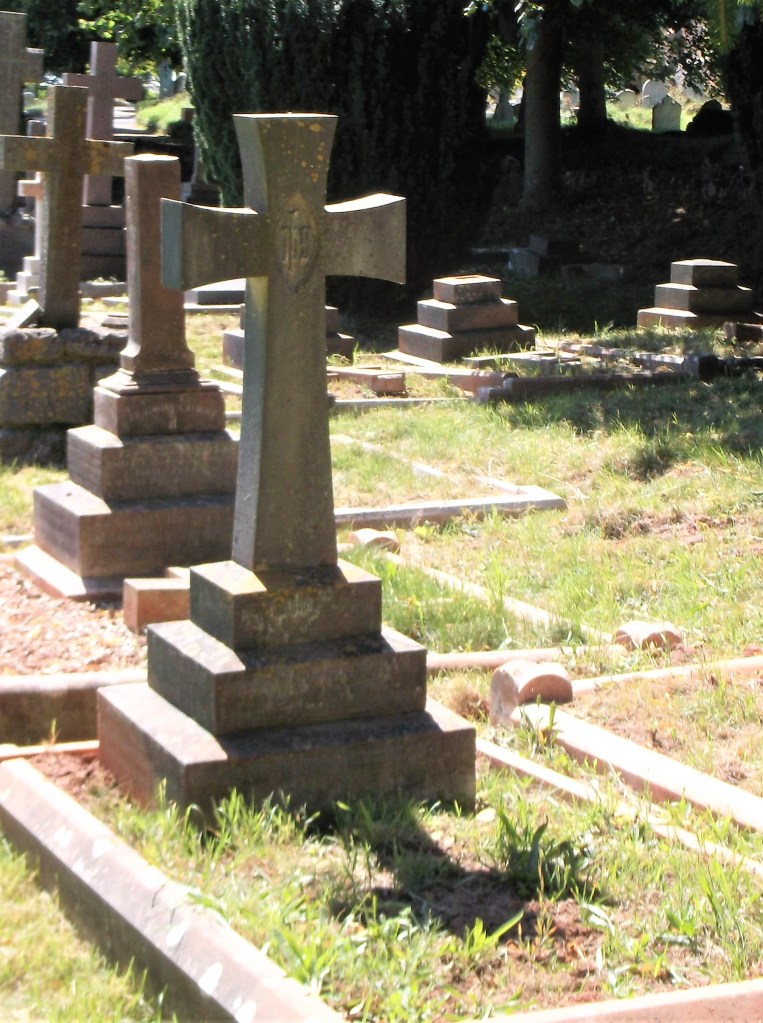
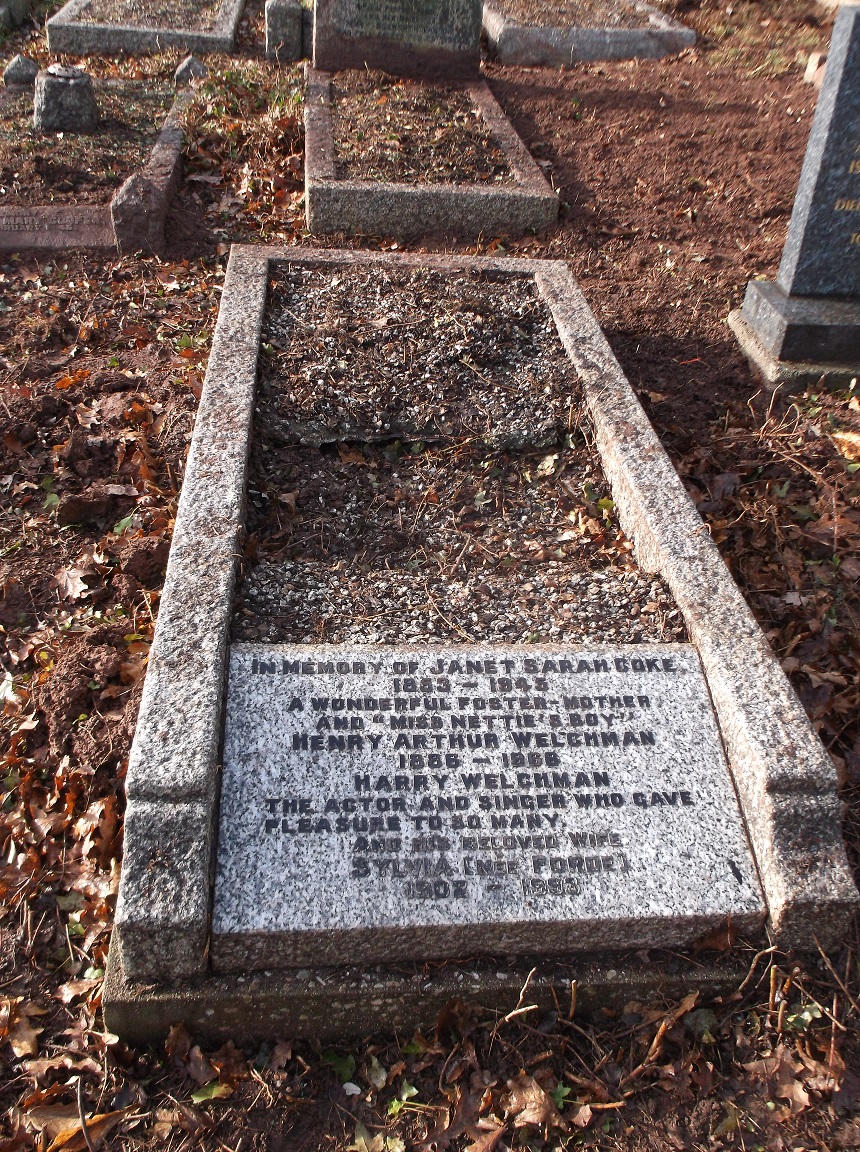
It has been two years since we first discovered their grave.  There was a brief flurry of research which has lain dormant since, until I was prompted by a recent encouraging comment on our Facebook site.  This was from Carol Smith on October 15th:

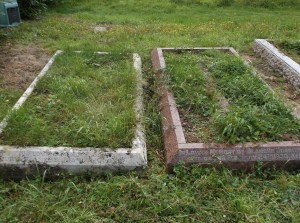
Wilkins family grave

“The grave ward looks fantastic the work you all are doing is really appreciated so pleased our family are at rest there (Sir and Lady Wilkins also my father and my mother ) thanking you all from the bottom of my heart xx”

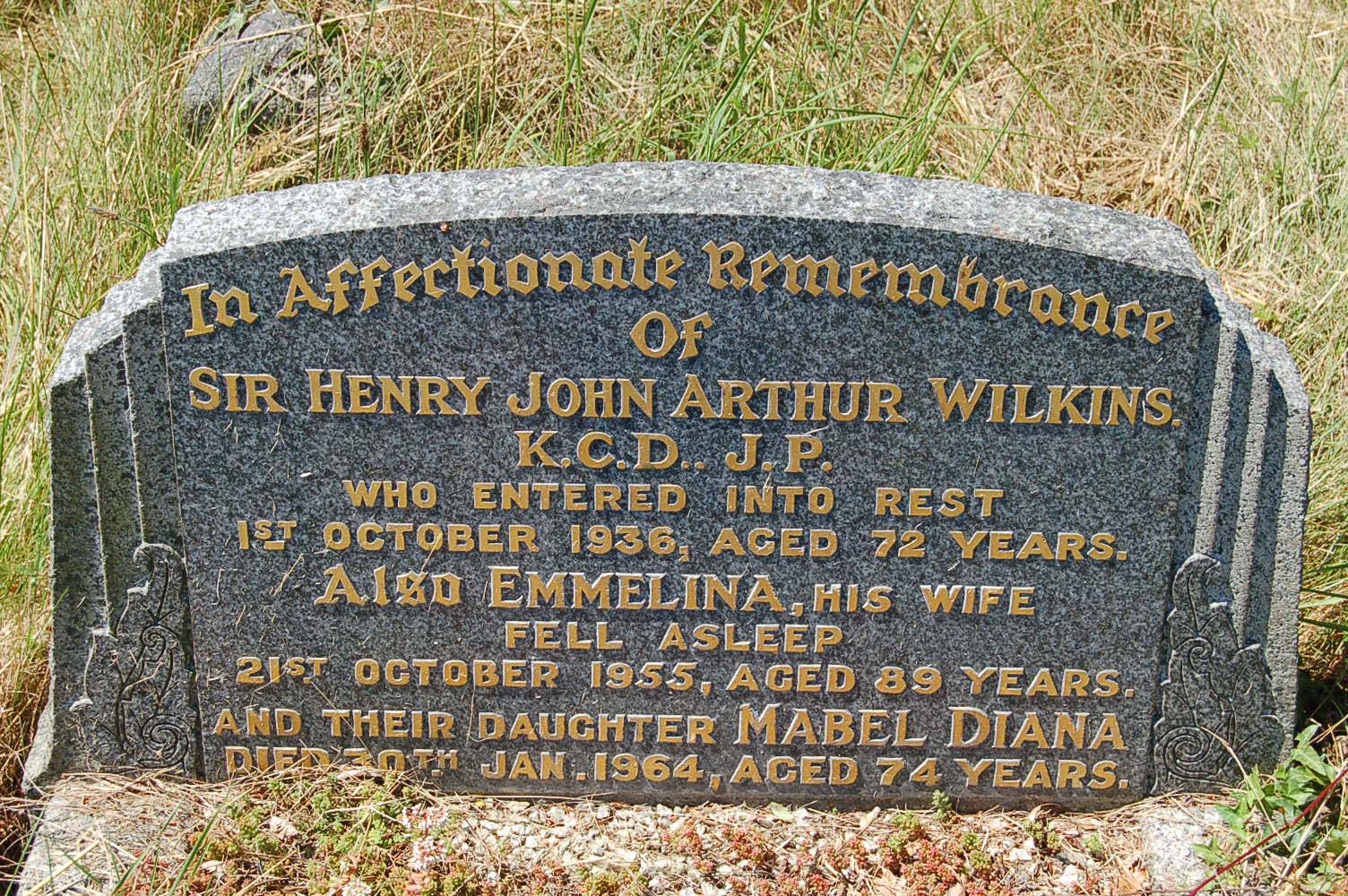
She referred to the family grave of Sir Henry John Arthur Wilkins, his wife Emmelina, their daughter Mabel and grandson Peter Moore.  The story of Sir Henry Wilkins is, as you will see, quite remarkable.  Though Emmelina doesn’t feature much in the documentation I have unearthed it is evident that Henry would not have been able to achieve so much without strong and constant support from his wife.  That inner spirit that they both showed also flowed through to Mabel whose impact on social welfare in Teignmouth has lasted through to today.

I shall talk later about Mabel but this is predominantly the story of Sir Henry.  He was a man of humble origins who became respected across the country, was honoured internationally, was once involved in the storming of the House of Commons and gives the impression, from what I have read, of someone of integrity who genuinely cared for others.  His main claim to fame was steering the Cooperative Wholesale Society (CWS) over a nine year period to its peak nationally before the second world war and contributing to its equivalent international growth.  He was the eighth president of the CWS and the first from Southern England.
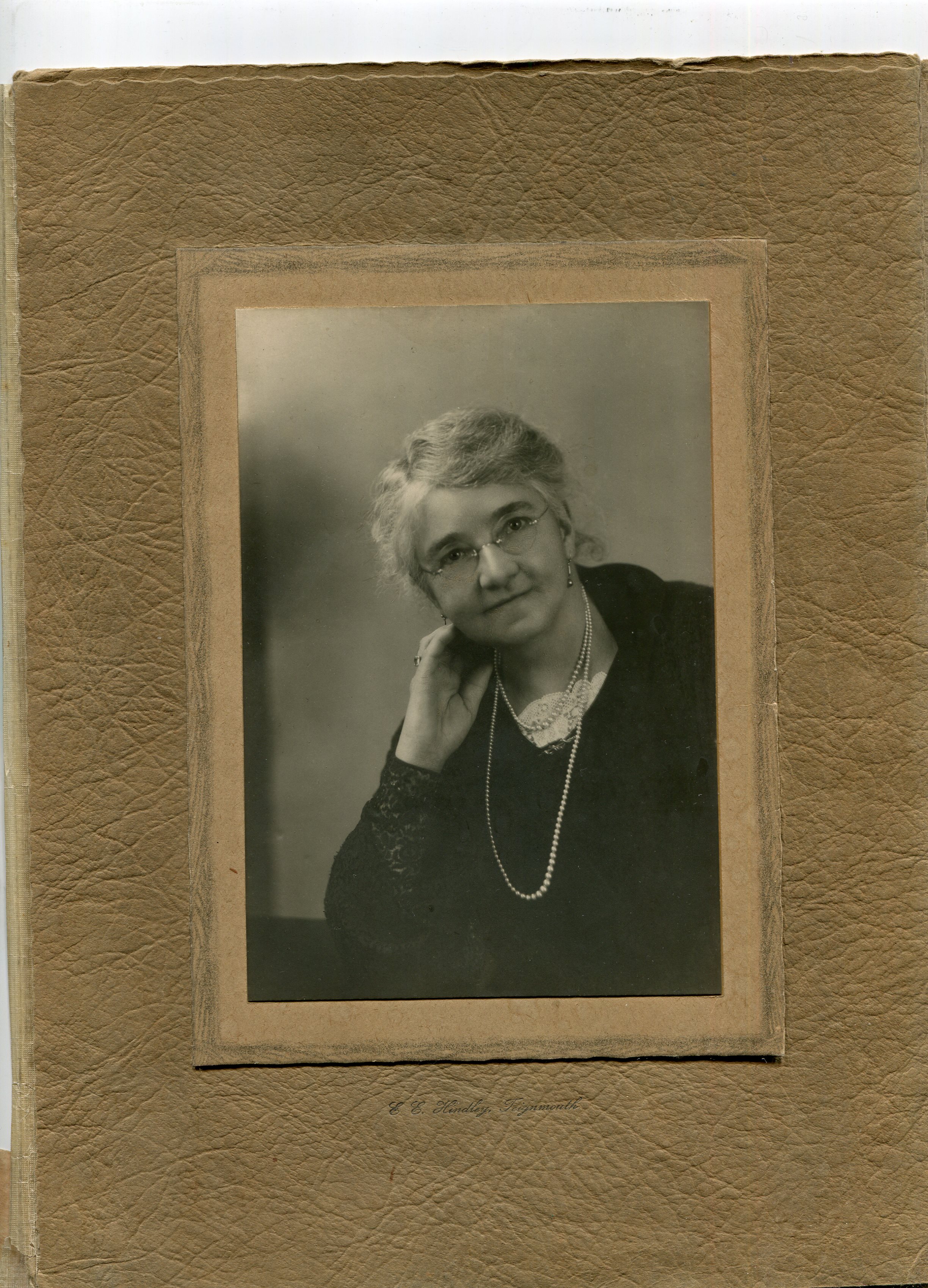
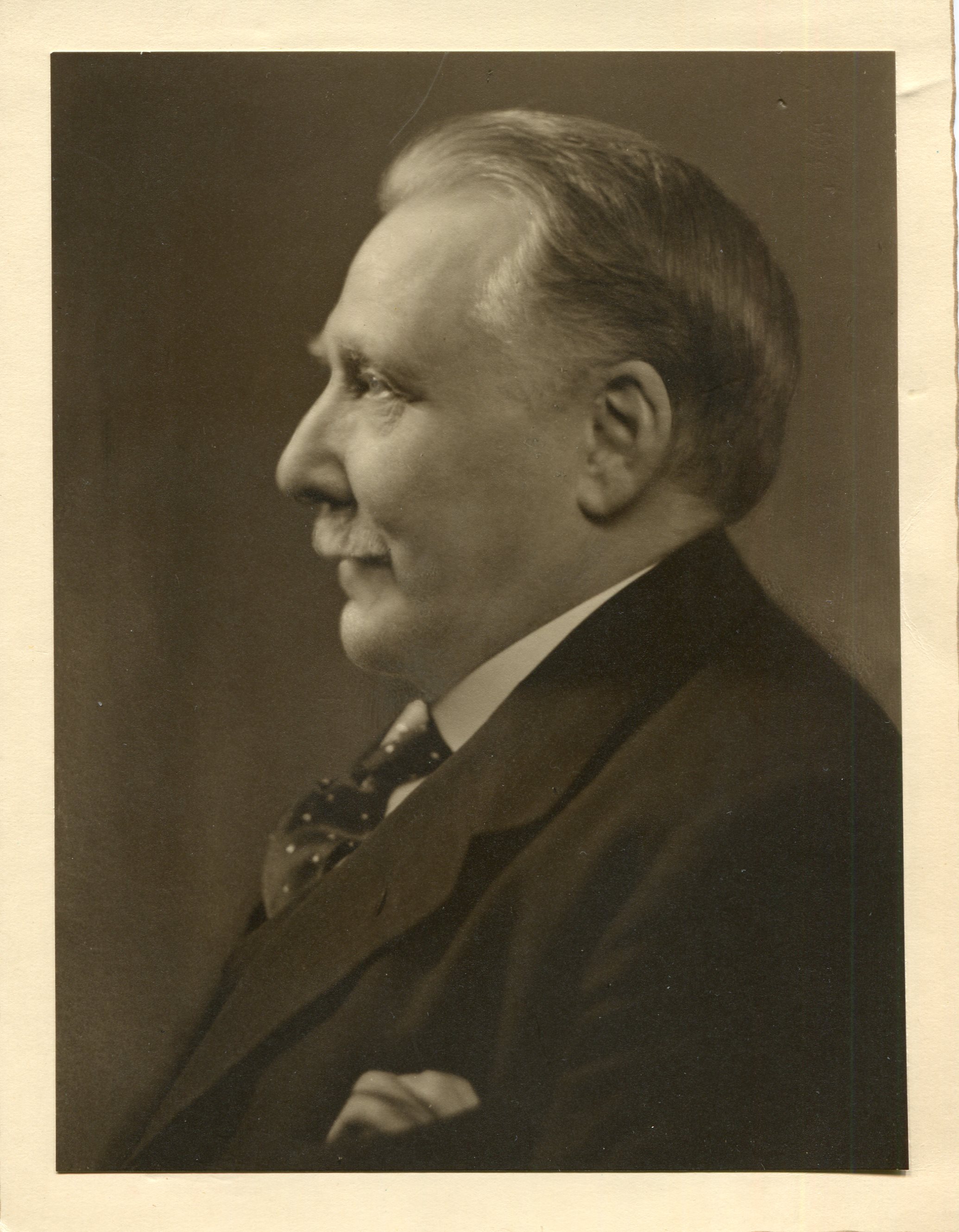
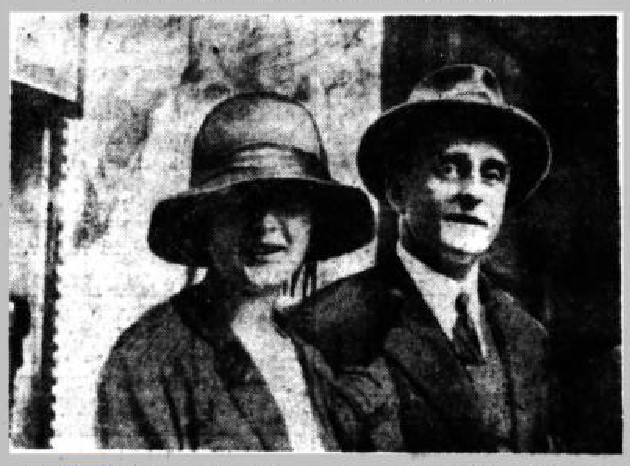
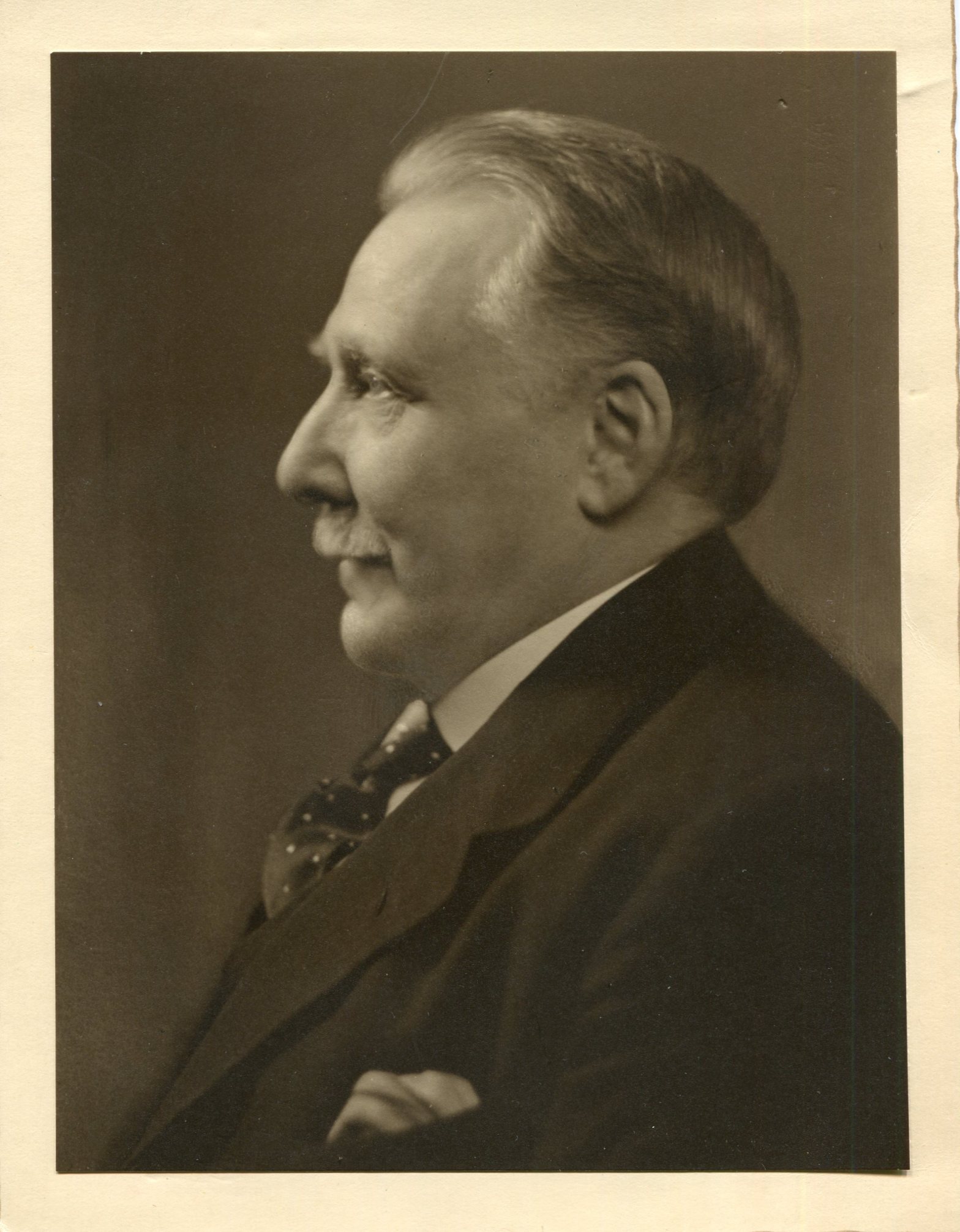
Emmelina and Henry Wilkins (photos courtesy of Carol Smith)

A Potted History

When Sir Henry died in 1936 there was a lot of commentary in the Press.  I thought I would just start with an obituary from the Western Morning News of 3rd October and then flesh out parts of that where possible from other sources.

TRAGIC DEATH OF DEVONIAN

Famous Pioneer of Co-Operation
SIR HY. WILKINS
PASSES AT HOTEL

“SIR HENRY WILKINS, of Beulah, Teignmouth, whose rise from humble origin to the presidency of the Co-operative Wholesale Society was a romance of the business world, died suddenly at the Great Western Hotel, Paddington, London, on Thursday night, at the age of 71.  An hotel servant found Sir Henry dead in his room.  His bed had not been slept in and apparently he had been taken ill while undressing.

Throughout the British Empire Sir Henry, who received a knighthood in the New Year Honours List of 1932, advocated and advanced co-operation, and in every Dominion his name is known and honoured as a pioneer of co-operation.

As an orphan of a naval servant, Sir Henry, who was born at Devonport, spent three and a half years at the Royal Naval School, Greenwich, training for a naval career.  While the school provided him with a good foundation for manhood, he failed to pass the medical examination for entry into the Navy.

Work was found for him as compensation at Devonport Dockyard, where he settled for some years, and at the early age of 21 he became interested in the Plymouth Co-operative Society.

SOON BECAME A POWER

Showing a keen sense of efficient administration he soon became a power in the organisation, and through it was able to serve the cause of co-operation throughout the Westcountry.

In those early days of building his career Sir Henry took a prominent part in the service of temperance and friendly societies, and his first real introduction to the national movement was through the annual conference of the Co-operative Wholesale Society at Plymouth.

Elected president in 1924 he retained the position until 1933, and when visiting America in connection with the 21st anniversary of the opening of the New York branch of the society he was received by the President of the United States, while subsequently he conferred with President Hoover at the White House.

He was equally respected on the Continent of Europe, and as a Knight Commander of the State of Denmark he was held in esteem throughout Scandinavia.

Sir Henry was a Justice of the Peace for Devon and attended sittings of the Teignmouth Bench frequently, but owing to the demands made upon his time by his position was unable to devote a great deal of attention to the public life of the town.  He loved Teignmouth, and once described it as the ‘prettiest place God ever made’.

WORLD CONGRATULATIONS

Congratulations from all parts of the world were showered on him at Christmas of last year, when he celebrated his golden wedding.  He was married at Charles Church, Plymouth.  Sir Henry leaves a widow, two sons, and a daughter.  The latter, Miss Mabel Wilkins, is the leader of the ‘Sunshine Girls’, a Teignmouth organisation which annually provides a treat for the old people of the town, a work in which Sir Henry was keenly interested.

Before the commencement of business at Teignmouth Police Court yesterday the Chairman (Col. R. S. Pottinger) said the Bench was grieved to hear the news of Sir Henry’s death.  He had not been a magistrate very long in Teignmouth, but he had had a distinguished record in his own line, and he had made a great impression on the Bench.  They all felt they had lost a very valuable colleague, and they had the deepest sympathy with his family.

Mr L. M. Kennaway (magistrates clerk) and Supt. Gill also voiced expressions of sympathy.”

Let’s take a look now at aspects of his life in a little more detail.

Humble Origins

Henry John Arthur Wilkins was born on 26 March 1864 in the East Stonehouse district of Plymouth.  His parents were John Wilkins and Elizabeth Mary Perring Wilkins (nee Moore) who had married in 1863 and were aged 21 and 20 respectively at the time of his birth.

Sir Henry’s mother was shown as a ‘tailoress’ in the 1871 census and his father as a butcher.  In 1873 though it appears that his father joined the navy although the naval record suggests that his career there was short-lived.  According to his record he was of fair complexion, blue-eyed with light hair and stood at 5ft 10in tall.

HMS Agincourt. Photo public domain
Courtesy of the Naval Historical Foundation,
Washington,
D.C. Photo #: NH 75984
U.S. Naval Historical Center Photograph.

The record also shows that in 1873 he was based on HMS Agincourt, a Minotaur-class armoured frigate built for the Royal Navy during the 1860s.  She spent most of her career as the flagship of the Channel Squadron’s second-in-command –  Rear-Admiral Henry Chads from 1 October 1869.  The Channel Squadron was the Royal Navy formation of warships that defended the waters of the English Channel from 1854 to 1909 and 1914 to 1915.  It appears from John’s record that he was invalided out on 27th August 1873.  There is no reason given but he died a year later.

His father’s brief spell in the navy could explain the reference in Sir Henry’s obituary to his attendance at the Royal Naval School, Greenwich.  The CWS archives confirm that he entered that school in 1876.  In a speech Sir Henry made some 50 years later it appears that he had also attended George Street Baptist School in Plymouth.

The next ‘loss’ in Henry’s life was his mother.  This time though it was to another man.  She re-married a William Appleyard in 1878 and then disappeared from the records!  By the time of the 1881 census Henry and his two siblings, Maude and Ernest, were living with their grandparents (parents of his mother Elizabeth) John and Mary Ann Moore.  John was a labourer and it looks as though they shared a large house at 26 William St with a number of other families.  Henry had left school and was identified in the census as a plasterer – he had been apprenticed to a builder whose business had subsequently failed and then Henry entered the Royal Dockyard in 1881.

In that same census Henry’s future wife, Emmelina, and her siblings too were living with their grandmother Diana, a retired draper, though both her parents, John and Sarah, were there as well.  Her father ten years earlier had been a gilder but by 1881 had become a master carpenter. Emmelina was then 15.

So both Henry and Emmelina had come from working-class backgrounds and experienced living in extended families.  Henry in addition had endured the trauma of losing his father at age 10 and his mother disappearing from the scene perhaps only four years later.  I wonder if these experiences during his formative years had sown the seeds of a philosophy of strength through working together and of caring for others.

What brought Henry and Emmelina together?  Could they just have been neighbours?  Had they attended the same primary school (though Emmelina was two years younger)?  Did Henry’s grandfather and Emmelina’s father work together at times?  We may never know but in December 1885 they were married.  Their first child, Mabel Diana, was born four years later on 26th January 1889, followed six years later by their son, Reginald John Moore (21st November 1895) and their final child, Henry Ernest in 1904 (30th November).  By the time of the 1901 census Henry was still plying a trade – he was 37 and had graduated from plasterer to ‘iron and brass turner’.  There was still no inkling in the records of what he was later to achieve but he had already taken the first steps.

Sir Henry may have come from humble origins but I wonder if he knew that his family name carried with it a coat of arms and a motto which seems remarkably fitting to the way his life unfolded – “Estote prudentes”, or “Be ye prudent”.

Henry and Co-operation

Henry’s place of work was the Royal Dockyard, Devonport, and it was here that his interest grew in the Plymouth Co-operative Society which he entered in 1886.  His activity with the Society shaped the rest of his life so that, although in 1901 he was still working as a turner, by 1911 he was identified on the census as a Director of the Cooperative Wholesale Society.

We may not know why exactly Henry became involved with the Co-operative movement but perhaps this modern quotation from Boutros-Boutros Ghali encapsulates Henry’s belief at the time:

“Co-operative enterprises provide the organizational means whereby a significant proportion of humanity is able to take into its own hands the tasks of creating productive employment, overcoming poverty and achieving social integration.”

Before exploring Henry’s involvement with the Co-operative it’s worth recapping a little on the history of the movement because it establishes the context of what Henry ultimately achieved.

The Cooperative Wholesale Society (CWS)

The original definitive work on the history of the CWS through this period is undoubtedly “The story of the C. W. S. The jubilee history of the cooperative wholesale society, limited. 1863-1913” by Percy Redfern.  This describes what most people are aware of as the founding of the movement in Rochdale.

Advert courtesy of
Graces Guide

The Co-operative movement began in Lancashire when a group of men came together to buy and sell everyday goods at an honest and fair price. To do this they wrote down a series of rules for fair business (known as the Rochdale Principles).  On 21 December 1844 they opened their store with a very meagre selection of butter, sugar, flour, oatmeal and a few candles.

Within three months they expanded their selection to include tea and tobacco and they were soon known for providing high quality unadulterated goods.  They were known as the Rochdale Society.  From these small beginnings the business core for much of the Co-op’s history was its wholesale operations which began in 1863 when the ‘North of England Co-operative Wholesale Industrial and Provident Society Limited’ was launched in Manchester by 300 individual co-operatives in Yorkshire and Lancashire. By 1872, it was known as the ‘Co-operative Wholesale Society’ (CWS) and it was wholly owned by the co-operatives which traded with it.

However, by 1938 the author Percy Redfern was changing his view on the origins of the movement, and Plymouth was featuring prominently in its roots.  The Western Morning News of 9th November 1938 explains:

DOCKYARDMEN PIONEERS OF GREAT MOVEMENT
Devonport Men’s Flour Mill
WEST’S PART IN CO-OPERATIVE ORGANIZATION

“First in the field of co-operative production were not the Rochdale pioneers of 1844 or Richard Owen and his disciples, but shipwrights of the Royal Dockyards.

Profiteers of the Seven Years’ war (1756-63), and those who in the 18th century sold poor and adulterated food to working people at high prices, were those who roused working men to join together to produce good food at reasonable prices.

About 1760, shipwrights of Woolwich Dockyard built their own co-operative flour mill with which to provide their daily bread.  Chatham, then the principal naval arsenal, followed in the same year; in 1816 Sheerness Dockyardmen formed their Economical Society, and the next year came news of the Devonport Union Mill as another development in the consumers’ revolt.  Butchers’ meat and pure water were added to bread later …..

….. At Devonport the mill and bakery combined the efforts of naval Dockyard workers and townsmen, says the ‘New History of the C.W.S.’, to supply themselves with cheaper and better bread, despite intimidatory opposition, and the mill continued until the establishment of the present Plymouth Co-operative Society.”

This revision of the origins of the movement is important for two reasons in relation to Sir Henry Wilkins.  Firstly, he worked in the Devonport Royal Dockyard and would have experienced first-hand the aethos of community and cooperative working; so it would have been natural and almost inevitable that he joined the Plymouth Co-operative Society.  Secondly, despite the historical dominance of the Rochdale Society in the beginnings of the CWS, the path to a nation-wide movement was not friction free.  Not only were there non-co-operative suppliers to compete with but there was also the task of trying to unite the myriad of small, local co-operative organisations that appear to have sprung up independently across the country.  This was perhaps the principle challenge facing the CWS for the first 50 years of its existence.  It was the challenge into which Henry Wilkins was plunged, a challenge which probably required dedication and a passion coupled with well-honed political nous to make things happen.  It appears that Henry rose to that challenge.

Henry’s Path in the CWS

In terms of his own career within the CWS:

  • He joined the Plymouth Society in 1886;
  • He was elected to the CWS Board (I.e. the national Board) in 1907 and is featured in Redfern’s first book as also being on the Drapery Committee in 1913 (top left in photo);
  • He was President of the Co-operative Congress at Plymouth in 1910;
  • Some time between 1911 and 1917 he left his Plymouth roots behind and moved to Teignmouth
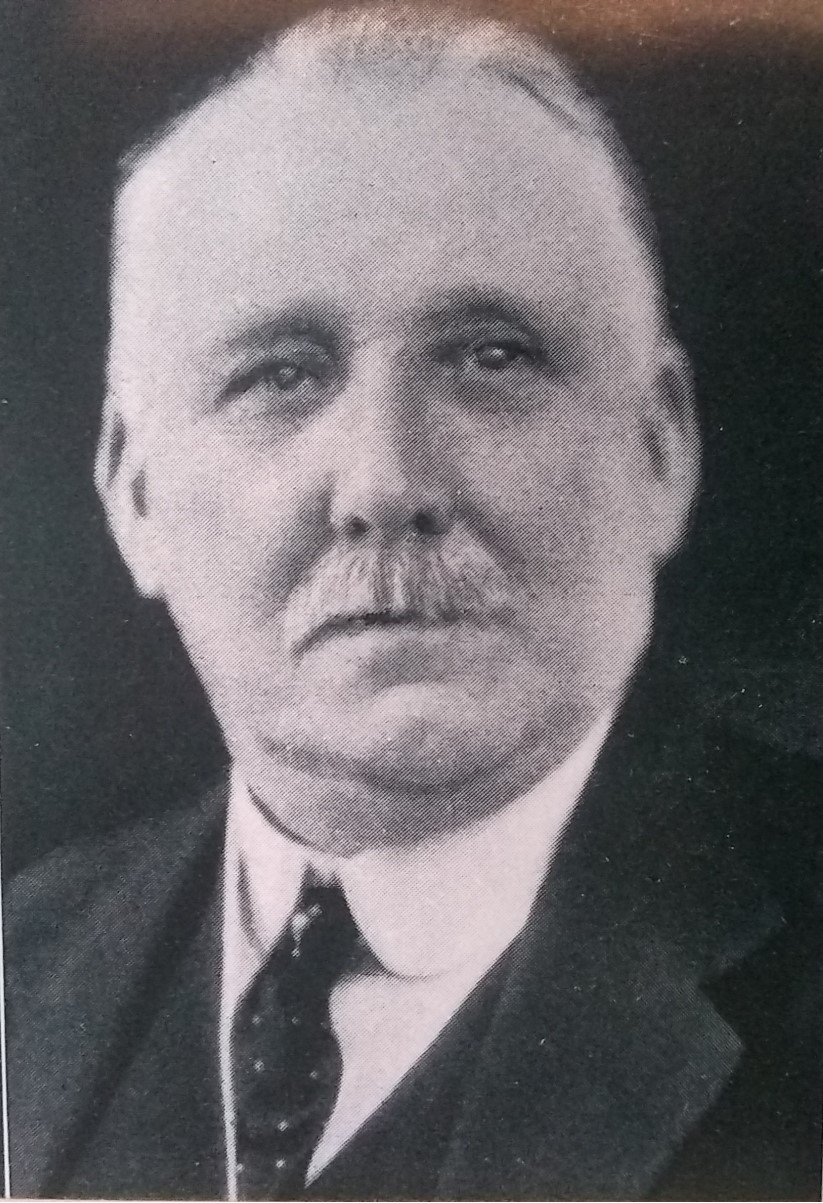
Henry Wilkins as President of CWS
Photo clip from Redfern’s 1938 book
  • He was elected President of the CWS in 1924, the first from the South of England, standing down in 1933 under the age rules of the organisation.  In his 1938 book on the new history of the CWS Redfern said “… he personified, in the twentieth century, the shipwrights who first made co-operative history in the eighteenth”
  • He was knighted in 1932 for services to the Co-operative movement.  The Exeter and Plymouth Gazette of 2nd January 1932 reported it as:

    ”TEIGNMOUTH’S NEW KNIGHT
    Mr. H. J. A. Wilkins, whose name appears among the Knights in the New Year’s Honours list, resides at Beulah, Coombe-road, Teignmouth.  He was recently made a Justice of the Peace for Devon, and a few months since received an honour from the King of Denmark.

    The new Knight’s duties as President of the Co-operative Wholesale Society have taken him all over the world, and he only recently returned from a tour in New Zealand.  Both Mr. Wilkins and his wife were born at Plymouth.

    Mr. Wilkins is one of the most unassuming of men.”

    At his final general meeting of the CWS he told the congratulatory delegates that he had been ‘overwhelmed with telegrams and letters (six hundred altogether) of immediate congratulation for his knighthood.

As we saw from his obituary Sir Henry received international acclaim but finding documentation describing the work he was involved with abroad is not easy.  Some supporting evidence though is the passenger lists of three voyages he made to three continents:

  • 1917, returning to Liverpool aboard the ‘Louise’ (?) from the west coast of Africa.  This would have been an interesting voyage in the middle of WW1!
  • 1919 (9th August), entering the USA from Liverpool aboard the SS Vestris.  In her article on ‘Cooperation’ in the Monthly Labor Review of April 2020 Florence Parker commented on this trip:

    ”Early in September 1919 several directors of the English Cooperative Wholesale Society visited San Francisco in the course of a tour made for the purpose of making international trade arrangements.  It is stated that the directors have taken the preliminary steps for mutual buying between the Cooperative Wholesale Co. Of San Francisco and their own society and that hereafter all purchases of the English society made in this section of the United States will be made through the Pacific Cooperative League.”
President Hoover
1928 (stock photo)
  • 1931 (8th September) shows him entering the USA again but this time having sailed from Wellington, New Zealand, aboard the SS Monowai.  It looks perhaps as though he had been on a round the world business trip. Is this possibly the trip when he met with President Hoover and, if so, I wonder what they discussed in the depths of the Great Depression three years after the Wall St crash?

We know he also visited the USA in May 1926, with four other members of the CWS, to celebrate the golden jubilee of the establishment of the CWS purchasing depot there.  The celebration dinner was held at the Waldorf Astoria Hotel (photo clip from Redfern book 1938) and they were received subsequently by President Coolidge in Washington.

New York Golden Jubilee (arrow points to president, Henry Wilkins, at head of the table

International acclaim was also recognised by the award he had received from the King of Denmark in 1931, as reported in the Exeter and Plymouth Gazette of 24 July 1931:

“Teignmouth
Mr. H.J.A. Wilkins, of Beulah (President of the Co-operative Wholesale Society) has had bestowed upon him by King Christian X of Denmark the insignia of Commander of the Order of the Dannebrog.  Mr. Wilkins, with other members of the Co-operative Wholesale Society, recently attended the jubilee celebrations of the Society in Denmark.”

The Order of the Dannebrog is a way of honouring people of the Danish state for meritorious civil or military service, for a particular contribution to the arts, sciences or business life.  It is also used in a discretionary way to recognise foreign nationals who contribute to Danish interests.

Sir Henry’s Influence on the CWS

In order to understand Sir Henry’s views of the CWS and, therefore, the influence that he would have had during his presidency I shall focus on some of his reported speeches in the lead up to his retirement when it seems he was still touring the country, opening new branches and facilities and generally encouraging and promoting the Co-operative philosophy.

In February 1930, presiding over the first of three major London Branch openings, he said at the opening ceremony:

“Individuals of forty years ago had very definite ideas of what was unnecessary in co-operative trade. There was no need for commercial travellers, no need for larger premises.  An ordinary warehouse was all that was wanted ….. When we opened the first extension in Leman Street twenty-two years ago, it was thought that we had overstepped ourselves.  Within five years we were crowded out.  And you buyers – you have been long-suffering.  It has long been a puzzle to me how the managers of the drapery departments have been able to build up the trade they have under their trying conditions. ….. We are having no more of these backdoor arrangements.  We are having the best.”

He made reference to the importance of the internationalisation of the Co-operative movement in a speech for International Co-operative Day in 1932, as reported by the Western Morning News of 4th July:

OLD PLYMOTHIANS
CELEBRATIONS BY CITY CO-OPERATORS

“Early associations with Plymouth were recalled by Sir Henry Wilkins, president of the Co-operative Wholesale Society, when he addressed Co-operators in Plymouth Guildhall on Saturday in the celebration of International Co-operative Day.  He said he remembered when he and Mr. J. Hayne Pillar (president of the Plymouth Society) were pupils at George-street Baptist School, of Mr. Henry Duke, now Lord Merrivale.

Sir Henry said there were 42 countries affiliated to the International Co-operative Alliance, and 70,000,000 members.  ‘We are meeting these foreign internationals,’ he declared, ‘and go to their countries and meet with them. We come to a common understanding.  We are binding ourselves together, and they are beginning to realize with us that men all over the world can be brothers.’

Mr. H. A. Glover, chairman of Plymouth Co-operative Education Committee, presided, and Mr. J. Hayne Pillar moved a vote of confidence in co-operation and its principles, which was carried.

Mrs. E. E. Hammett (Education Committee) and Mr. W. J. Lapthorn (vice-president of the society) thanked the speakers.  In addition to community singing, musical items were given by the Co-operative Junior and Adult Choirs, conducted by Mr. H. Woodward, and the Co-operative Orchestra, directed by Mr. Harry S. Wraight.”

Meanwhile, as president he also had duties at home and, as a Devon man, it was probably inevitable that there was significant local press coverage.  Here is the Exeter and Plymouth Gazette of 27 May 1932:

“EXMOUTH
Sir Henry Wilkins, President of the Co-operative Wholesale Society, visited Exmouth on Saturday, when he opened a new bakery built and equipped by Exmouth Co-operative Society.  Mr. C. Ebdon, Chairman of the Society, presided and welcomed Sir Henry as a Devonshire man.”

Four months later he was performing similar duties in Bristol, as reported in detail by the Western Daily Press of 7th September.

MEMORABLE DAY
FOR BRISTOL C.W.S.

Opening Ceremony for New Premises Extension

Bristol CWS (photo clip from Redfern’s 1938 book)

“The opening of the recent extension of the Bristol Co-operative Wholesale Society premises yesterday, the ceremony being performed by Sir Henry Wilkins, the president of the Co-operative Wholesale Society movement …..

…..  There was a large attendance of directors, managers, and representatives of the retail society at the opening ceremony yesterday, and the exterior of the huge building was gaily decorated with flags in honour of the occasion.

Sir Henry said they were met that day for the purpose of witnessing another definite step forward.  When the original block of buildings was opened in 1906 there were those who thought that the Executive had made a mistake in coming to Bristol, but within two or three years those pessimists realised that the building had justified itself up to the hilt. (Applause)

Custodians of Millions

During the past 10 or 12 years that building had not been able to cope with the work and they had to secure property in other parts of the city.  He proceeded to give a history of the progress of the C.W.S. in Bristol, and mentioned that 15 years ago they started buying property adjoining and decided to erect a building that would cost at least £60,000.  He alluded to the importance of having accommodation in which to make a proper display as by display they attracted business.

The Executive were the custodians of between 60 and 70 millions, and they were doing their best to use that in the most business-like manner for the interests of the subscribers.

He appealed to them to be loyal to the Society and then they would progress by leaps and bounds and before long see further extensions. (Applause.)  He then declared the new buildings open.

There was an attendance of nearly 400 at the luncheon over which Sir Henry Wilkins presided ….. After the loyal toast had been duly honoured, Mr. J. Justham, Bristol, made a presentation to Sir Henry Wilkins of two framed water colour paintings of Glorious Devon as an expression of the regard and esteem of his colleagues and himself.  The gift was suitably acknowledged by the president.

Proposing ‘Prosperity to the City of Bristol’, the president said that Bristol was a city and port with a remarkable history and one with very beautiful surroundings.  Referring to the docks and their importance, he wished the undertaking every success and hoped that the good feeling that existed between the Docks Committee and themselves would continue.  He believed that their society was the second largest contributor to the docks, and he believed that with the extension of their buildings they might come to the front.  He mentioned that the total number of employees of the society in Bristol and district was now 1758.  In replying Ald. E. M. Dyer said that as a port they appreciated very much the business they did with their society. Today they were in a better position than they had ever been before notwithstanding the great depression throughout the whole kingdom …..”

Politics could never be ignored but it seems that no-one in government had expected the revolt they would face six months later when the Co-operative movement launched a “Mass Attack on Commons”.  At least that was the theme of three items of news published in the Western Morning News of 5 April 1933:

“MASS ATTACK ON COMMONS
—–
CO-OPERATORS FIGURE
IN AMAZING SCENE
—–
BEWILDERED M.P.s FACE
CENTRAL LOBBY CHAOS

BY OUR POLITICAL CORRESPONDENT

There were amazing scenes at the House of Commons yesterday afternoon, when the Co-operators came from their meeting in the Central Hall, Westminster, for a mass attack on M.P.s.

They flocked through the entrance at St. Stephen’s in hundreds into the central lobby, where members of the public wait to interview local M.P.s.

Specially reinforced corps of police and attendants distributed specially large piles of green cards to the Co-operators, who filled in the names of their local M.P.s, and then perspiring attendants dashed into the Chamber, into the smoking rooms, and down on to the terrace to fetch the M.P.s.

When the members arrived in the central lobby, they looked with amazement on the scene, and endeavoured to extricate their local deputations from the crowd.  Each batch of Co-operators from each locality had brought a petition.  The total number of signatures on these petitions was about 1,000,000.

Some of the petitions were rolled up, some carefully tied with red tape, and others made their appearance from large suit cases.”

“PROTEST MEETING
—–
LABOUR PROMISES OPPOSITION
TO TAX PROPOSALS”

Over 2,000 Co-operators, delegates representing societies in all parts of the country, met in Central Hall, Westminster, yesterday to protest against the implementing of the report of the Committee which has recommended the taxation of undistributed trading profits.

The conference was part of the nation-wide drive by the Co-operative movement against the Committee’s proposals, and was the prelude to the presentation of the monster petition at the House of Commons last night.

Alderman Sir Fred Hayward (chairman of the Central Board of the Co-operative Union) presided.

Sir Henry Wilkins, chairman (sic) of the Co-operative Wholesale Society, Limited, moved a resolution declaring that the Committee’s recommendations destroyed the principle of mutuality, were inequitable, and would, if adopted, result in great injustice being inflicted upon Co-operative Societies and their members, of whom a large section was drawn from the poorest people of the community.  Mr. Neil S. Beaton (chairman of the Scottish Co-operative Wholesale Society) seconded.

Mr. George Lansbury, M.P., promised the support of the Labour Party.

The resolution was carried with a renewed request that the Prime Minister should receive a deputation before the Budget decision.”

“PETITION PRESENTED
—–
ALLEGED INFLICTION
OF GREAT INJUSTICE

BY OUR PARLIAMENTARY CORRESPONDENT.”

Mr. Kirkwood (Lab., Dumbarton) presented a petition in the Commons yesterday from the members of the Clydebank and Dumbarton Co-operative Societies protesting against the recommendations of the Select Committee which dealt with the taxation of Co-operative Societies, on the ground that they would inflict great injustice if adopted on the members.

Mr. Chamberlain, who was asked by Capt. Peter MacDonald (Con. Isle of Wight) whether he would be able to announce the policy of the Government with regard to the taxation of Co-operative Societies when he opens the Budget, replied that he must not be expected to anticipate his Budget statement.”

It seems, though denied by the government, that the petitions and protests were successful in overturning the proposed taxation.  Here’s one report from the Aberdeen Press and Journal of 7 April 1933:

“CO-OP. PROFITS
NOT TO BE TAXED
—–
Yield Not Considered Sufficient
to Justify Trouble
—–
(By Our Political Correspondent)
London, Thursday”

“I understand that the Government has decided not to tax the profits of the co-operative societies.

There have been sharp differences of opinion among Ministers on this subject, but eventually the view has been taken that it would be inadvisable to accept the recommendation of the Committee set up by the Chancellor of the Exchequer which investigated the subject and came to the conclusion that a case had been made out for taxation of the undistributed surplus of the societies while leaving the dividend untouched.

The Government, in its decision, has not been swayed by the mass demonstration of co-operators who invaded the House of Commons the other evening and presented petitions to M.P.s.

The deciding consideration has been that the estimated yield of such a tax, a little over £1,000,000, would not be sufficient to justify the trouble and disturbance which would be caused by its collection.”

It appears though that the victory may have been short lived as the country continued to battle the economic depression.

Three weeks later Sir Henry was back in London to open the new CWS offices there.  Sir Henry’s view of the event, as described in Redfern’s book, was:

“While the big commercial houses have been considering to economise, we have been compelled by the very force of our development to open new buildings.”

The Western Morning News of 21st April reported:

“CO-OPERATIVE OFFICIALS FROM WEST AT CEREMONY

Sir Henry Wilkins of Teignmouth and Plymouth, and Sir Thomas Alen (Newport), directors of the Co-operative Wholesale Society, who are retiring under age limit at the end of this month, attended the opening of the new Co-operative Wholesales Society’s offices in London yesterday, the formal ceremony being performed by Sir Henry Wilkins as president.

Sales of the branch, which includes the Bristol, Cardiff and Plymouth depots, were nearly £20,000,000 last year.

Mr. J. T. Davis, Plymouth, was present as director responsible for the policy in the area, and Mr. G. A. Ramsey, who is associated with the supervision of some Cornish societies.  The latter congratulated Sir Henry Wilkins, who was nominee of the Plymouth Society in 1907, on being the first president of the Co-operative Wholesale Society from the West of England.”

Just over a week later Sir Henry stood down as president.  His closing message was reported in the Western Morning News of 1st May 1933:

SPIRIT OF DRAKE
SIR H. WILKINS’S MESSAGE TO CO-OPERATIVE MOVEMENT
FROM OUR OWN CORRESPONDENT.
MANCHESTER, Sunday”

“Sir Henry Wilkins, who vacated the chair as president of the C.W.S. at Manchester yesterday, in a farewell message, said: ‘We must have courage in co-operation.  Something is needed of the daring spirit of Drake, Raleigh, Frobisher, Grenville and others who sailed the stormy seas in quest of their hearts’ desire.’

Sir Henry, who is a native of Teignmouth, said he was a Devonian with something of the roving spirit of the old sea-dogs who scoured the seas for new lands.  When the co-operators of Devon, with whom he had served as a member and as a committee man, urged him to respond to the call for service within the C.W.S., he went forth with a desire to secure more scope for co-operative adventure.

He referred to the growth of the C.W.S., and declared that it was becoming recognized throughout the world as a potent force in bringing the producer and consumer together.”

Redfern, in his book on the “New History of the CWS” comments:

“.…. he personified, in the twentieth century, the shipwrights who first made co-operative history in the eighteenth ….. He left the presidency – succeeded by Sir William Dudley – amidst warm tributes to his strong personality. ‘I have always believed a leader should step aside while still in possession of all his qualities’ he said in reply, ‘and I have no regrets’.”

He may have stood down as president but it seems he hadn’t quite retired and he was still in demand at local events as shown by the invitation he received the following year to attend another opening, this time at Newquay, as the Cornish Guardian of 24 May 1934 reported:

“NEWQUAY EXTENSION OPENED
SIR HENRY WILKINS THANKS
NEWSPAPER CRITICISM”

“There was a large gathering of local and other co-operators at the premises of the Newquay and District Co-operative Society in Fore Street, Newquay, on Thursday, when a formal re-opening ceremony was performed by Sir Henry Wilkins of the C.W.S.  There were representatives from most of the Co-operative Societies in Cornwall besides others further afield.  Mr. A. S. Bartlett, president of the Newquay Society, presided and was supported by Sir Henry and Lady Wilkins …..

Miss Pascoe presented Lady Wilkins with a bouquet and in reply Lady Wilkins wished the Society every success in the future.  Mr. Bartlett presented Sir Hy. Wilkins with a pair of scissors suitably inscribed with which he asked him to sever the white ribbon which had been stretched across the stairway leading to the showrooms etc.

NEW BRANCHES AND EXTENSIONS

Sir Henry Wilkins, in the course of his address, spoke of the efforts 32 years ago to spread co-operation in Devon and Cornwall.  The private traders immediately became active and sent contingents to the meetings to try and upset the proceedings.  But they did not succeed.  He found, when they got active opposition, that was the time when they were going to develop.  Referring to a recent London newspaper attack on the ‘Co-ops’, Sir Henry said he was thankful to the two noble lords who were agitating against them.  They were doing useful work in making people think.  There were not enough thinkers today.  Too many people were prepared to accept anything that was said to them.  People were thinking, however, and throughout the length and breadth of the land co-operation was flourishing and from Scotland to Penzance societies were opening new branches, and going in for extension.  He was glad they were doing that in Newquay.

The first place he visited in Cornwall was Bodmin – it was a purely voluntary visit! (Laughter). He remembered that they advertised a meeting in the town.  It was said that there would be no meeting and when four of them went to the hall to speak they found only one person there.  Two of his friends went back to Plymouth by the next train, but he and another remained behind.  They went into the street and enquired where the Salvation Army held their open air meetings and went to that spot and started a meeting and soon had collected a gathering of 150 people.  When rain came on they invited the people into the hall and that night in spite of everything they formed a co-operative society. (Applause). Other societies were formed as a result of their campaign and when the Co-op Congress was held at Exeter they were able to report that 15 new branches had been started in Devon and Cornwall. (Applause).

NEWQUAY’S SUCCESS

The Newquay Society had been in existence 14 years ….. In the last 12 months the membership had grown to 1,378, the share capital was £16,885 and the year’s trade amounted to £27,951.  They had been doing remarkably well. (Applause).  The committee were the custodians of the members’ savings – the £16,000 odd belonged to the members – and the committee had invested it in the business, and decided to use it to extend the premises.  If the members were wise they would see that all they required was obtainable in that shop in which they had supplied the wherewithal to run it.  They could not imagine the wife of a local draper going to a rival shop to buy goods and co-operators should not act in that foolish and ridiculous manner.  The committee had invested their money in that extension and they had to rally around them and purchase from that store and in a few years’ time they would have to extend still further.  He wished all the officials and members every success and he believed they would have it.  On an occasion like that the committee of the wholesale society made a present to the leading men of the Society, and he had pleasure in asking Mr. A. S. Bartlett, their president, to accept a gold watch (suitably inscribed from the Architects’ Department) as a memento of the occasion.  He wished him health and strength to continue the good work in which he took so keen an interest.

Mr Bartlett suitably replied and Sir Henry then declared the new premises open and cut the ribbon stretched across the stairs which led to the new showroom …..

GROWTH OF CO-OPERATIVE SOCIETIES

A tea was held at St. Michael’s Hall, followed by a public meeting, the speaker being Sir Henry Wilkins, while Mr. A. S. Bartlett presided …..

….. Sir Henry briefly outlined the history of co-operation, which, he said, was founded by 28 weavers in Rochdale in the year 1844.  Gradually the movement had grown, for in 1864 the year’s trade amounted to £58,904, and last year the trade was £93,000,000, while this year it was hoped to pass the £100 million mark.  Sir Henry accounted for the already increasing trade of this year by the already increasing opposition supplied by two newspapers, for he had always found that an active opposition did more good than harm.  He congratulated the Newquay Society on being one of the best patronised stores in Devon and Cornwall.  He was also very glad that all the profit had not been given back in dividend, as he thought the directors were very wise in putting some away for a rainy day.  Opening an extension was a very great achievement and he wished to congratulate the members, the committee and the employees for having helped to bring about such an achievement.  Soon, he hoped, he would be asked to come an open more extensions, but for this to happen there must be another increase in trade.

Before and after Sir Henry’s speech Mr. George, accompanied by Mr. Willcocks, sang to a highly appreciative audience.

The secretary and manager, Mr. F. Gregory, proposed a vote of thanks to Sir Henry and Lady Wilkins, to all the ladies who had assisted with the refreshments, and also to Messrs. George and Willcocks for entertaining the audience …..”

Sir Henry the Rechabite

Henry was an active baptist and, according to his obituary, in the early days of building his career he also took an active interest in the Rechabite movement though his first real introduction to the national movement was not until the annual conference of the CWS in Plymouth.

Although the “Independent Order of Rechabites” (IOR), founded in Salford in 1835, played a prominent part in the wider temperance movement it was in fact a Friendly Society with broader objectives.  Friendly societies had been around for some time, generally set up to help working-class people with such things as health insurance, death benefits etc.  Generally these societies met in pubs.  The Manchester methodists who founded the IOR were concerned that meeting in this way meant that the societies could actually be harming their members’ health, finances and moral welfare.  Their name was taken from the abstaining Rechabites of the Old Testament.

The Western Temperance League founded in 1837, of which the Rechabites formed a part one year later, was the second oldest in the country and had its roots locally in Plymouth in the evident impact that naval dockyards in particular were having on the fabric of society there.

An excellent web-site describes the problem in Plymouth:

“As a naval port, Plymouth developed an infamous reputation for drunkenness and disorderly conduct much of which centred around Union Street. By the 1880s there were 350 public houses across the Three Towns as well as numerous beerhouses and off licences, in fact 1 for every 232 persons in Plymouth. While men could socialise on licensed premises away from the pressures of family life, public houses also attracted prostitutes, habitual drunkards and other ‘ne’er do wells’. Drunken behaviour often escalated into brawls and fights causing problems for the local community and concern about the morality and of such individuals.”

So Henry’s acquaintance with the temperance movement in general would probably have begun early in his life.  He may even have witnessed in 1887 (working at the dockyard and one year after joining the Co-operative Society) the “Grand Monster Temperance Demonstration” organised by Aggie Weston, President of the tripartite Plymouth, Stonehouse and Devonport Ladies Temperance Association.  According to the Exeter and Plymouth Gazette of 22nd September:

“a procession was marshalled in Devonport Park, and after the principal streets of the Three Towns had been paraded, a mass meeting took place in the Guildhall, which was crowded.”

By 1923 temperance was on the political agenda with Lady Astor of Plymouth supporting a temperance platform and later introducing legislation prohibiting the sale of liquor to minors.  This was a year before Henry became president of the CWS.  His involvement with the Rechabites certainly gives us more insight to his beliefs but I wonder if it is an indication too of the political nous that would have served him well during his presidency.

Sir Henry and Teignmouth

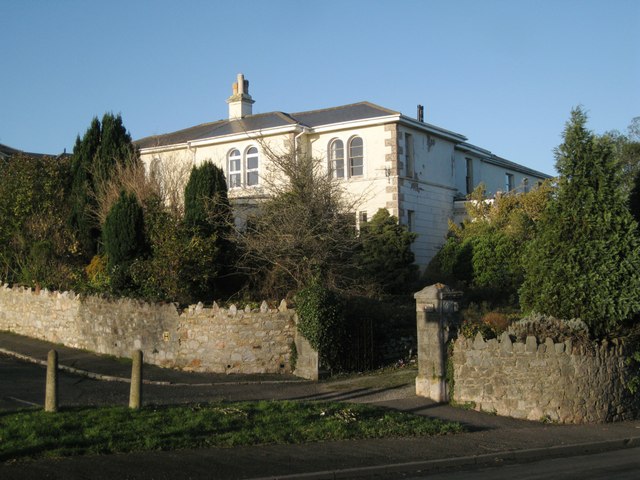
Sir Henry and his family moved to Teignmouth some time between 1911 and 1917.  I always wonder what brought people to Teignmouth and it seems in Sir Henry’s case that the answer was simple; according to his obituary “He loved Teignmouth, and once described it as the ‘prettiest place God ever made’.”  They moved in to a large, newly built semi-detached house named ‘Beulah’ in what was known at that time as Coombe Road but is now Coombe Vale Road.  It was built on the valley slope leading down to Bitton Brook.

It seems though that it wasn’t until 1932 that Sir Henry started taking an involvement in Teignmouth life, perhaps with an eye on being able to offer his skills and keeping himself busy after his retirement from the CWS.  The Exeter and Plymouth Gazette of 2nd February 1932 described Sir Henry’s initiation as a JP:

“WELCOMED AT TEIGNMOUTH
PETTY SESSIONS”
—–

“Sir Henry Wilkins, Teignmouth’s newly-created knight, was welcomed at the local petty sessions yesterday when he took his seat for the first time as a Justice of the Peace.

Mr. E. J. Ford, who presided, said that on behalf of the Bench he would like to give a word of welcome to their esteemed friend.  He was sure the Bench, as well as the Court, appreciated the honour the King had conferred upon him.  They hoped Sir Henry’s services in the Court would be of a congenial nature.  Sir Henry Wilkins suitably responded.

There are quite a few examples in the local press of Sir Henry’s rulings in the Petty Sessions so I have chosen only a couple here to illustrate the range of ‘minor’ misdemeanours and crimes he had to deal with and how he made his judgments.

The first should be considered perhaps as not so minor and perhaps shows a level of compassion from Sir Henry that was ahead of its time.  This is how the Western Morning News of 12th February 1935 described it:

“CHAIRMAN’S COMMENT
—–
Wife Granted Separation at Teignmouth”

“I thoroughly agree that it will be a good thing if a law is passed for cases of this description to be dealt with in camera”, remarked Sir Henry Wilkins (chairman) at Teignmouth Petty Sessions yesterday, when Mrs. Dorothy Beatrice Wood, the mother of eight children, successfully applied for a separation order against her husband, Percy Wood, dairyman, of Fore-street, Shaldon, on the ground of alleged persistent cruelty.

Ordering that defendant should pay weekly sums of 30s. in respect of the wife and 5s. for each of the children, who were placed in the mother’s custody.  Sir Henry described the case as a painful one.  The Bench were convinced there had been persistent cruelty for a number of years.

Mrs. Wood was represented by Mr. Gordon H. Mc Murtrie (Dawlish).  Defendant did not appear.  Defendant was also ordered to pay costs.”

The second example is possibly more at the whimsical end of cases in Petty Sessions, as described this time by the Western Times of 6th July 1934:

“BISHOPSTEIGNTON SLUMBERED
—–
But the Arm of the Law
was Still Reaching”

“For the furious riding of push bicycles at Shute Hill, Bishopsteignton, on June 8th, Horace Taylor, of Bitton-street, Teignmouth, and Ray Lamble, of Stanley Gardens, Teignmouth, were each fined 7/6 by the local Magistrates on Monday.

Constable Crocker, of Bishopsteignton, proved both cases, which he said occurred at 10.10 p.m.

Taylor said he could not have been endangering the lives of anybody at that time because everybody at Bishopsteignton was in bed by then.

The Chairman (Sir Henry Wilkins): If you think that after that time you can ride about as you like, get the idea out of your head.  He added that members of the Bench had had opportunity of seeing some boys rush about the town.  They were exceedingly clever on their bikes and it was astonishing how they avoided accidents, but it would have to stop.”

The Royal Humane Society also recruited Sir Henry to their ranks as this example from the Western Morning News of 22nd November 1932 illustrates:

“MEN’S BRAVERY REWARDED
—–
GIRL BATHER SAVED AT TEIGNMOUTH
—–”

“A gallant rescue from drowning in the River Teign had a sequel at Teignmouth Police Court yesterday, when the Royal Humane Society’s vellums were presented to Mr. George Elfick, of the London Hotel, Teignmouth, and Mr. W. T. Hitchcock, a local fisherman.

On behalf of the society, Mr. Hamilton Young said that on August 19 Mr. George Elfick (who is now in Australia) rescued a girl who was bathing near the mouth of the river, and had been carried into the middle.  Mr. Elfick, fully clothed, swam 50 yards to the girl, who had gone under water twice and was just sinking for the third time.

Mr. Elfick became exhausted, and was in serious difficulties himself, when Mr. Hitchcock swam out and brought them ashore.

Mr. Young added that this was the third occasion on which Mr. Hitchcock had received an award from the society.

Sir Henry Wilkins (chairman), who also presented a silver cigarette case to Mr. Hitchcock on behalf of Mrs. Elfick, said he was speaking for everyone when he said how extremely proud they were of the brave actions.  It was the work of heroes.”

I am sure that after 50 years of service to the CWS Sir Henry would have been looking forward to a long and perhaps more tranquil retirement.  Unfortunately it was not to be – he died only three years after standing down in 1933 as President, the first from southern England, of the immense Co-operative Wholesale Society.

The Western Morning News of 7th October 1936 described his funeral:

“LATE SIR HENRY WILKINS
—–
FUNERAL TRIBUTE AT TEIGNMOUTH”

“Indicative of his business and other activities, there was a large attendance at the funeral at Teignmouth yesterday of Sir Henry Wilkins, of Beulah, Teignmouth, who was formerly president of the Co-operative Wholesale Society.

The mourners included Mr. W. Bradshaw, the present president, and other officials of the society, while representatives of co-operative societies throughout South Devon were present.

The interment at Teignmouth Cemetery was preceded by a service at St. James’s Church, Rev. F. C. Eddy (vicar) officiating, and Mr. E. Smith presiding at the organ.

The family mourners were Lady Wilkins, widow; Miss M. Wilkins, daughter; Mr. And Mrs. R. Wilkins, son and daughter-in-law; Mr. E. Wilkins, brother; Mrs. Willoughby, sister; Mrs. Bishop, sister-in-law.  Deceased’s son (Mr. E. Wilkins), who is in South Africa could not be present.

Those also present included ….. A VERY LONG LIST THEN FOLLOWS …..

A number of women present included representatives of the Teignmouth Sunshine Girls, in whose work Sir Henry was interested.

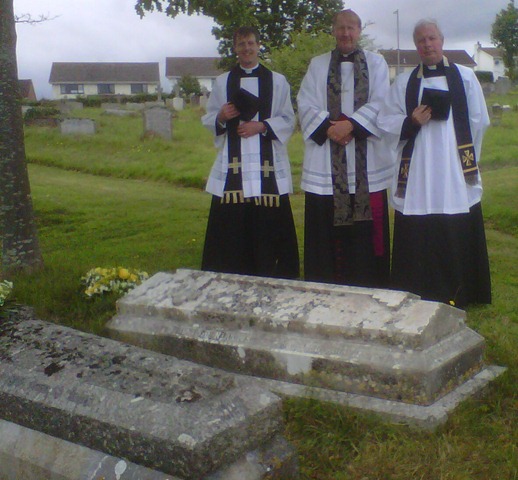
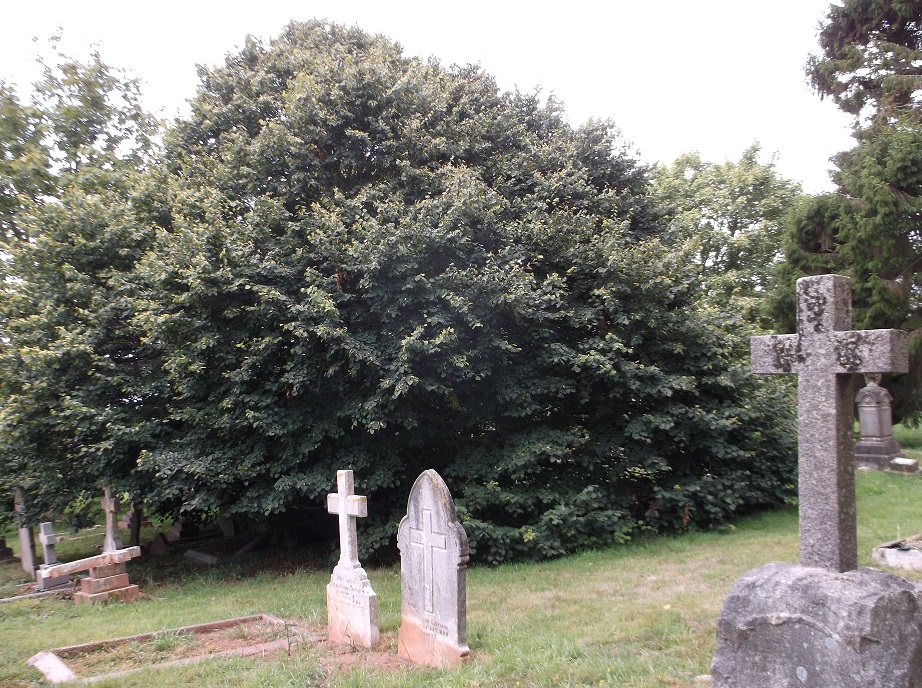
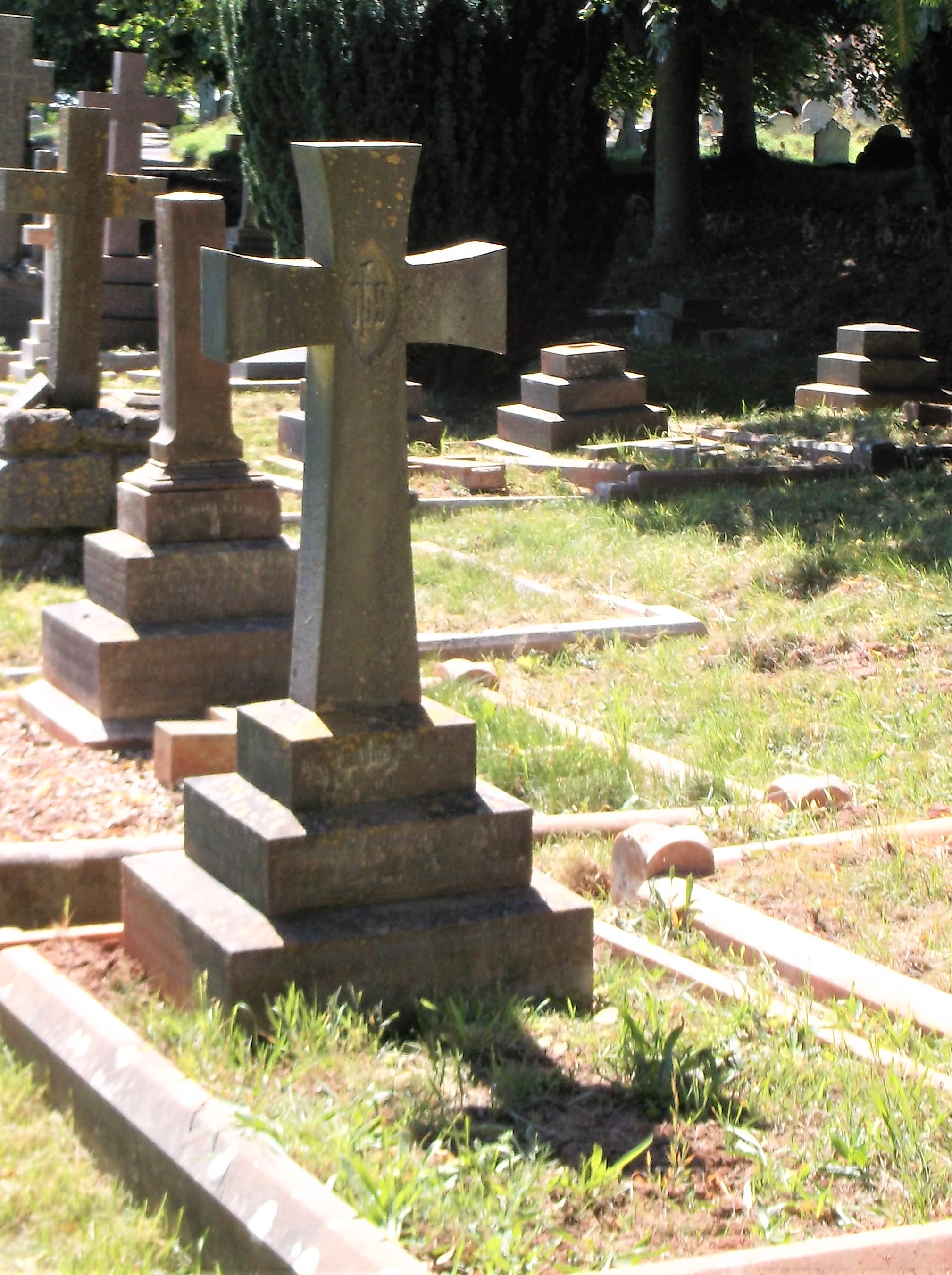
Sir Henry’s grave is at the top end of the cemetery.  He was joined almost 20 years later by Emmelina, then Mabel and his grandson Peter Moore Wilkins more recently in 2009.

After Sir Henry’s death his wife Emmelina and their daughter Mabel moved away from Teignmouth.  It appears that went to live close to Emmelina’s elder son, Reginald, and his family.  The electoral register of 1939 shows that Reginald was living at 74 Thornhill Road, Stockport and was the manager of an electrical works.  Emmelina and Mabel lived at 60 Compton Road, Stockport.

They may have moved away but they left a legacy in Teignmouth.

The Teignmouth Legacy

In 1926 the Exeter and Plymouth Gazette of 20 December reported on a party in Teignmouth:

“POOR AND LONELY
—–
TEIGNMOUTH PARTY”

“Over 100 poor and lonely persons of Teignmouth have been given a Christmas party at the Town Hall by the Sunshine Girls, a class of young people conducted by Miss M. Wilkins.  As the guests were assembling the girls sang old-time songs.  Turkey and ham were served, Mr. E.Ellis carving the former.  An entertainment followed, and was much enjoyed.  Before the company dispersed plum pudding and cream were served and each guest was presented with a parcel of groceries.  The Rev. H. R. Veale voiced the thanks of the class to the Urban Council for reducing the charge for the Town Hall and to all who had assisted.  The guests were welcomed by Mrs. Wilkins, and the girls assisting, in addition to Miss Wilkins, were the Misses H. Scagell, L. Baker, A. E. Webber, M. Smith, R. Walling, N. Walling, W. Skinner, E. Anderson, E. Cox, L. Rabjohns, E. Rabjohns, R. Murray, N. Churchill, S. Heller, W. Webber, and G. Banham.

This party became a tradition, continuing throughout the time that Mabel Wilkins was in Teignmouth.  The Western Morning News of 24 December 1931 picked up on the back-story, going back to 1917, and tells us:

“SUNSHINE GIRLS”

The Christmas festival is a special joy to the old, and there are few jollier gatherings than the old folks’ treats.  Teignmouth, I noticed, has an organization known as the ‘Sunshine Girls’, who this year entertained over 200 old people.  Behind the formal report of the proceedings I found there is an interesting and appealing little story.

Fourteen years ago Miss M. Wilkins, of Beulah, Coombe Road, Teignmouth, touched by the friendless state of many girls engaged in domestic work in this seaside town, decided, as she puts it, that ‘her bit of work’ should be to bring them the sunshine of friendship.  Accordingly, with a nucleus of girls she personally knew, she started a weekly gathering at her own home.  For six years this friendly circle grew; its members hastened to give a cordial welcome to other girls whom they heard had come as strangers to the town.  Then, as in all healthy organizations, there was the desire to do something definite.

Led, I suspect, by the kindly heart of Miss Wilkins herself, the ‘Sunshine Girls’, as they had called themselves, decided that ‘their bit of work’ should be to earn the money to entertain the old people of the town each Christmas.

Accordingly, the weekly meetings became sewing bees.  Employers and other friends heard of the project, and orders came in for the plain and fancy sewing which was being steadily produced each week.  The sum total earned this year enabled the net to be cast wider, and for old people from Shaldon, Holcombe and Bishopsteignton to be included in the party.”

1935 was a special party as it was also the Golden Wedding Anniversary of Mabel’s parents, Sir Henry and Lady Wilkins.  There were also even more attendees as the Exeter and Plymouth Gazette of 20 December described:

AGED FOLK ENTERTAINED
—-
Sunshine Girl’s Annual Party”

“Over 300 aged folk of Teignmouth, Shaldon, Bishopsteignton, and Holcombe, attended the Townhall, Teignmouth, when the Sunshine Girls gave their annual Christmas party.  Dr. F. W. Morton Palmer presided, and was supported by Mr. E. W. Toby (Chairman of the Council) and Mrs. Toby, Sir Henry and Lady Wilkins, the Rev. F. C. Eddy (Vicar of St. James) and Adjutant J. Kenny (Salvation Army).

Miss M. Wilkins, superintendent of the Guild, welcomed the guests, and read greetings from ex-Sunshine Girls from as far away as Iceland.  She announced that on Christmas Day her parents would celebrate their golden wedding.

On behalf of the Sunshine Girls, Miss A. Webber presented Lady Wilkins with a basket of roses.  Miss Peggy Mullen pinned a rose in Sir Henry Wilkins’s coat, and Miss Marjory Walling handed Sir Henry and Lady Wilkins a miniature garden.

The musical programme was contributed by Mrs. V. Vicary, Master R. and Miss D. Howard, the Misses H. M. Strong, E. Cox, N. Walling, Messrs. R. Loughborough and W. McIlvenna.

Master Peter Wilkins (grandson) presented Sir Henry and Lady Wilkins with a golden wedding cake.”

By 1939, as we have seen, Mabel’s father had died, she and her mother had moved to Stockport and then the war intervened so the Sunshine Girls’ activities seemed to have come to an end.  In 1946 a different party was arranged in Teignmouth though – a Victory party, as the Exeter and Plymouth Gazette of 11 January reported:

“HAPPY GESTURE – A new organization, the Service For Others Committee, was responsible for an old folks’ Victory party at Teignmouth on Saturday.  About 210 accepted the invitation to be present, the majority being between 70 and 80 – one was over 90.  The party was waited on by the committee and representatives of the Churches and Toc H.  Those unable to walk to the hall were brought by cars.

Mr. H. Irish, chairman of the Urban Council, wished all a happy New Year. On behalf of the committee he presented the organizer, Miss Alice Cross with a fountain pen.  A telegram from Miss M. Wilkins, Stockport (daughter of Lady Wilkins and the late Sir Henry Wilkins), the originator of the old folks’ parties, wished the guests prosperity for 1946.”

The following year the same committee entertained 350 ‘old Teignmouth folk to tea and entertainment at the Church House’.  Mabel Wilkins was welcomed at that event.  By now it was clear that Alice Cross had picked up the mantle of Mabel Wilkins; the Sunshine Girls may have passed but their tradition remained.  In 1948 the number of attendees had risen to 400 and the Western Times of 16 January continued to remember Mabel’s legacy:

A telegram was read from Miss M. Wilkins, of Manchester, the daughter of the late Sir Henry Wilkins, who originated the party.”

The legacy remains today.  The Service For Others Committee morphed eventually into the charity Age Concern Teignmouth and Shaldon which runs the eponymous Alice Cross Centre and each year continues to offer a Christmas party for the “old folk of Teignmouth”.

Like Albert Schweitzer “We should all be thankful for those people who rekindle the inner spirit.”

Acknowledgements

In what has turned out to be another much longer story than anticipated I am very grateful for the help received from:

  1. Carol Smith for photographs of Sir Henry and Lady Emmelina Wilkins and inspiring this story
  2. Jean Gitsham for her initial research two years ago and tracking down a source for the location of “Beulah”
  3. June Snell and Lin Watson for tracking down what we know so far on “Beulah”

Sources and References

Extracts from contemporary newspapers are referenced directly in the text and are derived from British Newspaper Archives.

Ancestry.com for genealogy

Wikipedia for general background information

Other sources, with hyperlinks as appropriate, are as follows:

  1. The National Archives of the UK; Kew, Surrey, England;  Royal Navy Registers of Seamen’s Services; Class: ADM 188; Piece:6 – Naval record
  2. The Story of the C. W. S. The jubilee history of the Co-operative Wholesale Society, limited. 1863-1913, Percy Redfern – Background history
  3. The New History of the C.W.S., Percy Redfern 1938 – Background history
  4. Flickriver – Various photos of CWS
  5. CWS Archives
  6. Everyday Offending –  – Temperance movement in Plymouth
  7. Cooperation” – Journal Article by Florence E. Parker in Monthly Labor Review – Vol. 10, No. 4 (APRIL, 1920), pp. 117-132 – Visit to America 1926
  8. Graces Guide –  – Picture of CWS candle
  9. Primitive Methodists –  – Rechabite movement
  10. The Alice Cross Centre –  – the Sunshine Girls

FINALLY there are some loose ends ……

  1. Where exactly is Beulah, the house where the Wilkins family lived in Teignmouth?
  2. What happened to Sir Henry’s mother?
  3. What happened to the Sunshine Girls after Mabel left Teignmouth?
The Two Juanitas

As you walk through the cemetery, you can’t fail but be drawn to some of the graves that have been uncovered – it could be the headstone that catches your eye; or maybe you wonder about the epitaph; or, as in the case of this story, it may be the name of the person buried there.

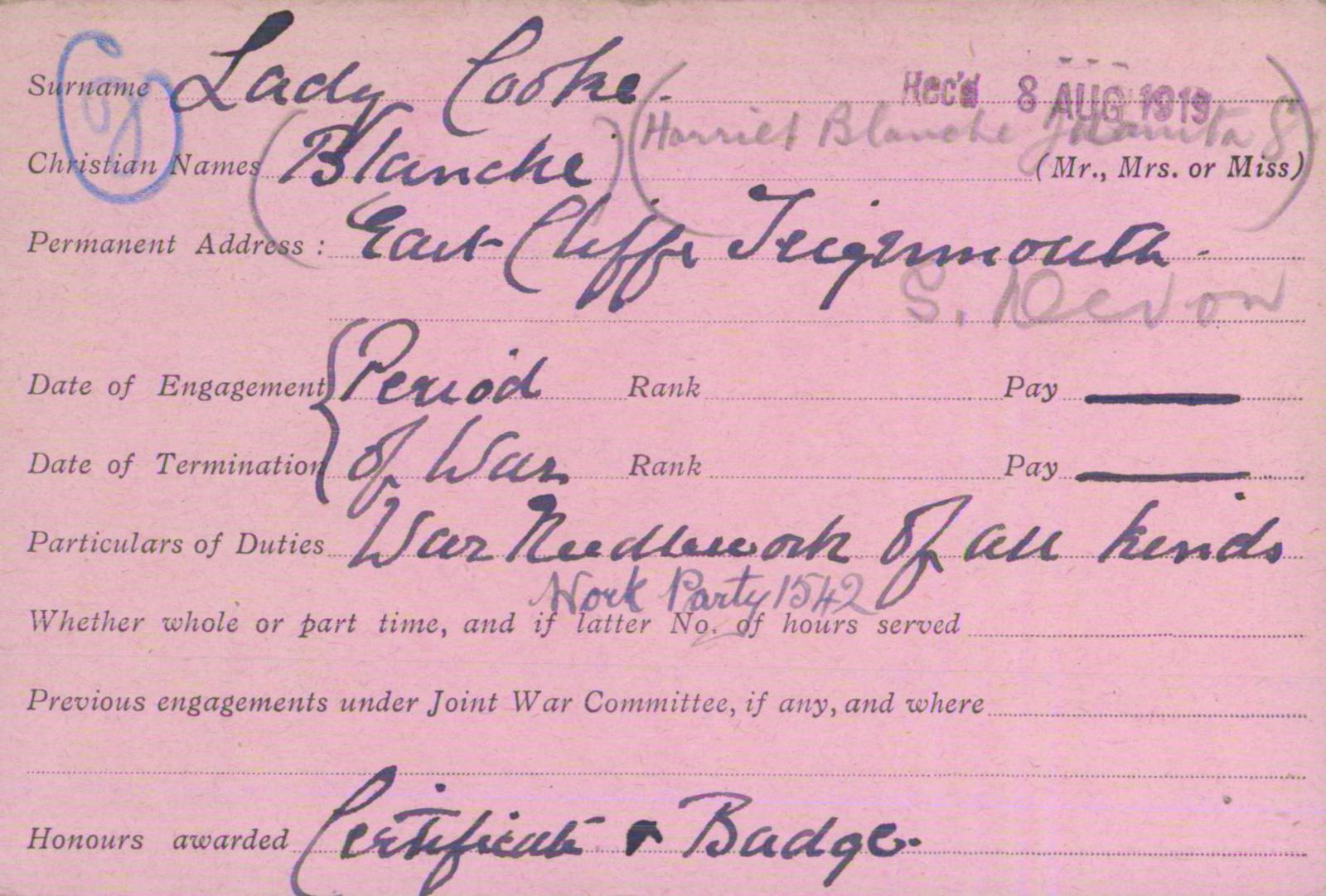
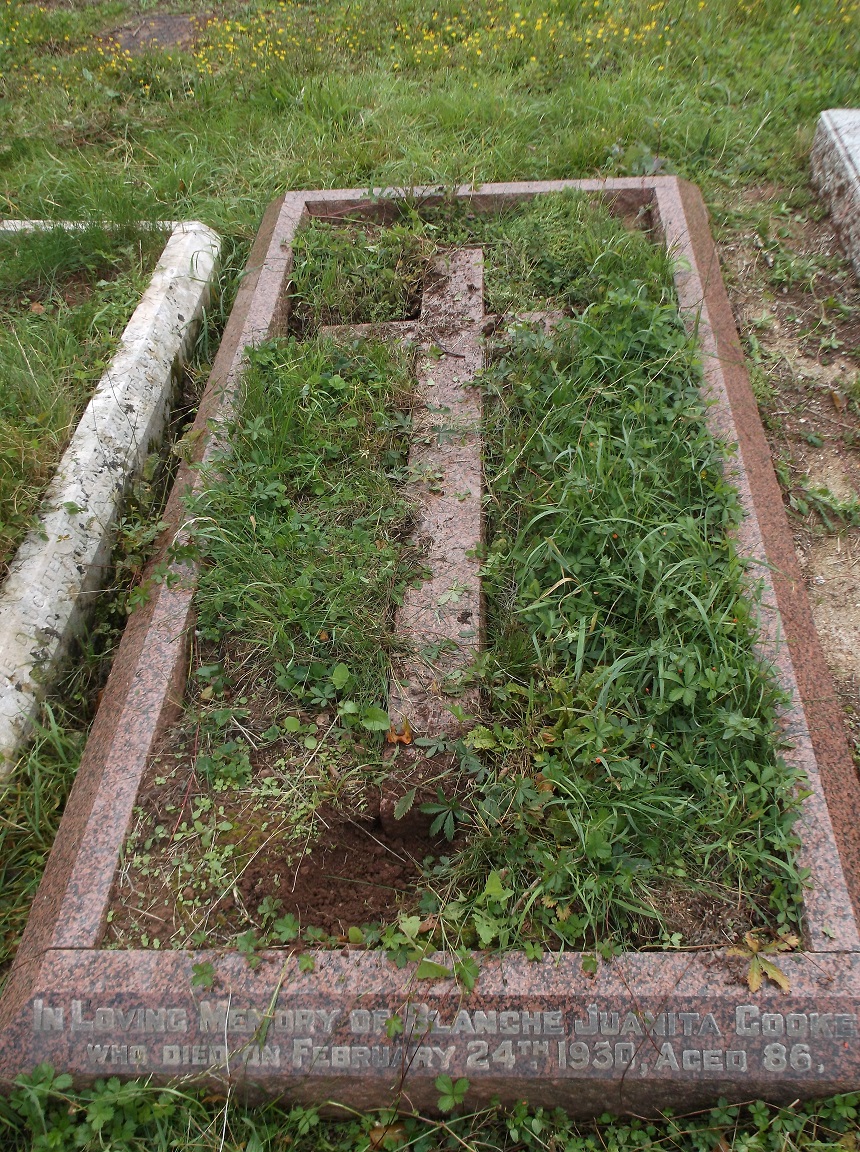
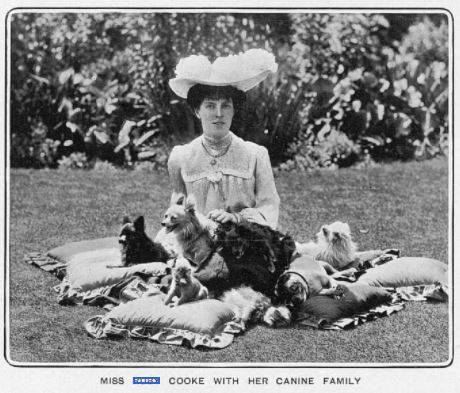
Blanche Juanita Cooke and her daughter Ruby Blanche Juanita Cooke are buried side-by-side.  Juanita is an unusual name for this country and certainly not common in Victorian times.  But, prompted by this, a quick internet search revealed something even more extraordinary.  Blanche Juanita Cooke was really the Dowager Lady Harriette Blanche Juanita Georgiana Cooke, the widow of the 9th Baronet Sir William Ridley Charles Cooke.  Unlike previous stories this is not a tale of accomplishments but rather one of life-style and of how the other half lived.  What follows is almost a real-life Downton Abbey (but lacking the upstairs-downstairs melodrama!) over more than a century.

Because of the long names I’ll refer from now on to the Dowager Lady Harriette Blanche Juanita Georgiana Cooke simply as “Blanche” or “Lady Cooke” or “Lady Blanche” and her daughter as “Ruby”.

Blanche’s life seemed to progress in stages, the first of which was through to her marriage.

Old Money Meets New Money

The marriage of Blanche to the 9th Baronet is significant in terms of social history because it represents a not uncommon feature of the development of Victorian aristocracy – the coming together of “old money” and “new money”.  The “old money” was the well-established historical peerages; the “new money” was the upstarts with wealth created from a combination of the industrial revolution and the expansion of the British Empire.  Blanche was new money, but let’s start with the old.

Old Money

There is an excellent account of the Cooke family line on the Arksey Village History blog site and I am indebted to Alison Vainlo, who has produced that site, for her kind permission to use some the photographs she has discovered.

Wheatley Hall, courtesy of Alison Vainlo

In brief, the Cooke family line can be traced back to the 15th Century but its growth in power seems to lie with Edward Cooke who became Mayor of Doncaster (1504- 1508).  The associated financial status this bestowed led to a gradual acquisition of land in the area through to the 17th century.  The baronetcy was awarded to the family for their ‘suffering and loyalty to the Crown’ during the civil war; and it was Sir George Cooke who became the 1st Baronet of Wheatley on May 10th 1661.  The magnificent Wheatley Hall, set in its 103 acres of ground, was built 22 years later.  The baronetcy passed down subsequent generations through the eldest male descendants of the family until it reached Blanche’s husband-to-be, Sir William Ridley Charles Cooke, in 1851.

New Money

Blanche’s “new money” aristocratic line started with her grandfather, Sir William Feilden (1772-1867).  He made his money in cotton and also started acquiring land, purchasing the hamlet of Feniscowles (near Blackburn) in 1798 and building the family home – the house of Feniscowles set in a “romantic valley on the banks of the river Darwen”.  He entered politics in 1832, becoming liberal MP for Blackburn.  Nine years later he switched allegiance to the conservatives and was rewarded with the baronetcy in 1846 shortly before his retirement.

Blanche’s father, Sir William Henry Feilden, acquired the title on his father’s death in 1867.  He was a captain in the 17th Lancers when he married Mary Elizabeth Wemyss, daughter of the late Colonel Wemyss of Wemyss Hall, Fife.  In a sense this was also a confluence of ‘new money/old money’.  Her mother’s line is the Wemyss clan whose records date back to the 12th century and who ruled the Fife region of Scotland from the bastion of Wemyss Castle.

Cambo House, birthplace of Blanche

William and Mary had seven children, of whom Blanche was the last to die.  The official records seem confused about her date of birth but contemporary birth announcements in the press suggest it was October 29th 1843 (Naval & Military Gazette and Weekly Chronicle of the United Service – Saturday 11 November 1843).  Curiously she was born at a place called Cambo House (belonging to the Erskine family), Fife, not at her husband’s or her own family home.  Also, and the original attraction of the grave, why was she given the name ‘Juanita’?  It doesn’t appear to be a family name nor a common Victorian name.  The name means ‘Gift of God’ so maybe there had been a miscarriage prior to Blanche’s birth, but again there is no evidence of that.  So it was probably just a whim.

Old Money and New Money Meet

So the scene was set for the coming together of old and new money.  But there could have been one slight problem along the way.  On 17th April 1855 Sir William Ridley Cooke had married Harriet Eloise Trebeck, daughter of the Reverend Jonathan Trebeck.  Fortunately for Blanche that marriage was not destined to last and it allows me to introduce a little whiff of scandal into the story.

The tabloid press may not have been around in those days but the story warranted widespread reporting around the country.  Here is the version from the York Herald of 29 November 1862:

DIVORCE OF A YORKSHIRE BARONET.
COURT FOR DIVORCE AND MATRIMONIAL
CAUSES, Nov. 21.
Before the Judge-Ordinary.
COOKE v. COOKE AND ELMSALL

This was a petition by Sir William Ridley Charles Cooke, Bart., for a dissolution of his marriage with Dame Harriett Eloise Cooke, on the ground of her adultery with Mansfield Elmsall.  The respondent and co-respondent pleaded a denial of the charge.

Mr. Temple, Q.C., and Dr. Spinks appeared for the petitioner; Mr. Overend, Q.C., and Mr. Littler for the respondent.

Mr. TEMPLE stated that the petitioner married the respondent, who was the daughter of a deceased clergyman named Trebeck, on the 17th of April, 1855, and they lived together at Wheatley Hall, in Yorkshire.  Four or five years after the marriage some dissensions arose between them respecting the co-respondent, and Lady Cooke left her home with the housekeeper, Mrs. Thomas, and went into lodgings in Sloane street, Chelsea.

She there wrote a letter to Sir Charles, in which she said that for a long time she and Mr. Elmsall had been more to one another by far than under their respective circumstances they ought to have been, but nothing so bad as he might at first suppose had taken place; that Mr. Elmsall’s love for her had been of long standing, and she had been the most to blame in allowing him to tell her of it, but she believed each of them would have remained in total ignorance of the other had it not been that the outbreak at the archery ground in Doncaster gave them a common ground of complaint and sympathy.  She continued – ‘I await your reply to this, hoping that you will give it your full attention, and consider it, knowing this much, you will or will not have me back again.  Should the former be your decision, I will do my best to deserve your confidence in future.  Of course our love will be a sealed subject between him and I for the rest of our lives.’  In conclusion she said that Sir Charles could take time for reflection if he pleased, but she begged him to make up his mind definitely before she returned.

Sir Charles, after receiving this letter, allowed her to return and live with him, but he afterwards had occasion to remonstrate with her again, and in March or April 1861, she finally left his house.  She went to live with her mother, first at Whitby, and afterwards at Dover.  On the 14th of March, 1862, she left her mother’s house, and Sir Charles received information which he communicated to his solicitors, and one of their clerks was sent to the Continent.  He traced Lady Cooke and Mr. Elmshall to Lucerne, and followed them to Offenburg, where the citation in this suit was served on them.

The Rev. Mr. Simmons proved the facts of the marriage and the separation, and that Sir Charles had always treated his wife with kindness.

Mr. Harper, a clerk to the attorney for the petitioner, proved that in May last he traced the respondent and the co-respondent to Paris, to Zurich, to Lucerne, to Lugano, to Milan, to Turin, to Geneva, and to Basle.  At Basle they stayed at the Three Kings Hotel, and occupied a double-bedded room.  From there they went to Offenburg, where they also occupied a double-bedded room.  He served the citation and petition on them as they were sitting at breakfast in the public room of the hotel.  He said ‘I suppose you can guess my business?’  The co-respondent said, ‘I really cannot’. He said, ‘Perhaps Lady Cooke can tell you,’ and they both started.  He said, ‘It is desirable not to attract attention,’ and handed the Times newspaper to the co-respondent, together with the citation and petition.  He then went round the table, and gave another copy to Lady Cooke.

Hudson, the petitioner’s groom, who had been sent to Offenburg to see the respondent and co-respondent, identified them.

The Court granted a decree nisi, with costs against the co-respondent.”

The somewhat coy description of the denouement and the “double-bedded room” was obviously the clincher!

Nine years later Sir William remarried, this time to Blanche (Photographs courtesy of Alison Vainlo).

The Preston Herald of 6th May 1871 painted a picture of the glamour of the day:

MARRIAGE OF MISS FEILDEN.
(DAUGHTER OF SIR W. H. FEILDEN, BART.)

That most charming of the environs of Scarborough, the South Cliff, was rendered unusually gay and attractive on Thursday last, by the proceedings in connection with the marriage, which took place on that day, of Sir William Ridley Charles Cooke, Bart., of Wheatley Hall, Doncaster, with Harriet Blanche Juanita, youngest daughter of Sir W. H. Feilden, Bart., of Feniscowles Hall, Lancashire.

The marriage was celebrated at the church of St. Martin’s-on-the-Hill, which was crowded long before the hour fixed for the nuptial ceremony.  Shortly after eleven o’clock the wedding party began to arrive.  The greatest interest appeared to be felt in the occasion by the throng that gathered about the church and filled the edifice, Miss Feilden being well known to many present as a young lady whose amiability endeared her to all her acquaintances.  The bride was handed from her carriage by her father, Sir William Feilden, who forthwith led her to the altar, whither she was accompanied by six young ladies as bridesmaids, viz., Miss Cecilia Willis, (cousin to the bride), Miss Williams, Miss Burrell, Miss Pedder, Miss Edith Feilden, and Miss Blanche Whittaker, the two last being the bride’s nieces.

The bride was attired in rich white satin, trimmed with magnificent Brussels lace, tastefully adorned with orange blossom, stephanotis, and lily of the valley, with veil and wreath to correspond.  She wore a splendid diamond tiara, and her sweet and bright smile, as she passed up the aisle, seemed to be reflected in the magnificent and costly suit of diamonds and emeralds that formed her ornaments.

The bridesmaids’ dresses were remarkably elegant, and from their light and cloudy appearance very difficult to describe.  Suffice it to say, that over long white silk slips were worn the most fairy-like of tulle dresses, with upper skirts of the same, caught up by bunches of lovely dog-roses and trails of ivy, with veils and wreaths to match.  Each bridesmaid wore a handsome gold and pearl locket, the gift of the bridegroom, and both they and the bride carried magnificent bouquets of exotica, grown and arranged by Mr. Kelly, gardener to Sir W. H. Feilden.

The bridegroom – Sir Wm. Cooke – was attended by Major Burrell 15th Hussars), as ‘best man’, and by Mr. Haughton Feilden (Royal Artillery), Mr. Arthur Pedder, Mr. Walter Burrell, and Mr. Simpson.  The bride and bridegroom met on the chancel steps where, with the party grouped around, and the bridesmaids in the rear, a most pleasing and most interesting scene was presented.  The service was impressively read and conducted by the Rev. Jonathan Beilby, M.A., vicar of Feniscowles, assisted by the Rev. Walter Grey, vicar of Arksey.  The well-pronounced ‘I will’, which the bridegroom pledged at the altar, was distinctly heard, and the manly earnestness of its tone guaranteed its sacred observance.  After the ceremony, the bridal party retired to the vestry of the church, where the newly-wedded pair received the first congratulations of their immediate friends, and where the usual formalities were gone through.

The party then repaired to Williamson’s Crown Hotel, where a sumptuous déjeuner was served to the company present.  The tables were set out by Mr. And Mrs. Williamson with the most consummate taste, and every delicacy of the season was to be seen.  The following guests were assembled:  (Long List).

The interval, that occurred before breakfast was served, was spent by the guests in the elegant drawing room of the hotel, where was displayed a magnificent and costly collection of bridal presents (Long List featuring diamonds, diamonds, more diamonds, rubies, emeralds, sapphires, pearls …. down to a “handsome gold-mounted whip” and “From the Servant’s of the bride’s family: many handsome and useful presents”).  During the absence of the company, the costly collection of presents above enumerated, was under the confidential care of Mr. Brogden.

The hour at breakfast was most pleasantly spent, and benisons and good wishes were warmly expressed towards the bride and bridegroom.  On rising, Sir Wm. and Lady Cooke bade adieu to their friends, and very shortly afterwards they took a special train for the Lake district, where they will spend a portion of the honeymoon.  As they left the Crown Hotel, the traditional and inevitable shower of white slippers followed them, and the best wishes of the spectators for their future happiness went with them.  A dance given at the hotel, by Sir Wm. and Lady Feilden, which was kept up till a late hour, terminated the proceedings of the day, which was, throughout, an exceptional one for its lovely brightness, genially calling to mind the old saying – to which many on Thursday would say ‘Amen’ – that ‘Happy is the bride whom the sun shines on.’”

The Social Whirl

Finding out what Blanche’s life was like during her marriage has been largely a trawl through the newspapers of the next 25 years.  This was made slightly more complicated because there were upto four Lady Cookes during this period so disentangling events associated with each of them was occasionally challenging.  The conclusion I have drawn, based solely on the evidence of newspapers, is that Blanche’s destiny was closely tied to her husband who, according to the Yorkshire Evening Press in their obituary of 28th September 1894, “took very little interest in either politics or local affairs”.  So it seems that Blanche’s life was one of meeting her conjugal obligations to perpetuate the baronetcy and the social obligations of all that went with the life-style.

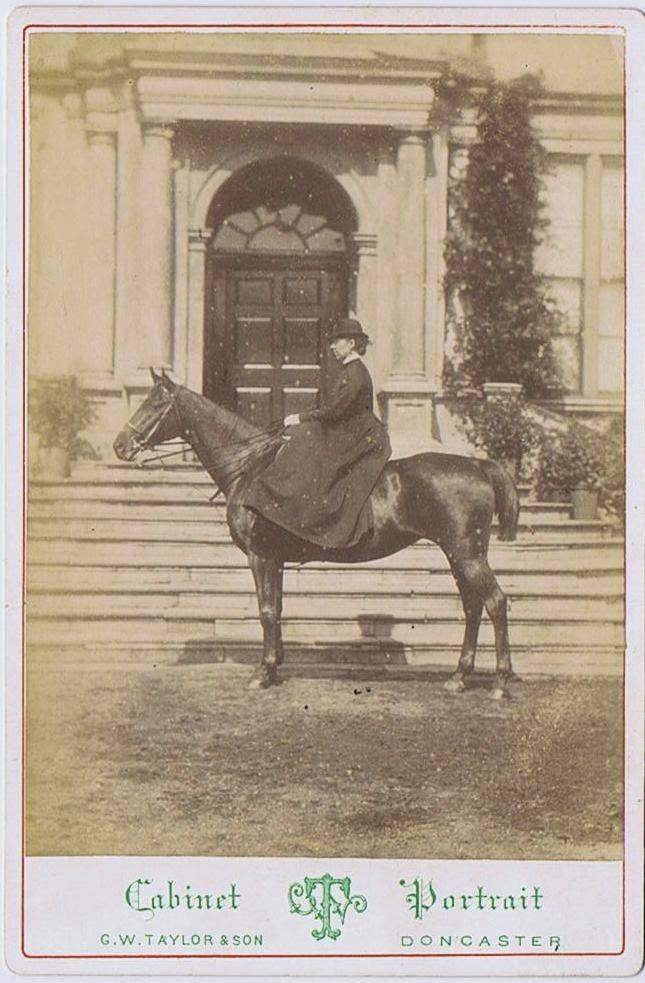
Photographs of Lady Blanche courtesy of Alison Vainlo

The conjugal obligations were soon fulfilled with the birth of her first child, a son William Henry Charles Wemyss, just over a year later (21st June 1872).  He was followed four years later by her second son, Arthur Gordon Wyatt, and finally her daughter Ruby, born 3rd June 1879.

Photographs of Ruby, courtesy of Alison Vainlo

The social obligations were principally year-in year-out attendance at the fashionable balls of the time, with weddings, funerals and other social events in between.  The social whirl always included the “Season” when it was the appropriate time (summer months) for the social elite to migrate to the city (London) for a round of balls, dinner parties and charity events.  These would be assiduously reported in the press throughout the country.  For example, the Dublin Evening Telegraph of 23rd May 1873 reported:

“Sir William Cooke, Bart., and Lady Cooke have arrived at Long’s Hotel, Clifford Street, London, for the season.”

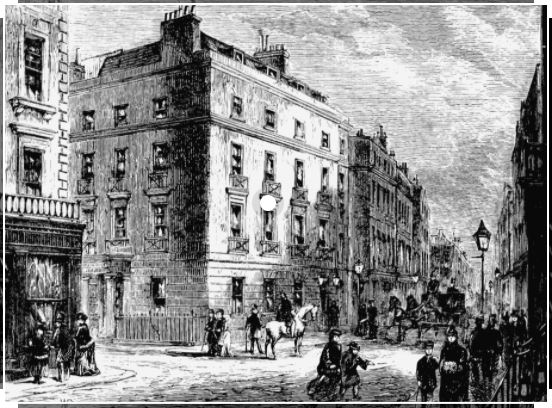
Long’s Hotel seems to have been their favoured residence in London, well-situated lying as it does in Clifford Street which runs between New Bond Street and Savile Row.  It has an interesting write-up in the Dictionary of Victorian London:

Long’s Hotel

“Long’s Hotel, in Bond Street, as it appeared in the sixties, was a species of adjunct to half the clubs in London. Men playing till three or four in the morning in clubs that aspired to being considered “correct” usually adjourned to Long’s, and one man having engaged a bedroom, the rest trooped in after him. To such an extent, indeed, was this recognised, that a commodious bedroom on the ground floor was especially set apart for these nocturnal emergencies, and within five minutes of entering the most methodical of night porters produced cards, candles and the inevitable brandy and sodas.  It was here that the fastest and best men in London lounged in and out of the coffee room from breakfast time till well on in the afternoon, and smoked, drank champagne, talked horsy, and swore loudly.  Not that Long’s was not a highly respectable hotel: on the contrary, the entire upper part was conducted on strictly correct lines, and patronised by the best county people of the day, and the latitude granted to the ground floor must be set down rather as a desire of the management to please all parties, and bow before the inevitable there was no resisting.”

I assume that Sir William and Lady Blanche stayed in the upper part of the hotel although Sir William may well have felt comfortable on the ground floor as well!

Victorian ball – general image

Out of season the social whirl did not stop, it just returned to a different pace.  January seemed to be a particularly busy month for balls.  Here are a few which appeared annually in that month and which were regularly attended by Sir William and Lady Blanche:  Doncaster Infirmary Ball, Yorkshire Hussars Ball, Wakefield Charity Ball, Newark Hospital Ball, The Bachelors Ball.  What were these balls like?  Sumptuous by the sound of it, perhaps even decadent.  Here are a few examples of those they attended across time:

Sir William and Lady Blanche would host their own balls.  The John Bull of 22nd January 1881 described one such event:

“On Tuesday, the 11th inst., a ball, attended by about two hundred, was given by Sir William and Lady Cooke at Wheatley Park.  The ballroom was decorated with evergreens, and beautifully lighted.  Dancing commenced at nine o’clock, and was kept up until seven in the morning ….. Lady Cooke wore a dress of the palest blue satin and deep Brussels lace; gold sash across the left shoulder; gloves to match, and a parure of rubies and diamonds; tiara to match …..”

The Yorkshire Post and Leeds Intelligencer of 23rd April 1887 reported on the Jubilee Ball marking Queen Victoria’s 50 years on the throne:

“DONCASTER – JUBILEE FANCY DRESS BALL.

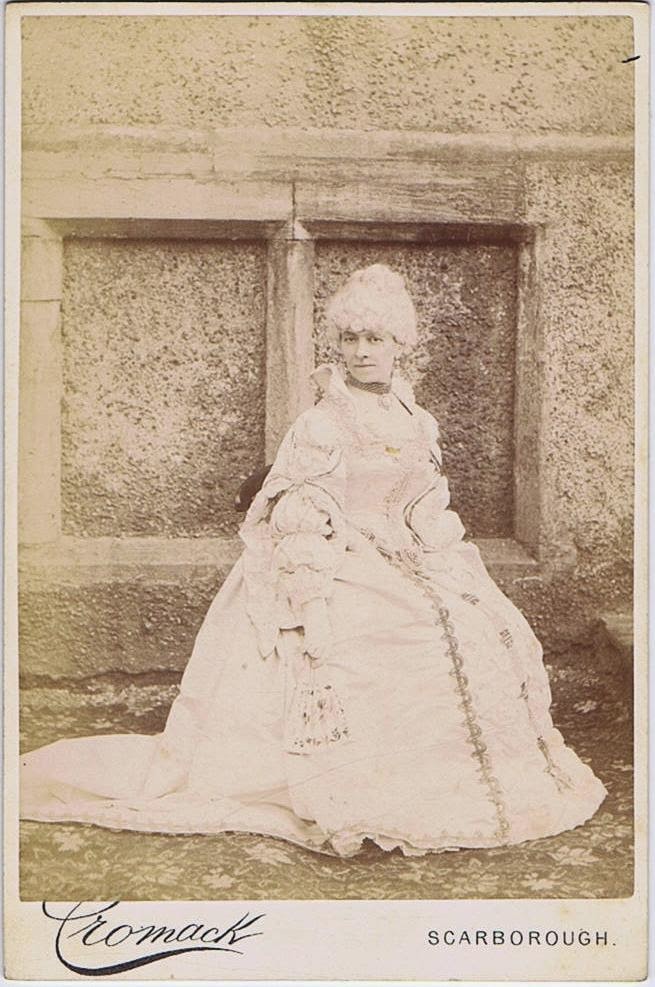
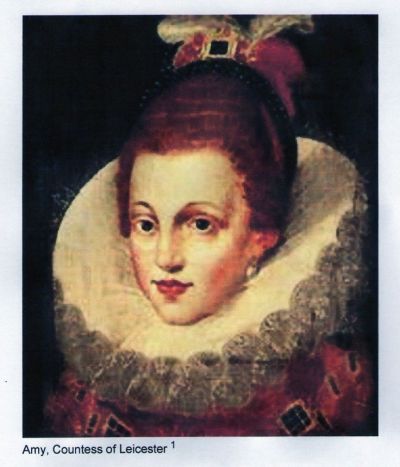
Amy Robsart, Countess of Leicester

The Jubilee of Her Majesty’s accession was celebrated in Doncaster last night by a grand fancy dress ball, which was held in the Mansion House.  There was a large and brilliant gathering, about 300 visitors being present.  Most of the noblemen and gentry in the district had made up house parties for the occasion, among them being Lord and Lady Auckland, Lord and Lady Halifax, ….., Sir William and Lady Cooke ….. The following were some of the characters represented ….. Amy Robsart (Lady Cooke) ….. Company began to arrive at nine o’clock, and dancing was continued until far into the morning.  The rooms and staircase were decorated with plants, and the fine picture of Her Majesty which hangs in the ballroom was draped with the Union Jack and Royal Standard.

Amy Robsart was an interesting choice of character by Blanche.  She was the first wife of Robert Dudley who was the “favourite” of Queen Elizabeth I.  Amy died young in suspicious circumstances.

Sometimes Royalty was involved as the Sheffield Daily telegraph reported in a four-column spread on 22nd October 1879:

“Rightly or wrongly, the ladies of Hallamshire  have got it into their heads that they owe the brilliant ball of last evening to the desire of Prince Leopold that the fairer portion of our people should be able to participate as largely as possible in the festivities held in his honour ….. Dancing, according to the majority of ladies, is more delightful than talking; and Prince Leopold’s choice, if choice it was, is accepted as further evidence of his good sense and personal excellence ….. the ball was undoubtedly a brilliant success …..

All the apartments were brought into requisition, and though the number of guests reached 650 there was abundance of room for everyone.  Those who delight to ‘trip it gaily to and fro’ could frequent the large hall and slide away to the melodious strains of the band, over the snowy holland.

On one side of the room, in the crimson portion, was a couch, placed in a recess and overhung by graceful palms, so that the Prince could recline under his own palm tree, if he were so inclined …..

The guard of honour was furnished by the 1st West York Yeomanry Cavalry …. At supper, for which Mr. Mountain catered, the following was the MENU – Baron of Beef, Rounds of Corned Beef, Quarters of Lamb, Boars’ Heads, Roast Turkeys, Roast and Boild Chickens, Hams, Tongues, Galantines of Veal, Pigeon Pies, Lobster, Salads, Grouse, Pheasants, Partridges, Game Pies.  SWEETS: Madeira Jellies, Macedoine of Fruits, Charlotte Russe, Noyean Creams, Bohemian Creams, Apricot Creams, Vanilla Creams, Pastries Various.  WINES: Champagne, Hock, Sherry”

All the above gives only a flavour of what might be described as a decadent life-style. Would they have suspected that it couldn’t last?  The first world war would bring change but that was still on the distant horizon.  Did the Leeds Mercury of 5th January 1894 identify early signs of the unsustainability of such hedonistic activities:

“WAKEFIELD CHARITY BALL ….. Since the year 1851 the event has been an annual one, and has been well supported by the gentry and county families residing in the neighbourhood of Wakefield.  What surplus funds have remained after the payment of expenses have been handed over to the Clayton Hospital and the Wakefield Dispensary.  In years gone by the amount thus available has often exceeded £100 – in 1847, for example, the sum devoted to charity being £159.  Of late, however, the receipts have somewhat fallen ….. Last year the surplus funds amounted to £33 15s.”

Although attendance at the “Ball scene” was a constant feature of her life, in the later years of her marriage there is increasing mention of Blanche attending various charity, military and social events, more often on her own accord.  Here are a few examples:

As a patron of the Cliff Bridge Company band, Scarborough, as described by the Yorkshire Evening press of 9th May 1890:

Spa Band, courtesy of North Yorkshire Archives

“THE MESSIAH AT THE SPA. The announcement of a benefit concert of the Company’s band, under the distinguished patronage of his Worship the Mayor (Ald. Hutton, J.P.), Joshua Rowntree, M.P. …. Lady Cooke &c, brought together a large audience at the Spa last night ….. The orchestra was composed of the Cliff Bridge Company’s Band specially augmented for the occasion, with a chorus of upwards of 100 voices …..”

There was entertainment of a different sort when Sir William and Lady Cooke attended the local Doncaster races, although this attendance in 1891 seemed a quieter event than normal as reported by the Daily Telegraph and Courier of 9th September 1891:

Owing to there being no parties this week from either the Duke of Portland’s or Viscount Galway’s, or from Nun-Appleton, the muster in the Ladies Stand at Doncaster yesterday was far below the usual average, and at no period of the day was it at all crowded.  Notwithstanding a heavy shower of rain in the morning, the weather proved extremely pleasant, and the racing was of a most interesting description.  One of the principal topics of conversation was the reported sale of the St. Leger favourite, Common, for the large price of £14,000 ….. (Worth around £1.8 million today)”

Another change of scene was the a military review as reported by the Gloucester Citizen of 19th May 1892:

Gloucester Hussars 1896: Photo probably by Richard Dighton of Cheltenham

“THE GLOUCESTERSHIRE YEOMANRY – THE ANNUAL REVIEW – The annual regimental training was brought to a conclusion on Wednesday by the official inspection and review, which took place on the drill ground near Cheltenham.  There was as usual a great concourse of spectators, and the enclosure held by Mr. C. Gilding was reserved for distinguished visitors amongst whom were the Countess of Suffolk, ….. , Sir William and Lady Cooke …..”

Closer to home Blanche was supporting a local church, as reported by the York Herald of 19th October 1893:

St Catherine’s Church, Loversal

“LOVERSAL CHURCH. Yesterday afternoon a bazaar in aid of the funds for restoring Loversal Church, was opened by Lady Cooke at St. Catherine’s, near Doncaster, the seat of Mr. C. E. S. and Lady Mary Cooke.  The church at Loversal has long needed restoration, and on the Rev. J. C. Ross accepting the living he set about devising means as to how the work could be accomplished …..

Interestingly this is the first mention here of two Lady Cookes together but the article is also the first reference I have found to Ruby, then aged 14:

“ ….. The ladies having charge of the stalls were Lady Mary Cooke, Miss Cooke (Wheatley Hall), Mrs. Ross (Wadworth Hall) …..”

The two Lady Cookes appeared again in 1894 which was also the first reference I could find to Blanche’s link (probably tenuous) to the political scene, as reported in the South Yorkshire Times of 25th May 1894:

“DONCASTER PRIMROSE LEAGUE. The annual meeting of the Primrose League was held on Saturday, Lieutenant-Colonel C. E. S. Cooke presiding ….. The officers were elected as follows: President, the Earl of Scarborough; ruling councillor, Lieutenant-Colonel C. E. S. Cooke, J.P.; dame president, the Lady Mary Cooke; ….. executive council, ….. Lady Cooke (Wheatley Hall) ….”

Primrose League Badge

The Primrose League, founded in 1883, was an organisation for spreading Conservative principles in Great Britain.  Their motto was “Imperium et libertas” – “Empire and freedom”, an appropriate oxymoron of the Victorian era.  The Primrose League was supposedly the first political organisation to give women the same status and responsibilities as men.  It reached its peak just before the first world war and then declined steadily, especially with the introduction of universal suffrage, although it wasn’t finally disbanded until 2004.

So we approach the end of the second phase of Blanche’s life.  The lead-in to that was another significant event – the coming of age of Blanche’s eldest son which put him in line as the next baronet.  The event was marked in style at Wheatley Hall as reported by the Yorkshire Evening Press of 10th August 1893:

Blanche with her eldest son, 1872. Photo courtesy of Alison Vainlo

“COMING OF AGE AT WHEATLEY.  This afternoon was commenced the rejoicings in connection with the coming of age of Mr. William Henry Charles Wemyss Cooke, eldest son of Sir William Cooke, of Wheatley Hall.  Mr Cooke attained his majority in June, but for general convenience the rejoicings were put off till the present.  At three o’clock there was a dinner given to the tenantry on the estate.  This was served in a marquee erected on the lawn in front of the hall, and was supplied by Messrs. R. and H. T. Oliver of Frenchgate, Doncaster.  About 130 were present by the express invitation of Sir William and Lady Cooke.  After dinner Mr. Cooke was presented with a 5ft. mahogany polished cylinder fall writing desk, with fittings, and a mahogany polished library chair upholstered in Morocco leather.  These had been purchased with the subscriptions of the tenantry and had been supplied by Mr. A. Wilburn, of High-street, Doncaster.  On a brass plate was the crest of the family, and underneath the inscription: ‘Presented to Wm. Henry Charles Wemyss Cooke, Esq., on his 21st birthday, by the tenantry of the Wheatley Hall estate.’  Mr. Cooke was the recipient of other gifts, including a gold pin, studded with diamonds, presented by Lady Cooke, a gold-mounted riding whip, the gift of the servants, and presents from Mr. C. E. S. and Lady Mary Cooke, and others.  After dinner there was dancing and sports.  Tomorrow (Friday) the school children on the estate are to be treated, and on Saturday the old people in the district are to be provided for at Arksey.

It was as if the coming of age was a presentiment of what lay ahead for Blanche.  Just over a year later, 27th September 1894, Blanche’s husband, Sir William Cooke, died.  The Yorkshire Evening Press of 28th September reported:

“DEATH OF SIR WILLIAM COOKE – This morning news reached Doncaster of the death of Sir William Ridley Charles Cooke, who died at his seat, Wheatley Hall, at half-past eight o’clock on Thursday night.  Sir William had long been suffering, and although at times he seemed better than at others, it was always known that the malady from which he suffered was incurable.  The late Sir William succeeded his father, Sir William Bryan Cooke – the first Mayor of Doncaster under the Reform Act – in 1857 ….. Sir William was for several years in the 7th Hussars.  He was well acquainted with the late Sir Roger Tichbourne, and during the late noted trial with reference to the claimant was a witness. (Note: the trial was the subject of the film ‘The Tichbourne Claimant’ in 1998).  For some time he held the position of lieutenant in the 2nd West Yorkshire Yeomanry, and subsequently that of captain in the 1st West Yorkshire Yeomanry ….. The deceased took very little interest in either politics or local affairs.  He is succeeded by his son, William Henry Charles Wemyss, who was born in Scarborough in 1872.”

The Globe of 2nd October reported his funeral:

“The remains of the late Sir William Cooke were laid to rest at noon today at Arksey, near Doncaster, of which parish the deceased Baronet was the patron.  The service was conducted by the Rev. Edmund Whitaker, of Bath, brother-in-law of Lady Cooke, assisted by the Rev. Thomas Todd, vicar of Arksey.  There was a large attendance of the tenantry, and many of the most prominent residents in the locality were present.  The principal mourners included Mr. W. H. C. W. Cooke (who succeeds to the Baronetcy), Mr. Arthur Cooke, Lady Mary Cooke, Colonel Charles Cooke, Miss Cooke, Colonel Feilden, Captain Feilden, Mr. Frank Ramsden, Mr. H. N. Middleton, and Miss Isabella Cooke.

So Blanche was now the “Dowager” Lady Cooke, officially, although I have seen little reference to that quaint, anachronistic title.  Her son became the 10th Baronet and owned the manor.  The year was almost a double tragedy for Blanche, though.  The new Sir William went down with typhoid a couple of months later.  This was one of those Victorian diseases that we have largely eliminated through improvements in sanitation,  but it was a killer in its time and no respecter of rank – Prince Albert, Queen Victoria’s husband, died from typhoid in 1861.  Sir William survived, but only after reports of his death had already reached some of the press!

If you go by the press then Blanche and Ruby disappeared from the public eye for the next seven years, until a little item in the Reading Mercury of 13th July 1901 set the stage for the next phase of their lives when it revealed:

“Lady Cooke and Miss Cooke have arrived at East Thorpe, Reading, which they have taken for a term of years.”

The Dog Years

I have called this phase ‘The Dog Years’ because they seemed engrossed in a whirlwind of activity around dog shows.  More of that later.

Why did they move?  It could have been whim.  It could, perhaps, have been with Ruby’s future in mind – by this time she was 22 and would have been quite a catch.  Perhaps Reading was seen as more central and closer to the social hubs of London, Bath, Cheltenham giving greater access to eligible bachelors.  Ruby received quite an interesting (though maybe not entirely enticing) write-up in the Tatler of 10th August 1904:

Ruby Cooke, 1904, from the Tatler

“Miss Cooke is very much fonder of country than town life, and one of her pet pastimes is photography; in fact, Lady Cooke herself as well as her boy and girl are all very clever at photography and take beautiful pictures as may be seen by the examples given on this page.  Another hobby of Miss Cooke’s is that of Florentine embroidery, in which art she learnt some hundred patterns and stitches when she was abroad.  Literature has also had some attraction for this busy little lady, and as a wee girlie she edited a child’s magazine.  Miss Cooke was also most successful in many children’s competitions in various papers.

Her own little den or study – always gay, sweet, and fragrant with flowers – is full of distinctive personality, and contains animals, china and otherwise, of every breed and description – long-legged cats and grotesque dogs, monkeys, fish and frogs, creatures ad infinitum.  There are relics, too, of the late Boer War and articles made by the prisoners.  There are also hundreds of souvenirs of foreign towns and countries which the family have visited from time to time, and these commingle with gifts from friends travelled in India, Japan, Africa, and America.  By the bye, she is a capable musician and plays the mandoline, banjo, and guitar; and not the least enjoyable of her many distracting and time-filling hobbies is that of making dainty sweets which meet with much appreciation in the family.

Another of Miss Cooke’s treasured possessions is a pretty little pony turn-out, but although at one time devoted to driving she rarely takes the leisure to do so now, and so the pony is getting fat and – shall we say? – lazy.”

If marriage was the plan then, despite the Tatler’s sales pitch, it didn’t work – Ruby never married.

William and Mildred 1911 at Cambridgeshire races

My personal belief is that the above could be partly true but that Blanche and Ruby also moved out of Wheatley Hall to make room for the new Lady of the Manor.  Blanche’s son, the new Sir William, married Lady Mildred Dennison, the youngest daughter of the late Earl of Londesborough, in July 1902.  It is likely this would have been planned for some time so maybe Blanche and Ruby took the opportunity to move out a year earlier.

East Thorpe today as the Museum of English Rural Life

Whatever the case, it seems that Reading was always destined to be a temporary measure – Lady Blanche didn’t buy a property but took out a lease instead.  Their move obviously involved downscaling from Wheatley Hall but their new abode, East Thorpe, seemed more than adequate for the two of them and the life they led.  East Thorpe was a house and stable block on Redlands Road which had been commissioned by Alfred Palmer (of Huntley and Palmers biscuit fame) and designed as an ‘up-market’ home by the fashionable Victorian architect Alfred Waterhouse.  Shortly after Blanche and Ruby left about ten years later Palmer gifted the house to the University of Reading to become St Andrews Hall, residential accommodation for female students.  A hundred years later it was converted to the Museum of English Rural Life.

The English Country Garden

The period in Reading started to bring out some of Blanche and Ruby’s interests.  East Thorpe had large gardens and hothouses which encouraged Blanche to take an interest in the local horticultural scene.  By 1908 Blanche, Lady Cooke, was triumphing as the Berkshire Chronicle of 14th November described:

“As the Reading Chrysanthemum Show ages, it loses not a whit either of its excellence as a floral display or of its power of attracting the public year after year ….. There were three entries of smaller groups, and here again the blooms were of great merit.  Lady Cooke, East Thorpe, Reading, obtained the first place chiefly on the excellence of the blooms, for in the three groups there was not any great distinction in arrangement, though Lady Cooke’s gardener had paid more attention than the others to the blending of colour.  By her success Lady Cooke becomes the holder for the next twelve months of the S. B. Joel challenge cup.”

She repeated her success (or her gardener’s?) and went even further the following year as the Reading Observer of 28th August 1909 commented on that year’s annual show of the Reading Horticultural Society:

“The show itself was an excellent one, and there were one or two new features of exceptional interest.  The principal prize, a challenge bowl and medal, for large groups, was annexed by Lady Cooke with one of the prettiest and most grateful groups set up at the show for some time.  Her gardener, Mr. Wynn, is to be congratulated ….. Lady Cooke’s pelargoniums, which took first prize, were splendidly grown.”

She also won first prizes for her melons and cucumbers.  She had obviously taken the show by storm; perhaps she knew it would be her last year because several months later they left Reading and all her prize-winning plants were up for auction as the Berkshire Chronicle of 20th October 1909 announced:

“HEELAS, SONS AND CO. LTD. Are favoured with instructions from Lady Cooke, who is leaving the town, to Sell by Auction the SURPLUS FURNITURE AND OUTDOOR EFFECTS, together with the Carriages, which include a SUPERIOR BROUGHAM, VICTORIA, with rubber tyres, PONY TRAP AND DOG CART; also Pony Harness, Gentleman’s Saddle, 2 blade Chaff Cutter, etc.  The Garden Effects include ladders, Water carriers, Lawn Sprinklers, SUTTON’S PONY MOWER 26ins., Double Cylinder Garden Roller, 3 light double Span Frame, 3 light Frame, together with a large number of HOTHOUSE AND OTHER PLANTS including 250 Exhibition Prize Strain Chrysanthemums, Begonias, Zonals, Salvias, Carnations, Lillies, etc.”

Dog Days

Two of Ruby’s dogs

Perhaps more significant than horticulture though was Blanche and Ruby’s entry into the world of dog shows.  Judging by the amount of publicity in the press of the day dog shows seemed to be one of the up-and-coming fashionable events of the time.  The earliest reference that I can find to their interest is in the Exeter and Plymouth Gazette of 28th April 1904 which reported on the third annual show of the Torquay and Devon Canine Association which boasted 700 entries and in which Ruby was awarded 2nd place in the class of the brown or sable Pomeranians.

A couple of months later she attended the Surrey County Canine Association show at Redhill when the Surrey Mirror and County Post of July 15th reported in almost a full-page spread:

“The entries numbered about the same as last year, and as £500 was distributed in prizes, all who took part must have been pleased with the result – even those who were not fortunate in gaining the covetted cards.  The exhibitors numbered 230, and many of them entered in five or six classes.  Quite 75 per cent. of them were prize winners or were mentioned, which is a good indication that the competition all round was keen.”

Ruby (aka Miss R B Cooke) was highly commended in two classes – Class 118 ‘Any variety under 10lbs’ and the curious Class 119 ‘Any variety the property of a lady’.  Although it may not have been prize-winning for Ruby it did lead to that article in the Tatler quoted earlier.  Here’s a little more from that article, with some wonderfully grandiose turns of phrase and insight into doggy psychology:

“Lady Cooke of Easthorpe, Reading, and her daughter, Ruby, have been dog-lovers for many years, but only recently have the allurements of the fashionable canine competitions induced them to show their dogs.  That Lady Cooke should be an animal lover is not remarkable as all her family – the Feildens of military fame – have been humanitarians to the speechless race, and that Miss Cooke shares in this taste is only natural where heredity is such a strong factor.

Being true animal-lovers the regard of Lady Cooke and her daughter is very cosmopolitan and their pets at various times have included almost every breed of large and small dog, from the sporting retriever down to a tiny griffon appropriately named the Mighty Atom, and whose full-grown weight is within 2½ lbs.  The canine chatelaine of Easthorpe is a five-year-old pug, a daughter of the magnificent champion, Earl of Prestbury, who recently died full of honours.  Queenie, as Miss Ruby calls her, is minus an eye, which she lost through her pugnacious tendencies …..

Very sensibly the dogs live out of doors at Easthorpe but are made free of the house.  Each dog revels in its own basket, and so strong are its feelings of proprietary rights that each one has annexed his own drawing-room lounge, and rarely indeed do these canines allow any usurpation of their chairs.  Man or woman may intrude on their rights, but dog or cat never.  The ownership of individual articles has been taught them very thoroughly and they quite understand the law of meum and tuum, for each dog has its own plate, its own tablecloth, its own india-rubber ball ….. “

By 1907 Blanche and Ruby were a recognised feature of the dog show circuit as the Western Morning News of 9th May 1907 reported:

“FANCIERS OF THE WEST.  Although Reading cannot be said to form part of the Westcountry, Lady and Miss Ruby Cooke, who reside at East Thorpe in that town, are so well known as successful exhibitors at Westcountry shows that they are fairly entitled to occupy a prominent place (as) ‘Fanciers of the West’ in the portrait gallery of The Illustrated Western Weekly News.  Portraits of these two ladies and of several of their (pet) dogs – Griffon Bruxelles and toy Pomeranians – are reproduced, therefore, in this week’s issue of that paper with an interesting record of their career as fanciers.  Lady Cooke’s first start on the show bench (commenced) in 1904; Griffons were her choice, and have remained so up to the present time.  She has been a prolific prizewinner since then, and will exhibit in several classes at the Torquay show next week.  Her daughter, Miss Ruby Cooke, is a lover of the (Pomeranian) variety with which she has also won many prizes and this lady, also, will be represented at the forthcoming Torquay show.”

Blanche and Ruby 1907 – from Illustrated Western Weekly News, courtesy of the South West Heritage Centre

After almost ten years in Reading they were ready for their next move.

Teignmouth, the War and Beyond

The Western Times of 18th February 1910 reported:

“Blanche, Lady Cooke, and Miss Cooke have arrived at their new residence, East Cliffe, Teignmouth, S. Devon”

(As a complete aside the paper reported on the same day that Sir Ernest Shackleton delivered, at Torquay, his lecture on his dash to the South Pole!).

Settling in

East Cliffe (1837)

The usual question arises of why they moved to Teignmouth and the answer, as usual, is unclear.  Blanche was 66 by this time so might it have been related to health and the belief that Teignmouth was more conducive to a healthy life-style, a relic of its earlier Victorian reputation.  Ruby was 31 and still unmarried – had she given up hope?  It seems that this move was planned to be permanent since they bought, rather than leased, their new residence (thanks to Lin Watson from the Teign Heritage Centre for confirming the ownership) and East Cliffe was quite a substantial house, almost a mansion.  East Cliffe and its acre or so of gardens has long since disappeared, replaced now by a car park.

Their interest in dog shows continued, with plenty of opportunity for exhibiting in the growing number of local events – Torquay, Weston-super-Mare, Bath, Newton Abbot, Exmouth, Exeter and as far afield as London for the shows of the Ladies Kennel Association and the Brussels Griffon Club.

As would be expected Blanche’s status inevitably drew her into lending her support to local activities as well.  She was part of Teignmouth’s first ever summer carnival as the Western Times of 22nd August 1913 reported:

“A new departure in the public attractions of Teignmouth took place yesterday, when the first Teignmouth and district summer carnival was held.  The townspeople have evinced a keen interest in the event, and the support all round has been very gratifying ….. The procession … assembled in Coombe-road, afterwards parading the principal thoroughfares of the town to the Den where the prizes were distributed ….. The hon. judges were Lady Cooke, Mrs Barklie, Mrs. W. J. Harris, Miss Cooke, Mrs. Tinline, Mrs. Marshall, and Mrs. F. E. Little.”

Four months later, as reported by the Exeter and Plymouth Gazette of 18th December 1913, she made her house available for a meeting of the clergy:

“THE BISHOP AT TEIGNMOUTH.  A drawing-room meeting in aid of the Exeter Diocesan Clergy Fund was held at Eastcliff, Teignmouth, yesterday, by kind permission of Lady Cooke.  The chair was taken by the Rev. J. Veysey, Vicar of East Teignmouth, and the chief speakers were the Bishop of Exeter and Sir Ernest Satow ….. Lady Cooke kindly entertained the audience after the meeting.”

Archibald Robertson, Bishop of Exeter (attribution Miss A Robertson) and Sir Ernest Satow

The Dogs of War

Then the war came.  Dog shows ended and the focus shifted to supporting the troops.  Both Blanche and Ruby became members of the local Voluntary Aid Detachment (VAD) organised nationally through the British Red Cross. The local detachment was known as work party 1542; Blanche’s duties were “War Needlework of all kinds” whilst Ruby was charged with “Secretarial and all Writing Work”.  The details of the local VAD are well-documented on the web-site of the Teign Heritage Centre so I won’t repeat that detail here; but I will pick out instead other references to the contributions which Blanche and Ruby made.

There were direct financial contributions to the ‘Devonshire Patriotic Fund’. The Devonian Yearbook of 1916 explained that:

“The object of the fund is to give assistance in case of need to the wives, families, and other dependent relatives of Sailors and Soldiers (Regulars and Territorials) belonging to the County, and to aid in the care of the sick and wounded.  In addition to providing monetary assistance in these cases, the Fund is being utilised to purchase materials for the use of the numerous ladies’ working parties which have been formed to make hospital garments and clothing comforts for the troops.”

Names of subscribers and how much they contributed were published in the local press!

Money was also raised through sales.  Here is an example from the Western Times of 10th November 1915:

THE TREASURE SALE
– Valuable Gifts From the ‘Orient’
– EXETER’S RED CROSS EFFORT.


The Devon and Exeter Red Cross Treasure Sale is going to be one of those big successes which will be talked about after it is over; but to really make sure of this being the case it is essentially necessary that it should be much talked about before it takes place ….. Everyone should, therefore, act as a canvasser, and let the pass-word be ….. ‘What have you given?’  Everything which can be spared is useful; and that which cannot be spared, if given in the truest sense of self-sacrifice, will be doubly valued ….. Amongst the many contributors of gifts yesterday were: Sir Ernest Cable, engravings and bronzes; Lady Cooke, Teignmouth, two gilt and brocade chairs and Rosewood desk ….. “

And money was raised through exhibitions, as the Western Times of 31st August 1917 illustrates:

Exhibitions and Competitions Held at Teignmouth.  Yesterday, at Lloyds old bank premises, Station-road, Teignmouth, the work done by the Women’s War Work Depot was on view.  In addition, the fancy articles made by the members were on sale for the funds.  Some most surprising things, made from pieces of lace and cloth discarded, were shown, and the work was greatly admired by the large number of visitors that attended during the day.  Blanche Lady Cooke opened the exhibition and announced that a cushion, given by the Misses Fox, had realised 7s 6d ….. The work done by the Depot was displayed on stalls, which were presided over by ….. , Miss Ruby Cooke and Masters Gerald and Peter Stayner (sixpenny antique stall) ….. Lady Cooke arranged a dog weight judging competition …..”

Blanche and Ruby also made gifts directly to the cause.  Here is another example from the Western Times of 10th June 1916:

“During the past week the Teignmouth Ladies’ Working party has despatched parcels to the British Red Cross Society, Hazebrouch Clearing Station, and some sandbags.  Gifts have been received from the Congregational Church Working Party, Lady Cooke, Mrs Harris, Mrs. Little, Miss R. Cooke and Miss Marshal.”

Towards the end of the war Blanche came up against the ‘Teignmouth Tribunal’.  On 10 February 1916, the Military Service Act (MSA) came into force introducing conscription in England and Wales; appeals against conscription were dealt with by local tribunals which were regularly publicised in the local press.  The Western Times of 2nd August 1918 described one such encounter:

“TEIGNMOUTH TRIBUNAL.  There were twelve cases down for hearing of Teignmouth Tribunal Wednesday, Mr. W. B. Harris presiding ……, Lady Cooke, Eastcliff, applied for exemption for her gardener, William Lock, 46, Grade 2.  It was stated that all the flower beds had been utilised for growing vegetables, the ground under cultivation being over an acre, which was cropped with potatoes and onions.  What was not consumed in the house was given away to poor people.  Mr. Lock said he went before the Agricultural War Committee and had been refused a voucher because he did not assist farmers.  He was quite willing to do that. – 1st November on condition that he assists farmers when required.”

The Women’s War Work Depot in Teignmouth continued through to May 1919.  Blanche then organised a special event to mark its closure, as reported in the Western Times of 16th May 1919:

The Closing Down of the Women’s War Work Depot.  To mark the closing of the Teignmouth Women’s War Work Depot, the subscribers and members were yesterday afternoon invited to an ‘At Home’ by Lady Cooke at Eastcliff.  The weather was ideal, and about 60 ladies accepted the invitation.  Assembling in the spacious hall, Lady Cooke said she had been requested by the members of the Depot to make a presentation to Mrs. Hewlett J. Stayner of a silver rose bowl in recognition of her valuable services as treasurer and manageress for the past four years, and also as a token of their gratitude and affection for the energy, tact, and patience she had shown.  On behalf of Miss Ruby Cooke, her ladyship also handed Mrs. Stayner ‘a very modest little book’ containing the autographs of all the members and donors.

….. Miss S. Medland was also presented with a watch bracelet and a framed list of subscribers …… A brooch was also handed Miss Ruby Cooke by Mrs. Stayner for her faithful services as secretary.  Lady Cooke remarked that all the presentations were quite unofficial, and had nothing to do with the Government, being purely gifts of affection from the grateful members of the Depot.  Lady Cooke and Miss Ruby Cooke were cordially thanked by Mrs. Stayner for arranging such a successful gathering.  The party, after inspecting the beautiful grounds and greenhouses which were ablaze with the flowers of spring, were entertained to tea.”

Blanche’s comment that the presentations were “nothing to do with the government” is curious, but there had been some official recognition earlier for their efforts, as reported in the Western Times of 15th February 1917:

The Teignmouth Women’s War Work Depot has applied for and received certificates from the British Red Cross Society for workers who have consistently given their services to the Depot.  Miss Medland has made 252 pairs of slippers for wounded soldiers; Mrs. Rowbotham for the whole year has made 10 sand-bags a week and 12 washing swabs ….. Valuable help has also been given by Miss Teschemaker, Miss L. Sandeman, ….. , Blanche Lady Cooke, Miss Ruby Cooke …..”

The Aftermath

So the war ended but life was never the same again and from then on there was little mention of Blanche and Ruby in the press.  The dog shows were no more; attendance at balls seemed non-existent, with the exception of the Devon County Christmas Ball of 1921.  It seems that Blanche and Ruby simply settled down to a quiet life in this small seaside resort, with East Cliffe  being used for the occasional fete, especially in connection with St. Michael’s Church and its missionary work.

On February 26th 1930 news reached Doncaster that Blanche, Lady Cooke, widow of the late Sir William Cooke, Bart., of Wheatley, Doncaster had died suddenly at East Cliffe, Teignmouth two days earlier.  Details of her funeral appeared in the Exeter and Plymouth Gazette of 1st March 1930:

“The funeral has taken place at Teignmouth of Blanche Lady Cooke, of East Cliffe, widow of Sir William Cooke, Bart., of Wheatley, Doncaster. Deceased died somewhat suddenly on Monday at East Cliffe, where she had resided for many years with her daughter, Miss Ruby Cooke.  She was 83.  The service at St. Michael’s Church, East Teignmouth, was conducted by the Vicar, (the Rev. W. T. Trelawney-Ross), who was assisted by Canon Mitchell, the Revs. S. Gregory and R. Matthews.  The mourners were Sir William Cooke (son), Admiral Sir Richard Peirse (nephew), Capt. And Mrs. D’Arcy Gray (nephew and niece) and Mrs. Brooks (cousin).

There were also present Capt. W. C. Plenderleath, R.N., ….. Miss Holland and Mrs Hexter (staff at East Cliffe).

This takes us full circle to Blanche’s grave in Teignmouth Old Cemetery – a simple grave, with a cross laid flat and no mention of her aristocratic heritage.

Grave Location of Lady Blanche Harriette Juanita Georgiana Cooke

Ruby died some 20 years later on 22nd July 1950 and was laid to rest next to her mother in an identical simple grave.  I can find no further references to Ruby for the period between her mother’s death and her own demise.  She has always seemed a somewhat enigmatic character, the article in the Tatler being the fullest account I could find of what her life might have been like, almost living in the shadow of her mother.  Why did she never marry?  Her death left its own mystery though.

The Exeter and Plymouth Gazette of 8th December 1950 reported on her Will:

“Miss Ruby Blanche Juanita Cooke of East Cliffe Gardens, Dawlish Road, Teignmouth, left £25,972 16s 6d gross (n.p. £25,820 11s 9d; duty paid £4582).  She left £2,000, certain effects, and her freehold cottage, East Cliffe Gardens, to Noreen P. Summers.”

So, who was Noreen P. Summers who gained this not inconsiderable inheritance?  House-keeper?  Ladies Companion?  Friend?  She was 46 at the time and single but she married a Frederick Gardner about 18 months later.  She died in 1969 and was living at Blakesley, Barnpark Road, Teignmouth at that time.  Her husband died about three years later and they are both buried in the same plot in Teignmouth Old Cemetery.

Acknowledgements

In what has turned out to be a much longer story than anticipated I am very grateful for the help received from:

  1. Alison Vainlo, who put together and maintains the Arksey Village History site, for the information I was able to glean from that site and for allowing me to share various photographs;
  2. Lin Watson, from the Teign Heritage Centre, for researching the provenance of East Cliffe to confirm the actual residence that Blanche and Ruby live in here in Teignmouth (there were confusing and contradictory reports and references);
  3. Margaret Boustead, Head of Archives & Records Management at North Yorkshire County Record Office, for use of the Spa Band photograph
  4. Tacy Rickard (now sadly deceased) for information on East Cliffe she had shared with me several years ago

Sources and References

There are, as usual, a few loose ends after these references which might be of interest. Otherwise extracts from contemporary newspapers are referenced directly in the text and are derived from British Newspaper Archives. Ancestry.com has been used for genealogy and Wikipedia for general background information and to get research lines started.

Other sources, with hyperlinks as appropriate, are as follows:

  1. Arksey Village history – the Cooke dynasty
  2. Peerage records – specific genealogy records for Blanche and Ruby
  3. Debretts – specific genealogy records for Blanche and Ruby
  4. Teign Heritage Centre – VAD and WW1 details
  5. Red Cross – VAD records
  6. Finders Cafe Archives – general information on Cookes
  7. Reading University – details of East Thorpe residence in Reading
  8. AND – Reading University 2
  9. Historic Environment Scotland – Blanche’s family home, Wemyss Hall
  10. Old and New London: Volume 4, pages 291-314 . Originally published by Cassell, Petter & Galpin, London, 1878 – Details of Longs Hotel
  11. North Yorkshire Archives – picture of the Spa Band
  12. Music at Scarborough, article by Stuart Scott – background to the Spa Band

Loose Ends

  1. The Estate. When Sir William Cooke died he left about £32,000 to Blanche.  When Blanche died her estate amounted to £2,732 and Ruby subsequently left about £26,000, so the numbers don’t appear to tally. Perhaps Blanche had set money aside in Trust for her children which wasn’t subject to the estate, or perhaps there were changes in the way in which property was treated. It seems quite likely though that after her mother’s death Ruby moved into the cottage that had once been the gardener’s cottage – East Cliffe Gardens so she would have realised her capital. There is certainly evidence that East Cliffe was converted into the Overcliff Hotel in the 1940s.
  2. Blanche’s son’s marriage was not to last.  On 24th November 1924 Lady Mildred Adelaide Cecilia Cooke was granted a decree nisi on the grounds of the misconduct of her husband Sir William Henry Charles Wemyss Cooke.  Lady Cooke said their marriage had been a happy one until 1914 when her husband started associating with another woman, and another in 1916 after he had been invalided out of the army and another in 1920 which proved the final straw.  Quite a philanderer.
  3. Blanche and Ruby would regularly visit Bath once or twice a year for a week or two each time.  There must have been regular events there because the Arrivals lists for those weeks were packed with aristocracy, but I haven’t found out yet what they could have been.
  4. Blanche’s brother, Henry Wemyss Feilden, having embarked on a military career was also known as an arctic explorer and naturalist.  He was a member of the Royal Geographic Society but was turned down for the Royal Society.  He took part in the Sir George Nares’ Polar Expedition of 1875-6 on board HMS Alert, the ship previously commanded by Admiral Rombulow Pearse who, of course, is also buried in Teignmouth Old Cemetery.  It’s definitely a small world.
  5. William Lock, Blanche’s gardener whom she defended at the Teignmouth Tribunal, died in 1956 aged about 83 and is also buried in Teignmouth Old Cemetery. He shares the same grave as his wife, Mary Lock, who preceded him by six years.  Mary was also a part of the household at East Cliffe whose address during the war was shown as East Cliffe Gardens – I presume this was the name of the cottage in the grounds of East Cliffe (now the ‘Old Cottage’ {?} at the top of Mere lane). Mary also belonged to the VAD during the war, on knitting duty.
  6. Staffing. From 1891 to 1894 there seems to have been a significant turnover in staff at Wheatley Hall and recruitment of new staff was evidently one of Blanche’s responsibilities. Reading about this activity raised a couple of curious observations: parlour maids were often required to be tall; and the same requirement was also made of footmen – so much so that a footman’s wages were related to his height!

In te domine speravi

A——-, a mantle-maker in a large establishment.  Wages 9s. per week, latterly only 7s. 6d., work being slack.  Pays 3s. 6d. for room, 1s. for coal, lamp-oil, and firewood, 9d. for washing, which leaves just 3s. 9d. for food and clothing.  Lives mostly on bread and tea; carries bread and butter for her dinner to her place of business, as it takes her three hours to walk there and back.”

As a child of 5, Mabel was sold to an organ grinder in Plymouth and walked many of the roads in Cornwall, singing to raise money for her owner”.

An interesting little ceremony took place in the grounds of Peamore, near Exeter, on Tuesday when …. Mr Kekewich planted a golden cypress tree.  It will be recalled that on the occasion of the visit of the King of Sweden to Exeter several years ago his Majesty stayed at Peamore ….. and planted a tree to commemorate the occasion”.

These are just three of many such anecdotes which are all connected through one man – Father John Hewett, the first Vicar of Babbacombe.

I shall return to the anecdotes later but first I am indebted to the present vicar, Revd Fr Paul Jones, who kindly sent us a pamphlet describing the life of Father John Hewett which was produced on the 100th anniversary of his death with financial support from the Anglo-Catholic History Society.  I am reproducing that verbatim here because it accurately conveys the feeling towards Father Hewett for his contribution to founding the church in Babbacombe (and also why should I re-invent the wheel?!!)

THE REVEREND JOHN HEWETT, M.A.
(1830 – 1911)

 The first Vicar of Babbacombe (1867 – 1910)

LECTOR, si monumentum requiris circumspice (“Reader, if you seek his monument look around you”). Sir Christopher Wren’s son provided a fitting epitaph when the great architect was laid to rest in the crypt of St Paul’s Cathedral.  The same sentiment was recalled 188 years later to acknowledge the life of the Reverend John Hewett.  Not that Babbacombe’s first Vicar would have entertained such a vanity for a moment.

Thomas Butterfield, that giant of Victorian church architecture, was responsible for the steepled landmark that has dominated Cary Park for close on 150 years, but it was Father Hewett who established All Saints Church on a firm foundation during his 44 years as Vicar.  And although Wren’s epitaph was invoked at the time of his death, Father Hewett had already settled on something more modest for his own resting place.  The words he chose have echoed the hopes of countless Christians: In te domine speravi (“In You, O Lord, have I hoped”).

The congregation who mourned his passing in 1911 were in no doubt about their debt to his ministry.  An inscription on the rear pillar in the north-west corner of the nave declares: ‘In blessed memory of John Hewett, to whom, under God, is due the building of this church’.  And the memorial cross of Portland stone, erected outside the south door, honours a faithful priest and ‘all the good that he has done for his people’.

He had served Babbacombe until his 80th year and if his memory has been somewhat air-brushed from the pages of local history it is fitting that we should cherish his achievements in this, the centenary year of his death.

He was a remarkable figure in so many ways:

  • For 20 years, he was the spiritual confidant to the matriarch of one of Britain’s noblest families.
  • For one awesome month in 1886, the future Queen Alexandra and her daughters were regular worshippers here.
  • His eldest son governed a vast province of India (the Taj Mahal was part of his remit) and was knighted for his services to the British Raj.
  • His second son was a rear-admiral who also found fame in India

John Hewett was born at Ewhurst in Sussex on August 6, 1830.  He showed early promise as a scholar and on May 12, 1849 – aged 18 – he was admitted to Clare College, Cambridge, graduating with a BA degree in 1853.  He had met a young Irish girl, Anna Louisa Lyster Hammon, daughter of a captain in the Honourable East India Company Navy, and they were married in October that year.  Their first child, John Prescott Hewett, was born at Barham, near Canterbury, in 1854.  By now, Father Hewett had committed himself to a life in holy orders and he was ordained deacon at Chichester Cathedral in 1855.

For his first appointment, he served as curate at the 1066 village of Battle in Sussex, and a second son, George Hayley Hewett, was born there in November.

Father Hewett had continued his studies at Clare College and in 1856 he graduated as an MA.  It was also that year that marked his ordination to the priesthood at Peterborough Cathedral.  In 1857 he moved to Compton Martin in Somerset, where his eight years as rector were marked by the births of two daughters and another son.

Torquay, meanwhile, was entering a long period of urban development and a sharp rise in population.  In 1860 Prebendary Reginald Barnes had become Vicar of St Marychurch and he superintended the opening and consecration of the rebuilt parish church in July 1861.  When Father Hewett and his family moved to Devon in 1865 his appointment as curate augured well for a flourishing parish.

When he arrived, the population of ‘Babbicombe’ was no more than 600.  It was regarded as a cliff top hamlet situated some distance from the mother church.  At the end of his first nine months the young curate realised there was a great need for a new church.  By now the population had grown to 850 (and likely to double before building work was completed).

When a public meeting was held in the Schoolroom in November 1865 local feeling was strong – Babbacombe needed its own parish church.  Father Hewett was quite ‘startled’ at the rapid increase in population and expressed his concern that the Church of England should erect a new building before any new chapels filled the void.

The foundation stone was laid on December 20, 1865, and building work got under way.  Two further sons were born in those early years and Father Hewett was appointed Vicar in 1867, prior to the consecration of the building on All Saints Day (November 1) by the great Samuel Wilberforce, Bishop of Oxford.

The innovative William Butterfield (1814-1900) was one of the most distinguished architects of the Victorian era and his design incorporated 50 varieties of Devon marbles.  The pulpit and font, with their intricate polychromatic marbles, remain outstanding examples of his art to this day.  When Gerard Manley Hopkins, the Jesuit poet, visited the church a few weeks before its consecration he described Butterfield’s work as ‘pure beauty of line’.

Work on the chancel began in September 1872 and the completed church, with its tower and spire, was opened on November 1 1874.  The inhabitants of the new parish were generally poor.  In fact, a quarter of Torquay’s population were in domestic service.  Babbacombe had no schools to speak of and religious observance was held in light esteem.  Father Hewett’s untiring zeal put All Saints Church at the hub of the community.  He was an exemplary social worker, sympathetic and earnest, an ardent supporter of the temperance cause and famed for the ‘rare eloquence’ of his sermons.

He was to serve as Rural Dean of Ipplepen from 1879 to 1892.  By now the most distinguished member of his regular congregation was the Duchess of Sutherland (former Mistress of the Robes to Queen Victoria).  Her husband was one of the richest landowners in the country and a close friend of the Prince of Wales.  But the most exalted figure who ever visited the church was the much-beloved Princess of Wales (the future Queen-Empress consort of Edward VII).  Alexandra and her three daughters stayed with the Duchess in her villa in the Warberries for a five-week visit that elated Torquay throughout March 1886.  The noble ladies shared a devout faith and their presence at All Saints Church every Sunday ensured overflowing congregations.

Father Hewett suffered a personal loss in 1884 with the death of his wife at the age of 55.  Two years later he married Miss Anne Robson, of Sunderland, and he was able to take pride in his growing family, particularly the two eldest sons.  John Prescott Hewett had entered the Indian Civil Service in 1877 and became Lieutenant-Governor of the Provinces of Agra and Oudh.  He organised George V’s Coronation Durbar in Delhi in 1911 and was honoured with several knighthoods.  George Hayley Hewett, the second son, served in the Zulu War, achieved the rank of rear-admiral and became director of the Indian Royal Maine.  Both brothers were included in Who’ Who.

As the years began to take their toll, Father Hewett resigned as Vicar in his 80th year in August 1910.  He retired to Teignmouth and died in his seafront home on August 5, 1911.  He was buried at Teignmouth Cemetery: his wife’s grave was laid alongside 12 years later.  A stained glass window was dedicated to his memory in the north aisle of the church in January 1913, followed by the erection of the memorial cross in May.

But it is the sentiment of a contemporary obituary that has resonated most clearly over the intervening centenary since his passing: ‘His outward memorial stands today in the glorious church of All Saints, the building of which, stone by stone and stage by stage, he was allowed to watch and superintend.  The souls of men, women and children, built by him, under God, strong in faith, into a spiritual temple, will stand in the last great day as an imperishable testimony to his work and worth.’

Written by Ian Woodford, a regular worshipper at All Saints, Babbacombe.

Fr Hewett’s grave alongside that of his second wife, Anne, in Teignmouth Old Cemetery

Interior view of All Saints Parish Church, Babbacombe by Roger Perdue

Memorial window to Fr John Hewett in All Saints Church, Babbacombe reproduced by courtesy of Pyramid Photography, Torquay

All Saints’ Church, Babbacombe and the Memorial Cross for Fr John Hewett

The Anecdotes

The pamphlet refers to Father John Hewett as “an exemplary social worker” and it is that aspect of his character which probably best underpins the first two anecdotes.

The Mantle-Maker’s Tale

A——-, a mantle-maker in a large establishment.  Wages 9s. per week, latterly only 7s. 6d., work being slack.  Pays 3s. 6d. for room, 1s. for coal, lamp-oil, and firewood, 9d. for washing, which leaves just 3s. 9d. for food and clothing.  Lives mostly on bread and tea; carries bread and butter for her dinner to her place of business, as it takes her three hours to walk there and back.”

Dinah Craik

The above extract comes from the book ‘Concerning men, and other papers’ by a female Victorian writer Dinah Craik.  It forms part of the chapter entitled ‘The House of Rest’ which describes her visit to this House and what she learned about how the House worked and the background of some of the women staying there.  The House is what we might describe today as a short-term respite centre for women.

Another example she gave:

“ ‘We all of us have something more or less wrong with our lungs’ said one girl.  And no wonder.  In … one of the largest establishments in London the workroom is only lighted by a skylight, bitterly cold in winter, baking hot in summer.  Sixty women work in it, and it is warmed by one small stove.”

The House of Rest was in Babbacombe.  It was conceived and run on a daily basis by two sisters – the “Misses Skinner” – who sound like a determined, and perhaps formidable, duo.  It had patronage of the Duchess of Sutherland and Father John Hewett was actively involved in its inception and ongoing governance.  As you can gather from the two extracts above it was intended to provide rest and recuperation for working women who suffered or were under pressure in their working conditions.

The House operated, I would say, under Christian values but was most definitely non-proselytising (the Exeter and Plymouth Gazette of 29 December 1883 confirmed this: “Visitors are received irrespective of religious distinctions”).  It was also careful not to portray itself as complete charity – whilst it was heavily subsidised through donations it also insisted that those visiting also had to make some financial contribution.  It’s aethos actually seems very akin to St Benedict’s “Rule” of compassion and discipline (which appeared in the story of Countess English).

Starting up in 1878 it went from strength to strength, ending up as three houses able to accommodate upto 30 women at a time.  I would say that its growth stemmed from the determination and commitment of those running it.  It promoted itself extensively throughout the country.  Here is an example from the Reading Mercury of 28 February 1880:

“HOUSE OF REST FOR WOMEN IN BUSINESS.
To the EDITOR of the READING MERCURY.

SIR, – A House of Rest to afford change and recreation to young women in business where they can obtain a timely rest to prevent serious illness, and where they can obtain a timely rest to prevent serious illness, and where they can spend their annual holiday, has been opened at Babbacombe, in Devonshire.  It is open all the year round.

I should be grateful to you if you would kindly allow me to make it known to those whom it is intended to benefit through the medium of your Paper, which I am aware is widely circulated.

The weekly payment is 5s., when introduced by a Subscriber, for a period of three weeks.  The House is under a Committee of Management, consisting of the Rev. John Hewett, M.A., the Duchess of Sutherland, Miss Roberts, and the Misses Skinner.  All information will be given to any young women in business respecting it, or to any others interested in it, on application to Miss Skinner, Bayfield, Babbacombe.

The need of some House of Rest for women engaged in shops, millinery, dressmaking, etc., has been long felt by them, and it is believed that this effort to supply the need and afford the comforts of a temporary resting place now offered to weary women in business will be appreciated by them.  Numbers have already made use of it, and have derived much benefit from their visits, many indeed having been completely restored to health by its means.

Yours faithfully, C. E. Skinner”

I don’t want to go into the detailed history of the House of Rest but I thought it was worth quoting a contemporary description of its establishment which I have added in an addendum at the end of this blog.  Craik’s book is also well worth reading as is a good blog post ‘Fernybank House of Rest for Women in Business” which presents a well-researched history.

To conclude this anecdote though I want to return to Craik’s book.  The House of Rest could never be a solution to working conditions that women were subject to in late Victorian Britain.  It could only offer some temporary respite and hope that that would somewhat alleviate the stress that working women were under.  Craik says of the House of Rest:

“It does not profess to cure the sick, or reclaim the wicked; it goes on the principle that ‘prevention is better than cure’, and that to guide people into the right way is safer and more efficacious than to snatch them out of the wrong one ….”

And gives the realistic assessment that those working conditions still claimed lives:

“Of the thousand women who in ten years have visited the House of Rest, and whose after career has been, as usual, silently watched by their friends there, many, only too many, have died; but only one has, to use the customary and most pathetic word, ‘fallen’”.

Mabel’s Tale

As a child of 5, Mabel was sold to an organ grinder in Plymouth and walked many of the roads in Cornwall, singing to raise money for her owner

This is a snippet from the autobiographical book A Cornish Waif’s Story by Emma Smith (pseudonym, real name Mabel Carvolth) published in 1954 when the author was in her sixties.  Briefly, Emma was the illegitimate child of a ‘slipshod’ woman and abandoned, to be put in the Union (the workhouse in Redruth) and then left with the Pratts ( the organ grinder) in a Plymouth slum where she shared a filthy, infested room with them and others.  She was turned out onto the street at age 9 and eventually ended up at the Devon House of Mercy in Bovey Tracey.  She finds some peace there and stays until age 15 when she returns to the world, enters service and eventually marries.

It is the Devon House of Mercy which is the context of the next link with Father John Hewett.

There are a lot of source references to the House of Mercy.  Kelly’s Directory of 1902 refers to it thus:

The Devon House of Mercy for the Exception of Fallen Women, in this parish, was established in 1861, and formally opened in 1863, the foundation stone of the permanent house having been laid by the late Earl of Devon in 1865: 90 inmates are received from all parts of the country, and instructed with the view to their establishment in some respectable calling : the institution is supported by voluntary contributions, and is under the care of members of the Clewer (Windsor) Sisterhood ; in connection with this house is the St. Gabriel’s Mission for work among the poor, carried on by the same Sisterhood.”

There is a particularly good summary by Frances Billinge on the Bovey Tracey History site which gives a number of examples of the intake at the House of Mercy:

“Mary Ann Barwick was born in Wootton Courtney in Somerset in 1856. From the 1861 census we learn that her father George was an agricultural labourer and the family lived at Ford. On 11 March 1870 Mary’s son Edmund was baptised at the local parish church and no father was named. This led to Mary’s placement in Bovey Tracey.”

And the book Prostitution and Victorian Society gives a shocking statistic:

“Between 1863 and 1870 90 percent of the women sent to the Devon House of Mercy from the lock wards of the Royal Albert were half or full orphans.”

The Royal Albert was the hospital in Devonport and the “lock wards” were where women with venereal disease were kept.  The Old Devonport web-site reveals:

In addition to the requirements of a normal hospital, it would also contain a Female Lock Ward of at least twenty-five beds, this being at the express request of the Government under the Contagious Diseases Act”

The Exeter and Plymouth Gazette of 11 December 1883 also made an interesting comment:

“During the thirteen years preceding 1881, 476 women were received into the House: of these 131 had been received only from the Royal Albert Hospital – an excellent institution at Plymouth.”

The presence of the ‘Lock ward’ was symptomatic of the social problems caused not just by a naval presence but also poverty.  This had been recognised 20 years earlier too when the House of Mercy was first proposed as reported by the Western Daily Mercury of 6 September 1864:

“According to a report recently made in Parliament there are on the streets of Plymouth, Devonport, and Stonehouse, earning the bread of infamy, no less than 900 children under the age of fifteen.  The total number of this class of all ages within the county is probably upwards of 5,000.”

All of the above points to the huge social need there was to support girls and women who were unable to provide for themselves, for numerous reasons, through the socially acceptable norms of the time.  The House of Mercy was a solution.  With the benefit of hindsight, looking back at Victorian society, you wonder whether institutions like this were born from compassion or, maybe, societal guilt – probably some combination of the two.

Anyway, in 1882 Father John Hewett became involved.  As the Western Times of 25 January reported:

“Your Committee have to report with deep regret the loss by death of two members of the Council, the Earl of St. German and the Rev. Dr Harris.  They recommend Charles A. W. Troyte, Esq., of Huntsham Court, and Rev. John Hewett, Rector of Babbacombe to fill the vacancies.”

Father Hewett was soon encouraging people to support the work of the House of Mercy as the Exeter and Plymouth Gazette of 11 December 1883 noted when reporting on a meeting at the Temperance Hall of Paignton, presided over by the Earl of Devon, in aid of the Devon House of Mercy:

“The Rev. J. Hewett moved that ‘this institution deserves the cordial support of all persons, as materially conducive to promote morality and virtue, and to facilitate a return to an honest and virtuous life of those who had fallen into sin’.  The work of the House of Mercy was, the rev. Gentleman said, truly one of Christian charity, and one which everyone should support and encourage as a Christian duty.  If they could even survey the domestic working of this admirable institution he was sure that everybody present would support it by their contributions and by their prayers. (Applause.)”

Unfortunately that is the last reference I can find to Father John Hewett and the House of Mercy.  All of the official records for the Devon House of Mercy are now held at the Berkshire Record Office which charges not inconsiderable fees for copies or searches of the archives.

It is interesting to note though that two of the major institutions supported by Father Hewett were both associated with the plight of women in society.

The Kekewich Tale

The final anecdote brings us back to Father Hewett’s normal clerical duties  but it is illustrative of the day-to-day dealings he had with all levels of society.

An interesting little ceremony took place in the grounds of Peamore, near Exeter, on Tuesday when …. Mr Kekewich planted a golden cypress tree.  It will be recalled that on the occasion of the visit of the King of Sweden to Exeter several years ago his Majesty stayed at Peamore ….. and planted a tree to commemorate the occasion”.

The Domesday Book of 1086 records Peamore as one of the holdings of Ralph de Pomeroy, the first feudal baron of Berry Pomeroy, Devon.  It was acquired by Simon Kekewich, the Sheriff of Devon, in the early 1800s.

The above extract is from the Exeter and Plymouth Gazette of 5 October 1934 and refers to the celebration marking the golden wedding anniversary of Mr . and Mrs. Lewis Pendarves Kekewich.  And yes they were married in All Saints Church, Babbacombe, on October 2nd 1884 with the bride’s uncle and the Rev. John Hewett officiating, as the Morning Post of 7 October 1884 reported:

“KEKEWICH-HANBURY. – On the 2d ist., at All Saints’, Babbacombe, by the Rev. F. Hayward Joyce, vicar of Harrow, assisted by the Rev. John Hewett, Lewis Pendarvis, third son of Trehawke Kekewich, Esq., of Peamore, to Lilian Emily, eldest daughter of Sampson Hanbury, Esq., of Bishopstowe.”

The Later Years

As we have seen Father Hewett’s wife died in 1884 and two years later he re-married Anne Christian Robson.  References to him in the local papers are very much focussed on what we might call the normal clerical duties in a small community – marriages, deaths, community work with parish organisations such as the flower show, the working men’s club whilst he also maintained an active involvement in the Gospel Temperance Movement.

It seems surprising that he kept going in his role until he was 80, retiring in 1910.  An interesting comment in the Torquay Times, and South Devon Advertiser of 20 April 1906 indicated that though he might be slowing down a little he still seemed to have all about him:

“Mr. Hewett is now getting into years with the indications of age showing themselves apace, though there is no diminution of intellectual clearness and vigour.  His countenance is benignant and pleasant, and his voice is clear and ringing, in spite of his years, capable of any modulation or variation in its tones and accentuations.  He is, or might be, an orator -”as Brutus is.”  While his action is graceful and his attitudes classical, he is in his preaching earnest and impressive.  His sermons are stated to be above the average in interest and acceptability, although he does not always burden the minds of his hearers with the ponderous stores of his own learning.”

In 1910 they retired to Teignmouth, living at the time of the 1911 census at 1 Carlton Place.  He died only a year later on 5th August 1911 and was buried in Teignmouth Cemetery.  His wife was placed in the grave next to his on her own death some 12 years later.  They are in plots Ii16 and Ii17.

As part of the centenary of his death in 2011 flowers were laid on his grave.

Some Loose Ends

House of Rest.  For a contemporary account of the House of Rest for Overworked Women see the addendum after the References section.  Emily Skinner died in 1922.  The house itself still exists, converted to holiday apartments.

The Devon House of Mercy.  The sisterhood continued in Bovey Tracey until 1939.  The building has been converted into flats.

His family background.  His father, John Short Hewett, also went to Clare College, Cambridge and entered the clergy.  The biographical write-up of Cambridge Alumni suggests though that their economic circumstances were somewhat different.  John Short Hewett entered Cambridge as a ‘sizar’ which means that he received an allowance toward college expenses often in return for doing a defined job such as acting as a servant to other students.  This could be explained by a reference to John Short Hewett’s father being “a country gentleman whose fortune was said to have suffered from his love of horse racing”.

John Hewett was more fortunate in entering as a ‘pensioner’ meaning that he didn’t require financial assistance.  However, he must have had a turbulent childhood since his father died in 1835 when he was only five years old and his younger brother, Thomas Hardwicke aged seven, six years later.  Curiously they both died in Boulogne.  Also curiously his mother re-married a Thomas Hardwicke in 1840 who also seems to have been a rector and died 15 years later.

His mother and sister (Felicia) then seem to have moved in with her brother in Bishopsteignton but she may have subsequently moved on to Ireland and Darmstadt, Germany.  If so she appears to have returned to the UK shortly before her death in 1873 and was staying with her son at St Alban’s House, Babbacombe.

His uncle.  The Torquay Post and South Devon Advertiser of 26 June 1891 announced (getting the relationship wrong!):

Sir Prescott Gardner Hewett

“The Rev. John Hewett, vicar of Babbacombe, has sustained a bereavement in the death of his brother, Sir Prescott Gardener Hewett, F.R.S., who died on Friday night, at his residence, Chestnut Lodge, Horsham, Sussex, from congestion of the lungs, following on an attack of influenza.”

As well as being president of the College of Surgeons he was also surgeon extraordinary to Queen Victoria.  His obituary in the St. George’s Hospital Gazette includes the epitaph:

“Few men have ever left the world with a more stainless record of duty honestly done and of success won by no ignoble means.”

It could be said that this equally applied to his nephew, Father John Hewett.

The Duchess of Sutherland.  Father John Hewett would have know the Duchess of Sutherland well since she was the patron for the House of Rest and also a regular attendee at All Saint’s Church.

Duchess of Sutherland

She died on 25th November 1888 (aged only 59) and, as the Torquay Times , and South Devon Advertiser of 30 November 1888 reported:

“It was not, we believe, until Saturday that her Grace’s illness took a serious turn, and even then her medical attendants were not apprehensive of immediate danger, though at her request the Rev. J. Hewett, vicar of All Saints, Babbacombe, where her Grace regularly attended, was telegraphed for and he proceeded at once to London, and on Monday came the melancholy intelligence of her demise.

….. she was a daily attendant at All Saints’, Babbacombe, where she was always working in the parish.

….. The Rev. J. Hewett, vicar of All Saints’, Babbacombe, and the Rev. W. E. Hampshire were present at the railway station (
to receive the coffin) and received those mourners who travelled by the same train.

….. The service which was brief, solemn, and impressive was conducted by the Rev. J. Hewett

….. The first part of the burial service was read by the Rev. Canon Body, and the second portion by the Rev. J. Hewett.”

She is buried in Torquay cemetery and commemorated at All Saints Church as The Queen of 29 November 1890 describes:

“At All Saints’ Church, Babbacombe, a handsome stained-glass window, which has been place in the church in memory of the late Duchess of Sutherland, was last Saturday dedicated, the service being conducted by the vicar, the Rev. John Hewett.  Among the congregation were Lady Mount-Temple, Lady Symonds, and the Lady Macgregor.  The Princess of Wales, who stayed with the Duchess when she visited Torquay a few years since, is one of the subscribers to the window, the subject of which is ‘The Holy Women at the Tomb’”.

Sources and References

Extracts from contemporary newspapers are referenced directly in the text and are derived from British Newspaper Archives.

Ancestry.com for genealogy

Wikipedia for general background information

Other sources, with hyperlinks as appropriate, are as follows.

Father John Hewett

Pamphlet reproduced in article

Anglo-Catholic History Society – funding of pamphlet

Cambridge Alumni

Memorial Cross photograph –  Copyright John C and licensed for reuse under this Creative Commons Licence.

All Saint’s Church

All Saints Babbacombe – website

All Saints Babbacombe – blog

Kelly’s Directory of Devon 1902 – general description

Pictorial & Historical Survey of Babbacombe & St Marychurch Volume 2 (A-J) compiled by Leslie Lownds Pateman – index

House of Rest

Fernybank House of Rest for Women in Business – JS Blogspot –

Concerning men, and other papers.  By the author of John Halifax, gentleman. By Craik, Dianh Maria Mulock, 1826-1887 –

Devon House of Mercy

Bovey Tracey History Society

Childrens Homes association

Dartmoor Trust

Brisons Veor

Kelly’s Directory 1902

Penwith Local History Group

Project Canterbury – Harriet Monsell: A Memoir, Rev. T. T. Carter, E.P.Dutton 1884 –

Prostitution and Victorian Society: Women, Class, and the State by Judith R Walkowitz –

Old Devonport society

A Cornish Waif’s Story, Emma Smith, 1954 – with online extract and reviews

And review

And review

Sir Prescott Gardner Hewett:

Lives on Line

Distinguished St George’s Men’, St George’s Hospital and Medical School Gazette, Vol III, Issue 25 –

Addendum

For those interested here is a fuller contemporary account of the House of Rest from the Morning Post of 19 August 1878:

“HOUSE OF REST FOR OVERWORKED WOMEN.
A week ago the House of Rest, a description of which we extract from the current number of Social Notes, was opened, and the first six inmates were received within its hospitable walls.  This charity is in great want of funds, and we recommend it to the attention of those who approve of this deserving scheme:

‘The condition of a large class of young women employed in shops, millinery, dressmaking, &c., in our large town has of late attracted much attention.  In London alone there are , it is reckoned, about 20,000 in shops, exclusive of those engaged in private millinery and dress-making establishments.  Early and late they toil for a bare livelihood, pinching and saving to make both ends meet.  The narrow means of a great proportion compel them to sleep in close, ill-ventilated rooms in miserable lodgings, and to content themselves with scanty fare.  Their hours of work are long; lasting in many cases from eight o’clock in the morning to nine o’clock at night, and in London, during the season, too often they are obliged to work all night.  The necessity of being always at their post, at the peril of losing their situations, will not allow them to attend to the trifling ailments that are the precursors of more serious sickness.

Under these circumstances is it any wonder if, with lowered health and overstrained nerves, they fall victims to the first severe illness that attacks them, drop out of the ranks of their fellows, and their places know them no more?  Now do we not desire to make morbid and sentimental complaints on the part of female workers.  If women work for their bread they must suffer in working; it is the condition of work as society is at present constituted, and women, like men, must accept that condition.  We only desire to help this class, so hard working, and in the main so respectable, to endure the condition without sinking under it.

Remembering always that ‘prevention is better than cure’, we desire to arrest the overworked, overstrained state both of body and mind which is so surely the harbinger, sooner or later, of serious disease.  Let us consider what we of the higher classes do when lowered health and overtaxed nerves carry us to the verge of illness.  If we are wise, we take the matter in time, go away for a rest, for a change of air and scene, and consider money well laid out in bringing us a return of health.

If we shrink from illness and strive to avert it – though it does not mean for us, as, alas! It does for them, want of bread and debt – with what terror must those who have nothing to turn to to look at it when it overtakes them.  We will not inquire what becomes of them in such cases, we will rather ask what we can do to prevent their reaching that heart-rending point.  Let us step in to their aid before illness supervenes, and try to stop its approaches.

A timely rest will often avert it.  Prevention is not only better, but more economical than cure.  It may be urged that all aid to the working classes to be of permanent benefit to them, should consist in helping them to help themselves; and, indeed, the scheme that has lately been started for enabling these tired workers to take a brief season of rest (of which I desire to lay a short sketch before your readers) includes some payment on their part, and some provident care to lay by money for that payment; but, when the element of self-help is thus recognised, surely it is permissible to supplement that self-help – to give some aid towards such needful rest.

Some little assistance may be offered by those who have means for rest and change to those who have no means for either, without pauperising them.  Only a short rest, just enough to set them on their feet and enable them to work again for themselves.  Those who study the proportion of their wages to the necessity of their living will see they cannot procure the boon without some such aid; their earnings only enable them to pay their way with the strictest economy, without allowing any margin for the expenses of a holiday; and yet it is just such a holiday that would save many a toiling worker from breaking down altogether.

What is wanted to meet the cases of which I am now speaking, at this particular point, is not an hospital – they are not ill enough to be admitted within its walls; not a convalescent home – they are not recovering from illness to justify their admission; but a house of rest to prevent sickness.  It has been a ‘missing link’ hitherto in our varied benevolent efforts, with, indeed, one or two admirable exceptions – the House of Rest for City Missionaries, so generously advocated by the Rev. P. B. Power, and a house of rest on a different basis, formed by the clergy for their own use on temporary cessations of their labour.  Surely a House of Rest for overworked women, especially of the class of whom I have spoken – shopwomen, milliners, and dressmakers’ assistants in all large towns, and, indeed, any others who require such aid – will prove of the same benefit to them that we know the House of Rest for City Missionaries has been to hard-working men.

In pursuance of this idea a small house has been taken in a high, healthy situation close to breezy downs in the centre of beautiful scenery at Babbicombe in Devonshire.  The rent has been given by a lady, and the house furnished by donations kindly supplied for that purpose by many others interested in the work.  The size of the house will enable 60 women to avail themselves of the benefits of it during the course of one year.  The climate – bracing in summer and yet soft in winter – will make the little home a pleasant resting place at both seasons.  If the undertaking prove successful we hope to enlarge our borders and take in greater numbers.

The rent and furniture being already given, for the yearly maintenance of the house we appeal to all who feel that this scheme supplies a want, and who are willing to aid by donations and especially by annual subscriptions, in carrying it out.  The promoters of the plan have thought it best, and their opinion has been confirmed by many other experienced workers, to make the house, as far as possible, self-supporting.  It is proposed, therefore, to give to each annual subscriber of £1 1s. a yearly ticket of admission for a period of three weeks, and to ask in addition from each person availing herself of such ticket a weekly payment of 5s.  This sum, it is hoped,she may be able to lay by during the year in prospect of rest and relief, for at least a short time, from harassing cares about ways and means.

The House of Rest will be under a committee of management consisting of the Rev. John Hewett, vicar of Babbacombe and rural dean; the Duchess of Sutherland, Stafford House, London; Miss Roberts, Florence Villa, Torquay; the Misses Skinner, Bayfield, Babbacombe, who will thankfully receive subscriptions and donations towards the support of the work.

The promoters of the scheme desire especially the co-operation of the heads of houses of business in London and the large towns to assist them to carry it out, both in affording opportunities for short periods of rest at such seasons as may be convenient to themselves, and in giving annual subscriptions for tickets, which they may distribute to such of their employess as they choose to select.  Some of the leading houses have already subscribed, and it is hoped that others will follow their example.

Those who themselves enjoy the varied charms of this lovely spot would like to share its beauties with dwellers in towns.  When we look out of our windows in the early morning and see the soft green of the trees, the silvery tints of the sea, and the purple distances of the moors – hear the call of the cuckoo, the whistle of the blackbird, and the song of the thrush – we cannot but long for some of the wearied workers in our great cities to see and hear them too.  I am sure they would go back to their work strengthened by even a short contact with these glorious gifts of God.

And so I plead not only for the physical good, great as I believe that would be, but for the mental and even spiritual refreshment which a brief sojourn in this loveliest part of our lovely Devonshire would be to worn-out toilers in our large towns.  I think, though they may not recognise it, they have a longing for beauty as well as for rest.  A little glimpse of it would enable them to set to work again with fresh courage as well as renewed strength.  It is so hard for them to watch London emptying into the country, and they without a chance of seeing a green tree or a wild flower, every one, as they think, getting a holiday but themselves.  And – no slight benefit – it would soften the bitterness with which they must sometimes look on the pleasures of those more happily situated than they are, if they could feel that the desire to give them enjoyment entered into the hearts and lives that now seem separated from theirs by an impassable gulf.  And I think it would sweeten the holiday of many a bright girl in the higher ranks to feel that she had helped a working sister to a taste of the pleasures  so freely lavished by loving care on herself; and would even heighten the satisfaction of heads of households in the summer recreation which they plan for their own families to feel they have been the means of extending such rest and enjoyment to those whose failing health has no parent’s eye to detect and no watchful care to avert.

In conclusion, I may add that we shall be grateful to all who will make this work known both to those it is intended to benefit and to those who are willing to assist us in carrying it out.  Some, we hope, will give us help in money; all, we trust, will wish us God speed!

C. E. Skinner

Countess Isabella Jane English

St Scholastica’s Abbey, South face

As you come out of Teignmouth on the Dawlish road and approach the top of the hill, keep an eye out on the left-hand side and you may catch a glimpse of one of Teignmouth’s hidden gems of architectural and historic interest.  St Scholastica’s Abbey nestles behind the pallisade of tall trees.  It is now surrounded to the west by a housing estate and itself was converted to residential accommodation some 30 years ago.

The immediate questions are:  How did it get here? Why? And who brought it about?  Given this blog the answer to the last question is probably obvious – the Countess Isabella Jane English. But her contribution lies in the context of the answers to the first two questions.  To answer those we need to follow several strands that converge over time on the Countess English.

For the first of those strands we go back some 1500 years.

Soar to Heaven like a Dove in Flight

This is where history and legend do battle.  What follows comes from the “Dialogues of Gregory the Great”.  These are written along the lines of a story and have little contemporary documentation to validate them.  So in time-honoured tradition, where authenticity may be challenged, I will start with the caveat – Tradition has it that ……

Nursia: Basilica of St Benedict destroyed 2016 by earthquake

In Nursia, in the Italian region of Umbria, in 480 AD a wealthy couple – Anicius Eupropius and his wife Claudia Abondiata Reguardati – had two children, Benedict and Scholastica who may have been fraternal twins.

Both were dedicated to God from a young age.

Benedict became the founder of the eponymous Benedictine order though only after an early life of:

Monte Cassino, John `Warwick’ Smith 1749-1831 Purchased as part of the Oppé Collection with assistance from the National Lottery through the Heritage Lottery Fund 1996 http://www.tate.org.uk/art/work/T09261
  • disillusionment with religious teaching in Rome (where he was disgusted by the paganism and immorality he encountered there);
  • the deprivations of living in isolation as a hermit in a cave at Subiaco just east of Rome;
  • surviving the challenge of lust;
  • surviving also several assassination attempts;
  • being credited with a number of miracles; and,
  • establishing in 530AD the monastery of Monte Cassino.

More importantly though he wrote a “Rule” for his monks.  Essentially this was a code for life that blended compassion and discipline in a way that influenced later monastic orders and is claimed to have shaped the future of Europe.

St. Scholastica

Meanwhile Scholastica pursued her own route to following God by living in a hermitage with other ‘consecrated virgins’ in a group of houses at the foot of Monte Cassino.  This is now the site of an ancient church, the ‘Monastero di Santa Scholastica’.

In ‘De Laude Virginitatis’ the Anglo-Saxon bishop replays the story of how Scholastica and Benedict would meet up once a year and spend the day in worship and discussing sacred texts and religious issues.  But one year something different happened.  They had supper and continued their discussion until it was time for Benedict to leave.  Scholastica though asked him to stay – the speculation is that she had a premonition that her death was near.  Benedict insisted that he had to leave, at which point Scholastica closed her hands in prayer and a wild storm started.  “What have you done?”, Benedict asked.  Scholastica simply answered “I asked you and you would not listen, so I asked my God and he did listen.  So now go off, if you can, leave me and return to your monastery”.  Of course Benedict was unable to do that and they ended up talking all night.

From Klosterkirche, Elchingen:
Benedict and Scholastica in discussion

Three days later Benedict saw his sister’s soul leaving the earth and ascending to heaven in the form of a shining white dove.  He had her buried in his monastery in a tomb he had already prepared for himself.  She is reputed to have died on 10 February 543 AD, marked now as St Scholastica’s Day and the official date of her being made a saint.  She is the patron saint of Benedictine nuns, education, ‘convulsive’ children and is invoked against storms and rain.

Benedict himself died of a fever a few years afterward ….. tradition has it on 21 March 547AD.  He was buried with his sister.

And so the Benedictine Order was founded and gradually spread across Europe.  Scholastica is traditionally regarded as the foundress of the Benedictine nuns and is remembered in a prayer:

“O God, to show us where innocence leads, you made the soul of your virgin Saint Scholastica soar to heaven like a dove in flight”

Nuns in Exile

For the next 1000 years monastic orders spread and flourished throughout Europe until the Catholic church encountered the challenge of the Reformation movement which rejected the doctrine of papal supremacy and eventually led to the break from Catholicism which became known as Protestantism.

In Britain though it appears that there was more to it than purely religious disagreement.  Henry VIII needed income to finance his military activities and saw the monastic houses as an answer to his economic problems.  It is estimated that the religious houses owned about a quarter of the nation’s landed wealth.

The Act of Supremacy gave Henry VIII the authority he needed for the dissolution of the monasteries and the seizure of their assets.  According to Professor George W Bernard this was “one of the most revolutionary events in English history”.  The move seems to have been cautiously popular – the view expressed by Erasmus was that monastery life was ‘lax, comfortably worldly and wasteful of scarce resources’ and that ‘the overwhelming majority of abbeys and priories were havens for idle drones; concerned only for their own existence, reserving for themselves an excessive share of the commonwealth’s religious assets, and contributing little or nothing to the spiritual needs of ordinary people.’  It sounds like Benedict’s Rule of ‘compassion and discipline’ had been long been forgotten, or at least that is what we may be led to believe.

Elizabeth I continued Henry’s work by forbidding all forms of Catholic religious life.  The consequence of this was that Catholics wishing to pursue a religious life or gain a Catholic education had to go to the continent.  Specific to this story this led to the establishment of 22 convents in Flanders and France to which around 4000 women from catholic families went into self-imposed exile between 1600 and 1800.  One of those convents was the Benedictine convent of Dunkirk which was founded in 1662.  The convent lasted there until 1793 when, yet again, another religious purge was to affect religious life.  This time it was the French revolution.

According to the definitive book ‘A History of the Benedictine Nuns of Dunkirk’ it was Sunday October 13th 1793 when the cloister of the convent …..

“was filled with gendarmes, and the community were informed that their property was confiscated, and that they were to prepare to leave their convent in a few hours”, and

“our property sequestered, we were allowed to take our clothes, but such was the hurry and confusion that they did not give time nor carts sufficient to get them out of the house, so that many were obliged to come out with nothing but the clothes upon their backs.”

They were dispatched to Gravelines and imprisoned there for eighteen months in harsh conditions during which time eleven out of seventy-three nuns died.  During this time they were also under constant psychological threat of the guillotine:

“It was the cruel device and pleasure of their heartless soldier-jailers to march these poor religious frequently to view the guillotine, whilst they knew not how soon they might themselves be the next victims.  Their chance of escaping that terrible death was at one time slight indeed; for after the death of Robespierre it was discovered that he had done them the honour of inscribing all their names in his pocket-book.”

However, they continually pressed to be allowed to return to England and eventually, on 30th April 1795 they set sail from Calais and arrived three days later in London.  There they were met by the Lady Abbess Prujean’s cousin, the Hon. Mrs Molyneux.  As the book relates:

“The figures which our nuns presented were ludicrous in the extreme.  They were clothed in garments of various shapes, texture and hue, bed curtains forming the principal feature in the material of which they were made. ‘No marvel was it that the servants smiled,’ Lady Abbess’s nephew remarked …..”

Five days later they were in their new establishment – three houses in Hammersmith which had been the former site of a convent before the reign of Henry VIII.

We are now approaching the involvement of the Countess English but, before that, one more character needs to be introduced in the story – Elizabeth Dalton.

The Dalton Legacy

A few miles to the south of Lancaster lies the parish of Thurnham which once formed part of the estate presided over by Thurnham Hall, the seat of the de Thurnham family who remained there until their line petered out in 1553.  The Dalton family acquired the estate through Robert Dalton and were lords of the manor subsequently until 1861.  There is reference to a Robert who had ten (maybe seven!) daughters who were staunch, pious Catholics, so much so that they were known as the “Catholic Virgins”.  The family survived the impact of the dissolution of the monasteries and their involvement in the failed Jacobite uprising of 1715.

Lonsdale, James;
Elizabeth Dalton;
Lancaster City Museums

Eventually in 1837, with no more male heirs of the Dalton family, the estate passed to Elizabeth Dalton who was one of several sisters all of whom died before her without children.  The estate was more than just the manor lands – there is evidence of extensive ownership of property in the Glasson Docks area.  She is described as “a remarkable woman of stern will and great piety” and likened to those Dalton “catholic virgins” of two hundred years earlier.

In 1848 she contributed £1000 (equivalent to about £90,000 today) towards the completion of Thurnham Church, and in around 1859 another £1098 for the completion of the Lady Chapel in Lancaster Cathedral which contains the following memorial:

“Pray for the five sisters of the family of Dalton of Thurnham: Charlotte, deceased Feb. 28, an. 1802; Mary, Aug.17, 1820; Bridget, Aug. 5, 1821; Lucy, Nov. 14, 1843; and Elizabeth, Mch. 15, 1861.  Elizabeth, the last of a race firm through troublesome times in their devotedness to the Catholic faith, which they sustained in this neighbourhood by their sufferings and influence, built and endowed this chapel of our Lady Immaculate to secure for herself and sisters the prayers of the faithful.”

I have not been able to find out much more about Elizabeth Dalton but there is one remaining piece in the jigsaw puzzle of this story which yet again is evidence of the serendipitous nature of history – being in the right place at the right time.

As a child Elizabeth was sent to be educated at Hengrave Hall, Suffolk.  This had been used as a refuge by the English Augustinian Canonesses of Bruges who, as in the story of the Benedictines described earlier, had also fled in 1793.  They were led by their Prioress Mother Mary More and, once settled, ran a school there.  Also at the school at the same time was a young girl, Frances Huddleston, from another old and staunch Catholic family. She and Elizabeth became friends and it was that friendship which created the serendipitous connection that shaped the rest of this story.

The Countess English – Background

So finally the strands converge on the Countess Isabella Jane English.  As Jean English notes in her article for the Bristol and Avon Family History Society:

“Isabella Jane English was born in Bath on the 5th February 1814 ….. Isabella came from a staunch Catholic family. Her father was John English, Solicitor and Alderman of Bath and her mother Frances was a Huddleston, and cousin to the Huddlestons of Sawston Hall, Cambridgeshire, where she had lived on her father’s death.”

She was the third of ten surviving children and was fortunate in having as her godmother Charlotte Georgiana, Lady Bedingfeld whose letters and journals are a rich source for the study of Catholic spirituality, education and marriage in the late eighteenth and early nineteenth centuries, as well as being a valuable record for Norfolk history and women’s history.’  Lady Bedingfeld was also later ‘Woman of the Bedchamber’ to Queen Adelaide, wife of William IV.

Jean English’s narrative of Isabella continues:

“We have no record of her childhood but she emerges in 1835 as a young woman of twenty-one, when her mother ….. takes her to Thurnham Hall, Lancaster to meet her old school friend, Miss Elizabeth Dalton. She was so taken with Isabella that she asked if she could stay with her and act as hostess to her many visitors.

Incredibly this arrangement lasted twenty-six years, Isabella remaining her companion until Elizabeth died in 1861.  She then inherited a fortune from Elizabeth’s estate.  The estate was in two parts:- the ‘entailed’ estate was intended to follow a family line and included Thurnham Hall which all passed to a distant cousin, Sir James Fitzgerald; the remainder, including all those properties in the Glasson dock area, passed to Isabella.

A condition of the inheritance was that she should spend a large proportion on charity.  She did this with alacrity, divesting herself of around £30,000 (worth £2.5 million today) within six months.  Realisation of income from the estate continued through to at least 1867 when a mass of property belonging to Miss IJ English was offered by auction, including the Victoria Hotel and 26 cottages at Glasson”.

Where did that £30,000 go?

This is where we come full circle to where this story started with St Scholastica’s Abbey.

The Countess English and St Scholastica’s Abbey

Let’s return to the book A History of the Benedictine Nuns of Dunkirk to explain what happened.  We left the nuns in 1795 having just moved into premises in Hammersmith which they opened as a school the following year.

For the next 60 years or so the convent and school flourished and paths crossed. For example: Isabella’s godmother (Charlotte Georgiana Lady Bedingfeld) stayed there as a boarder in 1830 when her husband died and remained until her own death in 1854; Isabella’s sister, Dame Mary Thais English, joined in 1836 and contributed to the convent’s musical reputation, composing at least one Mass and a number of voluntaries; In 1860 Isabella’s brother, the Most Rev. Dr Ferdinand English, received the “pallium” at the convent as Archbishop of Port of Spain, Trinidad.

And so we pick up the story in 1861:

“Miss Isabella English came on June 16th, 1861, to visit her sister, together with their brother, the Very Rev. Louis English, Rector of the English College in Rome.  She desired to devote part of the large fortune she had inherited to benefit some convent; at first she thought of helping some Franciscan nuns, but Dr English said ‘Why do you not assist your own sister’s community?’  She followed his suggestion, and it was by means of her generosity that a new home for our Sisters became a possibility.”

So the ball was set in motion for a move from Hammersmith, which had been mooted by Cardinal Wiseman as early as 1857 because of the falling number of pupils caused by the attraction of modern teaching orders with new methods of education. The story continues:

“Miss English mentioned at this visit that she had heard of an estate to be sold about seven miles from Bath, which, if it should prove suitable, she offered to purchase.”

In the words of Lady Abbess Selby:

“She wished me to go with Dame Mary Thais and herself to Bath to see if we liked the place.  Accordingly, with leave from the Vicar-General, I was next morning metamorphosed into a fine lady with a silk dress, a wig and a fashionable bonnet, etc. Dame Mary Thais the same, she looked quite young. Miss English arrived and took us to the station and for the first time in my life I got into a train and was whisked off to Bath, where we arrived in about three hours.  Dr English and our Abbé Lapôtre were with us.  We went to see the Leigh Estate, we were much pleased with the place.  We then drove to Mr Alban English’s place, Winisley Manor. Nothing could exceed the kindness of all the family.”

Unfortunately for Bath but fortunately for Teignmouth their bid for the Estate was not successful.  Isabella was nothing if not persistent though:

“In September a letter from Miss English said that she and our Abbé had seen a beautiful place which she thought would be the very site for us and, as the Abbé agreed with her, she was going to sign the deed of purchase for Dun Esk, near Teignmouth, Devon.  This she did, and the community agreed to advance at least £2,500 (approx £150,000 today) by the following March, to commence the building of a convent.  After Miss English had settled the purchase at Teignmouth she came to spend a few days at the Hammersmith convent, and all were edified by her unassuming manner and kindness.”

In 1862 Isabella went to Rome and brought back with her a special personally signed blessing from Pope Pius IX which also blessed the convent.  July 8th 1862 was the date fixed for laying the foundation stone, a ceremony carried out by Bishop Vaughan assisted by four or five priests.  The Lady Abbess laid the second and Isabella the third stone.  She returned to Rome in December taking with her a statue of St Peter, given to her by Isambard Brunel, to be blessed by the Pope.

The Western Daily Mercury of 10 July 1862 commented:

“The present proprietress of the property (Miss English) is a wealthy Catholic lady, and we understand that not only has she supplied the grounds, but also the entire cost of the undertaking. The architect is E. Goldie Esq.; contractor, Mr. S. Simpson, of London; superintendent of works, Mr James Copping. There are a large number of men now employed on the work, which seems to be carried on with great energy. Mr. Jackman, stonemason of this town, is engaged to furnish the freestone facings.”

By late 1863 the Abbey was completed. The 1867 book Devonshire described it as ‘the best piece of architecture of which Teignmouth can boast’ and quoted a total cost of £14,000 (about £850,000 in today’s money).

St Scholastica Abbey – Lithograph by O. Jewitt

Later in 1872 the contemporary architect Charles L. Eastlake complimented the well-known Catholic architect George Goodie in the following architectural commentary:

“The Roman Catholic Abbey of St. Scholastica at Teignmouth is a very creditable example of Mr. Goldie’s skill. Symmetrical in its general plan, broad and massive in its constructive treatment, and pure in its decorative details, it wears an appearance at once of grace and solemnity eminently characteristic of the purpose for which it was erected, and well adapted to its picturesque site, on a hill overlooking the coast of South Devon”

Shortly before its completion the Cork Examiner of 5 November 1863 quoted the Teignmouth Gazette which gave a detailed description of the internal architecture including the following interesting snippet:

“Two chapels branch east and west from the sanctuary – one is for the use of the laity, and the other belongs exclusively to Miss English (the lady founder), who has a passage communicating therewith from her dwelling house close by.”

So the nuns finally left Hammersmith.  Isabella, who was living in the adjacent house Dun Esk, took it upon herself to look after the various groups as they arrived until they could move into the convent.  The Lady Abbess wrote:

“It was truly amusing to see us all at dinner at one table, decked out with flowers and all sorts of good things, Miss English at one end and the Rev. Mr Shepherd at the other. Twice our good Bishop Vaughan honoured us with his company, and seemed to enjoy it as much as anybody.”

Isabella appears to have been a regular visitor to Rome.  For example, the Cork Examiner of 20 December 1869 reported on the ceremony of swearing in the great officers of the Council in the Sistine Chapel.  Visitors for this event included The Empress of Austria, Archduke Rudolf, the Earl of Denbigh, the Countess of Jersey, Prince Borghese, Prince Hermann etc.  The paper reported:

“The Countess English of Dunesk, and Madame Uzielli are among the latest arrivals in Rome.”

So you get a feel for the sort of circles that Isabella moved in at that time. Earlier in that year her many contributions to the Catholic church had been recognised by the Pope as reported in the Register and Magazine of Biography of that year and also as described in the Exeter and Plymouth Gazette of 29 January 1869:

“On the 8th instant our Holy Father, Pope Pius IX, conferred the honour of ‘Roman Countess’ on Miss Isabella Jane English, of Dun Esk, Teignmouth.  This title has been given to her on account of her devotion to Rome and the Holy See. This estimable lady belongs, through her mother, to one of the most ancient and distinguished Catholic families in the kingdom, and is heiress and representative of the late Miss Dalton, of Thurnham Hall, Lancaster.”

The above picture is in the hall of the mansion at Prior Park college and portrays the Countess English at St Peters. Notice the bracelet on her wrist.

Isabella did participate in other non-ecclesiastical activities locally as well, for example the Royal National Lifeboat Institution Bazaar and Fancy Fair in September 1877.  The Exeter and Plymouth Gazette of 13 September 1877 reported:

“No. 2 tent was presided over by Mrs. Elliott and Mrs. Holmes, and contained a tastefully arranged collection of fruit and flowers. No. 3, which was in charge of Countess English, Mrs. Arnold, and Mrs. Bathurst was (if we may be allowed to use the expression) the tent of the fair. It would be difficult to imagine a more varied collection than was to be found in it. One of the most notable things was an original drawing in Punch – ‘Trial by Battle’ – by John Tenniel, marked up at £21, which will probably meet with a purchaser before the bazaar is closed.”

Countess English – Her Later Years

By 1880 it became evident that Isabella’s health was deteriorating and she believed that the climate of Teignmouth was unsuitable for her state of health.  She bought a substantial 7-bedroomed house in Gay Street, Bath, intending to move there and by September that year Lady Clifford, her two daughters and five servants took possession of Dun Esk.

She left Bath in 1884 and moved to Ulster Terrace, Regent’s Park, London. At the beginning of September 1888 news reached the abbey that Isabella had received the last Sacraments and that the doctor expected her to last no more than a few days.  The book The Benedictine Nuns of Dunkirk records the events of the next few days thus:

“This announcement was most unexpected, as, although it was known that she had been suffering for some time past, she had written on August 24th that she was better. She had received every spiritual consolation, Cardinal Manning had sent his blessing and she was perfectly conscious and calm.  The community was just preparing little presents to send her on the 8th, the twenty-fifth anniversary of our arrival in Teignmouth.  On Saturday a telegram arrived to say that the dear Countess had died that morning and was to be buried on Thursday, the body arriving here on Wednesday.  As she did not die in the convent, the lawyer sent word to say that she could not be buried in our cemetery, as that leave was only given for those who died in the abbey.  The Home Secretary was appealed to, but he replied that he had no power to grant the request.”

Would this have been a disappointment to Countess Isabella English? Probably, but we will never know for certain although the Express and Echo of 6 September 1888 seemed to have some insight: “It was the wish of the late Countess to have been buried in the Convent.” The eventual burial arrangements were also unusual – a temporary grave would be prepared in the public cemetery.  I can find no reference as to what was planned for after these ‘temporary’ arrangements but it is clear that ‘temporary’ became ‘permanent’ as she is still here in Teignmouth Old Cemetery.

The book continues:

“An undertaker from Bath came to make all the arrangements for the funeral and our carpenter followed his instructions.  The sanctuary, Countess’s chapel, choir and cloister were all draped in black and a place prepared for the coffin.  The Bishop and Canon Graham came to take all responsibility off Lady Abbess, as she was so ill.  They were assisted by our constant friends, Fathers Corbishly and Urquhart, C.SS.R.  They arranged everything.  The Redemptorist Fathers also sang the Requiem Mass, as the community were feeling the death of their beloved benefactress so much that they felt unable to do so.  Canon Lapôtre was the celebrant and Fr Urquhart the organist.  The executors, Mgr Williams, Mr Parfitt and Mr King, also the undertaker, Powel, accompanied the corpse from London where she died.  Mgr Williams preached the panegyric, the Absolution was given by our Bishop.  Then our sisters singing the In Paradiso, the procession was formed and the community accompanied the coffin to the enclosure door.  It was followed to the cemetery by a large gathering of priests and friends who had come down from Bath and London, and others who had known her in Teignmouth.  As no relations were present, Mr Tozer represented the family.  The Bishop of Clifton, after reading the will on the return of the clergy, went to the Royal Hotel, where luncheon was prepared by order of Mr. Shepherd, whose doctor did not allow him to come to Teignmouth.”

The Express and Echo of 6 September 1888 added this poignant fact:

“.…. the funeral oration was delivered by the Right Rev. Monsignor Williams, President of Prior Park College, Bath, who took for his text Prov. XXXI, 20 – ‘She hath opened her hand to the needy and stretched out her hands to the poor’.”

Countess English – Her Bequests

That comment is interesting because it begs the question of who are the needy and poor.  Since inheriting part of Elizabeth Dalton’s estate Isabella certainly seems to have followed her condition of spending a major proportion on “charity”.  But from the references I have found this expenditure seems to have been largely on the Church.  The building of St. Scholastica’s is probably the most significant of her divestments but other examples included:

  • Various regular contributions to Prior Park College, Bath, including: the high altar; organ for new chapel, 1882; swimming bath
  • The new Roman Catholic Church, Teignmouth, 1878
  • The new Venerable English College, the College Pio, in Rome, 1862 (£3000)
  • The new neo-gothic style church, Eglise Saint-Jean-Baptiste, in Bois d’Haine, Belgium, in honour of Louise Lateau, a mystic and stigmatist (1873)
  • St John’s Church, Bath, where her name appears on a plaque
Prior Park College

Her will was proved on October 9th 1888 by the executors Rev. James Shepherd (her chaplain), Austin John King and James Parfitt.  The estate was worth £47,000 (about £3.8 million in today’s money) and the bulk of that was left to Prior Park College (where three of her brothers were educated).

Apart from a few personal bequests there were also some specific legacies, according to the Bath Chronicle and Weekly Gazette of 25 October 1888:

“a further sum of £2000 to found a theological chair (at Prior Park); £1,000 each to the Seminary of St. Thomas, Hammersmith, the Superior of St. Charles College, St. Charles square, and the Superior of the St. Scholastica at Dun Esk; £100 each to the Superiors of the Franciscans at Stratford and Portobello road, the Sisters of Mercy, Blandford square, and the Poor Clares at Notting-hill”

It appears that part of the legacy to Prior park may have been used to set up the Countess Isabella Jane English Foundation which closed in 2017 and, when established as a charity, had the objectives of “the promotion of education of students at the College of Prior Park or for the improvement, enlargement or repair of the said college”.

Countess English – Her Resting Place

As we saw, Countess English’s ‘temporary’ interment in the cemetery became permanent and she can be found in section F, plot 30.  Her headstone is a simple Celtic cross and bears the inscription:

PRAY FOR
ISABELLA JANE
ENGLISH
COUNTESS OF
THE HOLY ROMAN
EMPIRE
AND FOUNDRESS
OF
ST. SCHOLASTICAS
ABBEY CHURCH
IN THIS TOWN
DIED SEPT 2 1888
RIP


I wonder if Countess Isabella Jane English felt that, like St. Scholastica, she would “soar to heaven like a dove in flight.”

Sources and References

There are some loose ends to the story after this main list of references.

Extracts from contemporary newspapers are referenced directly in the text and are derived from British Newspaper Archives.

Ancestry.com for genealogy

Wikipedia for general background information

Other sources, with hyperlinks as appropriate, are as follows.

St Benedict & St Scholastica

Christianity Today – reference to story of St Benedict.

Tate Gallery – image of Monte Cassino by John Warwick Smith reproduced under Creative Commons Licence CC-BY-NC-ND 3.0. Part of the Oppé collection.

The Benedictine Nuns

A History of the Benedictine Nuns of Dunkirk, The Catholic Book Club, 1957

English Benedictine Nuns in Exile in the Seventeenth Century, Laurence Lux Sterritt, Manchester University Press, 2017

17th-century Nuns on the Run, James Kelly,

Hammersmith a Bridge, Dame Mildred Murray Sinclair, Paper 1993 Symposium,

The Religious Orders of England Vol III – The Tudor Age, David Knowles, Cambridge University Press, 1959 (repr. 2011) – reference to Erasmus and monasteries

The Dalton Legacy

Workers Housing at Glasson Dock, Andrew White, Lancaster Archaeological and Historical Society – reference to Elizabeth Dalton and inheritance.

Thurnham Hall – reference to history of Elizabeth Dalton.

Lancaster Cathedral 150th Anniversary Blog – reference to Elizabeth Dalton.

Art UK – image of Elizabeth Dalton by James Lonsdale (1777-1839), Lancaster Maritime Museum.

Countess English

The Countess Isabella Jane English, Jean English, Bristol & Avon Family History Society Journal No. 81 September ‘95 p9 (with special thanks to Bob Lawrence for tracking down the article).

Picture of Countess English at St. Peter’s, Rome. Hanging in the mansion of Prior Park College. (Special thanks to Carole Laverick for sending me photos of this picture.)

Historic Houses in Bath and their Associations, R. E. Peach, Simpkin, Marshall & Co, 1883. – references to Prior Park 

The Magazine of Biography, Westminster, 1869 – notification of becoming a Countess.  

The Nobilities of Europe, edited by Marquis de Ruvigny, Melville and Company, 1909 – notification of death.

The Latin Mass in the Clifton Diocese – reference to Prior Park.

A Provincial Organ Builder in Victorian England: William Sweetland of Bath, by Gordon D.W. Curtis.  Routledge, 2011

The Herald and the Genealogist, John Gough Nicholls, London, 1866 – reference to Dame Mary Thais English.

Prior Park College – picture.

Old and Sold – story of Louise Lateau from 1883.

St. Scholastica Abbey

Historic England – St. Scholastica Abbey.

British Listed Buildings – listing of St. Scholastica.

The Victorian Web – reference to Abbey of Saint Scholastica (woodcut image by O. Jewitt; image scanned by George P. Landow).  

A History of the Gothic Revival, Charles Locke Eastlake, Longmans, 1872 – reference to the Abbey of Saint Scholastica.

Devonshire: containing historical, biographical and descriptive notices of Exmouth & its neighbourhood, Exeter, 1867 references to the Abbey

George Goldie – biography.

Some Loose Ends

The Abbey of St Scholastica finally ceased as a convent in 1992 and was converted into residential accommodation.  You rarely get to see the interior but when the occasional apartment comes up for sale there are some photographic glimpses.  Here’s part of a description for one such property:

“The reception hall has a beautiful stained glass window, a holy water niche, a vaulted ceiling and marble and gilded columns. The dining hall has a vaulted ceiling as well as an intricately decorated and painted dome. There are beautiful stained glass windows set above an altar. There are further marble and gilded columns, two side altars and an ornate alabaster and onyx altar screen”

St. Scholastica, Teignmouth, may have closed as an abbey but there is a modern day one to take its place.  With a motto of “Peace and Joy” and a mission statement of “contemplative life in humility, simplicity and joy within the enclosure” it was founded in 1978 in Umuoji, Anambra State, Nigeria.

James Shepherd, Countess English’s chaplain, moved to Prior Park after her death and wrote some “most interesting reminisces of that establishment.”

The High Altar donated by Countess English to the Prior Park chapel has a sepulchre for relics but actually contains no relics. According to the Latin Mass in Clifton blog:

“There are no relics in the sepulchre, but as an explanation of this fact, two traditions exist: one that the marble chest, supposed to contain the relics, on its arrival at Prior Park from Rome, was found to be empty: the other that they were destroyed by a general order from Rome, as many spurious relics were about that time sent from the Eternal City by unauthorised individuals. The relics that were to have been inserted in the sepulchre were said to be those of St Laelius, the Boy Martyr, whose name appears on the back of the altar.

It is disappointing to discover that the chapel does not, after all, contain relics of a child martyr. It seems that Countess English – or at least her agents – may have fallen prey to merchants peddling fake relics in Rome. A lively trade in forgeries such as this has been in operation since the Middle Ages, as is well known. We do not know whether St Lelius even existed. Possibly his identity was part of the deception on the part of the sellers.”

Louise Lateau

Louise Lateau was subject to intense investigation during her life and the subject of much religious adoration because of her stigmata.  However her ecstasies and stigmata were insufficient for her to be canonised – an enquiry about her beatification was made again in 2009 which was turned down by the Vatican.

Countess English portrait.  As Jean English comments:

A very large portrait of her, miraculously undamaged by the recent fire, still hangs in the hall of the Mansion. Magnificently bejewelled and dressed in a long black gown and black lace mantilla, a bracelet on her wrist with a painting of the Pope, and holding a prayer book, she stands in pious splendour against a background of St. Peter’s, Rome.

Peter Paul Marshall

Introduction – a Pre-Raphaelite Inferno

In my previous post I mentioned the wonderful names of various Victorians.  Here is another one to conjure with – Dante Gabriel Rossetti. Yes, one of the founders of the Pre-Raphaelite Brotherhood; and, No, he’s not buried in Teignmouth cemetery.  But there is a strong connection.

History is fascinating for its weave of time-lines connecting people, places and things.  Because of that interconnectivity I could have chosen a number of starting points for today’s post but have selected Rossetti, or more specifically one of his drawings – Rupes Topseia.

Rupes Topseia

This was a pen and brown ink caricature, or cartoon, which he is believed to have been produced in July 1869.  I wonder if he borrowed the idea from his namesake’s, Dante Alighieri, famous work Inferno?  The drawing depicts William Morris falling from a precipice into hell being watched from the ruins above by his business partners, including one Peter Paul Marshall, the subject of this blog.

Peter Paul Marshall had an interesting struggle in life – the pragmatism of having to earn a living versus the pull of his soul – his real interest in art.  As we’ll see I believe that he tried to balance the two but was forever treading a tightrope.

There is a good article by Keith E Gibeling in the journal of the William Morris Society, Autumn 1996, – The Forgotten Member of the Morris Firm. The basis for the article is that “we know much about Morris, some about Faulkner but very little about Marshall” in the partnership of Morris, Marshall, Faulkner & Co.  It explores the question of who this elusive partner in the firm was.

I shall draw on this but I want to go back to original sources where possible, starting with obituaries of the time which suggest that Peter Paul Marshall was more well-known during his lifetime than now.

The Early Years

I will start with the rather terse obituary published in the Western Times of 23 February 1900:

“The death is announced, at Teignmouth, of Mr Peter Paul Marshall, for many years City Engineer at Norwich.  His chief works there were the fine new Foundry Bridge, the Isolation Hospital, and the opening up of the far-famed Mousehold Heath – the glory of Norwich.  He leaves a widow and five sons, one of them, Mr J. Miller Marshall, a well-known local artist.”

It is interesting that the focus is on his engineering rather than his connection with William Morris or his artistic prowess.

The Eastern Evening News of 19 February 1900 starts to tell us a little more about his early life (bracketed information is from other sources):

“The deceased gentleman was born (in 1830) at Edinburgh and educated at the famous High School there.  Having served in articles to the city architect of Edinburgh, he sought to advance his knowledge of engineering by joining Mr. (Thomas) Grainger, a famous C.E. in his day.  In that capacity (as a draughtsman) he made preliminary surveys of various railway lines, and it fell to his lot to draw out all the working and detail drawings for the stations, goods sheds, and engine-houses of the Edinburgh and Northern Railway, including the Edinburgh Central Station.  He went next (in 1847) into the office of Mr. James Newlands, an Edinburgh architect, and when that gentleman became borough surveyor of Liverpool he took Mr. Marshall with him as an assistant.  In the capacity of assistant to the engineer of Liverpool Water Works he drew out all the plans and working drawings for the Park Hill, Everton and High Level Reservoirs, works which he personally superintended and completed. By appointment from the Liverpool Corporation he took up and completed the contract for the Rivington reservoirs and filter beds, the contractor for which had broken down.”

So a picture is emerging of Peter Paul Marshall as a serious engineer but also one who evidently had a keen eye for the detailed drawings required for that profession. In fact it seems that his father was a local artist and you have to wonder whether naming his son ‘Peter Paul’ was sheer coincidence or perhaps reflected an aspiration for him in the field of art. The same Eastern Evening News commented that:

As a young man he studied art industriously at Edinburgh”, and,

“We would not be understood to point to Mr. Marshall as an artist of high and conspicuous powers, but we may fairly say that he possessed abilities which might have developed to remarkable purpose had destiny called him to the pursuit of art rather than of engineering”; and,

“If Mr. Marshall had not been an engineer he would conceivably have made an artist of some eminence”.

This was already evident by the time he reached Liverpool where he apparently exhibited paintings in 1852 and 1854 at the Liverpool Academy.

I wonder if it was at Liverpool that he first felt the real tension between his dual interests of engineering and art.  Certainly, just as we saw in my last post about Admiral Rumbelow Pearse, this could be another example of historic serendipity – Peter Paul Marshall being in the right place at the right time.

Why? It could all be down to one man who was also in Liverpool at that time – John Miller.

Miller was Scottish-born too and also moved to Liverpool but in the early 19th century.  In 1822 he had married Margaret Muirhead, daughter of a Falkirk merchant.  Liverpool’s economy was expanding rapidly and Miller saw the opportunity to make his fortune through trading. With his newly acquired wealth he started collecting art and, by the 1850s, had developed a keen interest in Pre-Raphaelite art which he not only collected himself but also supported and promoted the movement.

Four years ago (2016) there was a major exhibition of Pre-Raphaelite art at the Walker Gallery in Liverpool. As the Guardian reported at the time:

“They were the punk rockers of their day – subversive, rule-breaking, dangerous – and a new exhibition argues that it was Liverpool more than any city outside London that made the pre-Raphaelites into Britain’s first modern art movement …… The central importance of Liverpool to a brotherhood of artists who, in the 19th century, changed the course of British art is set out for the first time at the Walker art gallery …… ‘We are saying that Liverpool was a hugely significant place for the pre-Raphaelites,’ said the curator Christopher Newall. ‘There was a tradition of art collecting that led to great things … but more than that there was a freedom of spirit, an intellectualism, a non-conformism and self-confidence that allowed this style of art to prosper, …… The exhibition argues that Liverpool’s art scene rivalled London’s. When the early pre-Raphaelites were being treated with contempt by the Royal Academy in London, they were welcomed with open arms by the Liverpool Academy keen to exhibit the new and the daring. And when they struggled to sell their paintings, they found rich and willing patrons in Liverpool.”

So, given the lively artistic ambience of Liverpool, it’s hardly surprising that Peter Paul Marshall’s path crossed with that of John Miller.  But this crossing was much deeper – Peter Paul married Miller’s youngest daughter, Augusta (“Gussy”) Buchanan Miller in March 1857, although by this time he was living in Bloomsbury Square, London.

The London Whirl

What brought about Marshall’s move from Liverpool to London is unclear. Later in 1857 he was appointed as surveyor to the Tottenham Board of Health, but had he left his position in Liverpool long before that and come to London jobless?  If so, had he been driven by his artistic desires – perhaps drawn by the attraction of being closer to the centre of the Pre-Raphaelite movement and with the contacts of his father-in-law?  Was engineering then his fall-back and the certainty of a regular salary, especially now that he was married?

With marriage came children and, by the time of the 1861 census, he and Augusta had two sons – William (age 3) and James (age 2).  He was being kept busy professionally – his duties included the maintenance of roads and footpaths, the inspection of dilapidated houses, and the improvement and upkeep of water supply and sewage facilities.  In 1860 he had also joined Tottenham’s 33rd Middlesex Rifle Volunteers which was part of a national response to the possibility of a French invasion.  Wearing his professional hat he was able to supervise the construction of the firing range and various other buildings for the company.  His obvious enthusiasm was marked by a little verse by a Sally Gunn and collected in the article by Keith Gibeling:

I think I never saw. though perhaps I may be partial.
A more milingtary (sic) looking man than our surveyor, Mr. Marshall,
And very martial. likewise, we all thought that he appear’d
With that darling pair of whiskers, and that lovely flowing beard

He was also still pursuing his own artistic interests. Here are a few examples I have found from this period:

Haymaking is a picture of Marshall’s sons William and Johnnie with their mother and the children of the late J H Stewart.  It’s set in the hayfield at the back of their house in Tottenham with Epping Forest in the distance.  It had been exhibited at the Royal Academy.

A Letter from Home. It is thought the sitter was a Governess and the black edges to the letter suggest a death. Marshall painted in the window irises, a symbol of death.

A Letter from Home

A Clerical Life. This was created as a pair of paintings – The Rich Cleric and his Wife ; and The Labourer is Worthy of his Bread.  The original bore a label ‘8 Red Lion Square’ which was the address of William Morris’ workshop between 1861-5.

The Fifeshire Journal of 26 March 1863 commented on one of Marshall’s paintings on display at an exhibition of the Royal Academy:

“On Monday evening the hospitable doors of the Royal Academy of Pictures opened to a numerous but not equally select assemblage of ticket-holders, invited to a conversazione in the galleries of paintings ……. A very striking picture, by Peter Paul Marshall, entitled ‘First Thoughts of the Locomotive’ catches the eye at the first visit.  It represents the great engineer modelling an engine in clay by the light of the boiler fire, which throws a lurid glare, half natural, half fantastic, over him – his wife by his side, and his favourite rabbits at his feet. The proud, solicitous look of his wife, as she watches his work with interest, is most happily expressed, as is his own thoughtful, reflecting face; and a plate and sandwich on the ground beside him are done with pre-Raphaelite accuracy.”

I wonder if this is a refrain back to his civil engineering days in Liverpool.

At the same time that all of this was going on it seems that Marshall was also busy in the social whirl that was the Pre-Raphaelite Brotherhood (“PRB”).  This is reflected by a few snippets from the Wife of Rossetti, Her Life and Death by Violet Sutton. The first of these shows the breadth of society caught up in this whirl of social events at the home of Dante Gabriel Rossetti:

“For they were entertaining tremendously.  Invitations, lively and informal, ran, ‘Come, we have hung up our Japanese brooms, etc.’ Contesses rolled in their carriages to Blackfriars to see the Pre-Raphaelites in their habitat – the Ladies Waterford, and Trevelyan, and Bath, all eager to break new ground and meet the exponents of the cult they admired and whose pictures they bought.  A good sprinkling of Philistines like Hardman and Anderson Rose; journalists like Hepworth Dixon and Joseph Knight; among authors, Westland Marston and his daughters. Patmore and a wife, Meredith with his handsome head, Edward Lear, round and funny; Martineau, Halliday, chattering Tebbs and Mrs. Tebbs who was their dead friend Seddon’s beautiful sister.  There would be Sandys, Mark Anthony and his daughters; Peter Paul Marshall and his wife Gussy, the daughter of jolly old John Miller of Liverpool, the picture buyer; ‘Val’ with a head like a broom and the heart of a —— (vide Rossetti’s limerick), and Inchbold, a dangerous guest because he always wanted a bed and never went away; Hungerford Pollen, Munro, Hughes and Faulkner and a couple of Christina’s admirers, Cayley and John Brett (‘No thank you, John’).  There would be Morris and his wife, of course, and the Joneses.  Not Stephens; not asked, he had just married Mrs. Charles and had said Lizzy was ‘freckled’.  Holman Hunt was away.  Excepting Georgy there were not many of Lizzy’s particular friends.  Emma Brown was at the sea and Bessie Parkes and Barbara Bodichon were abroad.  But Mary Howitt brought her shy husband, Alaric ‘Attila’ Watts, and sat with him in a corner taking notes for her diary that would have rejoiced a daily paper of to-day.” (p. 272)

Then there were smaller gatherings:

“In the evenings ‘Poll’ Marshall, accompanied by his Gussy, would sing ‘Clerk Saunders’ to please Mrs Rossetti and ‘Busk ye, busk ye my Bonnie Bride’ for Mrs. Ned, and she would sing in her high wild voice ‘La Fille du Roi’ out of ‘Echos du Temps Passee’, to please Ned and Top.  The world had grown older.  Gabriel was thirty-three.”  (p 283)

And other things they did together:

“Gabriel had to go without her to the christening of little Jane Alice Morris in the last days of January.  He went down with some of the fellows, Marshall, Brown and Swinburne, who was just back from the continent and had not yet called on Lizzy.  Janey was going to put them all up somehow, in the fearless old Pre-Raphaelite fashion.  The Joneses were already there – Georgy to help the delicate Janey in preparing for such a large party.  It was given to show the new house and the new baby to as many of the old PRB as could be got together and to the members of the new firm which had been constituted, as it were, on its ashes, to fight Mr. Perkins’ aniline dyes and nurse the silk trade, nearly killed by Cobden’s Bill of three years ago, since when no lady’s gown had been able to ‘stand alone. Premises had been acquired in Queen’s Square.

Morris, Marshall, Faulkner & Co

So we have now reached another significant point in Peter Paul Marshall’s life.  He was still working full time as the surveyor in Tottenham but had now committed to business with William Morris.  As Violet Sutton noted:

The firm, founded in 1860, consisted actually, like the P.R.B., of seven – Rossetti, Morris, Brown, Jones, Faulkner, Philip Webb and Peter Paul Marshall.  Faulkner wrote to William concerning the first and only prospectus issued of Morris, Marshall, Faulkner & Co., 8 Red Lion Square, Holborn.  Fine Art Workmen in painting, carving, Furniture and the Metals.  ‘A very desirable thing,’ Scotus says, who had not been asked to be a member – and he did so like his fingers in every pie – ‘a very desirable thing, Fine Art Workmen! But isn’t the list of partner a tremendous lark!’”

William Morris’s life and works are well documented and exemplified through the William Morris Society, the William Morris Gallery, organisations such as the National Trust and the Victoria and Albert Museum, and numerous biographical works.  So there’s little to be gained by repeating that here.  Rather I want to focus on Peter Paul Marshall’s role in this enterprise.

According to William Michael Rossetti it was Peter Paul Marshall who came up with the idea for the Firm originally which could explain why his name appeared in the title to the business even though he was not as active as an artistic contributor. In the early years I imagine there would have been a burgeoning of energy and enthusiasm as the business got off the ground and Marshall certainly contributed artwork during this period which survives today.

One of the product lines of the Firm was stained glass which, judging by the number of installations, was potentially a fairly lucrative market and, of course, would have given the Firm some visibility. The Firm won a medal for their stained glass work in the International Exhibition of 1862 and, as Aymer Vallance comments in his 1897 work William Morris, His Art, Writings and Public Life:

“Ext No. 6734: Stained glass windows.  The report of the juries and list of awards witnesses that a medal (United Kingdom) was bestowed on the firm for their work ….. the award was given for artistic qualities of colour and design ….. At least one expert, Mr Clayton … pronounced the work of Messrs. Morris and Co. to be the finest of its kind in the Exhibition.  Before the close of the Exhibition orders were received through Mr. Bodley, then a generous friend and supporter of the firm, for glass for St. Michael’s, Brighton.”

St. Michael’s marked its 150th anniversary in 2012 with a project for the renovation of its Great West Window – “one of the finest achievements of Pre-Raphaelite glass making, and one of the most important stained glass windows of the 19th Century.” One of the designs, St Michael and the Dragon, is attributed to Peter Paul Marshall.

Other examples of stained glass design contributed by Peter Paul Marshall include:

The “Military Window” at St Martin’s Church, Scarborough.  According to the church “it is one of the earliest windows produced by Morris and Company, and was installed in 1862 in memory of a Major Monnins who died in 1860. The windows by Marshall are two of the few he executed for The Firm.”  The two panels attributed to Marshal are Joshua and St. Michael the Archangel.

East Window of Bradford Parish Church, 1863.  As the Bradford Historical and Antiquarian Society explains: “The theme of the window might be described as ‘Witnesses to Christ’ ….. The venerable figure of the patron saint, Peter, designed by Peter Paul Marshall, occupies the lower part of the central panel. His green cloak discloses a white robe, and from a golden chain round his neck hang two not very traditional keys and a bible.”  

Photo by Michelle Heseltine,  imagineaworld.co.uk

In the next few years the Firm blossomed.  As the Manchester Courier and Lancashire General Advertiser of 27 October 1897 commented on Vallance’s book:

“The history of this firm makes the most interesting chapter in the work, and becomes an astonishing record of the genius and miraculous powers of work of the dominant partner.”

However, it is also clear that all was not well with the running of the business ….. which brings us full circle to where we started this story with Dante Gabriel Rossetti’s cartoon Rupes Topseia.

Rupes Topseia

As I said earlier, the cartoon depicted William Morris falling into hell from a precipice whilst being watched by his business partners.  There has been much debate about the meaning of the cartoon, published as it was in 1869, but it clearly foresaw the demise of the Firm Morris, Marshall, Faulkner & Co.

The front-runner theory is that the cartoon refers to Warrington Taylor’s criticism of Morris’s extravagance and incompetent management which could soon throw the Firm into bankruptcy (Warrington Taylor was the business manager of the company from 1865 until his death in 1870). Whatever the interpretation, Marshall’s future was now set to change though it was another five years before the separation from Morris as the London Gazette of 6 April 1875 reported:

“Notice is hereby given that the Partnership heretofore subsisting between us the undersigned, Ford Madox Brown, Charles Joseph Faulkner, Edward Burne Jones, Peter Paul Marshall, Dante Gabriel Rossetti, Philip Webb, and William Morris, trading as Morris, Marshall, Faulkner, and CO., and Morris and Co., as Fine Art Workmen in painting, carving, Stained Glass, Furniture, and the Metals, at No. 26, Queens-square, Bloomsbury, in the county of Middlesex, has been dissolved by mutual consent; and that the said business will henceforth be carried on solely by the said William Morris, to whom all debts due to the late firm are to be paid and by whom all claims against the said late firm will be discharged – Dated this 31st day of March, 1875.”

Marshall received £1000 for his share of the partnership – equivalent to about £116,000 today.  He would need this.

Goodbye to London and All That.

By this time he had six children to support – William Miller, James Miller, Lancelot Paul, Pauline, Patrick Hugh and Geoffrey; and two years earlier he had resigned from his surveyor’s post in Tottenham following a serious outbreak of typhoid there.

According to Gibeling he was more or less unfairly forced out of his post:

“The loss of his job at Tottenham, it must be kept in mind, was due more to village politics than it was to any lack of ability. In fact, Marshall’s later years at Tottenham actually saw him in the vanguard of sewage treatment. He encouraged experiments in sewage treatment techniques by allowing other engineers and scientists to perform tests at the Tottenham sewage works. Marshal! was an engineer in the golden age of engineers, a man who pitted himself against the insidious problems that had plagued and frustrated city-dwellers for centuries. Men like Marshall were the heroes of what Asa Briggs has termed the ‘Age of Improvement’”.

Whatever the reasons behind his resignation this must have been a devastating period in his life as his secured income came to an end and his aspirations in the art world were suddenly curtailed.  I wonder how he felt about this double loss.

It appears that it was four years before he was able to secure another position.  He applied immediately in 1873 for the position of Borough Surveyor and Engineer for Leeds but was unsuccessful.  He was eventually appointed In 1877 as City Engineer and Road Surveyor for Norwich and finally left London life and his Pre-Raphaelite aspirations behind.  Whether he maintained connections with the group is uncertain but for the next 16 years until his retirement in 1893 he applied himself with his customary professionalism to a range of engineering tasks in Norwich.  His obituary notes:

“Amongst the principal works associated with his tenure of office may be mentioned the new Foundry Bridge, the Isolation Hospital, and the initiation of the new sewerage scheme.  It was he also who laid out Mousehold Heath.  In connection with the paving scheme he introduced the system of paving on sand, which has since been widely adopted in other places and by other engineers.”

Foundry Bridge Norwich 2018, Photo: Charles Watson

He did continue his art as well and the obituary continues:

“.…. in his time exhibited at the Royal Academy and the British Institution, as well as in the humbler galleries of the Norwich Art Circle.  In water-colour he was very successful, and many of his sketches are treasured in local salons in company with those by his artist son, Mr J Miller Marshall.”

Retirement

Interestingly his son may have surpassed him in artistic ability.  When Peter Paul Marshall retired he and his remaining family moved down to Teignmouth and the Norfolk News of 10 March 1894 commented:

“No less an authority on art matters than Mr. William Morris says, ‘The duty of the art missionary should be to induce the public to use its eyes, and to learn to appreciate the beautiful in nature.’….. Local art cannot but be the poorer by the removal from amongst us of Mr. J. Miller Marshall, and at art gatherings his clever and genial father will also be greatly missed.  Mr. P. P. Marshall – though not so well known in his art capacity as his son – was a splendid draughtsman, and a great favourite with the members of the art circle.  This was especially the case with the ladies; more than one of whom I have heard speak of him as ‘dear man’”.

The move to Teignmouth also prompted both Marshalls, father and son, to part company with most of their artwork.  As the Norwich Mercury of 6 December 1893 reported:

“EXHIBITION AT THE ART CIRCLE ROOMS, NORWICH.  During the last few days the opportunity has been afforded the public of inspecting a somewhat large collection of local paintings, the work of two artists in the city, whose names will be familiar to very many, Mr. P. P. Marshall and Mr. J. Miller Marshall.  The former, perhaps, is better known to the citizens as their late City Engineer, and it will, doubtless, come as a surprise to them to know that the gentleman in question is, in his particular line, an artist with abilities of a very high order.  His son, Mr. J. Miller Marshall, has long been a great favourite at the local exhibitions, and, as with his father, so his success has not been confined to local displays, contributions of his having at various times found places on the walls of the Royal Academy. These two artists are shortly leaving Norwich for the south of England, and hence the disposal of the contents of their studios.  By permission of the Norwich Art Circle, the display is made in their three rooms in Queen Street, a private view being given on Saturday, followed by free admission to the general public till tomorrow (Wednesday).  More than 150 works of the two artists are catalogued, and of these a very large number – the majority indeed – are by Mr. P. P. Marshall.  Many of his contributions – more especially those of his younger painting days – show a freshness and vigour of style which, with the developing influence of after years, might have brought out work of a very high order indeed.  Almost the first thought in the visitors , when making the tour of the exhibition, must have been that here, in these early efforts was the promise of a great artist; but to engineering Mr. Marshall’s energies were given, and art, although it did not altogether lose its devotee, was the poorer for the loss of work which would undoubtedly have brought with it distinction.  His best efforts are seen in portraiture.  Some of the more striking of Mr. Miller Marshall’s works depict well-known Broad scenery, but though these will perhaps attract a large share of public attention, he has also a deal of other noteworthy work – quaint bits of architecture in and around the city and county. The exhibition, on the whole, is very well worth a visit by any one at all interested in the work of our local artists.

Art remained an interest for Peter Paul Marshall during his time in Teignmouth and it appears he might still have done commissions.  The Eastern Evening News of 19 February 1900 mentions:

“As showing that Mr Marshall’s artistic tendencies remained with him in his years of retirement, it may be mentioned that since he went to live at Teignmouth he designed a window for a church at Havre, the erection of it being carried out by an Exeter firm.”

Peter Paul Marshall died on 16 February 1900.  He had apparently been in good health upto five months earlier but then, as the Norwich Mercury of 21 February 1900 reported:

“.…. a malady affecting one of his legs began to show itself. But for his age amputation would have been resorted to. He sank gradually under the progress of the disease, and death overtook him on Friday evening”

He left a wife and five sons but also, as we have seen, a legacy in both the engineering and art worlds.  I wonder if he was content with that legacy though.  Unlike his pre-Raphaelite contemporaries he had not come from a wealthy background.  Maybe if he had, he would have had the opportunity to pursue his undoubted artistic talents and be seen today on the same footing as Morris and Rossetti.  We shall never know.

He is buried in a simple grave, plot U58, not so easy to reach now, lying as it does beneath a large weeping lime.  The gravestone is weathered and virtually illegible.  It originally carried, as an epitaph, the refrain from an early nineteenth century Scottish poem and ballad by Lady Carolina Nairne:

The day is aye fair
In the land o’ the leal.

And that’s Peter Paul Marshall. For a few loose ends to the story see the section after the references.

Sources and References

Extracts from contemporary newspapers are referenced directly in the text. Other sources, with hyperlinks as appropriate, are as follows.  For further information and queries which have turned up during this research check out the “Loose Ends” section after these references.

GENERAL

Ancestry.com for genealogy

British Newspaper Archives for all snippets from contemporary newspapers

Wikipedia for general background information

SPECIFIC

Arts & Crafts Living:  – a short biography

The Art of William Morris, Aymer Vallance, 1897, George Bell & Son

Friends of St Michaels Church, Brighton: – 150th Anniversary and Windows 

Friends of St Martin’s Church, Scarborough: – Windows 

Victoria & Albert Museum: – Image of St Michael and the Dragon

Bradford Historical Society: – Bradford Cathedral windows  

Bradford Cathedral:  – Lady Chapel windows

BRANCH: Britain, Representation, and Nineteenth-Century History – comments on Morris:  

Arcadia auctions:  – source of various Marshall paintings

William Morris: Design and Enterprise in Victorian Britain, Charles Harvey, Jon Press, 1991

The Wife of Rossetti, Her Life and Death. Violet Hunt. Dutton & Co, New York, 1932

The Rossetti Archive:  – Rupes Topseia

Pre-Raphaelites: Beauty and Rebellion.  Christopher Newall, Ann Bukantas.  Oxford University Press. 2016

National Portrait Gallery: – Rupes Topseia

William Morris Society:  – various references

Arts Docbox – William Morris, an Annotated Bibliography:  

Victorian Poetry, Vol. 37, No. 3 (Fall, 1999), pp. 353-429 (77 pages), Published by: West Virginia University Press

Liverpool Museums:  – comments on John Miller etc

Rampant Scotland – Selection of Scottish Poetry (Land of the leal)  

Peter Paul Marshall: The Forgotten Member of the Morris Firm, Keith E. Gibeling, 1996

Michelle Heseltine – photo of St Peter Window, Bradford Cathedral

Peter Paul Marshall – Loose Ends

Family

Peter Paul Marshall was survived by his wife and five sons.  Augusta may have died in 1915 in Williton, Somerset and their daughter, Pauline, may have died in 1899 and have been buried in the West of London and Westminster Cemetery, Old Brompton.  The sons had followed a variety of careers, though all with links to their father’s past.  According to the obituary in the Norwich Mercury, these were:

  • Mr W J Marshall, a marine engineer in the service of the Chilean government
  • Mr J Millar Marshall, an artist well known in Norfolk
  • Mr L P Marshall, one of the staff in the office of the City Engineer in Norwich
  • Mr P H Marshall, a member of the firm MacVicar, Marshall & Co, shipping agents of Liverpool
  • Mr G Marshall, a mining engineer, who returned to this country from Johannesburg on the outbreak of the war

Of these, James Millar Marshall had picked up the artistic baton as we have seen.  There is an excellent article by Ross Bowden describing his travels around Australia in 1892/93 – “James Miller Marshall: a Norwich School painter in late 19th-century Australia”.  

He was depicted in 1938 as the artist ‘Bradley Mudgett’ in Norman Lindsay’s book Age of Consent.  Norman writes that the artist’s appearance made such an impression on him that he used him as the model, visually speaking, for the artist–hero, Bradley Mudgett.  When that book was filmed in 1969, the English actors James Mason played the artist and Helen Mirren the love interest.

James Miller Marshall in Australia (as Bradley Mudgett)

There are a number of mentions of James in the local Devon press since he was an active participant in the art scene here.  Here’s one from the Express & Echo of 12 September 1899:

“ ART EXHIBITION AT ELAND’S GALLERY:  J Millar Marshall is represented by some attractive pictures from the neighbourhood of Teignmouth the best of which (109) is ‘A View of Teignmouth from the Old Quay’”

And here is an example of one of his works – a Harbour Scene – which looks rather Turner-esque.

A Harbour Scene, James Miller Marshall

Finally ….. Some Poetry

Limerick, Dante Gabriel Rossetti

For those interested in “Val” …..

There is a big artist named Val,
The roughs’ and the prize-fighters’ pal:
The mind of a groom
And the head of a broom
Were Nature’s endowments to Val.

Land o’ the Leal, Lady Carolina Nairne

I’m wearin’ awa’, John
Like snaw-wreaths in thaw, John,
I’m wearin’ awa’
To the land o’ the leal.
There ‘s nae sorrow there, John,
There ‘s neither cauld nor care, John,
The day is aye fair
In the land o’ the leal.

Rear-Admiral William Alfred Rombulow Pearse

Introduction

Is it a pre-requisite of admirals of the 18th and 19th centuries to have grandiose names?  Probably not, but one of the first graves we researched was that of Rear-Admiral Thomas Abel Brimage Spratt – a name to conjure with.  A Royal Naval Mediterranean explorer, he could be called the “Indiana Jones” of his time!

Rear Admiral William Alfred Rombulow Pearse may not have been as renowned as Spratt but he is up there in the name competition stakes.  And he was in the right place at the right time for his name to go down in history.

Grave of Rear Admiral William Alfred Rombulow Pearse and his wife Blanche Eleanor

Little is known of his family and childhood years and public records seem confused.  The 1881 census shows him as having been born in 1821 in Bungay, Suffolk, whilst the 1871 census shows his place of birth as Hilsea, Hampshire. His date of birth shown on his grave is 6th June 1818 whilst the 1881 census gives it as 1821.  His marriage record gives his father as Thomas Henry Richard Rombulow which provides a first mystery – where did he acquire his surname of Pearse?  (More of this in the separate “Loose Ends” section after the main blog.)

Family Life

Following his “childhood years” his life seems to have two distinct phases, divided by one notable event – his marriage on 19 October 1865 to Blanche Eleanor Cookesley.  This event was described in the 28 October edition of John Bull:

“The marriage between Capt. W. A. Rombulow Pearse, R.N., and Blanche Eleanor, eldest surviving daughter of the Rev. H. P. Cookesley, Priest Vicar of Wimborne, was celebrated on Thursday in last week, in the Minster Church, which was densely thronged by parishioners and neighbours, anxious to show respect to one who has endeared herself to all who knew her by her sweetness and amiability of disposition.  The bride entered the western door, leaning on her father’s arm, accompanied by the following bridesmaids: Miss A Cookesley, sister to the bride, Miss Pearse, Miss Cookesley, Miss Bellman, Miss G. Bellman, Miss J. Smith, Miss H. Fletcher.  The bride was attired in a white corded silk dress, a Limerick lace veil, with wreath of orange blossoms and myrtle, and a bouquet of choicest flowers in her hand.  The bridesmaids wore white grenadine dresses trimmed with blue, with veils and wreaths of blue convolvulus. In the unavoidable absence of Capt. O’Reilly, R.N., the office of ‘best man’ was filled by Capt. Cookesley, 22nd Regt., brother of the bride. The service, commencing with a bridal hymn, was solemnised by the Rev. W. G. Cookesley, Incumbent of St. Peter’s, Hammersmith, uncle of the bride, assisted by the Rev. Reginald Smith, M.A., Rector of Stafford.  After the ceremony a large company assembled at the residence of the bride’s father, where a sumptuous dejeuner was served in a tent upon the lawn.  At four p.m. the happy couple left en route to Scotland, where they intend to spend the honeymoon.”

By the time of his marriage he was 44 years old and most of his significant naval experience was behind him.  In fact he was placed on the retired list seven years later and it would seem that his priority obviously shifted after his marriage to Blanche, who was 21 at the time, to family life.  Between 1865 and 1886, when he was 65 and five years off his death, they appear to have had a dozen children, not all surviving. They also moved around the country, living firstly in Little Parndon, Essex, then Great Berkhamsted, Herts, and finally at some point in the late 1880s ending up in Teignmouth.

Why Teignmouth?  There is no evidence of local family connections so the likelihood is that they were following the custom of many military and naval officers in retiring here.  They lived in a splendid mansion, Highcliffe, in a local 1850s development that was known at the time as Cross Park. This is at the corner of New Road and Dawlish Road and enjoyed superb views across the sea and coast.  References suggest that Cross Park was a focal point as well for sea captains who may simply have been looking for temporary accommodation.
Highcliffe today. Admiral Rombulow Pearse’s home, part of the 1850s Cross Park development

More of his family later as well but I want to focus now on his naval career which is where the historical significance lies. Fortunately, where public records seem a little confused, naval records are somewhat more organised.

Naval Career

His military record can be found in the National Archives – two pages that summarise his life at sea.  (As an aside, the second page of the military record gives his date of birth as 6 July 1819. I wonder if he or his parents had to lie about his age to be accepted into the navy, so it appeared that he was thirteen years old rather than eleven.  Also note that his name is spelt ‘Rumbulow’ rather than ‘Rombulow’).

The first page reveals an interesting fact – that his naval career started when he may have been only 11 as “Vol 1 cl” on HMS Rhadamanthus, a 5-gun paddle-steam sloop which saw no action but achieved distinction by being the first British warship to cross the Atlantic assisted by steam in 1833.  I wonder what sort of impression that would have made on the young Rombulow-Pearse?  Would he have recognised the significance of the deployment of this new technology?
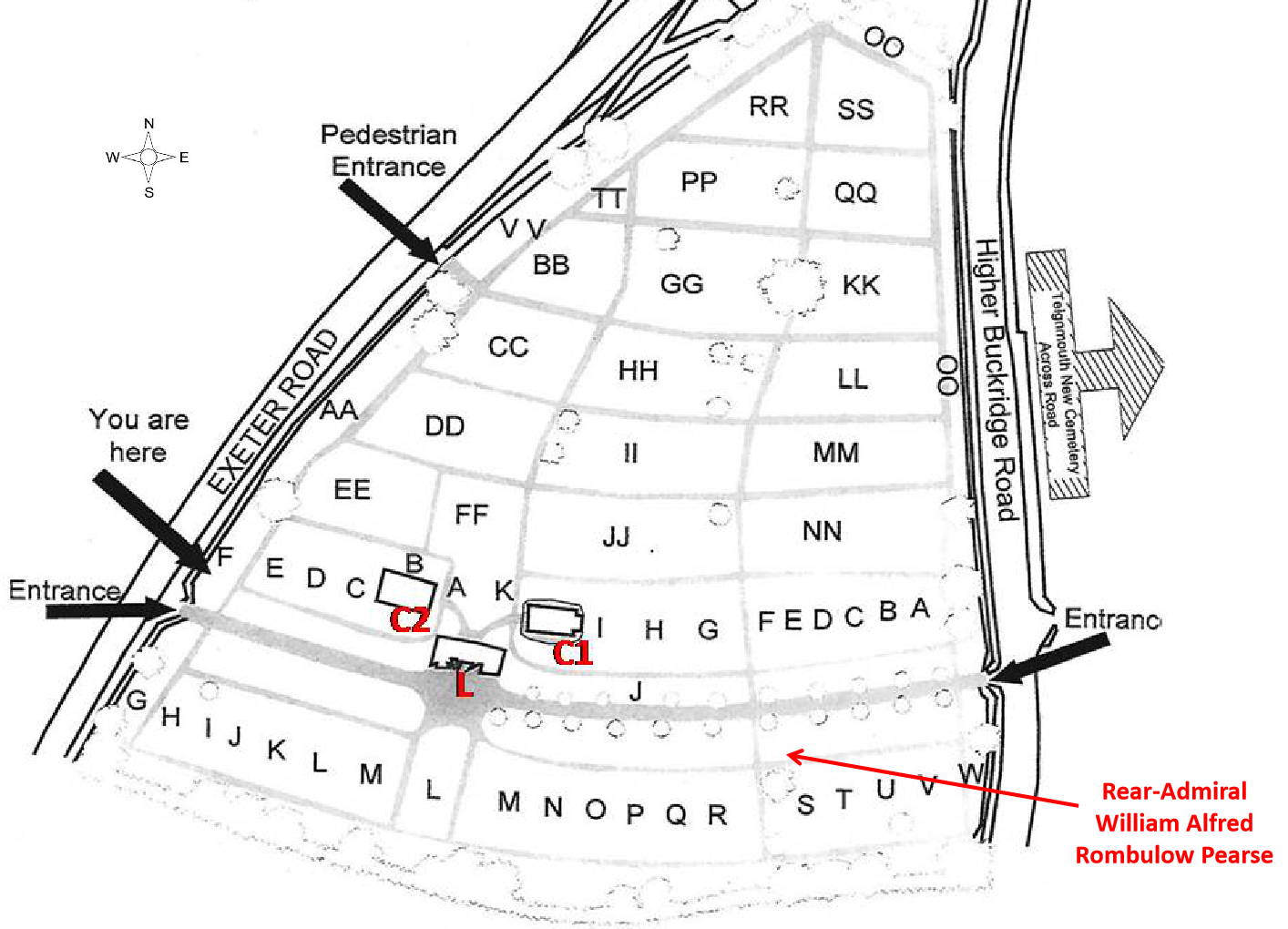
Model of the Rhadamanthus at Royal Maritime Museum, Gr

Within two years he was a midshipman on board HMS Meteor, a 296 ton wooden auxiliary vessel, paddle driven, carrying only two guns and commanded by Lieutenant Commander John Duffill.  By 1839 he had passed his examinations and was now serving as Lieutenant on board the HMS Modeste.  This signalled the start of his fully-fledged naval career which, as can be seen from the second page of his military record continued in a range of commands through to his retirement in 1872.

The official military record is interesting but it doesn’t paint a picture of the man.  So to add a little flesh to his story let’s start with his obituary. Here is what the Illustrated London News of 23rd August 1890 had to say:

“He was wounded at the attack on Canton while serving as mate in the Modeste; was present at the capture of the Amoy and Shanghai in 1841; and was senior Lieutenant of the Ajax during the Baltic Expedition.  He attained the rank of Lieutenant in 1838, Commander in 1855, Captain in 1862 and was placed on the retired list in 1872, becoming Rear-Admiral in 1878, and Vice-Admiral in 1884.”

A Naval Biographical Dictionary authored by William Richard O’Byrne in 1849 expands on some of these exploits:

“William Alfred Rumbulow Pearse passed his examination 2 May, 1839; and was afterwards, until paid off at the commencement of 1843, employed as Mate and Acting-Lieutenant in the Modeste 18, Capts. Harry Eyres and Rundle Surges Watson. In the former capacity he assisted, during the war in China, in boarding, 27 Feb. 1841, the ship Cambridge, bearing the Chinese Admiral’s flag, at the enemy’s position below Whampoa Reach, where he also landed and contributed to the destruction, in the whole, of 98 guns. On 13 of the following month he served in the boats at the capture of several rafts and of the last fort protecting the approaches to Canton; and on 18 he was similarly employed at the capture of the city itself. During the series of operations against it we find him commanding the Modeste’s cutter, under the present Sir Edw. Belcher, in an affair up a creek on the western side, where 28 vessels were destroyed. In a day or two afterwards he had the misfortune to be wounded. In Aug. and Oct. he co-operated in the reduction of Amoy and Chinghae. As Acting-Lieutenant, Mr. Pearse, on 10 March, 1842, succeeded with two boats in towing four fire-rafts clear of the shipping off Ningpo. On 15 and 16 of the same month he was employed on shore under Capt. Thos. Bourchier in an attack on the enemy’s camp at Tsekee.”

Late into his retirement an interesting snippet appeared in the Herts Advertiser (13 October 1888), when the then Admiral Pearse was living in Great Berkhamsted:

“MECHANICS INSTITUTE.  On Monday the winter session was inaugurated by a conversazione in the Town Hall.  The ball had been transformed, under the direction of Mr R H Bookey, the hon. Sec., into an interesting museum, adorned by flowers and plants kindly supplied by Messrs. Lane, of the Nurseries, Mr. Cooper and Mr. Mawley, and flags and trophies were suspended round the room, some of them lent by Admiral Pearse, having been taken away from Malay pirates and at the siege of Canton …..”

So the shaping of his image is around his contribution to naval actions.  Of more historical interest though is the four years he spent from 1857 to 1861 commanding HMS Alert.

Sir George Henry Richards, by Stephen Pearce

This is where his historical significance emerges through the convergence of his time-line with that of another character (another future admiral) in the story.  This was Admiral Sir George Henry Richards who, having served in South America, the Falkland Islands, New Zealand, Australia and in the First Opium War in China, was promoted to captain in 1854. There was then a significant five year period from 1857 to 1862 when he was in command of the two survey ships, HMS Plumper and HMS Hecate, acting as hydrographer of the coast of British Columbia.

But we need to back up a bit to recap briefly on the history and role of the Royal Navy as it developed through to this time.

By the mid eighteenth century Britain was expanding its Empire in all directions and needed to raise finance for this expansion.  To do this it made use of the Navigation Acts, originally intended to promote the development of English shipping but which had subsequently been adapted as a form of trade protectionism leading to control of the price of goods.

Effectively this became a form of taxation which was one of the driving forces behind the American Revolution.  The rest is history, as they say, and on the 3rd of September 1783 Great Britain and the United States signed the Treaty of Paris making peace between the two nations, and formally marking the end of the American War of Independence.  This overthrow of British rule firmly established the United States as the first republic in modern history extending over a large territory.

Ironically the new United States then developed its own pretensions to empire as, over the next hundred years, it bought, fought and annexed its way west and south across the North American continent.  Ultimately its eyes were set maybe on the annexation of Canada.  This expansion was framed within a governing philosophy known as “Manifest Destiny”..

Meanwhile Britain continued its own colonial expansion, in competition with other European nations – Spain, France, Holland.  To do this required control of the seas – hence the increasing importance of the role of the Royal Navy.  This wasn’t solely a military force though.  To function effectively the fleets needed knowledge of the areas that they were exploring and patrolling.  This prompted specific expeditions for hydrography and cartography – charting the waters and coastlines across the world.

We have seen this already in the story of Rear-Admiral Thomas Abel Brimage Spratt who spent 30 years doing such mapping in the Mediterranean.  There were similar activities along the coasts of the Americas, which brings us back to Admiral Sir George Henry Richards who was doing exactly that and to Rombulow-Pearse who played a different role.

So, Rombulow-Pearse took command of the newly commissioned HMS Alert in 1857, a 17-gun wooden screw sloop of the Cruizer class.

HMS Alert in the Arctic

Her engines gave 383 horsepower and she was also rigged with a barque-rig sail plan.  He was based on the Pacific Station at Esquimalt on the southern tip of Vancouver Island and had one role – the policing of the Canadian coastline and the protection of its borders from the United States. This was critical because British Columbia was the only access for Canada to the Pacific coastline.  The Alert had been specifically designed for this type of policing work although later it was refitted for Arctic expeditionary work.

George Henry Richards was also sent to provide a British military presence on Vancouver Island and arrived at Esquimalt in November 1857. However, that was secondary to his principal role of assisting the Anglo-American boundary commission in determining the location of the international boundary with America.  This involved detailed surveying of the waters between Vancouver Island and the American mainland, a task he swiftly completed by June 1958 though to no immediate avail – the deadlock in boundary negotiations wasn’t broken until 1871-72.

In the mean time Captain Richards continued his survey work of the British Columbia coast and, as part of this, he designated dozens of names for sites along this stretch of coast. For example, Alert Bay is named after Rombulow-Pearse’s ship; but, more importantly, he also named an island at the north entrance to Johnstone Strait as “Pearse Island”.  On the north side of the island is a two kilometre wide channel of water named the “Pearse Canal” by Captain Daniel Pender in some later survey work in 1868.

So William Alfred Rombulow-Pearse was immortalised by having an island and a channel named after him.  In itself that would be worthy historical recognition but there was more to follow.

Signing of Alaska Treaty of Cessation 1867

The area to the north of British Columbia, the north-western tip of the continent, actually belonged to Russia and its boundaries had been established by the Anglo-Russian Treaty of 1825.  In 1867 the United States purchased this territory (now known as Alaska) from Russia for a mere $7.2 million. In the hindsight of political history this was probably America’s greatest strategic acquisition and Russia’s greatest strategic loss.

Unfortunately the 1825 Anglo-Russian Treaty had been ambiguous about the territorial boundaries, these not being defined on maps of the period. America’s policy of “Manifest Destiny” was now squeezing Canada from both the south and the north, with Britain having to resolve the boundary issues on both fronts.  This was of strategic importance because British Columbia was Canada’s only access to the Pacific coast. The resolution of the boundary dispute took almost another 40 years before being finalised by the Hay-Herbert Treaty of 24th January 1903 (otherwise known as the Alaska Boundary Settlement).

By this time Vice-Admiral William Alfred Rombulow Pearse was long dead but his name lived on, set in the stone of that Hay-Herbert Treaty.  Why? Because the southern sea border dividing Alaska from British Columbia/Canada was the eponymous Pearse Canal.

Admiral W A Rombulow Pearse died on 12th August 1890 and was followed only seven years later on 8 January 1897 by the death of his wife, Blanche Eleanor Rombulow Pearse.  They are both buried in a surprisingly simple and modest plot (S110) which is easily accessible and easy to find. The leaded lettering on the grave is still in good condition but is barely legible because of the lichen growth and stone discolouration.

Sources and References

Extracts from contemporary newspapers are referenced directly in the text.  Other sources, with hyperlinks as appropriate, are as follows.  For further information and queries which have turned up during this research check out the “Loose Ends” section after these references.

GENERAL

Ancestry.com for genealogy

British Newspaper Archives for all snippets from contemporary newspapers

Wikipedia for general background information

SPECIFIC

BC Geographical Names – website

A Naval Biographical Dictionary, William R O’Byrne Esq, 1849

The Mid-Victorian Royal Navy – website

Royal Maritime Museum, Greenwich – collections website

Open Library Internet Archive – website

Crosspark – website

Oxford Dictionary of National Biography – website

Dictionary of Canadian Biography – website

Internet Archive – website

Dreadnought Project – website

Records by Admiral of the Fleet Lord Fisher, Hodder and Stoughton, 1919

The National Archives – website

Admiral William Alfred Rombulow Pearse – Loose Ends

Birth

I have been unable so far to find a birth registration.  There are three references to his date of birth; his gravestone carries the date 6th June 1818; his naval record shows it as 6 July 1819 and the 1881 census gives simply 1821.

However, I have found a reference to a baptism record for William Alfred Rumbelow dated 25 December 1817 at St John, Portsea, Hampshire.  The caveat is that the parents are shown as Father: John or Thomas Rumbelow and Mother: Sarah or Margaret.

There are two references to his place of birth: the 1881 census gives Bungay, Suffolk; the 1871 census gives Hilsea, Hampshire.  Given his entry into the Royal Navy the latter may be more likely.

Surname

It is unclear whether his surname is Pearse, which is how he is referred to in his military records, or “Rombulow-Pearse” which is how he is referred to in his obituary; how his wife Blanche refers to herself in the 1891 census; and how his children seem to be frequently referred to. The “Rombulow” component of the name also seems to have various spellings in references I have seen – Rombulow, Rumbulow and Rumbelow. My feeling is that “Pearse” is indeed probably his surname but, if that is the case, how did he acquire it?

Ancestry

The same question may have occurred to his own family who obviously made attempts to trace his ancestry.  First, though, some relevant information:

  1. His marriage certification gives his father as a “Gentleman”, Thomas Henry Richard Rombulow.
  2. It appears that a Thomas Rumbelow married a Margaret Oxenham on 28 May 1810 at Alverstoke, Hampshire (see Pallot’s Marriage Index)

  3. Thomas Rumbelow died 17 February 1825 at Portsea, Hampshire age 32, birth year 1793).  Geographically this fits with a birthplace of “Hilsea” for our admiral.
  4. Ancestry.com shows that they had four children – Margaret Amelia (born 27/7/13), Thomas Henry (born 10/7/1811 baptised 1 Aug 1811), Emily Jane (baptised 3/8/19), Margaret Elizabeth (baptised 18 Jan 1824)
  5. However, the baptism reference above suggests there could have been a fifth child William Alfred Rumbelow (baptised 25 December 1817)
  6. This still doesn’t resolve the “Pearse” surname.  So here comes some speculation:
    1. There is a record on the Ancestry.com England, Select Marriages, 1538-1973 of a Margaret Rumbelow marrying a Thomas Pearse in Kent on 17 August 1825.
    2. The Exeter and Plymouth gazette of 9 May 1829 reported in its Deaths column:
      On Monday the 4th of May inst., at Gosport, after a severe and protracted illness of several years, Lieut. Thomas Pearse R.N., eldest son of Rear Admiral Thomas Pearse, of Bradninch in this County.”
    3. The 1851 Census shows a Margaret Pearse residing as a visitor at 10 Albion St, Paddington.  She is described as a naval officer widow, born in Barnstaple and her age is given as 56 (if correct that would have made her about 15 when she married Thomas Rumbelow).
    4. The 1861 census shows a Margaret Pearse as a widow, aged 67, head of household, born in Shirwell (near Barnstaple) Devon. She is described as a “government assisted fund-holder (??)” – a little difficult to read from the census record but I suppose this could imply being in receipt of a navy pension.  With her is a daughter, Margaret Rombulow aged 27, and a grand-daughter, Alice Knock aged 6.  The strong indications are that this is the same Margaret Pearse.
    5. The National Archives also have a reference to “Entry papers for service as an Excise man”, dated 1864, for William Alfred Rombulow Knock
  7. So there appears to be a possible plausible chain to confirm that the surname “Pearse” came from his mother’s second marriage.

There are two examples of the family researching their ancestry.  Both are enquiries in the Devon and Cornwall Notes and Queries,” a Quarterly Journal devoted to the LOCAL HISTORY BIOGRAPHY and ANTIQUITIES of the Counties of Devon and Cornwall edited by JOHN S AMERY E WINDEATT HUGH R WATKIN and R PEARSE CHOPE”

Note 189, Vol X1, From January 1920 to October 1921:

“ROMBULOW OR RUMBELOW FAMILY – (1) The arms of the Rombulow family are the same in design as those of Bamfylde, viz:- On a bend gules three mullets pierced of the field.  What connection is there between the two families?
(2) Whom did the following members of the family marry?
Rev. John Rumnilowe 1560-1600 (?)
Rev. John Rumbilowe 1596-1636.  Rector of Bigbury
Rev. Nathaniel Rumbulowe 1635-1671.  Vicar of Quethiock
Mr John Rumbilow of Ottery St Mary 1625- ?
Rev. John Rumbilowe 1668-1729. Rector of Portlemouth.
Mr. John Rumbelloe, born about 1700, father of Mary Rumbelloe, who married John Vivian of Comprigney in Kenwyn, Cornwall.

Any information regarding Thomas Rombulow of Bishop’s Tawton, who died 1776, and of his descendants will oblige.

A. B. Rombulow-Pearse
Major 6th Gurkha Rifles”

Note 235 from Volume XII, from January 1922 to October 1923:

“Oxenham Family. – Is there a pedigree of the Oxenham family in existence? Can anyone tell me the connexion with it of Abraham Oxenham of Barnstaple, who married Anne May, about the end of the 18th century.  I believe he had four daughters, who married:

Julia Oxenham = John Dyer, Paymaster R.N.
Amelia Oxenham = Lieut. Waghorn R.N., who discovered the overland route to India.
Margaret Oxenham = Thomas Henry Richard Rombulow, of Plymouth.
Maria Oxenham = Dr. Mountjoy

A.B.R.P.”

Aubrey Bewicke Rombulow Pearse was the youngest son (born 1882) and served as Major in the Indian Army from 1914-20.  He retired as Lt. Colonel and died in 1950.

Other Family Information

His eldest daughter, Miss B E Rombulow-Pearse, married Commander E G Shortland RN in December 1898.  This is how the Exeter and Plymouth Gazette of Friday 23 December 1898 reported the event:

Sad news reported by the Army and Navy Gazette on Saturday 16 October 1897:

LIEUT. A. B. ROMBULOW-PEARSE.  Lieut. Alfred Bertie Rombulow-Pearse R.M.A., third son of the late Admiral W. A. Rombulow-Pearse died of peritonitis at Malta, on Sept 30, on board the Ramillies, flagship of the Mediterranean Squadron. He joined the Royal Marine Artillery as 2nd Lieutenant on Sept. 1, 1890, and was senior subaltern at the time of his death.  He was only 24 years of age.

Plymouth Naval Memorial has the grave of Midshipman Claude Aubrey Mortimer Rombulow-Pearse who died on 22 May 1941

Arthur Egmont Rombulow-Pearse served as a Lieutenant-Colonel of the Royal Marine Light Infantry during World War 1, before becoming Paymaster at the Ports Division on 1 July 1918.  His service medals came up for auction in 2017.

Claude Alwin Rombulow Pearse (CARP) was mentioned in dispatches on 11 April 1919, as Captain RN.  He was made Commander of the Order of the British Empire (Military).  He seems to have survived a chequered career though!  In 1904 he was appointed in command of the destroyer Skate and soon collided with the Vixen. CARP was told that he was to blame for having used too much helm.  He hadn’t learned from this experience it would seem, as in 1906 when commanding the destroyer Desperate he collided with the Banshee and was once again held to blame for “having not slackened speed at the judicious point”.  Conversely though he had also been commended for his handling of the Sturgeon in rescuing the crew of the Decoy when she had collided with Arun on manoeuvres in 1904.  Perhaps collision was just an occupational hazard, more common than we might have imagined! Admiral of the Fleet, Lord Fisher, mentioned this incident in his book:

“we smile when we remember youngsters like Lieutenant Rombulow-Pearse of the ‘Sturgeon’, who rescued the crew of the sinking ‘Decoy’ in a gale of wind, with only his small whaler to help him, and with the loss of only one man, who disappeared nobody knows how.”

FINALLY ….

NOTE:  BE CAREFUL NOT TO CONFUSE REFERENCES WITH ANOTHER VICE-ADMIRAL PEARSE WHO LIVE AT AROUND THE SAME TIME AND DIED IN 1871, AGED 77, AT EAST STONEHOUSE, PLYMOUTH.

Three in One – Part 3b – Harry Welchman – Career Years

This is your life

On February 5th 1960 the TV presenter Eamonn Andrews surprised Harry Welchman in a taxi outside  the Riverside Studios in Hammersmith, London. This became Harry’s appearance later that week on the popular TV show of the time ‘This is Your Life’.  Unfortunately the recording of that show doesn’t exist any longer; it would have been interesting to see what, if anything, they had to say about Harry’s early family life and indeed some of the more tortuous parts of his own career.

Harry was mainly a stage performer but between 1915 and 1954 he made 19 films, some musical and others straight drama.

His obituary in The Stage in 1966 described him as:

“.… the most famous musical comedy hero of his time, with handsome stage presence and a fine voice, admirably suited to the melodious scores of the romantic shows of the ‘twenties and ‘thirties.”

His theatrical and film career is well-documented elsewhere and though I will mention in this section of the story various productions with which he was involved, I am more interested in exploring the social aspects of his life. Before starting though why not take a look at Harry Welchman in the flesh in this Youtube recording of Harry Welchman singing ‘A Bachelor Gay’ in the 1932 film ‘The Maid of the Mountains’.  Click here.

Harry Welchman 1907

At the end of the previous post we left Harry Welchman at the age of 15 living in Congresbury, Somerset, with Janet Coke and her two eldest daughters Janet Sarah and Edith.  He remained with them whilst he completed his schooling and then went straight onto the stage in 1904.  He joined a touring musical comedy company led by Ada Reeve (who also appeared in the ‘This is Your Life’ programme in 1960) and made his first appearance on stage at the Royal, Boscombe, in the chorus of Winnie Brooke, Widow.


In Princess Caprice

At the age of 20, whilst playing Dandini in Cinderella at the Marlborough, he was spotted by Robert Courtneidge, the theatrical manager-producer (also father of Cecily Courtneidge).  This led to him becoming a juvenile, and subsequently main, lead in such West End hit productions as Tom Jones (1907), The Arcadians (1909) and Princess Caprice (1912).  By this time he was living in London with his ‘foster-mother’ Janet Sarah and her sister Edith.

On 8th July 1913 Harry married his first wife, the actress Joan Challoner who was described by The Stage at the time as:

“.… a young acress who for the past eighteen months has been a member of Sir Herbert Tree’s company at His Majesty’s.  Miss Challoner became engaged to Mr Welchman during the run of ‘Drake’, in which piece she was understudy both to Miss Phyllis Neilson-Terry and Miss Amy Brandon Thomas.”

Her entry to the profession came through an interesting route, being a member of the Stock Exchange Dramatic and Operatic Society which seemed to be a philanthropic organisation aiming to promote aspiring actors.

Harry Welchman and Joan Challoner

In 1915 Harry made his first film playing the lead role in Mr Lyndon at Liberty. Then the war intervened.  It’s not clear whether Harry actually saw active service but he was commissioned in September 1916 into a Special Reserve of Officers in the Royal Field Artillery.  Harry’s theatrical career was put on hold for a while but Joan Challoner continued hers through the war, including performances in the War Relief Matinees (her matinee was under the patronage of Queen Alexandra in aid of the Women’s Emergency Corps).

Their marriage was not to last though and in 1922 Joan initiated divorce proceedings against Harry.  It’s hard to determine how scandalous this would have been at the time but it seems to have been widely reported in the press of the time and the story suggests that it was quite acrimonious.

According to the Pall Mall Gazette of 19 January 1922:

“In the Divorce Division today before Mr Justice Hill, Mrs Joan Dorothea Welchman petitioned for a decree of restitution of conjugal rights against Mr Harry Welchman, an actor.”

The article described the breakdown of their marriage and the fact that Harry had walked out in April the year before.  However, by July 1922 more details had emerged pointing to an affair that Harry was having.  The Nottingham Journal of 20 July continues the story:

“ACTRESS SET FREE. DIVORCE GRANTED TO MISS JOAN CHALLONER.

Lord Buckmaster, in the Divorce Court, yesterday heard the petition of Mrs Welchman …. for a dissolution of her marriage on the ground of the adultery and non-compliance with an order for restitution of conjugal rights of her husband Mr Harry Arthur Welchman, the musical comedy actor.

Petitioner gave evidence that …. she never stayed with him at any time during 1921 at the Burford Bridge Hotel …. Edith Oliver, chambermaid at the Burford Bridge Hotel, who identified respondent by means of a photograph, gave evidence that in October, 1921, he occupied a bedroom at Burford Bridge Hotel with a woman not the petitioner.  A decree nisi with costs was granted.”

Harry’s lover seems to have been protected from the press at the time but The People of 3rd August 1924, when announcing Harry’s engagement to Sylvia Forde, chose to reveal those details:

“Harry Welchman was previously married to Joan Challoner; and after she divorced him he was expected to marry Margaret Cooper.  The two were very much attached; but, unfortunately, poor Miss Cooper died.”

Margaret Cooper

There is a superb biography of Margaret Cooper on the Kilburn and Willesden history blog site and I have chosen a few extracts here to explain some of the tragedy surrounding Harry’s divorce.  Described as the ‘Lady in the Long Silk Gloves’:

Margaret Cooper was a very popular music hall entertainer at the piano in the early part of the 20th Century  …..  Margaret was a very talented musician and composer, playing the piano, violin and organ.  After attending the Royal Academy of Music, she worked as an accompanist and sang at concerts and dinners  ….  Her lucky break came when she was spotted playing at a charity concert by theatre manager Sir Alfred Butt  …..  At first rather dubious about appearing on the variety stage, she took the plunge in October 1906 – and never looked back, she was an instant and overwhelming success.  When she appeared later that month in Bristol, she was billed as ‘The Latest London Sensation, in her Inimitable Songs at the Piano.  Her largest fee was £100 for a single performance, which is equivalent to about £8,000 today  …..  she was also in great demand for private parties, where she sang before King George V and Queen Mary and visiting royal dignitaries.

….. The death of her husband Arthur in 1918 was a severe blow to Margaret and her appearances in the London variety theatres became less frequent.  She died four years later from heart failure on 27 December 1922.  Although she’d not been in the best of health after suffering breakdown a few months earlier Margaret’s death was unexpected..  ….. Several obituaries agreed her death evoked a ‘peculiar pathos’ as Margaret was planning a new life, having agreed to marry actor and singer Harry Welchman in February 1923.  But the related scandal that could have damaged Margaret’s image was something the papers chose to ignore, presumably out of respect for the lady.

In Lady of the Rose

….. At the time of Margaret’s death Harry was appearing to good reviews in ‘The Lady of the Rose. Up to then, their engagement hadn’t been made public and there was a good reason for this.  Margaret’s obituaries fail to mention the fact Harry was going through a divorce.  In July 1922 his actress wife Joan … had been granted a decree nisi, on the grounds of Harry’s ‘statutory desertion and adultery’.  This was made final in January 1923, a month after Margaret’s death.  Her role is open to speculation, as she is never named in the newspaper reports as the ‘other woman.’

So 1922-24 was evidently a very emotional and dramatic period in Harry’s life in a non-theatrical sense – an adulterous affair, a messy divorce from his first wife, the death of his lover and then only a year later his engagement to his future second wife, Sylvia Forde.  I have already covered that engagement in Part 2 of this tale dealing with Sylvia Forde but perhaps one last quotation is of interest from The People of 3rd August 1924:

“An Actor’s Romance.  When on the first night of ‘Head over Heels’ there was a new leading lady, Mary Ellis, it looks as though a new name had arrived definitely in the West End.  But no; the the poor young lady was replaced in a few weeks, and I have never heard of her again.  Put in the chorus that night was a young woman named Sylvia Forde, then unknown, who, last week, was announced to be engaged to Harry Welchman and who, therefore, in consequence, will, I have no doubt, be heard of again.”

Harry’s career continued full flight though as he made his first Broadway appearance in Princess Flavia in 1925 but was also performing then in London in Love’s Prisoner at the Adelphi which only had a brief run and was rated by The Times as an unsuccessful mixture of Gilbert and Sullivan, melodrama and musical comedy.

Perhaps one of his most famous theatrical roles came three years later as the Red Shadow in the stage version of the Desert Song which ran at Drury Lane for more than 400 performances.  He definitely set the standard for this role.  The Stage in May 1967 was still continuing the comparison:

“.…. when Harry Welchman captured the Town at Drury Lane forty years ago, with the enchanting Edith Day as the Margot of the story, the show had a spectacular production .   “

By 1929 Harry’s career was taking another dramatic shift but this time of the theatrical sort – he entered management, setting up a production company for The White Camellia at Daly’s Theatre.  Life as a manager was to have its challenges.  We’ve already seen in part 2 about Sylvia Forde that shortly before the opening night Harry lost one of his principal dancers and Sylvia was drafted in at very short notice.  However, the book Daly’s – A Biography of the Theatre describes the financial consequences of Harry’s change of direction:

“Harry Welchman had little luck in management at Daly’s. ‘It has cost me eight thousand pounds to learn that musical comedy of the old-fashioned sort has no chance today’ said Harry Welchman in a Press interview, discussing the losses he incurred in staging first ‘The White Camellia’ and secondly reviving ‘The Lady of the Rose’ at Daly’s Theatre.”

He went on to explain:

“.… one or two of the so-called musical comedy houses are no longer business propositions.  Rents are enormous, the seating is abominable, of comforts there are none.  My advice is ‘scrap the lot’ and build some new ones, or at least leave the shells of the present theatres and reconstruct the interiors.  My dream for the future is to have a theatre with seating capacity commensurate with the biggest cinema theatres.  This theatre will have all the amenities of a picture house.  There will be no charge for programmes and no charge at the cloakrooms.”

I wonder if it was this realisation that perhaps changed his focus towards films – he made more than a dozen in the thirties and early forties, including two 1943 films The Gentle Sex and The Life and Death of Colonel Blimp.  One performance in the thirties though is definitely worth mentioning since it was local.  As the Exeter and Plymouth Gazette of 6th August 1937 describes:

“BARNSTAPLE MAN’S DESERVED TRIUMPH.  Strong Supporting Bill of Talent.

Had Harry Welchman, the famous musical comedy star, who is a native of Barnstaple and heads the variety bill at the Theatre Royal, Exeter, this week, met the wishes of audiences he would have been a very very tired man.  At each performance he had to take several ‘curtains’, sing extra songs and even when he had smilingly taken his last ‘au revoir’, the applause continued.  It was not because he was ‘one of us’ that Devon audiences have been so enthusiastic, for to most of them it was news when he made the statement at the end of his turn.  It was simply a delighted mass appreciation of his singing, which included well-known numbers from such musical plays and comedies as ‘Desert Song’, ‘Maid of the Mountains’, ‘Southern Maid’, ‘Rose Marie’, etc.  With an excellent voice he combines a charm of manner and histrionic talent that makes his songs doubly enjoyable.  Each contribution is given the right atmosphere, and how audiences have enjoyed listening to them!  One of the most successful was ‘No More War’, with its telling and dramatic recitative.  To this audiences have listened in tense silence, their applause at the conclusion demonstrating their approval of the sentiments expressed.

The high standard set in his particular sphere by Harry Welchman is characteristic of the whole programme.”

He was definitely easing off by the end of the Second World War, though it’s probably a truism that actors never retire.  As we have already seen, he moved down to Cornwall with his family in 1947 where he bought a farm but soon became involved in amateur dramatics at the Penlee Park Theatre.  This had its origins in 1948 with a successful Cornwall Shakespeare .Festival in which Harry performed in Twelfth Night and A Midsummer Night’s Dream.  The theatre stage in its first year was simply made from borrowed beer crates covered in imitation grass from the greengrocers but the following year the Penzance Town Council commissioned a proper earth and granite stage.

Here is a picture including Harry Welchman (centre) behind the scene in 1957 with the Penzance Playgoers Theatre Club.

In 1950 Harry was interviewed by the Nottingham Journal of 1st June, exploring his views on success of productions on the stage.  Harry explained:

“The play’s the thing ….. If you have not got a good play, then even the engagement of well-known people to sing in it will not help you or make any real difference if they have bad material to deal with.  The Student Prince has been a great success ever since its original production because it is based on a good play ‘Old Heidelberg’ – a most beautiful love story.  …..  To be a real success a musical play must have one or two numbers that people can get hold of.  The success lies in the music but the music is inspired by the book.  …..  The ‘Maid of the Mountains’ into which ‘A Bachelor Gay’ a song written by J W Tate was interpolated had nothing to do with the play but everyone came away whistling it.”

With these views it is strange that Harry, the non-retired actor, got involved in his final performance in 1959 – John Osborne’s play The World of Paul Slickey, a musical intended as a satire on high-society gossip columnists.  The play was apparently a complete disaster with the audience booing at the end.  Among the booing members of the audience were John Gielgud and Noël Coward, who later wrote in his diary of the play, “never in all my theatrical experience have I seen anything so appalling, appalling from every point of view“.  As the Birmingham Daily Post of 6th May commented:

“One felt sorry for the cast, especially for such veterans as Mary Lohr and Harry Welchman.”

The play closed after six weeks, rather a sad end to Harry Welchman’s career.

Harry Welchman, 24 February 1886 – 3 January 1966.

Information Sources:

Kilburn & Willesden History Blog – Margaret Cooper

Daly’s – The Biography of a Theatre – Management

All Music – Biographical

Penlee Park Theatre – time in Penzance

Big Red Book – This is your life

Wikipedia – biographical


Three in One – Part 3a – Harry Welchman – His Origins

The final person in the Three in One tale is Harry Welchman, 24 February 1886 – 3 January 1966.  Although he made several non-musical plays he was really a star of musical theatre and, as the Times remembers him, “perhaps the most popular musical comedy hero on the London stage in the years between the wars.

Originally this was simply going to be Part 3 of the tale but I have decided to split it into two sections because the research into his family background has proved interesting and gives some insight into Harry’s own development.

There is also the mystery attached to him which we are trying to unravel – how his ashes came to be interred in the same grave as Janet Sarah Coke, whom he ostensibly described as his ‘foster-mother’.  The first part of this tale outlined the time-line of Janet Coke’s life.  So I am now going to do the same for Harry Welchman’s family from before he was born to the time he embarked on his acting career.  Maybe there are some indications of where the two family lines might have overlapped and, therefore, how Janet may have ended up as Harry’s foster-mother.

Harry’s mother, Alice Mary Pheysey

Alice was born on 17 July 1851 in Staines, Middlesex, although she wasn’t baptised until six years later when the family was recorded as living in Putney.  She was one of at least seven siblings five of whom died before they were 30.

Her mother, Sarah Vicary, was born in May 1820 in Dawlish which may be the first indication of a connection with the Coke family line.  Sarah married Henry Pheysey in 1843 in Dawlish but they obviously moved up to London subsequently, their first son, Frederick being born in Islington in 1844.  The family is still shown in the 1861 census as living in Putney.

Henry was a wine and brandy merchant but he too died at the relatively young age of 49 in 1866, by which time they were living in Prince’s Square, Bayswater.  Sarah took on the business, trading still as Henry Pheysey & Co., but by 1871 was forced into bankruptcy which was finally liquidated in 1878.  She re-married in November 1884 to a William Smith at St Andrews, Walcott, Bath.

There is no evidence that Alice returned to Devon but she would probably have maintained contact with relatives there.  Could there have been some crossing of family paths in London as well?  Remember that Janet Coke was born in 1854 in Hammersmith, not that far from Putney.

Alice married Harry Welchman’s father, Arthur John Tregonwell Welchman, on October 13th 1870 at All Saints Church, Leamington.

Harry’s father, Arthur John Tregonwell Welchman

Arthur John Tregonwell Welchman was born on 10 November 1843 in Almorah, Bengal, India.  Goodness knows where the middle name ‘Tregonwell’ came from since neither of his parents bore that as a family name – his father was John Whately Welchman (1800-1870) and his mother Harriet Alzilea Martin (1820-1885).

John Whately Welchman at the time was a captain in the 10th Native Infantry (N.I.) in Bengal and rose to the rank of Major-General by 1865.  It appears that he was seriously wounded in the battle of Budlee-Ka-Sarai in 1857 as described in the History of the Bengal European Regiment:

“To the 1st Bengal Europeans it was painfully memorable; for although the enemy failed to make the slightest impression on our defences, they succeeded in severely wounding our Commanding Officer, Colonel Welchman, whilst gallantly leading his Regiment to the front.  Falling from his horse he was carried to the rear, when it was found that the elbow joint of his right arm was completely shattered …..”

Major W S R Hodson, who fought in the same campaign, expressed great concern in his letters:

Colonel Welchman with a very bad hit in the arm, in addition to his sickness when he came to Delhi from Dugshai ….. Colonel Welchman suffers severely from his wound, but bears it bravely ….. Colonel Welchman is very ill indeed. The doctors dread erysipelas, which at his age would be serious ….. Colonel Welchman dangerously ill and in great agony. I grieve deeply for the brave old man, for I fear we shall lose him

Flags of Bengal European Regiment

Colonel Welchman was awarded the Order of the Bath in 1858, probably as a result of that battle.  His obituary in the Naval & Military Gazette and Weekly Chronicle of the United Service, Wednesday 17 August 1870, is quite revealing:

“.…. He was every inch a soldier, and acquired by his manliness, his bonhomie, and his professional savoir faire, the respect and affection of all who came within the sphere of his social virtues, or of his Military command.  Like most other Officers in the Bengal Army, he saw little field service during the earlier period of his career, but he was actively employed in later years, and no one more thoroughly justified confidence in his ability than did Major-General John Welchman.”

The obituary is interesting because I wonder if those attributes of ‘bonhomie’ and ‘professional savoir faire’ reached down the family chain to his grandson Harry Welchman.

Whilst we are exploring the background of Harry’s family background it is also worth mentioning his aunt, Edith Welchman, who was a sister in the Indian Medical Service.  She was present at the Hazara campaign of 1888 and was awarded a Royal Red Cross, 1st Class, VR, for her work on the Black Mountain expedition.

Edith Welchman and her medal

Returning to Arthur John Tregonwell Welchman ….. it was inevitable that Arthur too would enter the military as was the tradition of the time.  He is already in boarding school in Leamington in 1851, according to the census of the time, and entered the military as a cadet at the age of 16 in 1859.  He went overland to Bengal the following year.  He was a lieutenant three years later, captain by June 1869, major by 1882 and Lt colonel in 1885.

His military career though appears nowhere nearly as illustrious as his father’s  In 1886 he was put onto the temporary half-pay list, probably to allow the family time out for Harry’s birth in Barnstaple, North Devon, and retired only six years later in 1892 at the age of 49.  This seems quite young for an army officer so I wonder whether he had some medical problem as well.

We will return to Harry’s birth but one thing this event shows is that army officers would periodically return to the UK and we have one piece of evidence which shows not only that Harry’s parents returned earlier in 1877 but that they were living in Shaldon on that visit.  The evidence is a curious story that appeared in the Western Morning News of 5th June 1877.  I include it here verbatim to give the story its correct sense of period:

“STRANGE ASSAULT CASE AT TEIGNMOUTH

At the Teignmouth Petty Sessions yesterday, before Mr R R Marsh-Dunn, Major Brown and Mr J G Templer, William Henry Hugo, a medical man, practising at St Nicholas, near Shaldon, was summoned for assaulting Selina Brewer, his housekeeper.  Mr Flood, of Exeter, appeared for the complainant, and Mr Creed, of Newton Abbot, for the defendant.

It was stated that the defendant lets a part of his house to a Captain and Mrs Welchman, and that on May 25th last, when he came home the worse for liquor, he commenced a quarrel with the housekeeper, who was frying fish for Captain Welchman, remarking that he (defendant) ought to have his own meals before the lodgers.  A dispute ensued as to whether the fish belonged to him or to Captain Welchman, and defendant used disgusting and threatening language to the inmates of the house, including Mary Towell, a dressmaker, who was working for Mrs Welchman.  His conduct was so strange that the whole party retreated to Mrs Welchman’s bedroom and locked the door.

Defendant, who had previously threatened to kick Miss Towel and her sewing machine out of the house, attempted to force open the door several times, and on going to the kitchen and finding the housekeeper there he caught hold of her and tried to push her out of the house, and this was the assault complained of.

Mr Creed, on behalf of his client, admitted the offence, but pleaded aggravation on the part of the housekeeper, who had neglected to get the defendant’s meals ready on the day in question.  He called William Woolway, a shopkeeper, of Shaldon, who stated that on the day named he was at the house form seven o’clock to half-past, and there saw defendant, who was perfectly sober, and who told him that he had had a quarrel with Mrs Brewer because she had not given her any food for the day.

In cross-examination Woolway said that he did not hear the quarrel, and that before he went to defendant’s house he paid for two glasses of beer for the doctor at a public-house near his house.  The Bench fined the defendant 10s, including costs.

Captain Arthur John Welchman was then charged with assaulting Mr Hugo on May 25th.  Complainant deposed that just after the disturbance, as stated in the previous case, had terminated, he met the defendant at the door of his house.  He was very excited at the time, and after using threatening language, said ‘I’ll thrash you, you hound’.  He then struck him a violent blow near the heart, from the effects of which he was still suffering.  He also slapped his face twice and then kicked him off the ground about five or six feet, and he fell at a distance of twelve feet from where he had been standing. (Laughter).

The defendant, later in the evening, adjourned to the drawing-room with his wife, and there had great rejoicings over what he had done.  They were singing duets and playing the piano until a late hour in the morning. (Loud laughter).  One of the females then asked Mrs Welchman to polish him off and scratch his eyes out.

In cross-examination he said the blow near his heart was a very severe one, and he had not attended any of his patients since, but he had been out.  Bessie Northam, a little girl, who was opposite to Mr Hugo’s house, stated that she heard the quarrel between Captain Welchman and Mr Hugo, and saw the former lift his foot, but would not swear that Captain Welchman kicked Mr Hugo.  In defence, Mr Flood denied the evidence given by Mr Hugo, and called several witnesses, who positively swore that no assault whatever had been committed, nor did Captain Welchman even attempt to strike complainant.  The Bench dismissed the case.

Mr Hugo was then charged with assaulting Mrs Welchman, but the magistrates dismissed the case.”

Apart from being a fascinating story (I love the parenthesised “Laughter” in the courtroom) it does place the Welchmans in Shaldon in 1877.  But why had they gone to live in Shaldon?  We know that Alice Welchman had family on her mother’s side in Dawlish but also, from the Coke family line, Janet Sarah Coke (i.e. Harry’s future foster-mother) might still have been living in Stoke-in Teignhead with her family at that time.  If Alice had known Janet in London then that might be another reason for the stay in Shaldon.  Alternatively, the two families may have actually met up there in 1877 and kept in contact subsequently.

Now let’s return to Harry Welchman himself.

We know that his father retired in 1892 so it is likely that Harry returned with his parents back to Bengal until that time which explains the lack of reference in the 1891 census.  Then, with his parents back in England, we know that Harry went to school in Weston-super-Mare.  Is it reasonable to assume that he wasn’t boarding there and that therefore his parents had retired to that area?  Coincidentally, perhaps, the Coke family were by this time living in Bristol (about 20 miles north) and in 1901 in Congresbury (about 11 miles east).

According to his obituary in the Times he was a sporting boy, playing, as he said, all the games, including hockey at county level.  We know little more about his life at school but we do know that big changes occurred when he was thirteen and in the subsequent couple of years.

His mother died then, in December 1899; curiously her death is registered in St Olave’s parish in Southwark.  Why though didn’t Harry just continue living with his father?  We know from the 1901 census that his father was now living in Dawlish, whilst Harry was now with the Coke family in Congresbury.  His father had also been declared bankrupt in January of that year, despite receiving an army pension of £420 and employing a housekeeper!  The 1911 Census shows him in St Helier, Jersey, with two visitors from London – Beatrice Sanders (40) and Gordon Sanders (15).  He marries her in 1915 and dies two years later.  It is almost as though he had abandoned Harry and was just interested in his own life.

So, in summary, what do we make of Harry’s origins and early life?

He came from a strong military background but chose to turn his back on that (although he did join the reserves during WW1).

His grandfather in particular seemed to have had a fairly illustrious career.  Did the qualities identified in his obituary pass through to Harry – ‘bonhomie’ and ‘professional savoir faire’?

Did he feel abandoned by his father after his mother’s death and, if so, how did that affect him?

There seem to have been a number of opportunities for the Welchman and Coke family paths to have crossed but no definite evidence of when or how it might have happened.

However the relationship with the Coke family formed it is obvious that Harry regarded it as overridingly special – why else would his ashes be interred in the grave of Janet Sarah Coke whom he regarded as his foster-mother?  Perhaps living with the Cokes was the first time he felt some real love, warmth and caring.

Information Sources:

History of Bengal European Regiment

Twelve years of a Soldier’s Life in India

Edith Welchman medals

Three in One – Part 2 – Sylvia Forde

Leaving behind the mystery of Janet Sarah Coke we now add a little glamour and intrigue to the Three in One tale.  Sylvia Forde was Harry Welchman’s second wife.  She too worked in the theatre, almost married a Prince and, importantly for Harry, she provided him with massive support when he toured the country.

Early Years

Sylvia Forde 1924

Sylvia Charlotte Helen Welchman (nee Forde) was born in Germany in 1902.  She was the elder daughter of Henry Bligh Forde and Hedwig von Dieskau.  Henry was an Irish naval engineer.  Hedwig is described as “of noble background” and was a lady-in-waiting to Queen Victoria’s grand-daughter, Princess Charlotte (sister of Kaiser Wilhelm II).

Henry died in 1910 shortly after the birth of his second daughter, Feodora, who later changed her name to become the famous actress Jane Baxter.  Henry was buried in St Mary Church Cemetery in Merton.  It’s not certain when the family moved to England, settling in Wimbledon, but there is evidence of Hedwig moving in the social circles in 1913 and also, perhaps, of how both her daughters eventually became involved with the stage..

The Pall Mall Gazette of 12 July 1913 reports:

“The vocal recital given by Mrs Henry Bligh Forde in the Aeolian Hall, yesterday afternoon, was full of agreeable artistic features.  In the first place the programme had been skilfully put together, never lacking in the proper variety and interest, and also the singer herself showed she knew what to do with it.  Her voice is classed as contralto but whatever it may be in range its timbre is of a light soprano quality.  Thoroughly efficient in the manner of production Mrs Forde ….. happily suggested the moods of such songs as Schubert’s ‘Haiden Röslein’ ……”

Stage Career

So, however it came about, Sylvia embarked upon a career on the stage, followed a few years after by her sister Feodora.  The earliest reference I can find to Sylvia’s acting career is from an article in The Stage of 18 December 1919.  The article was about a production at The Ambassadors theatre – a light opera by Bernard Rolt, appropriately titled “Sylvia’s Lovers”!

The story was summarised in The Graphic of 20 December 1919:

“The Ambassador’s Theatre has got a perfect artistic gem in the little opera called ‘Sylvia’s Lovers’, written by Mr Cosmo Gordon Lennox from the French of Marivaux to music by Mr Bernard Rolt.  The story revolves around the fascination of Stanislas, the Prince of Luneville, for a country wench, Sylvia, while his cousin, the Princess Clementine shows equally plebeian tastes, by falling in love with Sylvia’s bumpkin lover.  The whole atmosphere of the thing has been caught admirably by the players …

The Stage though specifically mentions Sylvia’s role:

“Mention should be made also of ….. the delightful old world Pastoral Ballet, the typical eighteenth century strains of which are illustrated in miming by Misses Bryonie Wake and Sylvia Forde as rustic lovers.”

Acting is, and probably was then too, a fickle profession.  If Sylvia had star potential it was never realised, yet her younger sister Feodora went on to make it in Hollywood.

Extravagance – the Boccaccio scene


The next reference I can find to Sylvia on the stage is having a role in an apparently innovative, extravagant revue at the New Oxford Theatre, “Mayfair and Montmartre”.  After a stuttering start on its first night the papers were full of praise for this show – “The most discussed revue in London” as The Graphic described it on 15 April 1922.  “Magnificent”, “spectacular” were how other reviews described it.


Yet in all the reviews there was no mention of Sylvia. The sole reference is a picture of her which appeared in The Illustrated and Sporting Dramatic News of 22 April 1922 in which she is shown disporting one of the famous costume dresses for which, together with the extravagant scenery, the flamboyant revue became known.


There is sporadic reference to her stage career after that so here is a brief summary of what I have been able to discover:

In November 1923 at The Alhambra was a mixed revue of a marimba band, singers and, according to The Era of 21 November:

“Mr Seymour Hicks, with Miss Sylvia Forde, raised the audience to a high pitch of enthusiasm with the intensity of his acting.”

In the following month Sylvia appeared again with Seymour Hicks at the Theatre Royal, Dublin, in Sacha Guitry’s ‘famous’ one-act play “Waiting for a Lady”.  Associated with such names you would think that Sylvia’s career would have taken off …. but it didn’t.  Sacha Guitry was a famous French playwright and film producer, awarded the Legion d’ Honneur in 1931.  Seymour Hicks (later Sir Seymour Hicks) was a British actor, music-hall performer, playwright, screenwriter, actor-manager and producer.  The Dublin Evening Telegraph wrote:

“The enterprise of the Hippodrome management in bringing over Seymour Hicks had its reward last night.  All seats were booked out and many were turned away.  The famous actor-manager, so familiar with Dublin audiences for his successes of the past, was seen in a one-act play entitled ‘Waiting for a Lady’, cleverly adapted by Seymour Hicks from Sacha Guitry’s ‘Sleeping Partners’.  The little comedy gave Hicks opportunity for the full play of his wondrous artistry.  He was assisted by Miss Sylvia Forde, who filled her little part in an accomplished manner”.

In January 1924 she played Lady Margaret Lindlay at the Royal Court, Liverpool, in Sir Jackanapes, a romantic costume play by A W Gattie and incidental music by Hermann Lohr.  Also in the cast was Harry Welchman, who was actor-manager for the production.  Sylvia was praised by The Stage (31 January 1924) for making a success of her role ‘by her ease, simplicity and charm’.  The play was on tour and next featured at the Prince of Wales theatre, Birmingham.  The Birmingham Daily Gazette of 15 March explained that:

“The hero is a smuggler and the heroine, played by Sylvia Forde, is the daughter of a man bent on capturing him.  By all accounts it should be really well worth seeing”

I wonder if the journalist was perhaps prophetic ….. (see later).

In June 1925 Sylvia appeared again in a small part with Harry Welchman at the Alhambra for a fortnight in a three-act musical play, The Bamboula, by H M Vernon and Guy Bolton.  The lyrics were by Douglas Furber and Irving Caesar, whilst the music was composed by Albert Sirmay and Harry Rosenthal.  It appears that this followed a two-month run at His Majesty’s Theatre.  For anyone interested in the plot, according to The Guide to Musical Theatre:

The Bamboula is a Ruritanian piece built to showcase the comical prince of a mid-European country known as Corona. Whilst pursuing the rich Donna Juanita across Europe he becomes involved in a mixup of identities with a young dance instructor and simultaneously catches rumblings of rebellion from home. He solves both problems by despatching the dance teacher to Corona as ‘Deputy Bamboula’ only to find that the lad becomes popular enough with the princess and the populace to become both husband and ruler whilst he himself is spurned by the Brazilian lady in favour of a German hotelier.

In September 1926 the same Birmingham Daily Gazette commented on ‘the winsome grace of Miss Sylvia Forde’ as the Princess Margaret in the touring production of The Student Prince.  Harry Welchman was described as “the handsomest, most debonair, and most fascinating Prince that could possibly be wished for” and of the production itself they said:

“This must be surely the most sumptuous production on tour today.  The mounting and dressing are on a scale of positive magnificence – ‘no expense spared’ as they say …..”

September 1927 saw her at The Apollo in a production of The Music Master, a three act play by Charles Klein.  She played Octavia, one of the sisters, whom she ‘represented acceptably’ according to The Stage of 8th September.  However The Sporting Times slated the production:

“The rest of the acting was undistinguished, nearly as undistinguished as the writing.  However, the players did what they could with poor parts.  I was most amused by Moya Nugent and Sylvia Forde as a couple of giggling girls.  They certainly giggled fine!”

In March 1929 Sylvia came to the rescue of Harry Welchman.  As The Era of 6 March 1929 explained:

“It was a shock for Mr Harry Welchman, recently to make a costly incursion into actor-management with The White Camellia, when shortly before the first night at Daly’s, Julia Suedo, one of the principal dancers, hurt her knee.  There was no understudy, and the difficulty was to find an understudy.  Then Mr Welchman remembered that his wife, Sylvia Forde, could dance although she had not appeared on stage for eight years (sic).  She began practising the principal dance at four o’clock on the afternoon of production and continued until just before the rise of the curtain.  Although tired, naturally, she came through the performance with flying colours ……

Miss Sylvia Forde danced and played without any trace of unpreparedness.  A very praiseworthy performance indeed, which thoroughly deserved the applause bestowed upon it.”

The Sphere of 30th March explained the plot which was simple but ‘thickens’:

“Miss Sylvia Forde as the dancing girl and M. Klit-Gaarde as the sinister major in The White Camellia conspire, one through love of the prince, the other through ambition, to assassinate the king of the inevitable Central European State.”

The adjacent photograph shows Sylvia, as Sonda, attempting the assassination with Harry Welchman, as Lt Paul Carret, standing between her and the target king.

The White Camellia appears to mark a long break in Sylvia’s stage career though she made a single comeback in a revival of The Student Prince in 1939, reprising her role from thirteen years earlier of Princess Margaret.  The adjacent photograph is from the Daily Record of 14 April that year portraying her at the Glasgow Alhambra.  In one of those spooky coincidences the Evening Despatch of 11 April 1939 published a review of the Student Prince, mentioning Sylvia, and on the same page also had a picture of her sister Jane Baxter who starred in the recently finished film version of ‘The Ware Case’.

The Burmese Prince

Sylvia Forde may not have made it as a star of stage and screen but she did have one moment of fame that she perhaps lived to regret.  Romance.  It happened at the end of July/ beginning of August of 1922.

On 5th August 1922 the Straits Times of Singapore carried a small announcement on page 8 of its edition that day:

“The engagement is announced of His Highness Maha Minhla Thugyaw of Mandalay and Miss Sylvia Forde of Wimbledon.”

America was a week behind.  The Washington Herald of 12 August reported:

“English weddings with princes in attendance are quite the fashion. The next one on society’s calendar will be the wedding of Miss Sylvia Helen Forde and the prince this time will be the groom.  He is Prince Maung Maung Gyi of Mandalay, grandson of King Mindon of Burma. His father, Theebaw, last king of Burma, was deposed by the British in 1885. The prince was photographed recently while visiting Miss Forde in England.”

A month later the news reached North Dakota!

Unfortunately communication in the 1920s was obviously not as swift as today so even by the time the Straits Times made that simple announcement the story had already moved on in the British press.

The name of the Prince is reported differently in the various articles you read but in a sense that is unimportant.  He was reported as being the great-grandson of King Mindon of Burma who was the father of the last king of Burma deposed in 1885.  Having decided to study engineering in London the prince wanted to live the life of any other student and for that reason referred to himself as Mr Gyi.  It was under that name that he first met Sylvia Forde and later became engaged to her.  It was only after two or three months of ‘courtship’ that he revealed his real name and rank.

The engagement seems to have been officially announced on or about the 24th July, as the Hull Daily Mail of that date reported:

“The engagement is announced between Maung Maung Gyi his Highness the Maha Min Hla Thugyaw, son of Maung Maung U and Khin Khin, their Highnesses the Maha Min Hla Thugaung of Mandalay, the great grandson of His Majesty the late King Mindon of Burma, and Miss Sylvia Charlotte Helen Forde, daughter of the late Mr Harry Bligh Forde, A.M.I.C.E., A.M.I.E.E., late of St Brendons , Wimbledon, and Mrs H B Forde, of 57 Merton Hall Road, Wimbledon, and grand-daughter of the late Mr and Mrs Henry Charles Forde and Baron and Baroness Von Dieskau.  The marriage will take place shortly in London.”

Wrap your brains around that!!

According to the Hartlepool Northern Daily Mail of 29 July:

“The Prince has been in England a little over a year studying engineering in London, and celebrated his twentieth birthday in June.  Miss Forde is about two months younger, and they became acquainted six months ago through a friend and fellow student.  He was known to Mrs and Miss Forde as Maung Gyi, the name he has adopted since he has been in England, and not until after the engagement did they discover his real identity.”

How wonderful, you might imagine.  But protocol intervened.

Only a week after their first report the Hull Daily Mail conveyed the bad news:

“News of the projected marriage between Prince Maung Gyi of Burma and Miss Sylvia Forde of Wimbledon having been cabled to India, the young Prince’s relatives have intervened to postpone it ….. Mrs Forde believes that his former guardian has incorrectly informed the father that the marriage was to take place immediately ….. ‘That was not their intention nor was it my wish,’ the mother declares, ‘for my daughter is only 19 and I should prefer that she did not marry for another year or two.’ ….. Prince Gyi sails for Burma almost immediately, and says he is convinced that when his father knows all the facts, and they have talked it over together, he will raise no objection to the match.”

Unfortunately Prince Gyi’s faith in his conviction proved to be misplaced.  The machinery of royal protocol and bureaucracy was already in motion as the Dundee Courier of the same day explained:

“The progress of the romance of Prince Maung Chi of Burmah and Miss Sylvia Forde, of Wimbledon, has received a check which must be very annoying to the young couple.  Their engagement was announced only a week ago, and now the unromantic Registrar General’s Office has banned any prospective wedding by refusing a licence.  His minions all over the kingdom have been notified, and a civil marriage south of Gretna Green is thus impossible.  Presumably the machinery has been set in motion from far off Mandalay.  At least Prince Chi thinks so ….”

The Hartlepool Northern Daily Mail of the same date gave more information and a view from the Prince himself:

“This step has, says the Times, been taken on telegraphed instructions of the Prince’s father Maung Maung U ….. As the Prince is under age his parents’ consent is necessary before a licence can be obtained ….. The Prince explained yesterday that the objection had evidently been made under the impression that the marriage was to take place immediately.  ‘It was never our intention to marry before I was 21,’ he said, ‘but we were anxious to announce the engagement.  I understand that objection has been lodged by a gentleman who was recently acting as my guardian over here ….. I had already written to my father but think that he can not have received my letter yet and has telegraphed under a complete misapprehension as to the social status of my fiancee’.”

Poor Sylvia.  Prince Gyi never returned.

Life with Harry Welchman

Whether Sylia ever truly recovered from the forced breakdown of her relationship with Prince Gyi we shall probably never know.  18 months later though she was now taking part in the production of Sir Jackanapes in which Harry Welchman was the actor-manager of the production.  Romance blossomed once again and in July that year the couple announced their engagement which appeared in the papers in various guises.  The Dundee Evening Telegraph of 30 July chose an interesting (salacious?) slant to the story:

“DIVORCED ACTOR SINGER TO WED AGAIN.  The engagement is announced of Mr Harry Welchman, the actor singer, to Miss Sylvia Bligh Forde, daughter of the late Henry Bligh Forde.

Mr Harry Welchman is the son of the late Colonel Arthur Welchman, 12th Bengal Cavalry, and is at present appearing in The Street Singer at the Lyric Theatre.  His fine stage presence and flashing eyes make him the idol of the devotees of romantic drama with music.

Miss Forde was in the chorus of the musical play ‘Head Over Heels’ at the Adelphi Theatre last year until Seymour Hicks chose her to be his leading lady in the music hall playlet ‘Waiting for a Lady’, in succession to Miss Barbara Hoffe.

Miss Forde, who is a pretty girl, lives with her mother in Wimbledon.  Mr Welchman was formerly married to Miss Joan Challoner, a young actress from His Majesty’s Theatre.  She obtained a decree of divorce against him in 1922.”

The Birmingham Daily Gazette of 31 July referred to it rather more kindly as ‘Romance of the Theatre’ and printed the accompanying photograph.


They married on 9 April 1925 although the ceremony was kept secret as subsequently reported by the Belfast Telegraph of 10 April:

“HARRY WELCHMAN’S WEDDING.  Mr Harry Welchman, the actor-singer, was on Thursday afternoon, the Evening News learns, married to Miss Sylvia Bligh Forde, of Wimbledon.  The civil ceremony took place at Kingston-on-Thames register office.  A religious ceremony was afterwards held in the Savoy Chapel.  The date of the wedding had been kept secret although the engagement of Mr Welchman and Miss Forde was announced in July last..”

In February 1927 the Sketch carried a photograph of the couple in the South of France with the caption:

“A STAGE FAVOURITE OF THE RIVIERA: MR HARRY WELCHMAN AT CANNES WITH MRS WELCHMAN.

Mr Harry Welchman, the well-known stage favourite and vocalist, has been on the Riviera with Mrs Welchman (formerly Miss Sylvia Forde).  Our snapshot show the delights of picking oranges in the South.”


The following year their daughter Pamela was born and in 1931 a picture of the family appeared in the Illustrated Sporting and Dramatic news of 31 October.

Apart from her reprise in the Student Prince in 1939 Sylvia seems to drop out of the media spotlight from then onwards.


Pamela & Lochinvar

We know the family, including 20 year old Pamela and her horse Lochinvar, moved down to Ludgvan in Cornwall in 1948 but the next, and last, mention of her that I can find is her attendance on 26 July 1992 at the London Palladium.  The occasion was a tribute to Evelyn Laye, a contemporary of Sylvia, in aid of the Multiple Sclerosis Society and the Theatrical Ladies Guild.  Her sister, Jane Baxter, also attended.

Sylvia Charlotte Bligh Forde died a year later, having survived Harry by 27 years.  Their daughter Pamela died in 2017.  Her memorial service was held at St Erth Church in Hayle, Cornwall.  She was not interred with her parents.

Sylvia Forde 1902-1993

Epitaph


Other Information Sources:

Le Minh Khai’s seasian history blog – Prince Gyi

Guide to musical theatre – the Bamboula

London Musicals 1925-29 – the Bamboula

New York Times – Jane Baxter

Picturegoer Weekly – Jane Baxter


Three in One

The credit for the discovery of this story must go to one of our keen volunteers, Jean Gitsham.  It is a tribute to the almost archaeological tenacity required to locate and uncover the burial sites of people who have an historic attachment with Teignmouth.  Like many such discoveries serendipity places a part.  In Jean’s own words:

I was looking at section SS grid given to me by Dave T, probably when I should have been sorting my own house and garden.  Anyway I started googling unusual names and amazingly all the Harry Welchman info appeared .. cemetery record of death date made it likely we had Harry.  So Geoff and I at next FOTC work session tried to work out where grave was likely to be.  It was in area where graves covered under dense ivy and brambles .. foliage so thick definitely no sign of either headstone or kerb.  However at following work session I told Selina about the possibility of us having famous music hall star; she was determined and we both set to clearing the grave with Selina doing majority of clearance work.  When I pulled back the brambles covering the horizontal inscription stone we had a bit of a giggle when the first words seen were he gave pleasure to many’.

Three in one grave

The story became even more fascinating though on reading the rest of the stone which revealed that the remains of three people were interred in the plot – Janet Sarah Coke, Henry Arthur Welchman and Sylvia Forde.  The immediate intriguing question was how three lives became intertwined so closely that their epitaph remains on a single grave in Teignmouth Old Cemetery.


Epitaph

This is what this tale attempts to unravel, in three parts starting with Janet Sarah Coke.

Thanks to Dave Tovey and Geoff Wood for their industrious research into official records which was of immense value in putting a time-line together.


Part 1 – Janet Sarah Coke

Janet Sarah Coke died in October 1945, aged 92.  She left £4438 in her will “all of which she bequeathed to Harry Welchman, the actor, desiring him to dispose of the same in accordance with any memorandum left by her”.

According to the Newcastle Evening Chronicle of 26 March 1946 Harry Welchman told a reporter that his real mother had died when he was quite young and Janet Coke had been his foster mother.  He said “I lived with her and her sister until I was 16 years old when I went on the stage ….. during the last year or so Miss Coke has lived with my wife and me”.

Little has been discovered about Janet Coke’s own life other than that it seems to have been shaped by the ups and downs of her father’s occupation as a photographer.  They travelled around the country and at some point must have become acquainted with the Welchman family for the fostering arrangement to have happened.  So the rest of this part of the story sets the scene and time-line of the Coke family movements.

Janet’s parents were Archibald Lewis Coke (also spelt as Cocke in various references) and Janet MacKay.  He was the youngest son of a surgeon, Arthur Coke, whilst she was the daughter of a Captain MacKay RM and they married at St James, Picadilly, in December 1852.  Janet, their youngest daughter, was born two years later in Hammersmith followed by sisters Edith in 1856 and Alice in 1858.

Archibald Coke (from Princeton University collection)

Photography was in its infancy in the mid-19th century and Archibald Coke was one of its pioneers.  Judging by the references to him, he was also one of the leading exponents in this exciting new artistic medium.  He was certainly one of the earliest British photographers to make a living from his art.  The photograph here is apparently what we would now call a selfie of Archibald Coke.

He opened his first photographic studio with his brother Arthur in 1847 at 44 Regent Street.  At that time it would have been known as a “daguerrotype” studio because of the original technology invented by Louis Daguerre that resulted in photographic images being produced on silvered copper plates.  Archibald soon adapted to a new medium though – the calotype, which involved the production of an image on paper coated with silver iodide.

It is in this medium that Archibald gained his reputation.  He submitted fifteen calotypes to the “Exhibition of Recent Specimens of Photography” which is regarded as the first exhibition in the world dedicated to photography and ran in the House of the Society of Arts in London from December 22 1852 to January 29 1853.  The University of Princeton has a collection of his works and writes:

Of many highlights in Princeton’s album of early photography compiled by Richard Willats (ca.1820-after 1881), the calotypes by Archibald Lewis Cocke (1824-1896) are among the most important.

He was also lauded in the 1854 Arts Journal:

“one of the oldest photographers whose landscape subjects on paper are unsurpassed for truth and beautiful detail,”

Devonshire (from Princeton University collection)

In 1850 his brother left the business but by 1854 Archibald had teamed up with another photographer, Thomas Nashum Kirkham, to form the Institute of Photography at 179 Regent Street.  His interests were also moving towards architecture and historic buildings, pictures of which he exhibited in the 1855 exhibition at the Photographic Institution in London.  He also took part in the 1861 Architectural Photographic Exhibition with a series on Exeter Cathedral.

All of the above sets the scene for Janet’s family early background – daughter of a successful commercial photographer who appeared to have been well regarded in London and by professionals in the arts world.  But 1861, or thereabouts, seems to have marked a turning point in the family’s fortunes.

The 1861 census records Archibald and his family (wife, three daughters and a servant Jane Merrifield) as living at East Wonford Cottage, Heavitree, Exeter.  Archibald’s parents came from the West Country, his father from Cornwall and his mother from Bradford in the district of Torridge, Devon.  His uncle through his mother’s side was Lewis Risdon Heysett so he himself was a descendant of the renowned Devon historian Tristram Risdon.  But what now caused Archibald to give up an apparently successful commercial enterprise in London and move down to Exeter is a mystery.  Maybe he had been commissioned to produce his series of photographs of Exeter Cathedral and had decided to stay.

Within a year though Archibald had filed for bankruptcy.  According to the Exeter Flying Post of 16 April 1862:

“Mr Commissioner Andrews granted an order of discharge to A L Cook, a photographer of Wonford.  The bankrupt owes his creditors £769 1s 9d, to meet which there are assets amounting to £115 12s 2d.”

Whatever the outcome of that bankruptcy it is clear that Archibald was still able to support his family.  The 1871 census shows the family as living at Endfield Cottage, Stokeinteignhead and they now had a fourth daughter, Amy Harriet, who was either born in 1864 in Heavitree, Exeter, or in 1865 in Newton Abbot depending on which census transcript you choose to believe.

Archibald was still in the photography business but had obviously left the London life behind and there appear to be no further references to his works in London exhibitions etc.  But in the North Devon Gazette of 24 August 1869 we read that:

“A large number of photographers have competed for the £5 prize offered for the best photographs of Westward Ho! and consequently a large number have been sent in for approval.  Those of Mr Archibald Coke, of Newton, however, stand out from all the rest as being superior in every respect.  We inspected the photographs yesterday , and quite agree with the judges in their decision; they, together with the scientific committee in connection with the British Association Excursion having unanimously awarded the prize to Mr Coke.  They are really splendid pictures, and compared with them many of the others are mere daubs.”

By 1881 the family had moved to 19 Goldney Road, Clifton, Bristol and were still in Clifton in 1891.  All four daughters were living there, none had married and by this time Janet Sarah Coke was 36.

Archibald continued to be mentioned in despatches.  The following advertisement of Heard and Sons comes from The Cornish Telegraph of 26 May 1880:

Triumphal Arch, Truro, 1880

“Royal Visit to Truro.  Preliminary Announcement.  Very successful negatives of the Triumphal Arches have been taken in two sizes by Mr Archibald Coke of Clifton, the well known landscape and architectural photographer under the special direction of Mr Trevail, the architect.  As soon as they can be properly printed proofs will be exhibited in our windows and orders taken.  Each arch has been photographed on both sides with flags and mottoes complete and the entire series will comprise ten views in each size.”

Archibald died on 26th February 1896 but curiously his address in the probate register was given as Barton Regis workhouse (St Thomas, Eastville, Stapleton, Gloucestershire).  The probate showed him as leaving an estate of £343 14s so why was he living in the workhouse?  Had something happened to break up the family between 1891 and 1896?

Certainly by the time of the 1901 census the family had split.  The mother, Janet, was now living in Congresbury, Somerset, with her two eldest daughters Janet Sarah and Edith.  Living with them now was Harry Welchman, age 15.  Meanwhile it appears that the youngest daughter, Amy, had married but by the time of the 1911 census she was a widow living in Horfield, Bristol, with her sister Alice.  At the same time, 1911, Janet Sarah and her sister Edith had moved back to Maida Vale, London, and Harry Welchman was still living with them, now aged 25.  On the census they were described as Harry’s aunts although there is no evidence of a family connection.

By 1939 all four sisters had returned to Devon and were living within several miles of each other.  Amy and Alice were living in Devon Square, Newton Abbot whilst Janet Sarah and Edith were in Barton Crescent in Dawlish.  Edith died in June 1941 and was buried in Teignmouth Old Cemetery.  It would appear that Janet Sarah subsequently returned to London.  The probate registry gives her address as 39 Marryat Road Wimbledon at the time of her own death in 1945.  We can only imagine that it was her wish to be buried close to her sister from whom she had not been separated throughout their family life, hence her appearance in Teignmouth Cemetery.

From this time-line and background to Janet Sarah Coke’s life we still do not have a definitive explanation for the link with Harry Welchman.  We do know though (as we’ll see later) that Harry Welchman was born in Barnstaple which is about 25 miles north of Bradford where Janet’s mother came from.  And we also know that Harry came to live with the family some time between 1896 and 1901.

The story continues in Part 2 with Sylvia Forde, Harry Welchman’s second wife.

Information Sources:

Princeton University ….

Exhibition of Recent Specimens of Photography – article

Metropolitan Museum of Art, New York – approved biography

The History of Photography, Helmut Gernsheim, Thames & Hudson, London

The Athenaeum (Journal of Literature, Science and the Fine Arts), 1855 – advertisement